Global Shipping Alliances Launch Green Slot Priority for Asia-Europe Routes
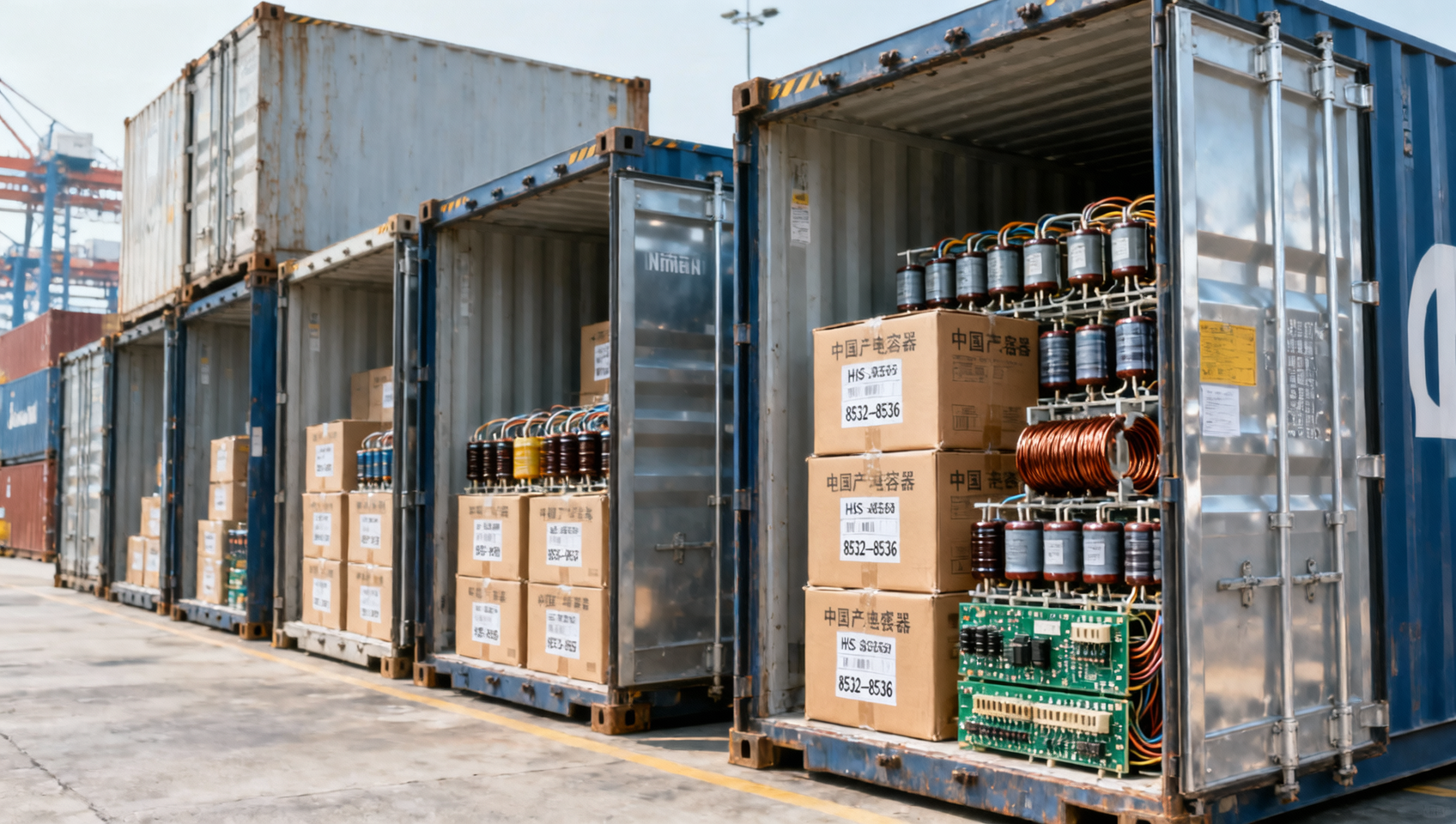
Starting in May, global shipping alliances have implemented the ‘Asia-Europe Green Slot Priority Mechanism’, granting expedited berthing, cargo handling, and customs clearance at major Chinese ports — Shanghai, Ningbo, and Shenzhen — to vessels powered by LNG, methanol, or battery systems. This development directly affects exporters of green products such as new energy equipment, photovoltaic modules, and lithium-ion batteries, and carries implications for European importers and carbon tariff-sensitive distributors.
Event Overview
Global shipping alliances announced the rollout of the ‘Asia-Europe Green Slot Priority Mechanism’ effective May. Under this mechanism, ships using LNG, methanol, or battery propulsion receive priority treatment across the full port workflow — including berthing, loading/unloading, and customs clearance — at Shanghai, Ningbo, and Shenzhen ports. The initiative targets faster logistics turnaround for China’s green exports and supports carbon footprint reduction for European supply chain partners.
Which Subsectors Are Affected
Direct Exporters (e.g., PV module, battery, wind turbine OEMs)
These companies are affected because their shipment schedules and delivery reliability now depend partly on vessel propulsion type. Green-powered vessels offer shorter port dwell times, which may improve on-time delivery performance — especially critical for time-bound project shipments (e.g., solar farm deployments) or contracts with strict penalty clauses.
Supply Chain & Logistics Service Providers
Freight forwarders, NVOCCs, and port agents face operational adjustments: vessel eligibility verification, documentation alignment with green slot requirements, and coordination with carriers on slot allocation. Delays may arise if green vessel capacity is oversubscribed or if documentation (e.g., fuel type certification) is incomplete.
European Importers & Carbon-Tariff-Sensitive Distributors
For these stakeholders, selecting Chinese suppliers that utilize green-vessel transport may concurrently reduce both customs processing time and Scope 3 emissions reporting burden — particularly relevant under the EU Carbon Border Adjustment Mechanism (CBAM) transitional reporting phase.
What Relevant Companies or Practitioners Should Watch and Do Now
Monitor official implementation guidelines from port authorities and alliance members
While the mechanism has launched, detailed criteria — such as acceptable fuel certification formats, real-time slot visibility tools, or contingency protocols during peak demand — remain subject to further clarification. Stakeholders should track updates issued by Shanghai International Port Group, Ningbo Zhoushan Port Group, and alliance carrier websites.
Assess current freight bookings against green vessel availability and schedule sensitivity
Not all green-powered sailings cover every port pair or frequency. Companies shipping high-value or time-critical green goods (e.g., next-gen battery packs) should cross-check scheduled green vessel departures with their planned shipment windows — rather than assuming blanket priority applies.
Distinguish between policy intent and operational readiness
Analysis来看, the mechanism reflects a coordinated signal toward low-carbon maritime trade, but actual throughput impact depends on vessel deployment scale and port infrastructure readiness (e.g., methanol bunkering availability at Shanghai). Early adoption does not guarantee immediate lead-time gains across all cargo types or terminals.
Update internal logistics SOPs and supplier communications
Exporters and forwarders should revise standard operating procedures to include green vessel eligibility checks and document preparation steps (e.g., confirming propulsion type in booking requests). Proactive alignment with carriers on slot reservation timelines — especially for Q3–Q4 peak season — is advisable.
Editorial Perspective / Industry Observation
From industry angle, this initiative is best understood as an early-stage operational alignment tool — not yet a regulatory mandate nor a fully scaled infrastructure shift. It signals growing integration between environmental compliance frameworks (e.g., EU CBAM, IMO 2030/2050 targets) and commercial port operations. Current impact remains concentrated among high-volume, repeat shippers with strong carrier relationships; broader accessibility will depend on expansion beyond three pilot ports and diversification of eligible clean fuels. Observation来看, its near-term value lies less in absolute time savings and more in supply chain predictability and ESG reporting utility.
Conclusion
The ‘Asia-Europe Green Slot Priority Mechanism’ marks a procedural step toward decarbonizing maritime trade corridors — one that prioritizes operational efficiency for verified low-emission vessels rather than imposing new compliance burdens. Its significance lies not in immediate transformation, but in establishing a precedent where environmental performance begins to translate into tangible logistical advantages. Currently, it is more accurately interpreted as a targeted facilitation measure for green exporters and their European partners — not a systemic overhaul of Asia-Europe shipping.
Source Attribution
Main source: Official announcement by global shipping alliances (publicly released in April, effective May).
Points requiring ongoing observation: Actual green vessel utilization rates at Shanghai/Ningbo/Shenzhen; frequency of slot allocation updates; inclusion of additional ports or fuel types beyond LNG/methanol/battery.
Get weekly intelligence in your inbox.
No noise. No sponsored content. Pure intelligence.
 Apr 19, 20262026 Dongguan Whole-House Customization List Released2026 Dongguan Whole-House Customization List Released
 Apr 19, 2026Global Shipping Alliances Launch Green Slot Priority for Asia-Europe RoutesGlobal Shipping Alliances Launch Green Slot Priority for Asia-Europe Routes
 Apr 19, 2026Vietnam Imposes AD Duties on Chinese Electronic ComponentsVietnam Imposes AD Duties on Chinese Electronic Components
 Apr 19, 2026Dongguan Victor Tops Local Full-Home Customization ListDongguan Victor Tops Local Full-Home Customization List
 Apr 19, 2026Guosheng Zhike Launches High-Precision Mold Machine Project in TaizhouGuosheng Zhike Launches High-Precision Mold Machine Project in Taizhou
 Apr 19, 2026CRRC Changchun Wins Jiaxing Urban Rail EMU ProjectCRRC Changchun Wins Jiaxing Urban Rail EMU Project
 Apr 19, 2026China Releases Green Design Guidelines 2026 for Industrial ProductsChina Releases Green Design Guidelines 2026 for Industrial Products
 Apr 19, 2026CATL Establishes $3B Era Resources Group for Global Mineral ControlCATL Establishes $3B Era Resources Group for Global Mineral Control
 Apr 19, 2026Shanghai Electric Gas Turbine Backlog Extends to 2028Shanghai Electric Gas Turbine Backlog Extends to 2028
 Apr 19, 2026Hormuz Strait Reopens, China Fertilizer Export Quota Easing ExpectedHormuz Strait Reopens, China Fertilizer Export Quota Easing Expected
 Apr 18, 2026TradeNexus Pro Launches Global Compliance RadarTradeNexus Pro Launches Global Compliance Radar
 Apr 18, 2026JIS T 2304:2026 Takes Effect June 1, 2026 for IVD SoftwareJIS T 2304:2026 Takes Effect June 1, 2026 for IVD Software
 Pathway for Rehab Devices with AI Modules") Apr 18, 2026FDA Updates 510(k) Pathway for Rehab Devices with AI ModulesFDA Updates 510(k) Pathway for Rehab Devices with AI Modules
Apr 18, 2026FDA Updates 510(k) Pathway for Rehab Devices with AI ModulesFDA Updates 510(k) Pathway for Rehab Devices with AI Modules Apr 18, 2026India BIS Approves 3 Chinese IoT Labs for IS 16444:2026 CertificationIndia BIS Approves 3 Chinese IoT Labs for IS 16444:2026 Certification
 Apr 18, 2026THE Alliance Launches Green Slot Priority for China PortsTHE Alliance Launches Green Slot Priority for China Ports
 Apr 18, 2026TÜV Rheinland Releases Dual-Standard ESS Certification Guide for ChinaTÜV Rheinland Releases Dual-Standard ESS Certification Guide for China
 Apr 18, 2026Vietnam Imposes AD Duties on Chinese Electronic ComponentsVietnam Imposes AD Duties on Chinese Electronic Components
 Apr 18, 2026SASO Launches PV Carbon Footprint Labeling from July 2026SASO Launches PV Carbon Footprint Labeling from July 2026
 Apr 18, 2026U.S. Adds 17 Smart Warehouse Robot Components to Export Control ListU.S. Adds 17 Smart Warehouse Robot Components to Export Control List
 Apr 18, 2026EU Enforces EN IEC 62443-4-2:2026 for Industrial Control Devices from 18 Apr 2026EU Enforces EN IEC 62443-4-2:2026 for Industrial Control Devices from 18 Apr 2026
 Apr 17, 2026Why Industry Veterans question impressive but vague specsWhy Industry Veterans question impressive but vague specs
 Apr 17, 2026What Industry Veterans notice first in weak supplier contentWhat Industry Veterans notice first in weak supplier content
 Apr 17, 2026A practical Editorial Framework for multi-topic industry sitesA practical Editorial Framework for multi-topic industry sites
 Apr 17, 2026Editorial Framework choices that weaken technical content SEOEditorial Framework choices that weaken technical content SEO
 Apr 17, 2026Temperature data loggers drift unpredictably inside lithium-ion battery storage enclosuresTemperature data loggers drift unpredictably inside lithium-ion battery storage enclosures
 Apr 17, 2026Are solar microinverters really worth the extra cost?Are solar microinverters really worth the extra cost?
 Apr 17, 2026Bifacial solar panels: How much more energy can they generate?Bifacial solar panels: How much more energy can they generate?