Vietnam Imposes AD Duties on Chinese Electronic Components
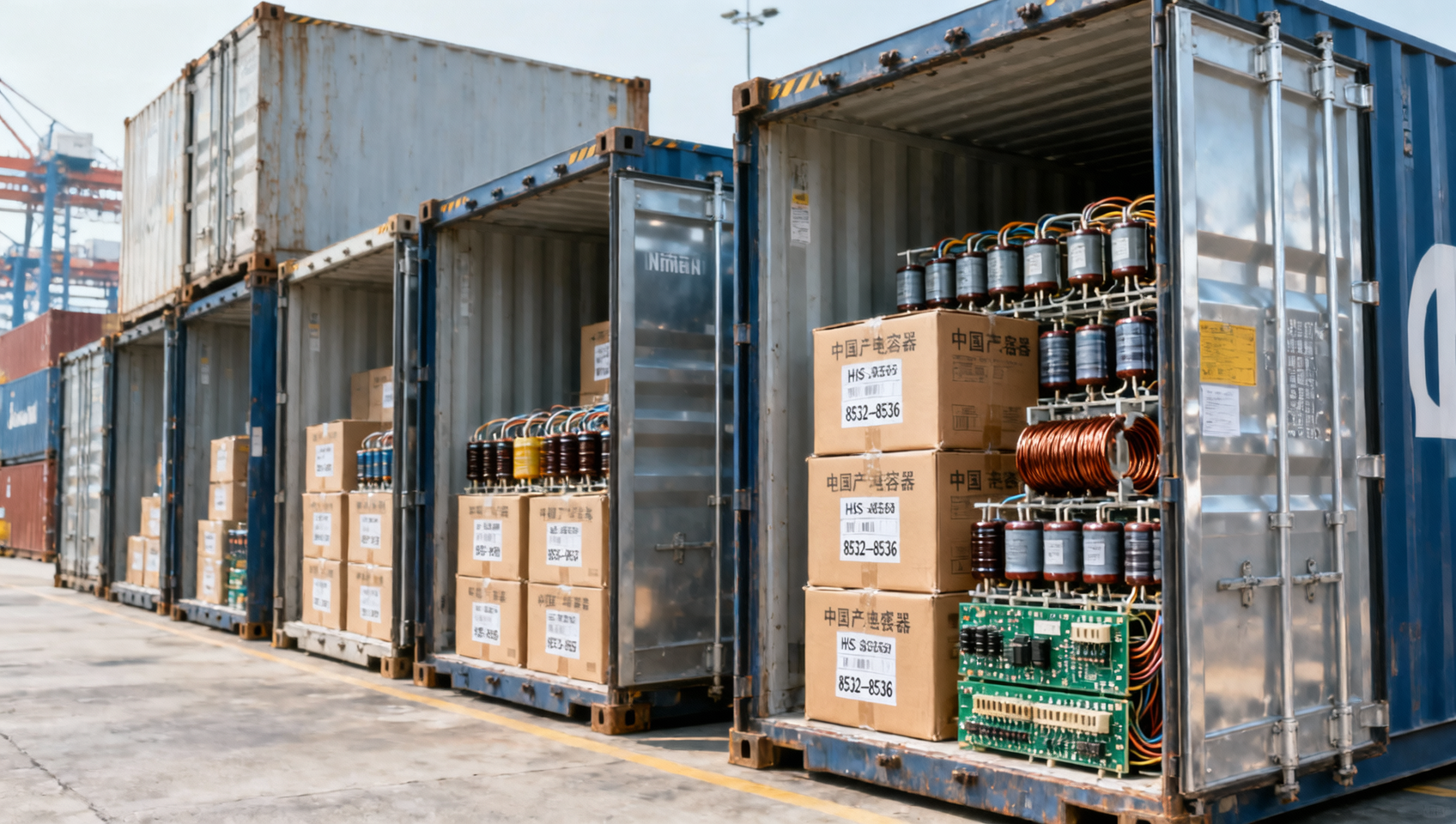
Vietnam’s Ministry of Industry and Trade has imposed definitive anti-dumping (AD) duties ranging from 18.7% to 32.4% on imported electronic components originating from China, effective April 18, 2026. This measure directly affects companies engaged in cross-border electronics trade, particularly those relying on Vietnam as a transshipment or origin-labeling hub for shipments to the U.S. and EU markets. Electronics exporters, EMS providers, global distributors, and procurement-focused supply chain operators should assess operational implications without delay.
Event Overview
On April 18, 2026, Vietnam’s Ministry of Industry and Trade announced the imposition of definitive anti-dumping duties on certain electronic components from China. The applied rates range between 18.7% and 32.4%, and the measure entered into force on the same date. No further procedural timelines or product-specific HS codes were disclosed in the publicly available announcement.
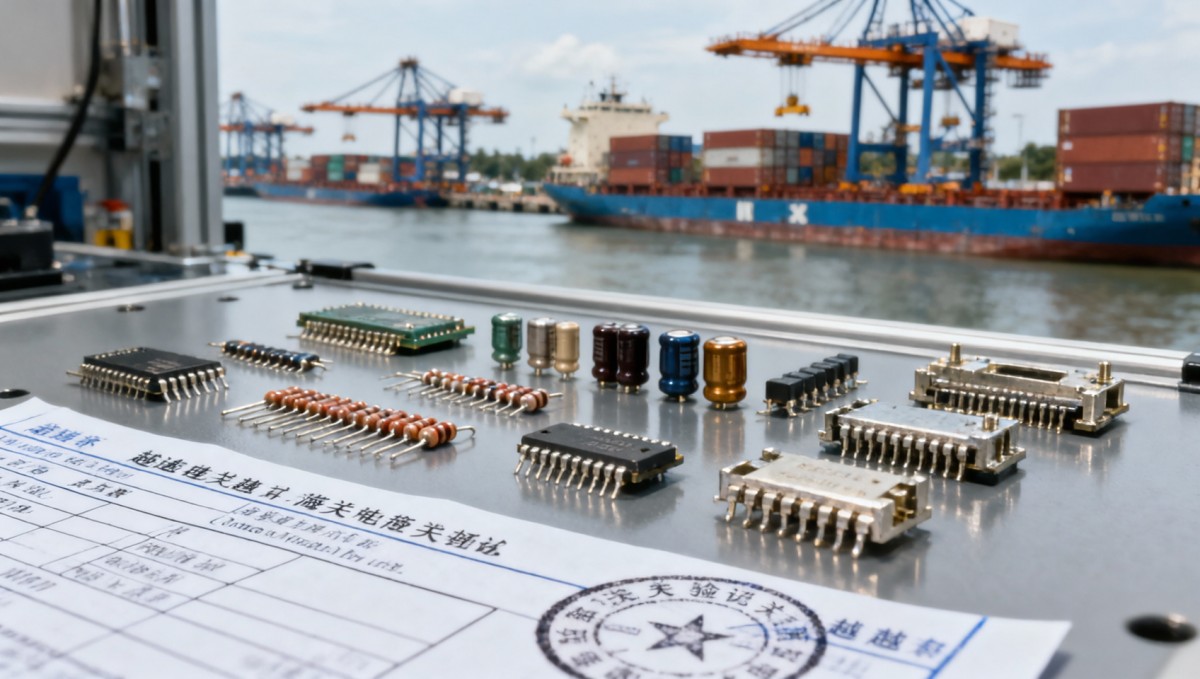
Industries Affected by Segment
Direct Trade Enterprises
Companies exporting Chinese-made electronic components to Vietnam for re-export — especially those structured to leverage Vietnam’s C/O for preferential access to third markets — face immediate cost increases. The AD duties apply at Vietnamese customs clearance, raising landed costs before onward shipment.
Supply Chain Service Providers (e.g., EMS, CMs)
Electronics manufacturing services (EMS) and contract manufacturers operating in Vietnam that source key components from China now confront higher input costs and potential delays in customs valuation. Their ability to maintain quoted lead times and margin commitments may be compromised unless sourcing strategies are revised.
Global Distributors & Regional Importers
Distributors using Vietnam as a regional consolidation or labeling hub for U.S./EU-bound consignments will see elevated total landed cost — including duty, logistics, and compliance overhead. This may erode price competitiveness relative to direct-sourced alternatives.
Procurement-Focused OEMs & Tier-1 Suppliers
OEMs managing multi-tier supply chains with China-sourced BOM items routed via Vietnam must reassess bill-of-materials routing logic. The AD levy introduces a new cost variable previously unaccounted for in landed-cost modeling for Vietnam-origin declarations.
What Enterprises Should Monitor and Act On Now
Verify product scope and HS code alignment
Confirm whether specific components in your supply chain fall under the officially listed scope. The Ministry’s determination does not publish exhaustive HS code mappings; verification with Vietnamese customs or legal counsel is advisable before assuming applicability.
Evaluate RCEP-certified direct procurement from China
For buyers targeting ASEAN or RCEP-participating markets, direct procurement from ISO/IECQ-certified Chinese manufacturers — accompanied by valid RCEP Certificate of Origin — may offer a lower-total-cost alternative, bypassing Vietnam-based tariff exposure altogether.
Assess feasibility of third-country assembly or labeling
Where Vietnam’s ‘origin laundering’ pathway is no longer cost-effective, consider limited-value-add operations in jurisdictions not subject to this AD measure — provided such arrangements comply with applicable rules of origin and documentation standards for target export markets.
Review contractual terms with Vietnamese partners
Revisit incoterms, duty liability clauses, and force majeure language in agreements with Vietnamese suppliers or logistics agents. Clarify responsibility for AD duty payment, documentation burden, and adjustment mechanisms if duties trigger renegotiation triggers.
Editorial Observation / Industry Perspective
This measure is best understood as an enforcement action — not merely a signal. Its implementation on April 18, 2026 reflects a concluded investigation and formal adoption, meaning cost impacts are already active for affected shipments. From an industry perspective, it marks a tightening of regulatory scrutiny over indirect trade routes used to circumvent trade remedies. It also underscores growing attention to ‘substantial transformation’ thresholds in origin determination — a trend likely to influence similar reviews elsewhere. Observers should track whether Vietnam expands the scope to additional component categories or initiates parallel safeguard or countervailing investigations in coming months.
While the current decision applies only to specific electronic components, its precedent matters: it confirms that transshipment-based origin optimization carries increasing regulatory risk where trade remedy laws intersect with customs enforcement capacity.
Concluding, this development is less about isolated tariff policy and more about recalibrating assumptions around supply chain geography. It signals that ‘country-of-assembly’ alone no longer guarantees duty exemption when upstream inputs originate from jurisdictions under active trade measures. A pragmatic interpretation treats this not as a disruption to be avoided, but as a structural prompt to align sourcing logic with verifiable origin compliance — across documentation, process, and certification.
Source: Vietnam Ministry of Industry and Trade (MOIT), official announcement dated April 18, 2026.
Note: Product-specific HS code coverage, review timelines, and potential exemptions remain pending further MOIT guidance and are subject to ongoing observation.
Get weekly intelligence in your inbox.
No noise. No sponsored content. Pure intelligence.
 Apr 19, 20262026 Dongguan Whole-House Customization List Released2026 Dongguan Whole-House Customization List Released
 Apr 19, 2026Global Shipping Alliances Launch Green Slot Priority for Asia-Europe RoutesGlobal Shipping Alliances Launch Green Slot Priority for Asia-Europe Routes
 Apr 19, 2026Vietnam Imposes AD Duties on Chinese Electronic ComponentsVietnam Imposes AD Duties on Chinese Electronic Components
 Apr 19, 2026Dongguan Victor Tops Local Full-Home Customization ListDongguan Victor Tops Local Full-Home Customization List
 Apr 19, 2026Guosheng Zhike Launches High-Precision Mold Machine Project in TaizhouGuosheng Zhike Launches High-Precision Mold Machine Project in Taizhou
 Apr 19, 2026CRRC Changchun Wins Jiaxing Urban Rail EMU ProjectCRRC Changchun Wins Jiaxing Urban Rail EMU Project
 Apr 19, 2026China Releases Green Design Guidelines 2026 for Industrial ProductsChina Releases Green Design Guidelines 2026 for Industrial Products
 Apr 19, 2026CATL Establishes $3B Era Resources Group for Global Mineral ControlCATL Establishes $3B Era Resources Group for Global Mineral Control
 Apr 19, 2026Shanghai Electric Gas Turbine Backlog Extends to 2028Shanghai Electric Gas Turbine Backlog Extends to 2028
 Apr 19, 2026Hormuz Strait Reopens, China Fertilizer Export Quota Easing ExpectedHormuz Strait Reopens, China Fertilizer Export Quota Easing Expected
 Apr 18, 2026TradeNexus Pro Launches Global Compliance RadarTradeNexus Pro Launches Global Compliance Radar
 Apr 18, 2026JIS T 2304:2026 Takes Effect June 1, 2026 for IVD SoftwareJIS T 2304:2026 Takes Effect June 1, 2026 for IVD Software
 Pathway for Rehab Devices with AI Modules") Apr 18, 2026FDA Updates 510(k) Pathway for Rehab Devices with AI ModulesFDA Updates 510(k) Pathway for Rehab Devices with AI Modules
Apr 18, 2026FDA Updates 510(k) Pathway for Rehab Devices with AI ModulesFDA Updates 510(k) Pathway for Rehab Devices with AI Modules Apr 18, 2026India BIS Approves 3 Chinese IoT Labs for IS 16444:2026 CertificationIndia BIS Approves 3 Chinese IoT Labs for IS 16444:2026 Certification
 Apr 18, 2026THE Alliance Launches Green Slot Priority for China PortsTHE Alliance Launches Green Slot Priority for China Ports
 Apr 18, 2026TÜV Rheinland Releases Dual-Standard ESS Certification Guide for ChinaTÜV Rheinland Releases Dual-Standard ESS Certification Guide for China
 Apr 18, 2026Vietnam Imposes AD Duties on Chinese Electronic ComponentsVietnam Imposes AD Duties on Chinese Electronic Components
 Apr 18, 2026SASO Launches PV Carbon Footprint Labeling from July 2026SASO Launches PV Carbon Footprint Labeling from July 2026
 Apr 18, 2026U.S. Adds 17 Smart Warehouse Robot Components to Export Control ListU.S. Adds 17 Smart Warehouse Robot Components to Export Control List
 Apr 18, 2026EU Enforces EN IEC 62443-4-2:2026 for Industrial Control Devices from 18 Apr 2026EU Enforces EN IEC 62443-4-2:2026 for Industrial Control Devices from 18 Apr 2026
 Apr 17, 2026Why Industry Veterans question impressive but vague specsWhy Industry Veterans question impressive but vague specs
 Apr 17, 2026What Industry Veterans notice first in weak supplier contentWhat Industry Veterans notice first in weak supplier content
 Apr 17, 2026A practical Editorial Framework for multi-topic industry sitesA practical Editorial Framework for multi-topic industry sites
 Apr 17, 2026Editorial Framework choices that weaken technical content SEOEditorial Framework choices that weaken technical content SEO
 Apr 17, 2026Temperature data loggers drift unpredictably inside lithium-ion battery storage enclosuresTemperature data loggers drift unpredictably inside lithium-ion battery storage enclosures
 Apr 17, 2026Are solar microinverters really worth the extra cost?Are solar microinverters really worth the extra cost?
 Apr 17, 2026Bifacial solar panels: How much more energy can they generate?Bifacial solar panels: How much more energy can they generate?