Electronic Shelf Labels and Pricing Errors at Store Level
Electronic shelf labels are transforming store-level pricing accuracy, yet pricing errors still disrupt margins, compliance, and customer trust. For retailers and supply chain leaders exploring electronic shelf labels, energy monitoring, smart warehousing, and warehouse automation, understanding the root causes of mismatched prices is essential. This article examines how digital pricing systems, operational workflows, and real-time data integration can reduce errors and support more efficient, scalable retail operations.
For store operators, procurement teams, finance approvers, quality managers, project leads, and distribution partners, pricing accuracy is no longer a narrow point-of-sale issue. It affects audit readiness, promotion execution, labor efficiency, inventory turnover, and shopper confidence across every store format, from convenience chains to hypermarkets.
Electronic shelf labels, often integrated with pricing engines, ERP platforms, warehouse systems, and handheld devices, can reduce manual relabeling steps from 4–6 tasks to 1–2 automated confirmations. However, technology alone does not eliminate pricing errors. Most failures occur at the intersection of data latency, workflow gaps, exception handling, and incomplete governance.
Why Pricing Errors Still Happen in Digitized Stores
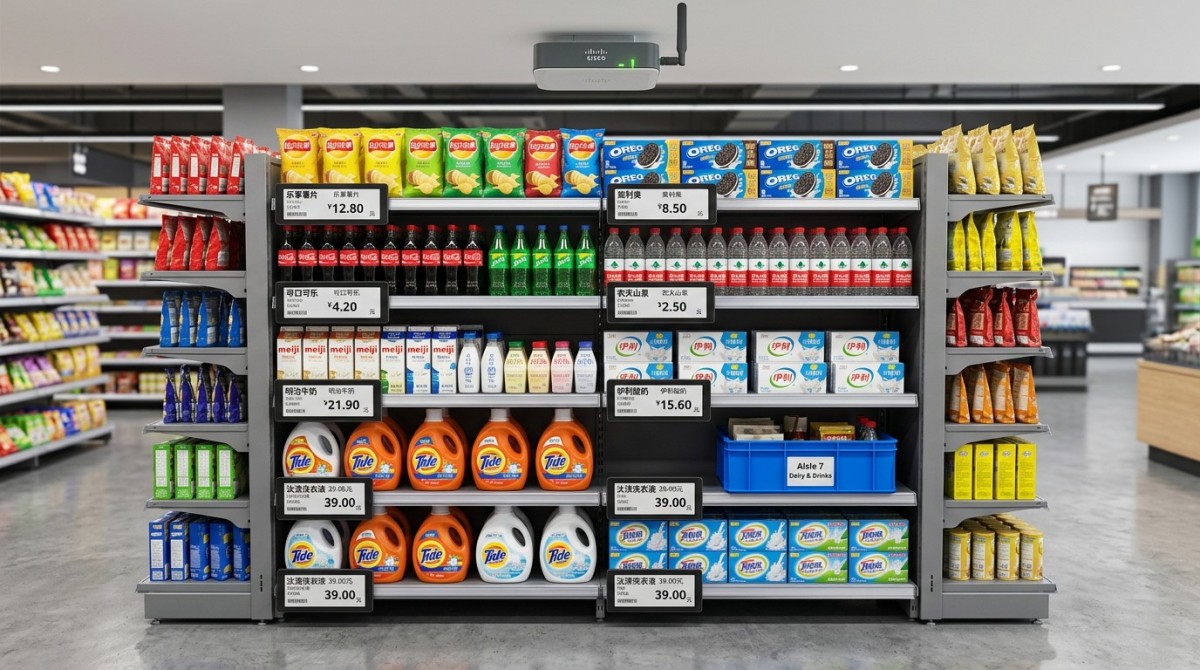
Many retailers assume that once electronic shelf labels are installed, shelf price mismatches will disappear. In practice, errors persist because the shelf label is only the final display layer. If the upstream price master, promotion engine, store server, or SKU mapping is incorrect, the digital label will simply display the wrong value faster.
At store level, the most common failure points fall into 5 categories: delayed data synchronization, broken item-to-label association, promotion timing conflicts, incomplete exception alerts, and human overrides without approval trails. In chains with hundreds of daily price changes, even a 1% exception rate can create dozens of visible discrepancies per site each week.
Operational complexity also matters. A grocery store may process 3,000–20,000 active SKUs, with promotional windows changing every 24–72 hours. If handheld scanning routines are skipped during shift transitions or if category teams upload batch changes late, labels may not reflect the final approved promotional price at opening time.
Another issue is fragmented accountability. Pricing often touches merchandising, IT, store operations, finance, and compliance. Without a defined owner for price governance, errors remain unresolved until customer complaints, spot audits, or POS exception reports expose the mismatch.
Typical root causes behind mismatched shelf prices
The table below summarizes how pricing errors usually emerge in real retail environments and what teams should monitor during system reviews, pilot rollouts, and chain-wide deployment planning.
The pattern is clear: electronic shelf labels reduce manual paper handling, but pricing integrity depends on upstream data discipline and downstream store execution. Retailers that treat ESL as part of a connected pricing control system, rather than a standalone display tool, typically reach more stable accuracy performance within 8–12 weeks of structured rollout.
Operational warning signs procurement and store teams should not ignore
- Frequent price corrections during the first 2 opening hours of the day.
- High dependence on paper backup labels for promotional aisles.
- Store staff manually confirming more than 50 price changes per shift.
- Mismatch reports appearing repeatedly in the same 3–5 product categories.
- Delayed exception visibility between head office systems and store execution teams.
How Electronic Shelf Labels Improve Accuracy, Labor Control, and Compliance
When deployed correctly, electronic shelf labels can sharply reduce manual relabeling labor, shorten promotional change cycles, and create a more auditable pricing process. A typical paper-label workflow may require printing, sorting, distributing, replacing, checking, and archiving. With ESL, much of that work shifts to centralized digital control and exception-based store intervention.
This matters not only for frontline efficiency but also for finance and compliance. Price discrepancies can trigger refund exposure, promotional liability, and store inspection risk. In regulated categories such as healthcare-related goods, baby products, or controlled retail environments, displaying the correct unit price and promotional dates is part of responsible retail execution, not just customer convenience.
There is also a strong connection to smart warehousing and warehouse automation. When item master data, replenishment logic, and shelf-edge pricing are synchronized, retailers can better align stock movement with real demand signals. Faster updates reduce the lag between central purchasing decisions and store-level price execution, especially during seasonal campaigns or regional markdown events.
Energy monitoring can be an additional benefit in modern deployments. Battery status reporting, network health monitoring, and infrastructure power usage visibility help facilities teams manage large ESL estates more efficiently. In multisite retail operations, reducing avoidable service visits by even 10–15% can materially improve maintenance cost control.
Key business gains from a mature ESL environment
- Price update speed can move from several hours to near-real-time execution, often within 1–15 minutes depending on network architecture.
- Manual ticket replacement volume can fall by 70%–90% in high-change categories.
- Audit trails improve because change events are logged by user, timestamp, store, and SKU.
- Promotion launch consistency improves across 10, 50, or 500 stores when workflows are standardized.
- Customer trust increases when shelf, app, and checkout prices align more reliably.
These gains are strongest when retailers treat pricing as a cross-functional control tower process. The system should connect merchandising, procurement, store operations, finance review, and IT support rather than operating in departmental silos.
System Integration Requirements That Prevent Store-Level Pricing Errors
The biggest differentiator between a stable ESL deployment and a problematic one is integration quality. Electronic shelf labels need reliable communication with POS, ERP, promotion engines, product information systems, and often warehouse or store inventory tools. If one of these links is partial or delayed, errors surface at the shelf edge first.
For procurement teams and project managers, integration should be assessed across at least 4 layers: data source quality, transmission speed, store network resilience, and exception visibility. A system that updates prices quickly but does not flag failed transmissions is risky, especially across estates with 50–200 stores and multiple regional assortments.
Store execution also depends on physical conditions. Label readability, battery replacement cycles, wireless interference, fixture density, and refrigeration-zone performance all affect reliability. In practice, retailers should test labels across ambient, chilled, and promotional endcap areas before scaling beyond a pilot of 3–10 stores.
A structured implementation roadmap usually includes 3 stages: pilot validation, controlled regional rollout, and enterprise standardization. Each stage should include acceptance criteria for update success rate, response time, exception handling, and shelf audit compliance. This is especially important when integrating with smart warehousing or automated replenishment processes.
Critical technical and workflow checkpoints
The following matrix can help decision-makers evaluate whether their pricing environment is ready for stable electronic shelf label deployment and long-term governance.
A practical takeaway is that pricing stability should be measured by both technical uptime and process control. Fast updates are useful, but reliable exception handling, traceability, and store verification are what prevent recurring pricing errors over the long term.
Implementation sequence for cross-functional teams
- Clean product master data and unify SKU naming, units, and promotional attributes.
- Map interfaces between pricing engine, POS, inventory, and ESL middleware.
- Run pilot testing across at least 3 store conditions: standard aisle, chilled zone, and promotional area.
- Define approval rights for price changes, overrides, and emergency rollback procedures.
- Train store operators on exception handling, not just routine label viewing.
How Buyers and Decision-Makers Should Evaluate ESL Solutions
For procurement leaders and enterprise decision-makers, the best electronic shelf label program is not simply the one with the lowest unit cost. Total value depends on integration effort, battery life expectations, support model, software visibility, rollout scalability, and the supplier’s ability to support store-level operational realities.
A strong evaluation framework usually covers 6 dimensions: hardware durability, software integration, pricing governance capability, maintenance workload, deployment timeline, and service responsiveness. In chain retail, these factors often influence long-term operating cost more than the initial display tag price alone.
Finance approvers should ask how the solution reduces refund risk, labor hours, and rework. Quality and safety managers should verify readability, tamper resistance, and audit log access. Project owners should review rollout sequencing, on-site training needs, and regional support availability. Distributors and channel partners should consider interoperability and ease of replacement across varied store formats.
The comparison table below provides a practical lens for selecting a solution that supports both day-to-day store operations and broader digital retail strategy.
A balanced sourcing decision should weigh both technical fit and process fit. If a solution cannot support exception management, audit reporting, and phased rollout control, it may still generate pricing errors even with modern hardware in place.
Common buying mistakes to avoid
- Choosing on hardware price alone without reviewing integration complexity.
- Skipping pilot validation in high-change or refrigeration-heavy categories.
- Underestimating training needs for store supervisors and replenishment teams.
- Failing to define rollback procedures for failed promotional deployments.
- Ignoring service response time for stores outside major metro regions.
Best Practices for Rollout, Monitoring, and Continuous Improvement
Once electronic shelf labels are live, continuous governance becomes the deciding factor in performance. Retailers should establish a monitoring rhythm that combines automated system alerts with physical shelf checks. A practical model is daily exception review, weekly category sampling, and monthly root cause analysis for recurring error clusters.
Project managers should define clear KPIs during the first 90 days. Typical measures include update success rate, percentage of labels offline, time to resolve exceptions, number of customer price complaints, and variance between planned and actual promotional activation time. These metrics are more useful than generic system uptime alone.
Continuous improvement also depends on operational feedback. Store operators often know where failures occur first: crowded promotional bays, high-turnover endcaps, mislabeled planogram resets, or rushed overnight updates. Their observations should feed directly into process redesign, staff coaching, and supplier review meetings.
For organizations pursuing broader digital transformation, ESL data should be tied to inventory accuracy, warehouse replenishment, and labor planning. That connection turns pricing from a reactive correction task into a managed operational control point across the retail network.
FAQ for operators, buyers, and project teams
How long does ESL deployment usually take?
A pilot can often be prepared in 2–6 weeks depending on integration readiness, while a regional rollout may take 1–3 months. Enterprise deployment across many stores typically follows phased scheduling, especially when price engines, warehouse systems, and store network upgrades are involved.
Which stores benefit most from electronic shelf labels?
The strongest value usually appears in environments with frequent price changes, large SKU counts, labor pressure, or heavy promotional activity. Supermarkets, electronics retailers, pharmacy-adjacent formats, and chain stores with 5,000+ active SKUs often see the clearest operational gains.
What should teams monitor after go-live?
At minimum, monitor failed updates, offline labels, delayed promotion launches, repeated SKU-binding issues, and manual overrides. A weekly review of the top 10 exception causes is usually enough to identify whether the problem is technical, procedural, or data-related.
Can ESL support broader automation goals?
Yes, especially when integrated with smart warehousing, automated replenishment, store analytics, and energy monitoring. The strongest results come when shelf-edge pricing is treated as part of a connected retail operations architecture rather than a standalone display project.
Electronic shelf labels can significantly reduce store-level pricing errors, but only when retailers combine the technology with clean data, reliable integration, disciplined workflows, and measurable governance. For buyers, operators, finance reviewers, and project leaders, the priority is not just digitizing price display but building a resilient pricing control system that scales across stores.
TradeNexus Pro helps decision-makers evaluate connected retail technologies with a sharper focus on operational value, supply chain fit, and implementation risk. If you are reviewing electronic shelf labels, smart warehousing, warehouse automation, or adjacent digital pricing infrastructure, contact us to explore tailored insights, compare solution paths, and get a more informed deployment strategy.
Get weekly intelligence in your inbox.
No noise. No sponsored content. Pure intelligence.
 Apr 23, 2026Taobao Factory Spark 3.0 Launches AI Workbench for SME Export FactoriesTaobao Factory Spark 3.0 Launches AI Workbench for SME Export Factories
 Apr 23, 2026TENENG Group Inspects IoT Safety Compliance at Jiangnan ChemicalTENENG Group Inspects IoT Safety Compliance at Jiangnan Chemical
 Apr 23, 2026China Launches First Embodied AI Open Data CommunityChina Launches First Embodied AI Open Data Community
 Apr 23, 2026PV Glass Prices Flat for 9 Weeks Amid Rising Integrated ProcurementPV Glass Prices Flat for 9 Weeks Amid Rising Integrated Procurement
 Apr 23, 20262984 NQI One-Stop Platforms Launched Nationwide2984 NQI One-Stop Platforms Launched Nationwide
 Apr 23, 2026China’s Green Smart Ship Tech Norms Accelerate BMS & Shore Power ExportChina’s Green Smart Ship Tech Norms Accelerate BMS & Shore Power Export
 Apr 23, 2026China Builds World's Largest Agri-Meteorological IoT NetworkChina Builds World's Largest Agri-Meteorological IoT Network
 Apr 23, 2026EU CBAM Carbon Tariff Enters Enforcement on April 1, 2026EU CBAM Carbon Tariff Enters Enforcement on April 1, 2026
 Apr 23, 2026Five Ministries Issue Zero-Carbon Factory Guidance for Export IndustriesFive Ministries Issue Zero-Carbon Factory Guidance for Export Industries
 Apr 23, 2026ISO Releases First Zero-Carbon City Standard — China’s Practices IncludedISO Releases First Zero-Carbon City Standard — China’s Practices Included
 Apr 22, 2026China Leads Global Offshore Wind Installations for 5th YearChina Leads Global Offshore Wind Installations for 5th Year
 Apr 22, 2026China Launches National Mine Safety IoT Monitoring NetworkChina Launches National Mine Safety IoT Monitoring Network
 Apr 22, 2026Yinchuan Boiler Pure Water Solution Certified for Middle East ProjectsYinchuan Boiler Pure Water Solution Certified for Middle East Projects
 Apr 22, 2026China to Enforce Mandatory EV Battery Recycling Standards by 2026China to Enforce Mandatory EV Battery Recycling Standards by 2026
 Apr 22, 2026Vietnam Launches Anti-Circumvention Probe on Electronic ComponentsVietnam Launches Anti-Circumvention Probe on Electronic Components
 Apr 22, 20262026 Shanghai Fastener Show: Robotic Fasteners Drive Overseas Procurement2026 Shanghai Fastener Show: Robotic Fasteners Drive Overseas Procurement
 Apr 22, 2026US BIS Adds EV On-Board Charger Crypto Modules to EAR Appendix 7US BIS Adds EV On-Board Charger Crypto Modules to EAR Appendix 7
 Apr 22, 2026TÜV Rheinland Updates BESS Certification: Propagation Blocking Now MandatoryTÜV Rheinland Updates BESS Certification: Propagation Blocking Now Mandatory
 Apr 22, 2026Red Sea Crisis Escalates: Suez AI Speed Limits & Slot Review from Apr 19Red Sea Crisis Escalates: Suez AI Speed Limits & Slot Review from Apr 19
 Apr 22, 2026EU CBAM Carbon Tariff Takes Effect April 1, 2026EU CBAM Carbon Tariff Takes Effect April 1, 2026
 Apr 21, 2026When to Replace CT Scanner Parts Before Downtime StartsWhen to Replace CT Scanner Parts Before Downtime Starts
 Apr 21, 2026How to Cut Costs in Lathe Turning Without ReworkHow to Cut Costs in Lathe Turning Without Rework
 Apr 21, 2026Lathe Turning Tolerances: What Can You Expect?Lathe Turning Tolerances: What Can You Expect?
 Apr 21, 2026How to Avoid Risks in Solar Panels WholesaleHow to Avoid Risks in Solar Panels Wholesale
 Apr 21, 2026Solar Panels Wholesale: How to Compare SuppliersSolar Panels Wholesale: How to Compare Suppliers
 Apr 21, 2026Solar Mounting Cost Factors You Should KnowSolar Mounting Cost Factors You Should Know
 Apr 21, 2026Solar Mounting Options: Which One Fits Your Project?Solar Mounting Options: Which One Fits Your Project?