ANATEL Mandates Localized Voice Assistants for Smart Home Devices in Brazil
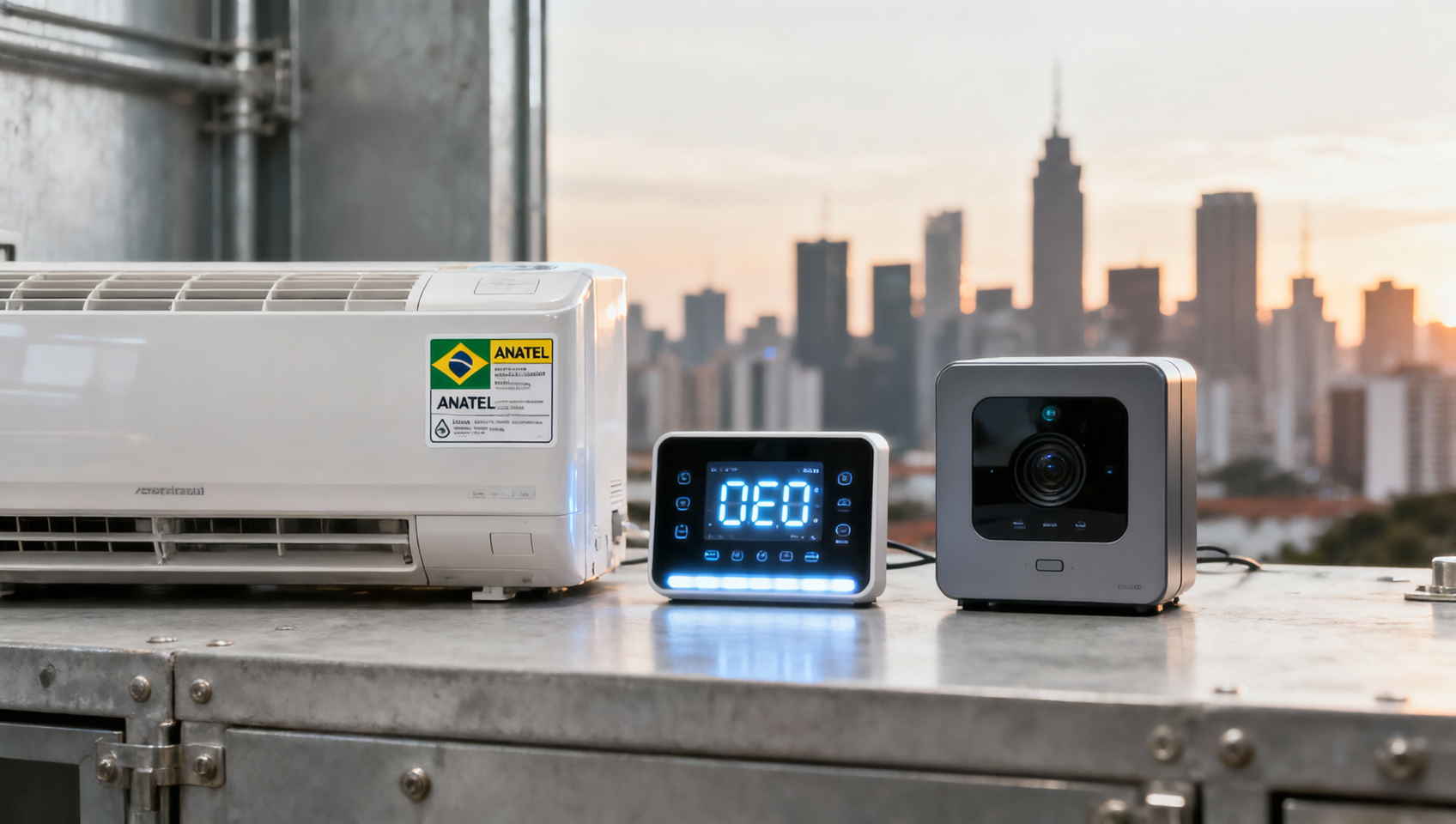
Brazil’s National Telecommunications Agency (ANATEL) issued Resolution No. 821 on April 23, 2026, requiring all imported smart home devices—including air conditioners, lighting systems, and security hubs—to ship with a pre-installed, ANATEL-certified local voice assistant (e.g., Santos Assistant) and support offline Portuguese speech recognition at ≥92% accuracy. Effective October 2026, non-compliant products will be denied ANATEL certification and prohibited from sale. This regulation directly impacts smart home hardware exporters, localization service providers, and regional compliance teams operating in or targeting the Brazilian market.
Event Overview
On April 23, 2026, ANATEL published Resolution No. 821. It stipulates that, starting October 2026, all imported smart home products—specifically those categorized as air conditioning units, lighting control systems, and security central controllers—must be pre-equipped with an ANATEL-certified local voice assistant and must perform Portuguese-language speech recognition offline with a minimum accuracy of 92%. Products failing to meet these requirements will not receive the mandatory ANATEL certification code and will be barred from commercial distribution in Brazil.
Which Sub-Sectors Are Affected
Importers and Exporters of Smart Home Hardware
These entities are directly responsible for product certification and market entry. The new rule shifts compliance responsibility upstream: voice assistant integration and offline Portuguese ASR validation must now be confirmed prior to shipment—not after arrival. Impact includes extended lead times for certification, potential rework of firmware and packaging, and increased pre-market testing costs.
Firmware and Software Localization Providers
Voice assistant integration is no longer optional or post-sale; it must be embedded and certified before import. Providers offering multilingual ASR or voice platform licensing must verify whether their Portuguese offline models meet ANATEL’s ≥92% accuracy benchmark—and whether their deployment architecture satisfies ANATEL’s certification criteria for pre-installation and tamper resistance.
Contract Manufacturers and OEMs
OEMs producing white-label or private-label smart home devices for Brazilian distribution must now incorporate certified voice assistant modules into base firmware images. This affects build configurations, version control, and factory flash protocols. Any deviation—for example, shipping global firmware variants without the localized stack—will invalidate certification eligibility.
Distribution and Channel Partners
Local distributors and e-commerce platforms must verify ANATEL certification codes against Resolution No. 821’s technical annexes before listing or stocking devices. Inventory acquired before October 2026 but lacking compliant firmware may become unsellable unless retrofitted—an option not guaranteed under current ANATEL guidance.
What Relevant Enterprises or Practitioners Should Focus On
Monitor official technical annexes and certification procedures
Resolution No. 821 references supporting technical documents still pending publication by ANATEL. Current more relevant than broad policy tracking is verifying when Annex A (voice assistant certification criteria) and Annex B (offline ASR test methodology) are released—and whether third-party labs are authorized to conduct validation.
Identify high-risk SKUs and assess firmware readiness
Focus initial review on devices already scheduled for Brazilian launch between October 2026 and March 2027—especially those using generic cloud-dependent assistants or English-only ASR engines. Confirm whether firmware updates can be applied pre-shipment or if hardware-level changes (e.g., on-device NPU support for offline inference) are required.
Distinguish between regulatory signal and enforceable requirement
The rule takes effect in October 2026, but ANATEL has not yet disclosed transition rules for inventory already cleared for import. From industry angle, this gap suggests companies should treat the deadline as binding for *new* certifications only—while treating existing stock as subject to case-by-case review, pending further notice.
Align procurement, QA, and logistics timelines
Integrate voice assistant certification into the product development gate review cycle—not as a final step. Allocate additional 8–10 weeks for ANATEL lab testing and documentation review. Adjust component sourcing to ensure certified voice SDKs or licensed ASR engines are included in bill-of-materials and factory flash instructions.
Editorial Perspective / Industry Observation
Analysis来看, this resolution marks a deliberate shift from connectivity-based regulation to AI-functionality governance in Brazil’s telecom framework. It does not merely extend existing device certification—it introduces functional performance thresholds (e.g., offline accuracy) tied to language-specific AI behavior. Observation来看, ANATEL is signaling that local AI sovereignty—defined here as linguistic autonomy and infrastructure independence—is becoming a prerequisite for market access, not just a competitive differentiator. From industry angle, the rule functions less as an immediate operational mandate and more as a structural inflection point: it formalizes voice interface localization as a non-negotiable layer of regulatory compliance, comparable in weight to RF safety or power supply standards. Current more relevant than debating enforcement capacity is recognizing that this establishes a precedent likely to influence future ANATEL rules on edge AI, data residency, and human-AI interaction design.
This regulation underscores how national telecom agencies are evolving beyond spectrum and hardware oversight into functional AI governance. Its significance lies not in isolated technical demands—but in institutionalizing language-specific AI performance as a foundational market access criterion. It is better understood not as a one-off compliance hurdle, but as an early indicator of how regional digital sovereignty frameworks may increasingly shape hardware design, software licensing, and cross-border supply chain planning.
Information Sources:
— ANATEL Resolution No. 821 (published April 23, 2026)
— Official ANATEL Regulatory Portal (resolucoes.anatel.gov.br)
Note: Technical annexes (Annex A and Annex B), certified lab list, and transitional provisions remain pending and require ongoing monitoring.
Get weekly intelligence in your inbox.
No noise. No sponsored content. Pure intelligence.
 Apr 24, 2026India BIS Mandates IS 13252:2025 for PLCs & HMIs by Oct 2026India BIS Mandates IS 13252:2025 for PLCs & HMIs by Oct 2026
 Apr 24, 2026SASO EV Charger Regulation: Sand-Resistant Grid Compatibility Testing RequiredSASO EV Charger Regulation: Sand-Resistant Grid Compatibility Testing Required
 Apr 24, 2026Japan Updates JIS for Rehab Devices: IEC 62366-1:2024 Usability Compliance RequiredJapan Updates JIS for Rehab Devices: IEC 62366-1:2024 Usability Compliance Required
 Apr 24, 2026China Customs Launches RCEP Origin Smart Pre-Review SystemChina Customs Launches RCEP Origin Smart Pre-Review System
 Apr 24, 2026ANATEL Mandates Localized Voice Assistants for Smart Home Devices in BrazilANATEL Mandates Localized Voice Assistants for Smart Home Devices in Brazil
 Apr 24, 2026TÜV Rheinland Updates IoT EMC Standard with AI Edge抗扰度 RequirementTÜV Rheinland Updates IoT EMC Standard with AI Edge抗扰度 Requirement
 Apr 24, 20262M Alliance Shortens Ningbo–Rotterdam Route to 18 Days Amid 35% Slot Premium2M Alliance Shortens Ningbo–Rotterdam Route to 18 Days Amid 35% Slot Premium
 Apr 24, 2026Vietnam Enforces Bilingual Safety Labels for Imported Electronic Components from Apr 22, 2026Vietnam Enforces Bilingual Safety Labels for Imported Electronic Components from Apr 22, 2026
 Apr 24, 2026USTR Launches Sunset Review on China Solar PV AD/CVD DutiesUSTR Launches Sunset Review on China Solar PV AD/CVD Duties
 Apr 24, 2026EU New Battery Regulation Fully Effective Apr 24, 2026EU New Battery Regulation Fully Effective Apr 24, 2026
 Apr 23, 2026Taobao Factory Spark 3.0 Launches AI Workbench for SME Export FactoriesTaobao Factory Spark 3.0 Launches AI Workbench for SME Export Factories
 Apr 23, 2026TENENG Group Inspects IoT Safety Compliance at Jiangnan ChemicalTENENG Group Inspects IoT Safety Compliance at Jiangnan Chemical
 Apr 23, 2026China Launches First Embodied AI Open Data CommunityChina Launches First Embodied AI Open Data Community
 Apr 23, 2026PV Glass Prices Flat for 9 Weeks Amid Rising Integrated ProcurementPV Glass Prices Flat for 9 Weeks Amid Rising Integrated Procurement
 Apr 23, 20262984 NQI One-Stop Platforms Launched Nationwide2984 NQI One-Stop Platforms Launched Nationwide
 Apr 23, 2026China’s Green Smart Ship Tech Norms Accelerate BMS & Shore Power ExportChina’s Green Smart Ship Tech Norms Accelerate BMS & Shore Power Export
 Apr 23, 2026China Builds World's Largest Agri-Meteorological IoT NetworkChina Builds World's Largest Agri-Meteorological IoT Network
 Apr 23, 2026EU CBAM Carbon Tariff Enters Enforcement on April 1, 2026EU CBAM Carbon Tariff Enters Enforcement on April 1, 2026
 Apr 23, 2026Five Ministries Issue Zero-Carbon Factory Guidance for Export IndustriesFive Ministries Issue Zero-Carbon Factory Guidance for Export Industries
 Apr 23, 2026ISO Releases First Zero-Carbon City Standard — China’s Practices IncludedISO Releases First Zero-Carbon City Standard — China’s Practices Included
 Apr 22, 2026China Leads Global Offshore Wind Installations for 5th YearChina Leads Global Offshore Wind Installations for 5th Year
 Apr 22, 2026China Launches National Mine Safety IoT Monitoring NetworkChina Launches National Mine Safety IoT Monitoring Network
 Apr 22, 2026Yinchuan Boiler Pure Water Solution Certified for Middle East ProjectsYinchuan Boiler Pure Water Solution Certified for Middle East Projects
 Apr 22, 2026China to Enforce Mandatory EV Battery Recycling Standards by 2026China to Enforce Mandatory EV Battery Recycling Standards by 2026
 Apr 22, 2026Vietnam Launches Anti-Circumvention Probe on Electronic ComponentsVietnam Launches Anti-Circumvention Probe on Electronic Components
 Apr 22, 20262026 Shanghai Fastener Show: Robotic Fasteners Drive Overseas Procurement2026 Shanghai Fastener Show: Robotic Fasteners Drive Overseas Procurement
 Apr 22, 2026US BIS Adds EV On-Board Charger Crypto Modules to EAR Appendix 7US BIS Adds EV On-Board Charger Crypto Modules to EAR Appendix 7