SASO EV Charger Regulation: Sand-Resistant Grid Compatibility Testing Required
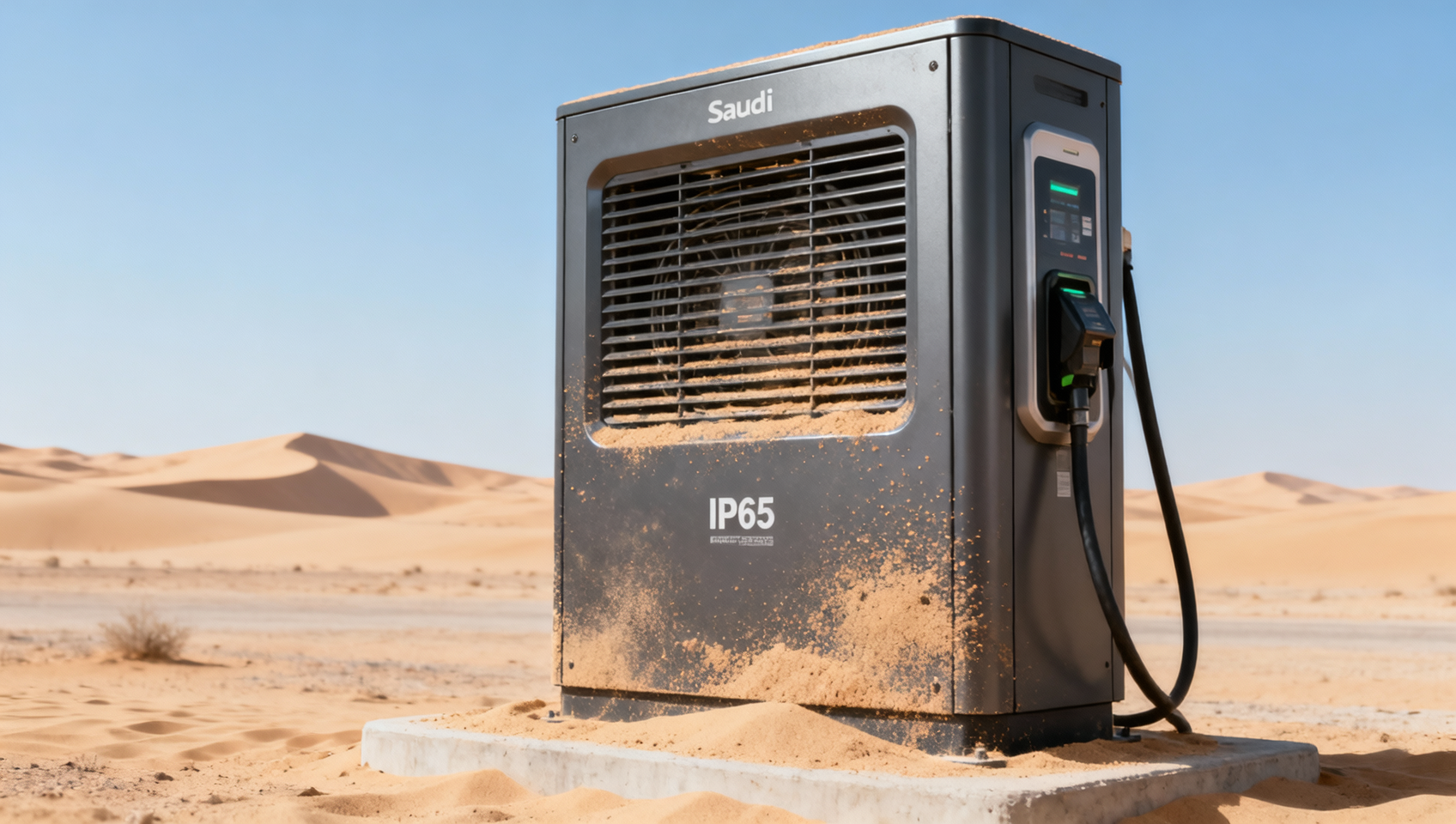
Saudi Arabia’s Standards Organization (SASO) issued Technical Regulation TR-SASO-EVCS-2026 on April 23, 2026, mandating real-world grid compatibility testing—including high temperature, sand exposure, and voltage fluctuation—for all imported EV charging infrastructure. This requirement directly affects EV charger exporters, certification service providers, and supply chain stakeholders targeting the Saudi market.
Event Overview
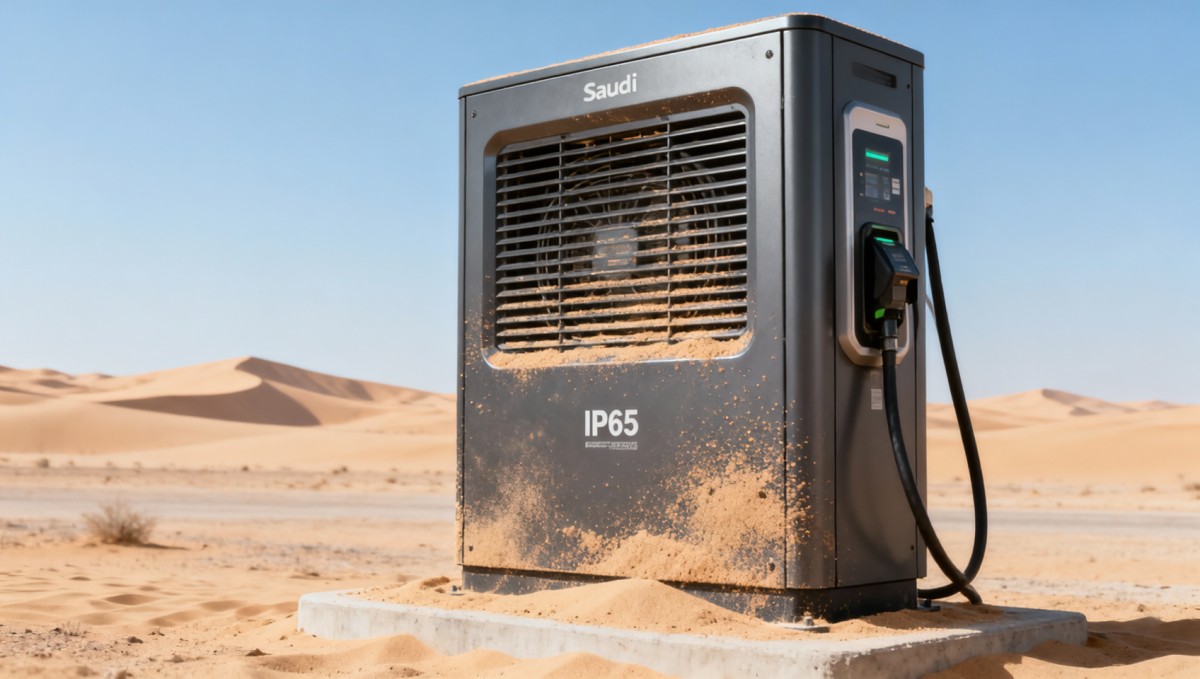
On April 23, 2026, SASO published Technical Regulation TR-SASO-EVCS-2026. It requires all imported electric vehicle (EV) charging infrastructure—including AC and DC chargers—to undergo a 72-hour physical test under combined high-temperature, sand-dust, and grid-voltage-fluctuation conditions at the National Laboratory in Riyadh. Only chargers passing this test are eligible for the SASO Certificate of Conformity (CoC). The regulation enters into force on August 1, 2026. As of publication, only three Chinese testing institutions have been authorized by SASO to conduct pre-testing.
Which Subsectors Are Affected
Direct Exporters of EV Chargers
Exporters supplying AC/DC chargers to Saudi Arabia must now allocate additional time and budget for mandatory on-site testing in Riyadh. Unlike previous conformity assessments relying on lab-based or document-only reviews, this regulation introduces a field-realistic, environment-specific verification step—potentially extending time-to-market by several weeks per model.
Testing & Certification Service Providers
Third-party labs and certification bodies supporting exporters face new operational constraints. With only three authorized Chinese institutions currently permitted to perform pre-testing—and no public list of accredited international labs outside China—service capacity is limited. Clients may experience scheduling bottlenecks or need to coordinate logistics for prototype shipment to Riyadh well ahead of submission deadlines.
Supply Chain & Logistics Operators
Logistics providers handling EV charger shipments to Saudi Arabia must now account for potential rework cycles: failed tests may require hardware modifications (e.g., enhanced enclosure sealing, thermal management adjustments), followed by retesting. This increases inventory holding time, customs clearance complexity, and risk of non-compliant stock accumulation in transit or bonded warehouses.
What Enterprises and Practitioners Should Focus On Now
Monitor official SASO updates on authorized testing facilities
Current authorization is limited to three Chinese institutions for pre-testing—but SASO has not yet published a full list of internationally accredited labs capable of performing the final 72-hour test in Riyadh. Stakeholders should track SASO’s official portal for announcements regarding expanded accreditation or remote witnessing options.
Verify product readiness for sand-dust ingress protection and wide-range voltage tolerance
The regulation specifies real-world environmental stress—not just IP ratings or nominal voltage specs. Manufacturers should review existing designs against IEC 62793 (voltage fluctuation immunity) and ISO 16750-3 (dust exposure), and confirm whether enclosures, cooling systems, and power electronics meet sustained operation under simultaneous thermal and particulate load.
Align internal timelines with the August 1, 2026 enforcement date
Given the 72-hour continuous test duration plus administrative processing, submissions for CoC must be scheduled no later than mid-July 2026 to avoid post-enforcement delays. Exporters should treat the July deadline as de facto, especially if using newly authorized or less-experienced testing partners.
Prepare technical documentation for Riyadh lab coordination
The National Laboratory in Riyadh will require detailed operational logs, firmware version records, and configuration files prior to test initiation. Companies should begin compiling these materials now—not after passing pre-tests—to avoid last-minute submission rejection.
Editorial Observation / Industry Perspective
From an industry perspective, this regulation signals a shift from procedural compliance toward performance-based validation in Gulf EV infrastructure markets. Analysis来看, TR-SASO-EVCS-2026 reflects growing emphasis on local environmental resilience—not just electrical safety—as a core pillar of regulatory acceptance. Observation来看, it is less a one-off technical update and more a precedent: similar sand- and heat-resilience requirements are under discussion in UAE and Oman standardization bodies. Current more appropriate interpretation is that this is a signal of regional harmonization around climate-adaptive grid integration—rather than an isolated national requirement.
It is not yet a fully scaled implementation: the narrow pool of pre-authorized testing entities suggests SASO is still in a phased rollout phase. Industry stakeholders should treat early 2026 as a calibration period—not a finalized operating environment.
Conclusion: This regulation elevates environmental robustness from a design preference to a mandatory gatekeeping criterion for the Saudi EV charging market. Its immediate impact lies in extended certification lead times and revised product qualification workflows—not in broad market exclusion. For now, it is best understood as an operational recalibration point, not a strategic inflection.
Information Source: Saudi Standards, Metrology and Quality Organization (SASO), Technical Regulation TR-SASO-EVCS-2026, published April 23, 2026. Note: Authorization status of testing institutions and final lab procedures remain subject to ongoing SASO clarification and are recommended for continued monitoring.
Get weekly intelligence in your inbox.
No noise. No sponsored content. Pure intelligence.
 Apr 24, 2026India BIS Mandates IS 13252:2025 for PLCs & HMIs by Oct 2026India BIS Mandates IS 13252:2025 for PLCs & HMIs by Oct 2026
 Apr 24, 2026SASO EV Charger Regulation: Sand-Resistant Grid Compatibility Testing RequiredSASO EV Charger Regulation: Sand-Resistant Grid Compatibility Testing Required
 Apr 24, 2026Japan Updates JIS for Rehab Devices: IEC 62366-1:2024 Usability Compliance RequiredJapan Updates JIS for Rehab Devices: IEC 62366-1:2024 Usability Compliance Required
 Apr 24, 2026China Customs Launches RCEP Origin Smart Pre-Review SystemChina Customs Launches RCEP Origin Smart Pre-Review System
 Apr 24, 2026ANATEL Mandates Localized Voice Assistants for Smart Home Devices in BrazilANATEL Mandates Localized Voice Assistants for Smart Home Devices in Brazil
 Apr 24, 2026TÜV Rheinland Updates IoT EMC Standard with AI Edge抗扰度 RequirementTÜV Rheinland Updates IoT EMC Standard with AI Edge抗扰度 Requirement
 Apr 24, 20262M Alliance Shortens Ningbo–Rotterdam Route to 18 Days Amid 35% Slot Premium2M Alliance Shortens Ningbo–Rotterdam Route to 18 Days Amid 35% Slot Premium
 Apr 24, 2026Vietnam Enforces Bilingual Safety Labels for Imported Electronic Components from Apr 22, 2026Vietnam Enforces Bilingual Safety Labels for Imported Electronic Components from Apr 22, 2026
 Apr 24, 2026USTR Launches Sunset Review on China Solar PV AD/CVD DutiesUSTR Launches Sunset Review on China Solar PV AD/CVD Duties
 Apr 24, 2026EU New Battery Regulation Fully Effective Apr 24, 2026EU New Battery Regulation Fully Effective Apr 24, 2026
 Apr 23, 2026Taobao Factory Spark 3.0 Launches AI Workbench for SME Export FactoriesTaobao Factory Spark 3.0 Launches AI Workbench for SME Export Factories
 Apr 23, 2026TENENG Group Inspects IoT Safety Compliance at Jiangnan ChemicalTENENG Group Inspects IoT Safety Compliance at Jiangnan Chemical
 Apr 23, 2026China Launches First Embodied AI Open Data CommunityChina Launches First Embodied AI Open Data Community
 Apr 23, 2026PV Glass Prices Flat for 9 Weeks Amid Rising Integrated ProcurementPV Glass Prices Flat for 9 Weeks Amid Rising Integrated Procurement
 Apr 23, 20262984 NQI One-Stop Platforms Launched Nationwide2984 NQI One-Stop Platforms Launched Nationwide
 Apr 23, 2026China’s Green Smart Ship Tech Norms Accelerate BMS & Shore Power ExportChina’s Green Smart Ship Tech Norms Accelerate BMS & Shore Power Export
 Apr 23, 2026China Builds World's Largest Agri-Meteorological IoT NetworkChina Builds World's Largest Agri-Meteorological IoT Network
 Apr 23, 2026EU CBAM Carbon Tariff Enters Enforcement on April 1, 2026EU CBAM Carbon Tariff Enters Enforcement on April 1, 2026
 Apr 23, 2026Five Ministries Issue Zero-Carbon Factory Guidance for Export IndustriesFive Ministries Issue Zero-Carbon Factory Guidance for Export Industries
 Apr 23, 2026ISO Releases First Zero-Carbon City Standard — China’s Practices IncludedISO Releases First Zero-Carbon City Standard — China’s Practices Included
 Apr 22, 2026China Leads Global Offshore Wind Installations for 5th YearChina Leads Global Offshore Wind Installations for 5th Year
 Apr 22, 2026China Launches National Mine Safety IoT Monitoring NetworkChina Launches National Mine Safety IoT Monitoring Network
 Apr 22, 2026Yinchuan Boiler Pure Water Solution Certified for Middle East ProjectsYinchuan Boiler Pure Water Solution Certified for Middle East Projects
 Apr 22, 2026China to Enforce Mandatory EV Battery Recycling Standards by 2026China to Enforce Mandatory EV Battery Recycling Standards by 2026
 Apr 22, 2026Vietnam Launches Anti-Circumvention Probe on Electronic ComponentsVietnam Launches Anti-Circumvention Probe on Electronic Components
 Apr 22, 20262026 Shanghai Fastener Show: Robotic Fasteners Drive Overseas Procurement2026 Shanghai Fastener Show: Robotic Fasteners Drive Overseas Procurement
 Apr 22, 2026US BIS Adds EV On-Board Charger Crypto Modules to EAR Appendix 7US BIS Adds EV On-Board Charger Crypto Modules to EAR Appendix 7