India BIS Mandates IS 13252:2025 for PLCs & HMIs by Oct 2026
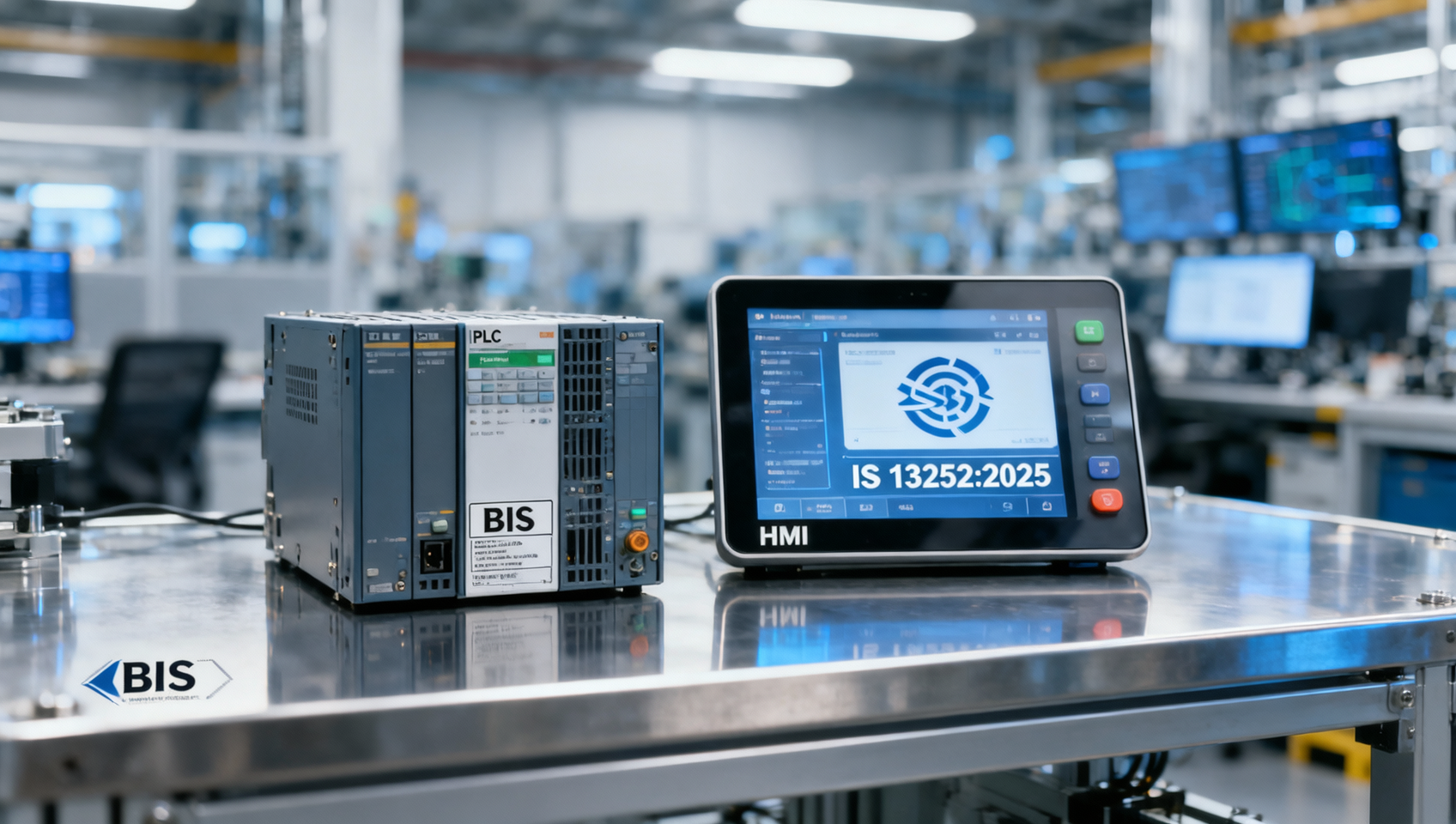
India’s Bureau of Indian Standards (BIS) has expanded its mandatory certification scope to include programmable logic controllers (PLCs) and human-machine interfaces (HMIs) — core components in industrial automation — effective from 1 October 2026. Announced on 22 April 2026, the requirement mandates compliance with IS 13252:2025 (identical to IEC 61131-2:2023), impacting manufacturers, exporters, and distributors supplying to the Indian market. Direct trade enterprises, OEM integrators, and supply chain service providers active in factory automation should treat this as a near-term regulatory milestone.
Event Overview
On 22 April 2026, the Bureau of Indian Standards (BIS) issued an official notification adding programmable logic controllers (PLCs) and human-machine interfaces (HMIs) to its list of products requiring mandatory BIS certification. The applicable standard is IS 13252:2025, which is technically identical to IEC 61131-2:2023. From 1 October 2026, importation of non-certified PLCs and HMIs into India will be prohibited. As of the announcement date, fewer than 12% of Chinese manufacturers hold valid BIS licenses for these products, and typical certification timelines exceed 14 weeks.
Which Subsectors Are Affected
Direct Exporters & Trading Enterprises
These entities face immediate customs clearance risk post-October 2026 if shipments lack valid BIS licenses. Impact manifests in delayed port releases, potential shipment rejection, and contractual non-compliance with Indian buyers who require certified goods for project deployment.
OEMs & System Integrators Using PLCs/HMIs
OEMs embedding uncertified PLCs or HMIs into larger automated systems (e.g., packaging lines, conveyor controls) may encounter certification cascading — where end-product approvals are withheld pending component-level BIS conformity. This affects tender eligibility and project timelines in infrastructure and manufacturing sectors.
Contract Manufacturers & EMS Providers
For facilities producing PLCs or HMIs under private label or white-label arrangements, responsibility for BIS licensing rests with the brand owner named on the product. Contract manufacturers must verify licensing ownership and ensure technical documentation (e.g., test reports, factory audit readiness) aligns with IS 13252:2025 requirements.
Supply Chain & Logistics Service Providers
Freight forwarders and customs brokers handling automation hardware imports into India must now validate BIS license status pre-shipment. Absence of valid license numbers in shipping documents may trigger inspection delays or classification disputes at Indian ports.
What Relevant Enterprises or Practitioners Should Focus On — And How to Respond
Monitor Official Updates from BIS and Indian Customs
Current guidance references IS 13252:2025 but does not yet publish detailed implementation protocols (e.g., scope exclusions, grandfathering provisions, or transitional arrangements). Stakeholders should track BIS circulars and Directorate General of Foreign Trade (DGFT) notifications for formal enforcement instructions.
Prioritize Certification for High-Volume or High-Value SKUs
Given average certification cycles exceed 14 weeks — and limited BIS-accredited labs accept international applications — companies should identify top-selling PLC/HMI models by Indian revenue share and initiate applications by Q3 2026 at the latest. Avoid bundling multiple variants into single applications unless technically justified under IS 13252:2025’s family rules.
Distinguish Between Regulatory Signal and Operational Readiness
The 22 April 2026 announcement is a formal regulatory decision, not a draft proposal. However, actual enforcement capacity (e.g., customs lab testing throughput, inspector training) remains unconfirmed. Companies should treat the deadline as binding while verifying real-time port-level enforcement patterns via local partners.
Review Technical Documentation and Supplier Agreements Now
IS 13252:2025 requires evidence of electromagnetic compatibility (EMC), safety insulation, and environmental robustness. Firms must audit existing test reports for alignment with the 2025 edition; older IEC 61131-2:2017 reports are insufficient. Where components are sourced from third parties, licensing obligations and liability clauses in supplier contracts need explicit review.
Editorial Observation / Industry Perspective
From an industry perspective, this expansion signals India’s broader shift toward harmonizing industrial equipment regulation with international standards — particularly IEC frameworks used across EU, ASEAN, and GCC markets. Analysis来看, it is less about isolated product control and more about building traceability and conformity infrastructure for smart manufacturing policy goals. Observation来看, the low current certification rate among Chinese suppliers (under 12%) suggests limited preparedness — making this a structural bottleneck rather than a procedural delay. Current更值得关注的是 whether BIS will introduce phased enforcement (e.g., pilot ports or sectoral rollouts), as past BIS mandates (e.g., for LED lamps) included staggered implementation windows despite firm deadlines.
This is best understood not as a one-off compliance event, but as an early indicator of tightening regulatory convergence in India’s industrial automation ecosystem — especially where safety, interoperability, and cybersecurity intersect in next-generation control systems.
Conclusion
The BIS mandate for PLCs and HMIs under IS 13252:2025 marks a material step in India’s industrial product regulation framework. Its significance lies not only in the import ban deadline, but in how it reshapes sourcing decisions, technical validation workflows, and cross-border accountability for automation hardware. For stakeholders, the most rational interpretation is that this is a binding regulatory requirement already in force — with practical execution dependent on proactive documentation alignment, selective prioritization, and close monitoring of implementation-level updates.
Source Attribution
Main source: Official notification issued by the Bureau of Indian Standards (BIS), dated 22 April 2026.
Points requiring ongoing observation: Specific enforcement mechanisms, scope clarifications (e.g., embedded vs. standalone HMI units), and availability of BIS-recognized testing laboratories outside India.
Get weekly intelligence in your inbox.
No noise. No sponsored content. Pure intelligence.
 Apr 24, 2026India BIS Mandates IS 13252:2025 for PLCs & HMIs by Oct 2026India BIS Mandates IS 13252:2025 for PLCs & HMIs by Oct 2026
 Apr 24, 2026SASO EV Charger Regulation: Sand-Resistant Grid Compatibility Testing RequiredSASO EV Charger Regulation: Sand-Resistant Grid Compatibility Testing Required
 Apr 24, 2026Japan Updates JIS for Rehab Devices: IEC 62366-1:2024 Usability Compliance RequiredJapan Updates JIS for Rehab Devices: IEC 62366-1:2024 Usability Compliance Required
 Apr 24, 2026China Customs Launches RCEP Origin Smart Pre-Review SystemChina Customs Launches RCEP Origin Smart Pre-Review System
 Apr 24, 2026ANATEL Mandates Localized Voice Assistants for Smart Home Devices in BrazilANATEL Mandates Localized Voice Assistants for Smart Home Devices in Brazil
 Apr 24, 2026TÜV Rheinland Updates IoT EMC Standard with AI Edge抗扰度 RequirementTÜV Rheinland Updates IoT EMC Standard with AI Edge抗扰度 Requirement
 Apr 24, 20262M Alliance Shortens Ningbo–Rotterdam Route to 18 Days Amid 35% Slot Premium2M Alliance Shortens Ningbo–Rotterdam Route to 18 Days Amid 35% Slot Premium
 Apr 24, 2026Vietnam Enforces Bilingual Safety Labels for Imported Electronic Components from Apr 22, 2026Vietnam Enforces Bilingual Safety Labels for Imported Electronic Components from Apr 22, 2026
 Apr 24, 2026USTR Launches Sunset Review on China Solar PV AD/CVD DutiesUSTR Launches Sunset Review on China Solar PV AD/CVD Duties
 Apr 24, 2026EU New Battery Regulation Fully Effective Apr 24, 2026EU New Battery Regulation Fully Effective Apr 24, 2026
 Apr 23, 2026Taobao Factory Spark 3.0 Launches AI Workbench for SME Export FactoriesTaobao Factory Spark 3.0 Launches AI Workbench for SME Export Factories
 Apr 23, 2026TENENG Group Inspects IoT Safety Compliance at Jiangnan ChemicalTENENG Group Inspects IoT Safety Compliance at Jiangnan Chemical
 Apr 23, 2026China Launches First Embodied AI Open Data CommunityChina Launches First Embodied AI Open Data Community
 Apr 23, 2026PV Glass Prices Flat for 9 Weeks Amid Rising Integrated ProcurementPV Glass Prices Flat for 9 Weeks Amid Rising Integrated Procurement
 Apr 23, 20262984 NQI One-Stop Platforms Launched Nationwide2984 NQI One-Stop Platforms Launched Nationwide
 Apr 23, 2026China’s Green Smart Ship Tech Norms Accelerate BMS & Shore Power ExportChina’s Green Smart Ship Tech Norms Accelerate BMS & Shore Power Export
 Apr 23, 2026China Builds World's Largest Agri-Meteorological IoT NetworkChina Builds World's Largest Agri-Meteorological IoT Network
 Apr 23, 2026EU CBAM Carbon Tariff Enters Enforcement on April 1, 2026EU CBAM Carbon Tariff Enters Enforcement on April 1, 2026
 Apr 23, 2026Five Ministries Issue Zero-Carbon Factory Guidance for Export IndustriesFive Ministries Issue Zero-Carbon Factory Guidance for Export Industries
 Apr 23, 2026ISO Releases First Zero-Carbon City Standard — China’s Practices IncludedISO Releases First Zero-Carbon City Standard — China’s Practices Included
 Apr 22, 2026China Leads Global Offshore Wind Installations for 5th YearChina Leads Global Offshore Wind Installations for 5th Year
 Apr 22, 2026China Launches National Mine Safety IoT Monitoring NetworkChina Launches National Mine Safety IoT Monitoring Network
 Apr 22, 2026Yinchuan Boiler Pure Water Solution Certified for Middle East ProjectsYinchuan Boiler Pure Water Solution Certified for Middle East Projects
 Apr 22, 2026China to Enforce Mandatory EV Battery Recycling Standards by 2026China to Enforce Mandatory EV Battery Recycling Standards by 2026
 Apr 22, 2026Vietnam Launches Anti-Circumvention Probe on Electronic ComponentsVietnam Launches Anti-Circumvention Probe on Electronic Components
 Apr 22, 20262026 Shanghai Fastener Show: Robotic Fasteners Drive Overseas Procurement2026 Shanghai Fastener Show: Robotic Fasteners Drive Overseas Procurement
 Apr 22, 2026US BIS Adds EV On-Board Charger Crypto Modules to EAR Appendix 7US BIS Adds EV On-Board Charger Crypto Modules to EAR Appendix 7