Why Robot Vacuum Cleaners Miss Dirt Along Wall Edges
Robot vacuum cleaners are designed for convenience, yet many users still notice stubborn dirt collecting along wall edges. This common cleaning gap is not just a product flaw—it reflects design limits, sensor behavior, brush layout, and real-world operating conditions. For buyers, operators, and business decision-makers, understanding why robot vacuum cleaners miss edge debris is essential for evaluating performance, maintenance costs, and product suitability.
Why do robot vacuum cleaners miss dirt along wall edges in the first place?
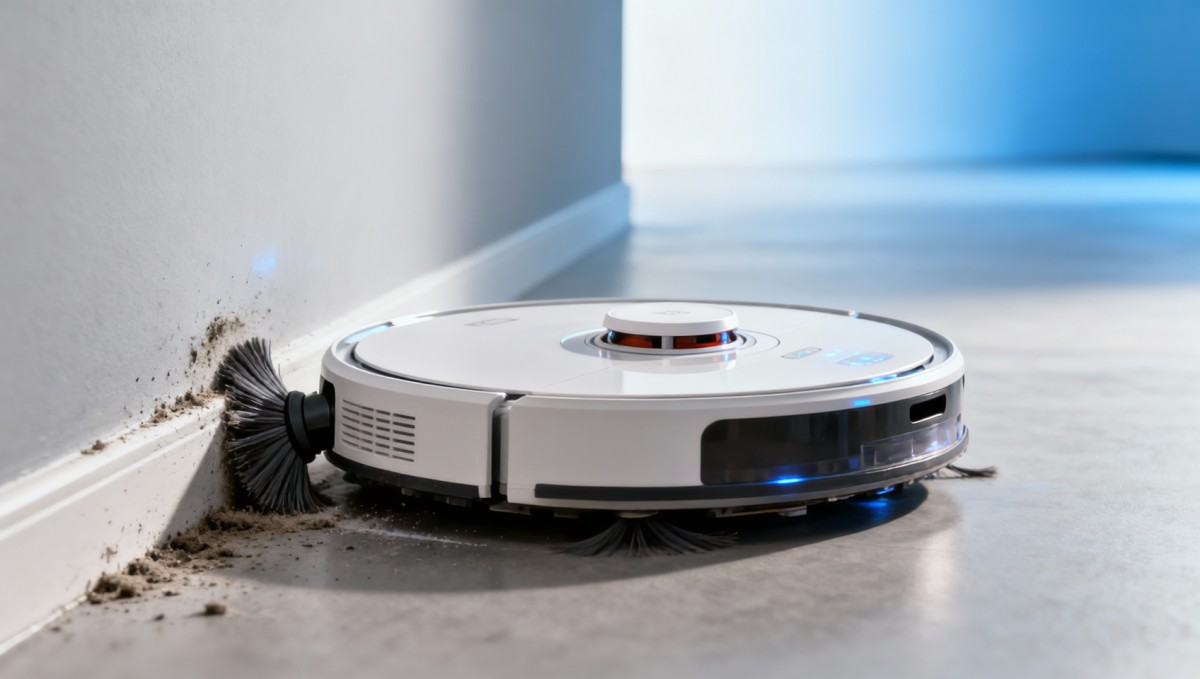
When buyers ask why robot vacuum cleaners miss dirt along wall edges, the answer usually starts with geometry. Most units have a round body, while room corners and skirting lines create tight linear boundaries. A machine with a diameter commonly in the 30–35 cm range cannot place its suction inlet fully flush against every wall segment, especially when furniture legs, baseboards, and door frames interrupt the path.
The second reason is sensor behavior. Edge cleaning relies on infrared, LiDAR, camera navigation, bumper systems, or wall-following sensors. These systems are designed to avoid hard collisions and protect both the machine and indoor surfaces. In practical operation, many robots intentionally keep a small gap of several millimeters to around 1–2 cm from the wall, which reduces scuffing but can leave a narrow strip of dust behind.
Brush layout also matters. Many robot vacuum cleaners use one or two side brushes to pull debris inward. If the side brush is too short, rotates at a modest speed, or loses stiffness after 3–6 months of use, wall-edge pickup drops noticeably. Fine dust, pet hair, and heavier grit behave differently, so a machine that handles open-floor dust well may still struggle with edge debris near textured walls.
For B2B evaluators, this is not a minor household complaint. Edge-cleaning limitations affect cleaning frequency, labor back-up needs, complaint rates in managed properties, and perceived product value. In commercial pilot testing, a unit that misses only a small perimeter band can still create visible dirt accumulation after 7–14 days if wall zones are high traffic.
The most common technical causes
- Round chassis design reduces true corner reach and limits contact with sharp wall transitions.
- Wall-following algorithms prioritize collision avoidance over aggressive edge contact.
- Single side-brush systems may leave the opposite edge less effectively cleaned depending on route direction.
- Uneven floors, thick baseboards, and rugs with raised borders interrupt suction continuity along the perimeter.
Which design and operating factors have the biggest impact on edge cleaning performance?
Not all edge-cleaning gaps come from the same source. Procurement teams should separate hardware limits from controllable operating issues. In many deployments, performance changes more from maintenance condition and room layout than from headline suction numbers. A robot rated for high suction may still underperform at the wall if the brush geometry and pathing logic are weak.
The table below helps operators and purchasing teams compare the main factors behind robot vacuum cleaners missing dirt along wall edges. It is especially useful during pilot evaluation, distributor screening, and model benchmarking across residential, hospitality, healthcare-adjacent, and office-use environments.
This comparison shows why a simple feature checklist is not enough. Edge-cleaning performance depends on the interaction between navigation, brush reach, and the physical perimeter of the room. Teams reviewing robot vacuum cleaners for multi-site use should test at least 3 surface conditions and 2 wall profiles before making a final selection.
Another overlooked variable is operating mode. Some robots use a quick clean path on daily cycles and reserve edge mode for a second pass. If users skip that perimeter cycle to save 10–20 minutes per session, dirt along wall edges becomes more visible. In real-world managed environments, scheduling discipline can matter almost as much as machine specification.
What operators should inspect during routine use
A practical 5-point check
- Confirm side brushes are not bent, shortened, or wrapped with hair after every 5–10 cleaning cycles.
- Inspect the front bumper and wall sensors for dust buildup at least once per week.
- Review whether edge-clean mode is active in the cleaning schedule and not disabled for speed.
- Check baseboards, cable runs, and furniture skirts that may push the robot away from the wall line.
- Compare performance before and after brush replacement to separate wear issues from design issues.
How should buyers evaluate robot vacuum cleaners for edge cleaning in B2B scenarios?
For business buyers, the key question is not whether any robot vacuum cleaner can miss dirt along wall edges. Most can under certain conditions. The real question is how much missed debris is acceptable in the intended environment, and what total operating cost follows from that gap. A showroom, serviced apartment, electronics office, or clinic reception area will each have a different tolerance threshold.
Procurement teams should score models using operational criteria rather than advertising language. That means reviewing route logic, perimeter pass quality, consumable replacement intervals, noise limits, maintenance labor, and fallback cleaning requirements. In many enterprise evaluations, 4 core dimensions matter most: cleaning consistency, intervention frequency, consumable cost, and reporting visibility.
The following matrix is useful when comparing robot vacuum cleaners for offices, rental properties, distributor portfolios, or managed service offers. It combines selection criteria with typical buyer concerns from finance, operations, quality control, and project management teams.
For finance approvers, the most important insight is that a lower purchase price does not always mean lower cleaning cost. If missed wall-edge debris forces manual touch-up every 1–2 days, labor expense can quickly outweigh hardware savings. For distributors and resellers, a poor edge-cleaning fit often leads to avoidable returns, support tickets, and weaker repeat business.
A sound trial process usually runs through 3 stages: desk review, site pilot, and post-pilot analysis. During the pilot, measure edge results in at least one open area, one furnished area, and one obstacle-heavy zone over 7–10 days. This reveals whether the machine is genuinely suitable or only looks strong in a clean demo environment.
B2B scenarios where edge performance matters more than average suction
- Managed apartments and hospitality spaces where visible perimeter dust affects guest perception within 24–48 hours.
- Office corridors and meeting rooms where chair legs and wall edges create repeated missed strips.
- Healthcare-adjacent waiting areas where quality control teams require predictable daily surface appearance.
- Distributor product portfolios where performance claims must survive mixed customer environments.
Can edge dirt problems be reduced without replacing the robot vacuum cleaner?
Yes, in many cases missed dirt along wall edges can be reduced through setup changes, maintenance, and cleaning workflow design. This matters to project managers and operating teams who want to improve performance without restarting the procurement cycle. The first step is to identify whether the gap is design-driven, maintenance-driven, or environment-driven.
A common improvement method is scheduling. Running edge mode 2–3 times per week, with standard cleaning on other days, often gives a better labor-to-result balance than using only one generic routine. In sites with heavy lint, dust, or hair near skirting boards, operators may also add a manual perimeter sweep once weekly instead of expecting complete edge removal from the robot alone.
Consumable management is equally important. Replacing side brushes and filters on a defined cycle, rather than waiting for failure, can stabilize results. While exact intervals vary by usage intensity, many operators review brushes monthly and replace them within 3–6 months. This is particularly relevant in commercial spaces running one to two full cycles per day.
Environment adjustment can also help. Removing loose cables, reducing wall-side clutter, and increasing furniture clearance by even a few centimeters improves route continuity. In business settings, these small layout decisions can reduce missed edge zones more effectively than chasing higher suction specifications alone.
A practical improvement workflow
4 implementation steps for operations teams
- Audit the site for problem edges such as raised trim, heavy furniture density, and rug borders.
- Run a 7-day comparison between standard mode and scheduled edge-pass mode.
- Replace worn brushes, clean sensors, and repeat the same route test for like-for-like comparison.
- If edge debris remains above acceptable levels, define a hybrid process with targeted manual touch-up.
This hybrid approach is often the most realistic path. It acknowledges that robot vacuum cleaners improve daily floor maintenance but may not eliminate every wall-edge cleaning task. For quality and safety managers, setting realistic service expectations is better than overpromising a fully hands-free perimeter result.
What are the most common misconceptions, and what should decision-makers ask next?
One common misconception is that stronger suction alone solves edge debris. In reality, suction acts after debris has been guided into the intake path. If the side brush does not reach the dirt, or the robot stays too far from the wall, higher suction makes only a limited difference. This is why spec-sheet comparisons often fail to predict real edge-cleaning performance.
Another misconception is that all missed edge dirt means poor product quality. Sometimes the machine is working within its design limits, and the issue comes from unsuitable deployment conditions. Dense room layouts, decorative molding, cable clutter, or infrequent maintenance can create the same visible result. Decision-makers should therefore ask for use-case fit, not just generic performance claims.
For sourcing teams, this creates a strong need for independent technical interpretation. TradeNexus Pro helps procurement leaders, supply chain managers, distributors, and enterprise evaluators compare cleaning technologies with a sharper business lens. Instead of relying on broad marketplace claims, teams can use TNP to track product positioning, component trends, integration logic, and operational trade-offs across smart electronics and supply chain decision workflows.
That matters because cleaning equipment selection is no longer just a facility choice. It connects to lifecycle cost, after-sales support, site compliance, user acceptance, and digital procurement transparency. In a market where product categories evolve quickly over 2–4 quarters, better intelligence reduces the risk of buying a unit that tests well in theory but underdelivers along real wall edges.
FAQ for buyers, operators, and channel partners
How should I test robot vacuum cleaners for edge cleaning before purchase?
Run a site trial for 7–10 days across at least 3 areas: an open zone, a furnished zone, and a wall-heavy perimeter zone. Inspect the same wall edges after each cycle, and test with both new and partially worn brushes if possible. This shows how fast performance declines and whether manual touch-up remains necessary.
Are robot vacuum cleaners suitable for high-standard environments if they miss edge dirt?
They can be, but usually as part of a defined cleaning system rather than a total replacement for manual work. In spaces where appearance standards are strict, many operators use robots for routine floor coverage and keep weekly or inspection-based edge detailing in place. Suitability depends on tolerance level, traffic volume, and labor structure.
What should finance teams focus on besides purchase price?
Look at the total cost of ownership over 12 months: consumables, intervention frequency, manual backup labor, downtime, and complaint management. A cheaper unit that needs frequent edge touch-up may cost more in operations than a better-balanced model with stable perimeter performance and easier maintenance.
What should distributors and resellers ask suppliers?
Ask for edge-cleaning behavior by floor type, replacement intervals for brushes, recommended test conditions, and expected gaps near baseboards or corners. Also request guidance on suitable room density and fallback cleaning expectations. These questions reduce mismatched customer expectations and improve post-sale support quality.
Why choose us when evaluating cleaning technology, sourcing strategy, and market fit?
TradeNexus Pro supports enterprise buyers and industry intermediaries who need more than product headlines. We help teams interpret why robot vacuum cleaners miss dirt along wall edges through the lens of technical design, sourcing risk, lifecycle cost, and deployment suitability. That is especially valuable when a purchase decision affects multiple stakeholders, from operators and project leads to finance reviewers and channel partners.
Our platform is built for decision-makers working across advanced manufacturing, smart electronics, healthcare technology, green energy, and supply chain SaaS ecosystems. That cross-sector perspective helps clarify how component quality, navigation systems, supplier positioning, and service structure can influence edge-cleaning outcomes in the field. For B2B users, this means better context before budget approval or portfolio expansion.
If you are reviewing robot vacuum cleaners for distribution, procurement, project rollout, or internal operations, contact TradeNexus Pro for practical support around 6 key topics: parameter confirmation, model selection logic, delivery cycle expectations, custom deployment scenarios, applicable certification questions, and quotation comparison frameworks. We can also help structure pilot evaluation checkpoints and supplier-screening criteria for more defensible purchasing decisions.
Use TNP when you need clearer answers before the next step: which models deserve a pilot, what edge-cleaning compromises are acceptable, how often consumables should be budgeted, and where a hybrid cleaning workflow makes better business sense. In a market shaped by rapid product turnover and rising accountability, better intelligence is often the difference between a smooth rollout and an expensive mismatch.
Get weekly intelligence in your inbox.
No noise. No sponsored content. Pure intelligence.
 Apr 23, 2026Taobao Factory Spark 3.0 Launches AI Workbench for SME Export FactoriesTaobao Factory Spark 3.0 Launches AI Workbench for SME Export Factories
 Apr 23, 2026TENENG Group Inspects IoT Safety Compliance at Jiangnan ChemicalTENENG Group Inspects IoT Safety Compliance at Jiangnan Chemical
 Apr 23, 2026China Launches First Embodied AI Open Data CommunityChina Launches First Embodied AI Open Data Community
 Apr 23, 2026PV Glass Prices Flat for 9 Weeks Amid Rising Integrated ProcurementPV Glass Prices Flat for 9 Weeks Amid Rising Integrated Procurement
 Apr 23, 20262984 NQI One-Stop Platforms Launched Nationwide2984 NQI One-Stop Platforms Launched Nationwide
 Apr 23, 2026China’s Green Smart Ship Tech Norms Accelerate BMS & Shore Power ExportChina’s Green Smart Ship Tech Norms Accelerate BMS & Shore Power Export
 Apr 23, 2026China Builds World's Largest Agri-Meteorological IoT NetworkChina Builds World's Largest Agri-Meteorological IoT Network
 Apr 23, 2026EU CBAM Carbon Tariff Enters Enforcement on April 1, 2026EU CBAM Carbon Tariff Enters Enforcement on April 1, 2026
 Apr 23, 2026Five Ministries Issue Zero-Carbon Factory Guidance for Export IndustriesFive Ministries Issue Zero-Carbon Factory Guidance for Export Industries
 Apr 23, 2026ISO Releases First Zero-Carbon City Standard — China’s Practices IncludedISO Releases First Zero-Carbon City Standard — China’s Practices Included
 Apr 22, 2026China Leads Global Offshore Wind Installations for 5th YearChina Leads Global Offshore Wind Installations for 5th Year
 Apr 22, 2026China Launches National Mine Safety IoT Monitoring NetworkChina Launches National Mine Safety IoT Monitoring Network
 Apr 22, 2026Yinchuan Boiler Pure Water Solution Certified for Middle East ProjectsYinchuan Boiler Pure Water Solution Certified for Middle East Projects
 Apr 22, 2026China to Enforce Mandatory EV Battery Recycling Standards by 2026China to Enforce Mandatory EV Battery Recycling Standards by 2026
 Apr 22, 2026Vietnam Launches Anti-Circumvention Probe on Electronic ComponentsVietnam Launches Anti-Circumvention Probe on Electronic Components
 Apr 22, 20262026 Shanghai Fastener Show: Robotic Fasteners Drive Overseas Procurement2026 Shanghai Fastener Show: Robotic Fasteners Drive Overseas Procurement
 Apr 22, 2026US BIS Adds EV On-Board Charger Crypto Modules to EAR Appendix 7US BIS Adds EV On-Board Charger Crypto Modules to EAR Appendix 7
 Apr 22, 2026TÜV Rheinland Updates BESS Certification: Propagation Blocking Now MandatoryTÜV Rheinland Updates BESS Certification: Propagation Blocking Now Mandatory
 Apr 22, 2026Red Sea Crisis Escalates: Suez AI Speed Limits & Slot Review from Apr 19Red Sea Crisis Escalates: Suez AI Speed Limits & Slot Review from Apr 19
 Apr 22, 2026EU CBAM Carbon Tariff Takes Effect April 1, 2026EU CBAM Carbon Tariff Takes Effect April 1, 2026
 Apr 21, 2026When to Replace CT Scanner Parts Before Downtime StartsWhen to Replace CT Scanner Parts Before Downtime Starts
 Apr 21, 2026How to Cut Costs in Lathe Turning Without ReworkHow to Cut Costs in Lathe Turning Without Rework
 Apr 21, 2026Lathe Turning Tolerances: What Can You Expect?Lathe Turning Tolerances: What Can You Expect?
 Apr 21, 2026How to Avoid Risks in Solar Panels WholesaleHow to Avoid Risks in Solar Panels Wholesale
 Apr 21, 2026Solar Panels Wholesale: How to Compare SuppliersSolar Panels Wholesale: How to Compare Suppliers
 Apr 21, 2026Solar Mounting Cost Factors You Should KnowSolar Mounting Cost Factors You Should Know
 Apr 21, 2026Solar Mounting Options: Which One Fits Your Project?Solar Mounting Options: Which One Fits Your Project?