Energy Storage Battery Sizing Mistakes That Raise Costs
Many energy storage battery projects run over budget not because of battery technology limits, but because of early sizing mistakes that distort performance, safety, and lifecycle value. For operators, project leaders, and enterprise buyers evaluating green energy systems alongside shifting shipping rates and supply chain risks, understanding how capacity miscalculations happen is the first step toward smarter, lower-cost decisions.
For most buyers and project teams, the real issue is not simply “how big should the battery be,” but whether the system is being sized against the right business objective. A battery that is too small may trigger peak demand penalties, reduced backup reliability, accelerated degradation, and expensive retrofits. A battery that is too large can lock in unnecessary capital expenditure, lower asset utilization, and create a longer payback period than expected. The most cost-effective storage design comes from matching technical sizing to load profile, operational risk, safety limits, and financial targets from the start.
Why battery sizing mistakes become cost problems so quickly
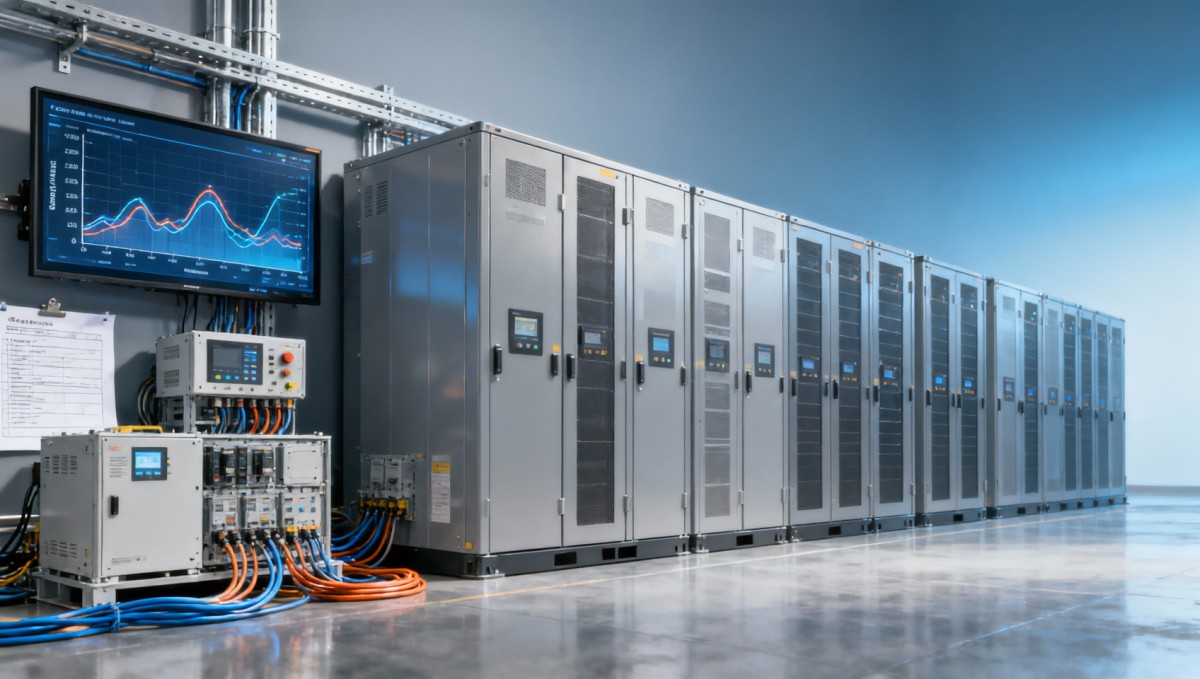
Battery sizing errors are expensive because storage systems are capital-intensive and tightly connected to the wider project design. Once procurement, inverter selection, EMS configuration, site layout, fire protection planning, and grid interconnection assumptions are set, correcting a wrong battery size often affects multiple cost layers at once.
Common downstream impacts include:
- Higher upfront capex from overspecified battery capacity, PCS, enclosure space, and auxiliary systems
- Lower lifecycle ROI when the battery is underutilized or cannot capture enough savings
- Unexpected operating costs due to inefficient cycling, thermal management burden, or demand-charge exposure
- Shorter useful life when the battery is repeatedly pushed beyond intended depth of discharge or power limits
- Compliance and safety costs if redesign is needed after installation assumptions prove wrong
For enterprise decision-makers and financial approvers, the important takeaway is this: battery sizing is not a narrow engineering detail. It is a commercial decision that directly affects asset productivity, risk exposure, and procurement strategy.
The most common energy storage battery sizing mistakes
When people search for energy storage battery sizing mistakes that raise costs, they are usually trying to avoid the planning errors that quietly damage project economics. The mistakes below are the ones that most often appear in commercial, industrial, and distributed energy storage projects.
1. Sizing only by daily energy consumption
One of the most frequent errors is using average daily kWh consumption as the main sizing input. That may look logical, but battery systems are rarely built to cover an average day. They are built to serve a specific duty: peak shaving, backup power, time-of-use arbitrage, renewable firming, or grid support.
A facility consuming 20,000 kWh per day may still need a relatively modest battery if the main goal is shaving a short evening peak. Another site with lower total consumption may need a larger system if it must sustain critical loads for several hours during outages. Average energy use alone does not define the right battery size.
2. Ignoring the difference between power and energy
Many procurement teams confuse kW and kWh. Battery energy capacity determines how long the system can run, while power capacity determines how much load it can support at a given moment. A battery may have enough energy on paper but still fail to handle a short-duration high-demand event because its power rating is too low.
This mistake often leads to systems that appear competitively priced during bidding but fail in real operating conditions. It also creates mismatches with inverters and load control strategy.
3. Forgetting usable capacity versus nameplate capacity
Nameplate capacity is not the same as usable capacity. Real-world battery operation is constrained by depth of discharge limits, reserve margins, thermal conditions, degradation allowance, and control settings. If a project assumes 100% of nominal capacity is available, the system may be undersized from day one.
For buyers comparing quotations, this is one of the most important review points. Two vendors may appear to offer the same battery size, while the practical usable energy available to the site is materially different.
4. Not accounting for battery degradation over time
A storage system sized only for commissioning-day performance may miss project targets after a few years. Degradation affects available capacity, efficiency, and performance under different operating temperatures and cycling patterns.
If the battery is expected to deliver a minimum backup duration or financial return in year 8 or year 10, the sizing model must reflect end-of-life performance requirements rather than ideal early-life numbers.
5. Using incomplete load data
Short monitoring windows, poor interval resolution, or missing operational scenarios can distort sizing. A few weeks of data may not capture seasonal cooling loads, production shifts, maintenance cycles, startup surges, or weather-related variation.
For project managers and engineering leads, this is where many “cheap” designs become expensive later. Incomplete data creates false confidence.
6. Overlooking charging constraints
Some projects assume the battery can always recharge exactly when needed. In reality, charging may be limited by solar variability, tariff windows, feeder capacity, transformer loading, or site operating schedules. If recharge opportunities are narrower than assumed, the system may need different sizing or control logic.
7. Failing to align sizing with the actual use case
A battery optimized for demand charge reduction is not automatically optimized for backup resilience. A system designed for solar self-consumption may not be ideal for frequency response or multi-shift industrial operation. Trying to satisfy too many use cases with one simplistic sizing assumption often inflates cost while reducing performance.
What target readers should evaluate before approving a battery size
Different stakeholders view battery sizing through different risks. The best decisions happen when commercial, technical, operational, and safety questions are reviewed together.
For operators and facility users
- What loads are truly critical during an outage?
- How often will the battery cycle in normal operation?
- What happens if ambient temperature, demand peaks, or production schedules change?
- Will the EMS prioritize savings, resilience, or both?
For business evaluators and enterprise decision-makers
- What savings mechanism is the battery expected to deliver: demand charge reduction, tariff arbitrage, avoided downtime, renewable utilization, or capacity support?
- What is the utilization rate of the proposed system?
- Is the design oversized for rare events that could be addressed differently?
- How sensitive is the payback model to energy prices, policy changes, and battery degradation?
For finance approvers
- What assumptions are driving ROI and payback calculations?
- Is the model based on usable capacity or nominal capacity?
- What future augmentation or replacement costs may appear?
- Does the project include hidden balance-of-system costs caused by oversizing?
For safety and quality managers
- Does the size increase thermal management, spacing, suppression, or permitting complexity?
- Are operating margins realistic under worst-case conditions?
- Has the battery chemistry and enclosure design been matched to the site risk profile?
For project managers and engineering leads
- Was the sizing based on high-resolution load data?
- Do inverter, PCS, transformer, and EMS assumptions match the battery design?
- Can the system still meet project targets after degradation and under partial availability?
How to size more accurately without overspending
The most effective way to avoid costly battery sizing mistakes is to use a structured decision process rather than relying on vendor headline numbers alone.
Start with the primary business objective
Define what the battery must do financially and operationally. Is the main goal to cut peak charges, provide backup for critical equipment, increase solar self-consumption, or reduce production downtime risk? A clear objective prevents unnecessary capacity from being added “just in case.”
Build from interval load data, not rough averages
Use 15-minute, 5-minute, or site-appropriate interval data where possible. The better the data resolution, the more accurately the system can be sized for real power peaks, event duration, and charge opportunities.
Model multiple operating scenarios
Good battery sizing should include normal operations, seasonal peaks, outage events, tariff changes, and asset degradation. This is especially important for industrial and commercial sites with variable production patterns.
Use usable capacity and end-of-life performance
Evaluate the system based on what it can reliably deliver, not just what appears on the datasheet. Include degradation reserve, control margins, and realistic operating temperature assumptions.
Check the full system, not only the battery rack
A correctly sized battery can still underperform if inverter power, EMS strategy, HVAC, transformer capacity, or site interconnection limits are wrong. Battery sizing should be validated as part of total system architecture.
Stress-test the financial model
Decision-makers should ask what happens if electricity tariffs shift, battery cycle count differs from plan, or shipping and procurement costs increase. A resilient project case should still make sense under less-than-ideal assumptions.
When a larger battery is justified and when it is not
Not every large battery system is a sizing mistake. In some cases, additional capacity is justified because it protects continuity, reduces curtailment, supports future expansion, or creates strategic flexibility in uncertain energy markets.
A larger battery may be reasonable when:
- Outage risk creates very high downtime costs
- Load growth is likely within a short planning horizon
- Time-of-use spreads and demand charges strongly reward larger dispatch windows
- Renewable generation would otherwise be regularly curtailed
- Modular expansion later would be significantly more expensive
It may not be justified when:
- The battery is rarely expected to use its full capacity
- The project is compensating for poor demand management elsewhere
- The payback depends on optimistic assumptions only
- Site constraints make part of the additional capacity operationally unusable
- The buyer is paying for flexibility that the business will not actually use
For distributors, agents, and solution providers, this distinction matters commercially as well. Customers increasingly want storage proposals that are defensible, data-based, and easy to explain to internal approvers.
A practical checklist before signing off on storage capacity
- Define the battery’s primary and secondary use cases
- Separate kW requirement from kWh requirement
- Use interval load data and validate data quality
- Calculate with usable capacity, not nameplate only
- Include degradation and end-of-life performance targets
- Test seasonal, outage, and peak-event scenarios
- Review charging constraints and recharge timing
- Confirm inverter, PCS, EMS, and interconnection alignment
- Evaluate safety, permitting, and thermal management implications
- Stress-test ROI, payback, and augmentation assumptions
Conclusion
Energy storage battery sizing mistakes raise costs not because storage is inherently uneconomic, but because early assumptions are often disconnected from the real load profile, operational objective, and lifecycle business case. For operators, project leaders, procurement teams, and finance approvers, the smartest path is to treat sizing as a cross-functional decision rather than a simple equipment selection exercise.
If a battery system is sized around real usage data, usable capacity, degradation, charging limits, and measurable financial goals, it becomes far easier to control capex, protect safety margins, and improve long-term return. In today’s green energy market, the best storage investment is usually not the biggest battery or the cheapest quoted battery. It is the one sized correctly for how the business will actually use it.
Get weekly intelligence in your inbox.
No noise. No sponsored content. Pure intelligence.
 Apr 23, 2026Taobao Factory Spark 3.0 Launches AI Workbench for SME Export FactoriesTaobao Factory Spark 3.0 Launches AI Workbench for SME Export Factories
 Apr 23, 2026TENENG Group Inspects IoT Safety Compliance at Jiangnan ChemicalTENENG Group Inspects IoT Safety Compliance at Jiangnan Chemical
 Apr 23, 2026China Launches First Embodied AI Open Data CommunityChina Launches First Embodied AI Open Data Community
 Apr 23, 2026PV Glass Prices Flat for 9 Weeks Amid Rising Integrated ProcurementPV Glass Prices Flat for 9 Weeks Amid Rising Integrated Procurement
 Apr 23, 20262984 NQI One-Stop Platforms Launched Nationwide2984 NQI One-Stop Platforms Launched Nationwide
 Apr 23, 2026China’s Green Smart Ship Tech Norms Accelerate BMS & Shore Power ExportChina’s Green Smart Ship Tech Norms Accelerate BMS & Shore Power Export
 Apr 23, 2026China Builds World's Largest Agri-Meteorological IoT NetworkChina Builds World's Largest Agri-Meteorological IoT Network
 Apr 23, 2026EU CBAM Carbon Tariff Enters Enforcement on April 1, 2026EU CBAM Carbon Tariff Enters Enforcement on April 1, 2026
 Apr 23, 2026Five Ministries Issue Zero-Carbon Factory Guidance for Export IndustriesFive Ministries Issue Zero-Carbon Factory Guidance for Export Industries
 Apr 23, 2026ISO Releases First Zero-Carbon City Standard — China’s Practices IncludedISO Releases First Zero-Carbon City Standard — China’s Practices Included
 Apr 22, 2026China Leads Global Offshore Wind Installations for 5th YearChina Leads Global Offshore Wind Installations for 5th Year
 Apr 22, 2026China Launches National Mine Safety IoT Monitoring NetworkChina Launches National Mine Safety IoT Monitoring Network
 Apr 22, 2026Yinchuan Boiler Pure Water Solution Certified for Middle East ProjectsYinchuan Boiler Pure Water Solution Certified for Middle East Projects
 Apr 22, 2026China to Enforce Mandatory EV Battery Recycling Standards by 2026China to Enforce Mandatory EV Battery Recycling Standards by 2026
 Apr 22, 2026Vietnam Launches Anti-Circumvention Probe on Electronic ComponentsVietnam Launches Anti-Circumvention Probe on Electronic Components
 Apr 22, 20262026 Shanghai Fastener Show: Robotic Fasteners Drive Overseas Procurement2026 Shanghai Fastener Show: Robotic Fasteners Drive Overseas Procurement
 Apr 22, 2026US BIS Adds EV On-Board Charger Crypto Modules to EAR Appendix 7US BIS Adds EV On-Board Charger Crypto Modules to EAR Appendix 7
 Apr 22, 2026TÜV Rheinland Updates BESS Certification: Propagation Blocking Now MandatoryTÜV Rheinland Updates BESS Certification: Propagation Blocking Now Mandatory
 Apr 22, 2026Red Sea Crisis Escalates: Suez AI Speed Limits & Slot Review from Apr 19Red Sea Crisis Escalates: Suez AI Speed Limits & Slot Review from Apr 19
 Apr 22, 2026EU CBAM Carbon Tariff Takes Effect April 1, 2026EU CBAM Carbon Tariff Takes Effect April 1, 2026
 Apr 21, 2026When to Replace CT Scanner Parts Before Downtime StartsWhen to Replace CT Scanner Parts Before Downtime Starts
 Apr 21, 2026How to Cut Costs in Lathe Turning Without ReworkHow to Cut Costs in Lathe Turning Without Rework
 Apr 21, 2026Lathe Turning Tolerances: What Can You Expect?Lathe Turning Tolerances: What Can You Expect?
 Apr 21, 2026How to Avoid Risks in Solar Panels WholesaleHow to Avoid Risks in Solar Panels Wholesale
 Apr 21, 2026Solar Panels Wholesale: How to Compare SuppliersSolar Panels Wholesale: How to Compare Suppliers
 Apr 21, 2026Solar Mounting Cost Factors You Should KnowSolar Mounting Cost Factors You Should Know
 Apr 21, 2026Solar Mounting Options: Which One Fits Your Project?Solar Mounting Options: Which One Fits Your Project?