AGV Robots or Forklifts for Repetitive Pallet Moves?
For repetitive pallet moves, the choice between forklifts and AGV robots can reshape labor efficiency, safety, and long-term costs in smart warehousing. As warehouse automation accelerates, buyers and operators are also weighing how AGV robots connect with ASRS systems, automated storage and retrieval workflows, energy monitoring, and TMS software. This comparison helps decision-makers identify which solution delivers the strongest operational value.
How should buyers compare AGV robots and forklifts for repetitive pallet moves?
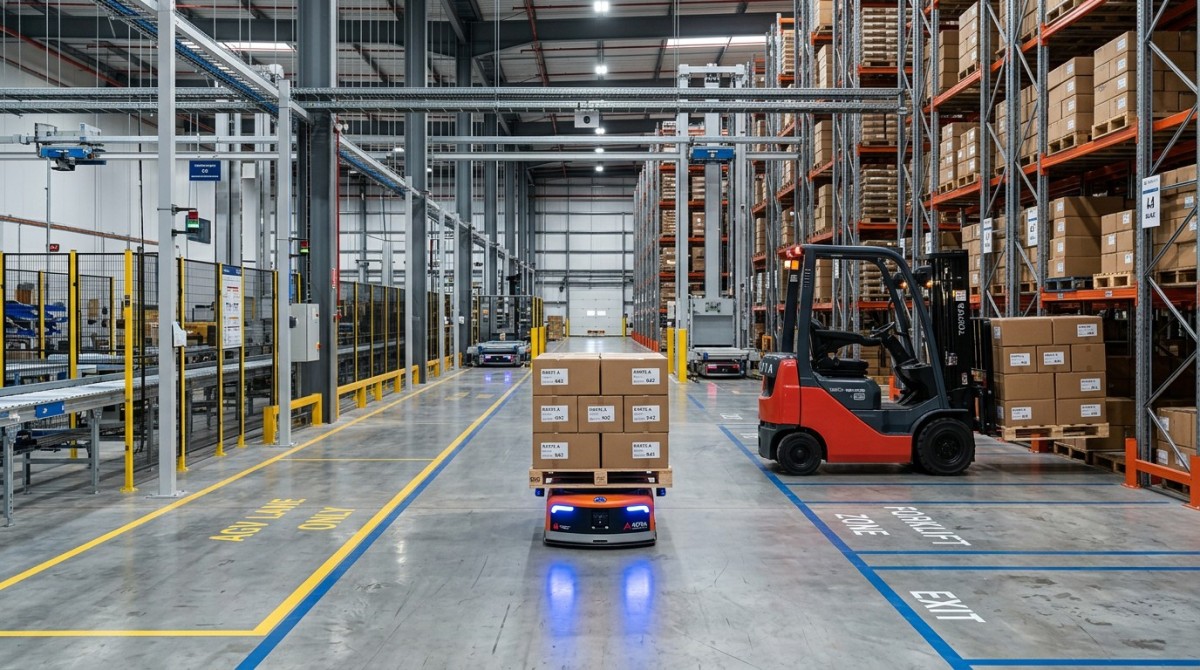
In repetitive pallet transport, the real question is not which machine is newer, but which workflow is more stable, scalable, and controllable over a 3–5 year operating horizon. Forklifts remain common because they are flexible, familiar, and available across many warehouse types. AGV robots are gaining ground because they reduce dependence on manual driving, standardize route execution, and support digital warehouse management.
For operators, the difference shows up in task rhythm. A forklift can handle ad hoc moves, urgent exceptions, and mixed routes well, especially when the facility layout changes weekly. An AGV robot performs best when pallet moves follow repeatable rules, fixed pickup and drop-off points, and predictable lane logic over 2 or more shifts per day.
For procurement teams and financial approvers, decision quality depends on 5 core dimensions: throughput stability, labor availability, safety exposure, integration requirements, and total cost of ownership. A lower upfront purchase price does not always mean a lower operating cost. A more automated option does not always create a faster payback either.
For project managers and safety leaders, the comparison also extends beyond vehicle performance. Traffic design, charging strategy, aisle width, floor conditions, pallet consistency, and software connectivity can determine whether an AGV deployment runs smoothly or struggles with bottlenecks. In many facilities, the right answer is not a full replacement, but a phased mix of both technologies.
The table below helps decision-makers evaluate AGV robots and forklifts against common warehouse criteria instead of relying on generic assumptions.
This comparison shows a practical pattern: AGV robots usually create stronger value where movement rules are repeatable and measurable, while forklifts remain highly effective where workflow variation is high. That is why cross-functional review is essential. TradeNexus Pro helps procurement leaders and project owners compare technologies through supply chain use cases, integration priorities, and operational constraints rather than one-dimensional price checks.
Which warehouse scenarios favor AGV robots, and when do forklifts still win?
Scenario 1: Repetitive line feeding and staging moves
AGV robots are typically strong in closed-loop pallet transport such as inbound staging to buffer zones, production line feeding, finished goods transfer to dispatch, and repeated dock-to-rack replenishment. If the same move happens every 3–10 minutes across fixed stations, automation can improve consistency and lower traffic conflict between pedestrians and vehicles.
In advanced manufacturing and smart electronics environments, route predictability matters because small delays can ripple through assembly or packaging. AGV robots are easier to standardize when pallet dimensions, transfer heights, and stop positions remain within a narrow operating range. This makes them suitable for plants already using ASRS or planning structured material flow.
For quality and safety managers, these settings also support better rule enforcement. AGV fleets can be configured around speed zones, stop points, and right-of-way logic. When the operating environment is engineered well, safety performance becomes less dependent on individual driving behavior and more dependent on system discipline.
Scenario 2: Mixed loads, changing priorities, and nonstandard travel paths
Forklifts usually remain the better fit for mixed warehouses where operators move different pallet types, react to urgent requests, or adjust routes several times per shift. If the site handles damaged pallets, irregular overhang, temporary storage positions, or high exception rates, a trained driver can often resolve issues faster than an automated vehicle.
This is common in multi-client logistics, seasonal distribution, and fast-changing dealer environments. A forklift can support loading, unloading, stacking, and transport with fewer digital dependencies. That flexibility is especially valuable when throughput changes sharply from month to month or when project teams cannot freeze the layout for at least 8–12 weeks.
Financial approvers should note that operational variability can erode the economics of AGV robots if too many manual exceptions remain. If human intervention is required for every fifth or sixth move, the expected labor savings may weaken. In such cases, a forklift fleet with improved traffic rules and telemetry may produce a better cost-performance balance.
Scenario 3: Hybrid facilities with phased automation goals
Many enterprises do not need an all-or-nothing decision. A hybrid model often works best. AGV robots can take over repetitive, low-variation pallet moves, while forklifts remain available for receiving peaks, exception handling, and maintenance tasks. This phased approach lowers implementation risk and gives project teams time to validate traffic design and software interfaces.
A common rollout path uses 3 stages: workflow mapping, pilot deployment on one route, and scale-up to additional lanes or zones. This gives procurement teams better visibility into charging patterns, route occupancy, and real operator interaction before larger capital approval. It also supports distributor and integrator partners who must manage after-sales support across multiple sites.
For organizations comparing options across regions, TNP provides deeper strategic value by connecting technology review with market intelligence, supplier positioning, and digital integration trends across manufacturing, healthcare technology, green energy, and supply chain SaaS environments.
What should procurement and finance teams check before approving either option?
A strong equipment decision starts with process numbers, not brochure claims. Procurement teams should gather at least 6 baseline inputs before comparing AGV robots and forklifts: moves per hour, route distance, pallet dimensions, peak shift pattern, aisle constraints, and exception rate. Without these, cost comparison usually becomes misleading.
Finance teams should also separate acquisition cost from operating cost. Forklifts may require lower initial investment, but labor, training, shift coverage, battery handling or fuel management, and accident exposure can materially change long-term economics. AGV robots add software, commissioning, and integration cost, yet may lower repeatable transport labor and improve utilization over 2–4 shifts.
Project managers need to validate site readiness. AGV robots usually require cleaner route logic, stable Wi-Fi or industrial connectivity, acceptable floor flatness, and well-controlled pickup/drop stations. Forklifts also need planning, but they are less sensitive to navigation landmarks and route mapping. If site conditions are weak, the implementation timeline can stretch from a few weeks to several months.
Safety and quality teams should verify pallet consistency and traffic interaction. Broken pallets, poor wrapping, low-label visibility, and random pedestrian crossings affect both technologies, but AGV reliability depends more heavily on standardization. A warehouse with frequent pallet damage may need packaging discipline before automation produces full value.
A practical 5-point procurement checklist
- Define task stability: Are at least 60%–80% of pallet moves repeatable by route, load type, and destination?
- Measure labor pressure: Is operator recruitment difficult across 2 or 3 shifts, or is turnover increasing?
- Check integration scope: Will the project require links to WMS, ASRS, ERP, TMS, or energy monitoring tools?
- Review site readiness: Are lanes, charging points, and pickup/drop-off positions stable enough for automated operation?
- Model capital approval: What payback window is acceptable—often 18–36 months for automation projects, depending on labor and utilization assumptions?
The next table translates selection logic into an approval-friendly matrix that procurement, operations, and finance teams can review together.
This matrix helps reduce a common procurement mistake: comparing AGV robots and forklifts as if they solve identical operating conditions. They do not. One is optimized for repeatable digital flow; the other for adaptable human-led handling. TNP supports decision-makers by framing equipment selection within broader sourcing, integration, and market-readiness considerations.
How do costs, implementation timelines, and integration risks differ?
Cost structure is more than purchase price
A forklift project often looks simpler because cost is easier to identify upfront: vehicle purchase or lease, operator training, energy or fuel handling, service support, and routine maintenance. AGV robot projects usually add fleet software, route design, site surveying, charging logic, interface development, and acceptance testing. That does not automatically make AGV robots more expensive over time, but it does change budgeting logic.
A realistic review should separate costs into 4 buckets: capital equipment, infrastructure adaptation, software and integration, and annual operating support. Facilities with high labor costs, multi-shift repetition, and stable routes may find AGV economics attractive. Facilities with lower labor pressure and high workflow variability often keep a stronger case for forklifts.
Distributors and channel partners should also assess service obligations. AGV systems can require specialized commissioning and troubleshooting skills. Forklift support is usually easier to source across local markets. For cross-border projects, spare parts strategy, remote diagnostics, and local integrator capability can be as important as the vehicle itself.
Implementation timing and project risk
Forklifts can often be deployed faster, especially if the site already has trained staff and charging or fueling procedures. AGV robots generally need a structured rollout including route validation, software setup, safety testing, and user training. A modest pilot may fit within 4–8 weeks, while broader multi-zone deployment can extend further depending on interfaces and site modifications.
The most common AGV project risks are not usually mechanical. They are process-related: inconsistent pallets, route obstructions, unclear ownership between IT and operations, or weak exception handling logic. For forklifts, the more typical risks involve safety incidents, operator availability, inconsistent driving behavior, and damage to racks, pallets, or product packaging.
That is why implementation planning should include at least 3 governance layers: operations ownership, technical integration review, and safety validation. If a business cannot assign these roles clearly, even a promising AGV robot project may underperform. TNP’s value in this stage is helping enterprise buyers compare technology pathways with strategic market insight, supplier fit, and implementation maturity.
Common risk signals to investigate early
- Pallet quality varies significantly between inbound sources or shifts.
- Travel paths are frequently blocked by temporary storage, waste bins, or manual carts.
- Site expects automation but has not defined system ownership between warehouse, IT, and maintenance.
- Approval is based only on equipment price, without evaluating 12–36 month operating impact.
What standards, safety points, and integration questions are often missed?
Whether a site chooses AGV robots or forklifts, compliance and operating discipline should be part of the purchasing discussion from the start. Buyers often focus on speed, payload, or cost, yet overlook route segregation, emergency stop logic, load stability rules, pedestrian interaction, and maintenance documentation. In regulated or high-throughput sectors, these details shape actual performance.
For AGV robots, buyers should review how the supplier addresses navigation safety, obstacle detection, traffic priority, and software event logging. For forklifts, review usually centers on operator certification, inspection routines, battery charging or fuel safety, and site traffic signage. In both cases, risk assessment should include crossings, blind corners, loading areas, and transfer points to conveyors or ASRS zones.
Integration is another common blind spot. A standalone vehicle may move pallets, but a connected material flow system can also trigger tasks automatically, update status in real time, and coordinate dispatch across upstream and downstream systems. Warehouses planning digital growth should ask whether the chosen solution can align with WMS, MES, TMS, or energy monitoring priorities over the next 12–24 months.
For project leaders, a simple rule helps: if repetitive pallet moves directly affect order cycle time, production continuity, or dock congestion, integration questions should be reviewed before purchase approval, not after installation. This is especially true in sectors where traceability, uptime, and synchronized logistics matter.
FAQ for operators, buyers, and decision-makers
Are AGV robots always better for repetitive pallet moves?
No. AGV robots are often better when tasks are repetitive, routes are stable, and the facility can support standardization. They are less effective when pallets vary widely, exceptions are frequent, or layout changes happen every week. The better choice depends on task predictability, shift structure, and integration readiness rather than on automation alone.
How long does implementation usually take?
A forklift deployment can often be operational quickly if training and site readiness already exist. AGV robot timelines vary more. A focused pilot may take 4–8 weeks, while larger deployments with software interfaces, route redesign, and safety testing may take longer. The range depends heavily on process discipline and system scope.
What is the most overlooked cost factor?
For forklifts, buyers often underestimate labor continuity, safety exposure, and product or rack damage costs. For AGV robots, they often underestimate workflow standardization effort, commissioning, and integration support. The best financial review includes both direct equipment cost and operating impact across at least 12–36 months.
Can AGV robots and forklifts operate together?
Yes, and many facilities benefit from this hybrid model. AGV robots can handle repetitive pallet transfers, while forklifts cover overflow, irregular loads, and exception recovery. The key is clear traffic policy, route segregation where needed, and shared operating rules for pedestrians and vehicles.
Why work with TradeNexus Pro when evaluating warehouse transport solutions?
Choosing between AGV robots and forklifts is rarely just an equipment decision. It is a supply chain design decision that affects labor planning, safety governance, warehouse software strategy, and capital allocation. TradeNexus Pro supports this decision by connecting operational analysis with deeper B2B market intelligence across advanced manufacturing, healthcare technology, smart electronics, green energy, and supply chain SaaS ecosystems.
For procurement teams, TNP helps clarify supplier evaluation logic, integration questions, and category trends that broad marketplaces often miss. For enterprise decision-makers, it provides a sharper view of how automation choices fit broader network design, resilience planning, and digital transformation goals. For distributors and project owners, it supports better positioning around solution fit, not just product listing visibility.
If you are evaluating repetitive pallet transport, contact TradeNexus Pro to discuss route suitability, AGV robot versus forklift selection, implementation stages, integration with ASRS or TMS systems, expected delivery windows, site-readiness checkpoints, and quotation communication priorities. You can also explore support on workflow mapping, supplier comparison, compliance considerations, and phased automation planning for multi-site operations.
A better decision starts with better inputs. Bring your pallet dimensions, move frequency, shift pattern, aisle constraints, software environment, and safety concerns. TNP can help turn those details into a more grounded sourcing and deployment strategy.
Get weekly intelligence in your inbox.
No noise. No sponsored content. Pure intelligence.
 Apr 23, 2026Taobao Factory Spark 3.0 Launches AI Workbench for SME Export FactoriesTaobao Factory Spark 3.0 Launches AI Workbench for SME Export Factories
 Apr 23, 2026TENENG Group Inspects IoT Safety Compliance at Jiangnan ChemicalTENENG Group Inspects IoT Safety Compliance at Jiangnan Chemical
 Apr 23, 2026China Launches First Embodied AI Open Data CommunityChina Launches First Embodied AI Open Data Community
 Apr 23, 2026PV Glass Prices Flat for 9 Weeks Amid Rising Integrated ProcurementPV Glass Prices Flat for 9 Weeks Amid Rising Integrated Procurement
 Apr 23, 20262984 NQI One-Stop Platforms Launched Nationwide2984 NQI One-Stop Platforms Launched Nationwide
 Apr 23, 2026China’s Green Smart Ship Tech Norms Accelerate BMS & Shore Power ExportChina’s Green Smart Ship Tech Norms Accelerate BMS & Shore Power Export
 Apr 23, 2026China Builds World's Largest Agri-Meteorological IoT NetworkChina Builds World's Largest Agri-Meteorological IoT Network
 Apr 23, 2026EU CBAM Carbon Tariff Enters Enforcement on April 1, 2026EU CBAM Carbon Tariff Enters Enforcement on April 1, 2026
 Apr 23, 2026Five Ministries Issue Zero-Carbon Factory Guidance for Export IndustriesFive Ministries Issue Zero-Carbon Factory Guidance for Export Industries
 Apr 23, 2026ISO Releases First Zero-Carbon City Standard — China’s Practices IncludedISO Releases First Zero-Carbon City Standard — China’s Practices Included
 Apr 22, 2026China Leads Global Offshore Wind Installations for 5th YearChina Leads Global Offshore Wind Installations for 5th Year
 Apr 22, 2026China Launches National Mine Safety IoT Monitoring NetworkChina Launches National Mine Safety IoT Monitoring Network
 Apr 22, 2026Yinchuan Boiler Pure Water Solution Certified for Middle East ProjectsYinchuan Boiler Pure Water Solution Certified for Middle East Projects
 Apr 22, 2026China to Enforce Mandatory EV Battery Recycling Standards by 2026China to Enforce Mandatory EV Battery Recycling Standards by 2026
 Apr 22, 2026Vietnam Launches Anti-Circumvention Probe on Electronic ComponentsVietnam Launches Anti-Circumvention Probe on Electronic Components
 Apr 22, 20262026 Shanghai Fastener Show: Robotic Fasteners Drive Overseas Procurement2026 Shanghai Fastener Show: Robotic Fasteners Drive Overseas Procurement
 Apr 22, 2026US BIS Adds EV On-Board Charger Crypto Modules to EAR Appendix 7US BIS Adds EV On-Board Charger Crypto Modules to EAR Appendix 7
 Apr 22, 2026TÜV Rheinland Updates BESS Certification: Propagation Blocking Now MandatoryTÜV Rheinland Updates BESS Certification: Propagation Blocking Now Mandatory
 Apr 22, 2026Red Sea Crisis Escalates: Suez AI Speed Limits & Slot Review from Apr 19Red Sea Crisis Escalates: Suez AI Speed Limits & Slot Review from Apr 19
 Apr 22, 2026EU CBAM Carbon Tariff Takes Effect April 1, 2026EU CBAM Carbon Tariff Takes Effect April 1, 2026
 Apr 21, 2026When to Replace CT Scanner Parts Before Downtime StartsWhen to Replace CT Scanner Parts Before Downtime Starts
 Apr 21, 2026How to Cut Costs in Lathe Turning Without ReworkHow to Cut Costs in Lathe Turning Without Rework
 Apr 21, 2026Lathe Turning Tolerances: What Can You Expect?Lathe Turning Tolerances: What Can You Expect?
 Apr 21, 2026How to Avoid Risks in Solar Panels WholesaleHow to Avoid Risks in Solar Panels Wholesale
 Apr 21, 2026Solar Panels Wholesale: How to Compare SuppliersSolar Panels Wholesale: How to Compare Suppliers
 Apr 21, 2026Solar Mounting Cost Factors You Should KnowSolar Mounting Cost Factors You Should Know
 Apr 21, 2026Solar Mounting Options: Which One Fits Your Project?Solar Mounting Options: Which One Fits Your Project?