ASRS Systems in Cold Storage: What Changes First?
In cold storage, asrs systems rarely fail all at once—the first changes usually appear in energy management, equipment response time, and workflow stability. As smart warehousing and warehouse automation expand, operators and decision-makers must understand how automated storage and retrieval performs under low-temperature stress, where AGV robots, energy monitoring, and system integration can directly affect cost, safety, and uptime.
What changes first when ASRS systems move into cold storage?
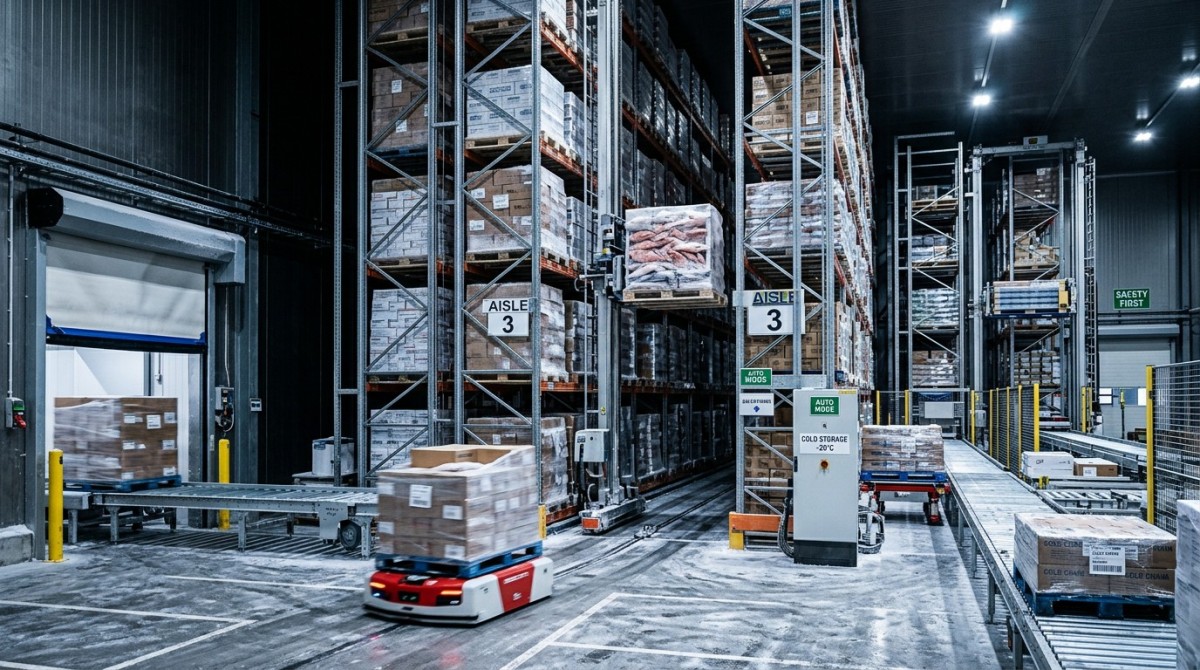
Cold storage changes the operating logic of automated storage and retrieval systems long before a visible breakdown appears. In most facilities, the first signs show up in 3 areas: higher energy draw during peak cycles, slower or less predictable motion response, and reduced workflow consistency between storage, picking, and outbound staging. For operators, these shifts may look minor in week 1, but over 4–12 weeks they often become recurring service calls, delayed throughput, or temperature-control conflicts.
From a procurement and project perspective, cold environments create a different risk profile than ambient warehouses. At temperatures such as 0°C to -25°C, material brittleness, lubricant behavior, condensation risk, and battery performance can all affect cranes, shuttles, conveyors, sensors, and AGV robots. That means the question is not simply whether an ASRS system works in cold storage, but which component classes degrade first and how quickly those changes become operational costs.
Enterprise decision-makers and finance approvers should also note that early cold-storage performance issues rarely appear as one large capital event. Instead, they surface as small efficiency losses: an extra 3–8 seconds per retrieval, more frequent defrost-related pauses, rising compressor load, and more manual intervention during shift handoffs. These small losses can materially affect inventory turns and labor planning across a 2-shift or 3-shift operation.
For quality and safety teams, the first changes often involve control reliability rather than structural failure. Door timing, traffic synchronization, barcode readability, and operator access discipline become more critical in low-temperature zones. When these process elements drift, the warehouse may still run, but it runs with less margin for error, especially in food, pharma-adjacent logistics, and temperature-sensitive electronics supply chains.
The earliest cold-storage warning signals to monitor
- Energy spikes during door openings, inbound replenishment peaks, or dense retrieval windows, especially when freezer and ante-room traffic overlap for 30–90 minutes.
- Longer cycle times in cranes, shuttles, lifts, and AGV robots, often caused by sensor latency, traction variation, or control recalibration at low temperature.
- Workflow instability between WMS, ASRS controls, and conveyor or robotic interfaces, where the system still completes tasks but needs more exception handling per shift.
- Maintenance frequency moving from monthly checks to biweekly intervention in seals, heaters, lubrication points, or battery charging logic.
These indicators matter because they appear early enough to support correction without a full redesign. For distributors, integrators, and project managers, this is where technical due diligence creates value: understanding whether the issue is environmental adaptation, load profile mismatch, or insufficient integration planning.
Which components and workflows are most sensitive in low-temperature ASRS operations?
Not every part of a cold storage ASRS system changes at the same pace. Mechanical movement, electrical responsiveness, and software coordination each react differently. In practical terms, three layers deserve close review during specification and commissioning: motion hardware, energy and thermal control, and system orchestration across warehouse automation assets. This matters to procurement teams because a low upfront price can become expensive if the wrong layer becomes the bottleneck.
Motion hardware usually shows the first measurable drift. Shuttle wheels, crane travel mechanisms, lifting assemblies, and conveyor transfers may still remain within tolerance, but their acceleration and repeatability can soften under freezer conditions. A difference of only a few seconds per cycle can significantly reduce throughput when the operation runs 500–2,000 pallet movements per day. This is why spec sheets should be read together with temperature-rated operating profiles, not in isolation.
Electrical and sensing systems present a second risk layer. Sensors may fog, cable jackets may become less flexible, and connectors may face condensation when equipment crosses temperature zones. Battery-powered AGV robots working between ambient docks and frozen aisles also require special attention because charging logic, traction response, and runtime stability may vary sharply compared with normal warehouse conditions.
The third layer is workflow orchestration. A cold storage site often depends on tighter synchronization among WMS, PLC logic, doors, conveyors, and staging rules. If one handoff point loses timing discipline, the entire warehouse automation chain becomes more fragile. That is why project leaders should examine not only equipment design but also exception pathways, alarm management, and data visibility for the first 30, 60, and 90 days after go-live.
Typical first-change points by subsystem
The table below helps procurement teams and site operators compare where early performance changes usually appear in cold storage ASRS systems and what each change means for uptime, safety, and maintenance planning.
The table shows an important procurement lesson: early change does not always mean imminent failure, but it does reveal where cold storage conditions distort design assumptions. A system that performs well at 15°C may need additional heaters, enclosure protection, or software logic refinement to remain stable at -20°C.
Why workflow stability matters as much as hardware durability
Many buyers focus first on metal structure, motor power, and pallet load range. Those factors matter, but in cold storage the operational sequence is equally important. If freezer doors remain open even 10–20 seconds longer per cycle, energy load rises and aisle conditions become harder to control. If AGV robots arrive too early or too late, the ASRS buffer logic can create unnecessary idle time.
This is where integrated data visibility helps. Sites that monitor cycle time, exception frequency, door dwell time, and energy consumption by zone can identify the first changes before service incidents escalate. For supply chain managers, this creates a stronger basis for capex approval, vendor comparison, and service-level negotiation.
How should buyers compare cold storage ASRS options before procurement?
Cold storage ASRS procurement should not be based on general warehouse automation claims alone. Buyers need a structured review covering operating temperature range, throughput profile, thermal interface design, maintenance access, and software integration. In many projects, 5 core checks determine whether the investment will remain stable over 3–7 years: environmental compatibility, motion reliability, control visibility, service model, and energy impact.
For finance approvers, the key issue is hidden cost transfer. A lower-priced system may require more manual labor, more frequent maintenance windows, or more refrigerated air loss because of poor transfer coordination. That means the right comparison is not only capex versus capex, but total operating effect over the first 12–24 months. This is especially relevant in facilities handling frozen food, biologics-related storage support, or export logistics with strict time-temperature discipline.
For project managers and engineering leads, the best supplier discussions are highly specific. Ask how the ASRS system behaves during peak pallet turns, partial-load operation, mixed-SKU handling, and multi-zone transfers. Ask whether AGV robots are expected to enter low-temperature aisles or remain in transition zones. Ask what commissioning adjustments are normally required in the first 2–6 weeks.
Distributors and channel partners should also validate aftermarket support logic. Cold storage automation often needs faster diagnostics and stronger spare-parts planning than ambient storage. A technically sound system with poor service coordination can become commercially difficult to support in regional markets.
A practical procurement comparison table
Use the following framework to compare ASRS systems in cold storage projects. It is designed for cross-functional reviews involving operations, procurement, engineering, finance, and safety teams.
This comparison model helps teams avoid the common mistake of buying a nominally compatible ASRS system that lacks freezer-ready integration discipline. In cold storage, performance depends as much on interface control and service design as on core machinery.
A 4-step buying checklist for cross-functional approval
- Define the exact temperature zones, shift model, and movement profile, including average and peak pallet or tote transactions per hour.
- Validate which automation assets enter the cold zone directly and which remain in ambient transition areas.
- Request a commissioning and stabilization plan for the first 30, 60, and 90 days, including alarm thresholds and maintenance checkpoints.
- Compare lifecycle implications, not only purchase price, by reviewing energy exposure, service response, spare parts, and manual fallback processes.
When this checklist is used early, procurement teams gain clearer vendor alignment, finance teams gain more predictable approval logic, and operational teams reduce the risk of under-specified warehouse automation.
What implementation, compliance, and risk controls matter most after selection?
Once a cold storage ASRS system is selected, the next priority is implementation discipline. Most post-installation problems come from three sources: incomplete environmental adaptation, weak commissioning routines, and poor exception management. In practical terms, the first 2–8 weeks after startup are when buyers should pay closest attention to cycle consistency, thermal-loss behavior, and fault response procedures.
Compliance and safety teams should focus on general industrial safety, electrical integrity, access control, and cold-environment operating procedures. Exact requirements vary by country and sector, but common expectations include machine guarding, emergency stops, lockout and maintenance protocols, traceable inspection records, and temperature-sensitive handling discipline. For food and healthcare-related logistics, documentation and process control are often just as important as equipment design.
Project managers should also separate acceptance into stages rather than treating go-live as a single moment. A useful model is a 3-stage validation path: factory and software readiness, site commissioning under controlled load, and live operational stabilization under real shift patterns. This staged approach helps identify whether the first changes are mechanical, thermal, or workflow-related.
For operators, clear fallback rules reduce risk. If a sensor line becomes unstable or an AGV robot route needs temporary restriction, the team should know exactly how to switch to manual or semi-automatic mode without exposing inventory, personnel, or temperature integrity. These decisions should be scripted before production ramp-up, not improvised after alarms begin.
Key risk controls during the first 90 days
- Track at least 6 operational signals: retrieval cycle time, queue length, door dwell time, exception count, energy trend by zone, and manual intervention frequency.
- Review maintenance points weekly during ramp-up, then shift to monthly or quarterly intervals once stable patterns are confirmed.
- Test manual override, recovery logic, and restart procedures under realistic shift conditions, not only under clean commissioning scenarios.
- Document transition-zone behavior carefully, especially where pallets, totes, or AGV robots cross between ambient and frozen environments.
Common misconceptions in cold storage warehouse automation
One common misconception is that a freezer-rated component automatically makes the full ASRS system freezer-ready. In reality, low-temperature operation depends on the entire chain: controls, doors, transfer logic, maintenance method, and energy monitoring. A technically robust crane can still underperform if the transfer zone is poorly managed.
Another misconception is that slower motion always protects reliability. Sometimes reduced speed helps, but if the workflow becomes unsynchronized, longer dwell times can increase frost, congestion, and thermal leakage. The right approach is balanced control, not simply lower speed.
A third misconception is that cold storage automation should be judged only by uptime. Uptime matters, but so do inventory accuracy, energy intensity, labor fallback burden, and service responsiveness. A system can remain “running” while still creating unacceptable operating cost and safety pressure.
FAQ: how should operators and buyers interpret early ASRS changes in cold storage?
How do I know whether slower response is normal or a warning sign?
A small adjustment period is normal after startup, but repeated cycle extension over several shifts should be investigated. If retrieval or storage tasks regularly add 3–8 seconds beyond the expected pattern, or if exceptions increase week by week, treat that as a warning sign. Compare motion data with temperature-zone behavior, door timing, and queue buildup before blaming a single machine.
Are AGV robots suitable for cold storage ASRS integration?
Yes, but suitability depends on route design, temperature exposure time, charging strategy, and interface stability. AGV robots may perform well when kept mostly in ante-room or transition areas, while deeper freezer penetration often needs more careful validation. Buyers should ask about battery behavior, traction control, and charging frequency under the actual temperature profile, not under ambient test assumptions.
What should procurement teams request before approving the project?
Request four things at minimum: a temperature-specific technical scope, an integration map covering WMS and warehouse automation handoffs, a first-90-day commissioning plan, and a maintenance schedule with spare-part logic. If the supplier cannot explain how the ASRS system handles peak traffic, thermal transitions, and alarm recovery, the commercial proposal is not complete enough for final approval.
What is a realistic implementation timeline?
The answer depends on project size and integration depth, but many facilities should expect several stages rather than a single date: design confirmation, installation, commissioning, and stabilization. For some projects, the stabilization period alone may require 2–6 weeks after technical startup, especially where conveyors, doors, ASRS controls, and AGV robots all interact across temperature zones.
Why work with TradeNexus Pro when evaluating cold storage ASRS strategy?
Cold storage ASRS decisions are rarely just equipment decisions. They involve supply chain resilience, cross-border sourcing, technical validation, and budget control. TradeNexus Pro helps procurement directors, operators, project owners, distributors, and executive teams evaluate warehouse automation with a market-informed lens that connects engineering realities to commercial outcomes.
Because TNP focuses on advanced manufacturing, smart electronics, healthcare technology, and supply chain SaaS alongside broader industrial intelligence, it can support a deeper view of how automated storage and retrieval fits into a changing logistics environment. That includes supplier screening logic, system integration questions, cost-risk framing, and practical interpretation of early warning signs in cold storage operations.
If your team is comparing ASRS systems, reviewing freezer-zone warehouse automation, or assessing whether AGV robots and energy monitoring should be part of the same project scope, TNP can help structure the discussion. Useful consultation topics include parameter confirmation, system selection, expected delivery stages, customization requirements, service planning, documentation expectations, and quotation alignment across multiple vendors.
For enterprises preparing a new project or optimizing an existing facility, the next step should be specific. Bring your temperature range, SKU profile, daily movement volume, integration requirements, and target timeline. With that input, TradeNexus Pro can help you clarify which cold storage ASRS changes matter first, which suppliers deserve deeper review, and which implementation risks should be addressed before purchase approval.
Get weekly intelligence in your inbox.
No noise. No sponsored content. Pure intelligence.
 Apr 23, 2026Taobao Factory Spark 3.0 Launches AI Workbench for SME Export FactoriesTaobao Factory Spark 3.0 Launches AI Workbench for SME Export Factories
 Apr 23, 2026TENENG Group Inspects IoT Safety Compliance at Jiangnan ChemicalTENENG Group Inspects IoT Safety Compliance at Jiangnan Chemical
 Apr 23, 2026China Launches First Embodied AI Open Data CommunityChina Launches First Embodied AI Open Data Community
 Apr 23, 2026PV Glass Prices Flat for 9 Weeks Amid Rising Integrated ProcurementPV Glass Prices Flat for 9 Weeks Amid Rising Integrated Procurement
 Apr 23, 20262984 NQI One-Stop Platforms Launched Nationwide2984 NQI One-Stop Platforms Launched Nationwide
 Apr 23, 2026China’s Green Smart Ship Tech Norms Accelerate BMS & Shore Power ExportChina’s Green Smart Ship Tech Norms Accelerate BMS & Shore Power Export
 Apr 23, 2026China Builds World's Largest Agri-Meteorological IoT NetworkChina Builds World's Largest Agri-Meteorological IoT Network
 Apr 23, 2026EU CBAM Carbon Tariff Enters Enforcement on April 1, 2026EU CBAM Carbon Tariff Enters Enforcement on April 1, 2026
 Apr 23, 2026Five Ministries Issue Zero-Carbon Factory Guidance for Export IndustriesFive Ministries Issue Zero-Carbon Factory Guidance for Export Industries
 Apr 23, 2026ISO Releases First Zero-Carbon City Standard — China’s Practices IncludedISO Releases First Zero-Carbon City Standard — China’s Practices Included
 Apr 22, 2026China Leads Global Offshore Wind Installations for 5th YearChina Leads Global Offshore Wind Installations for 5th Year
 Apr 22, 2026China Launches National Mine Safety IoT Monitoring NetworkChina Launches National Mine Safety IoT Monitoring Network
 Apr 22, 2026Yinchuan Boiler Pure Water Solution Certified for Middle East ProjectsYinchuan Boiler Pure Water Solution Certified for Middle East Projects
 Apr 22, 2026China to Enforce Mandatory EV Battery Recycling Standards by 2026China to Enforce Mandatory EV Battery Recycling Standards by 2026
 Apr 22, 2026Vietnam Launches Anti-Circumvention Probe on Electronic ComponentsVietnam Launches Anti-Circumvention Probe on Electronic Components
 Apr 22, 20262026 Shanghai Fastener Show: Robotic Fasteners Drive Overseas Procurement2026 Shanghai Fastener Show: Robotic Fasteners Drive Overseas Procurement
 Apr 22, 2026US BIS Adds EV On-Board Charger Crypto Modules to EAR Appendix 7US BIS Adds EV On-Board Charger Crypto Modules to EAR Appendix 7
 Apr 22, 2026TÜV Rheinland Updates BESS Certification: Propagation Blocking Now MandatoryTÜV Rheinland Updates BESS Certification: Propagation Blocking Now Mandatory
 Apr 22, 2026Red Sea Crisis Escalates: Suez AI Speed Limits & Slot Review from Apr 19Red Sea Crisis Escalates: Suez AI Speed Limits & Slot Review from Apr 19
 Apr 22, 2026EU CBAM Carbon Tariff Takes Effect April 1, 2026EU CBAM Carbon Tariff Takes Effect April 1, 2026
 Apr 21, 2026When to Replace CT Scanner Parts Before Downtime StartsWhen to Replace CT Scanner Parts Before Downtime Starts
 Apr 21, 2026How to Cut Costs in Lathe Turning Without ReworkHow to Cut Costs in Lathe Turning Without Rework
 Apr 21, 2026Lathe Turning Tolerances: What Can You Expect?Lathe Turning Tolerances: What Can You Expect?
 Apr 21, 2026How to Avoid Risks in Solar Panels WholesaleHow to Avoid Risks in Solar Panels Wholesale
 Apr 21, 2026Solar Panels Wholesale: How to Compare SuppliersSolar Panels Wholesale: How to Compare Suppliers
 Apr 21, 2026Solar Mounting Cost Factors You Should KnowSolar Mounting Cost Factors You Should Know
 Apr 21, 2026Solar Mounting Options: Which One Fits Your Project?Solar Mounting Options: Which One Fits Your Project?