Automated Storage and Retrieval for Mixed SKU Warehouses
In mixed SKU warehouses, automated storage and retrieval is becoming essential for faster throughput, higher accuracy, and better space utilization. By combining smart warehousing strategies with ASRS systems, AGV robots, and warehouse automation tools, businesses can reduce labor pressure, improve inventory visibility, and build more resilient operations. This article explores how these technologies help decision-makers optimize complex warehouse environments for long-term efficiency and scalability.
For operators, procurement teams, financial approvers, safety managers, project leaders, and channel partners, the challenge is no longer whether automation matters, but which automated storage and retrieval model fits a warehouse with hundreds or even tens of thousands of SKUs. Mixed SKU environments create unique pressure on slotting, replenishment, picking speed, and traceability. The right system must support daily demand swings, varying carton sizes, and strict service-level targets without creating an overly rigid facility.
In sectors covered by TradeNexus Pro, including advanced manufacturing, healthcare technology, smart electronics, and supply chain software ecosystems, warehouse complexity is rising quickly. Shorter product life cycles, smaller order quantities, and higher fulfillment expectations mean that warehouse automation must now support both operational control and strategic flexibility. A well-designed solution can reduce search time, improve cycle counting discipline, and support expansion over a 3- to 7-year planning horizon.
Why Mixed SKU Warehouses Need a Different Automation Strategy
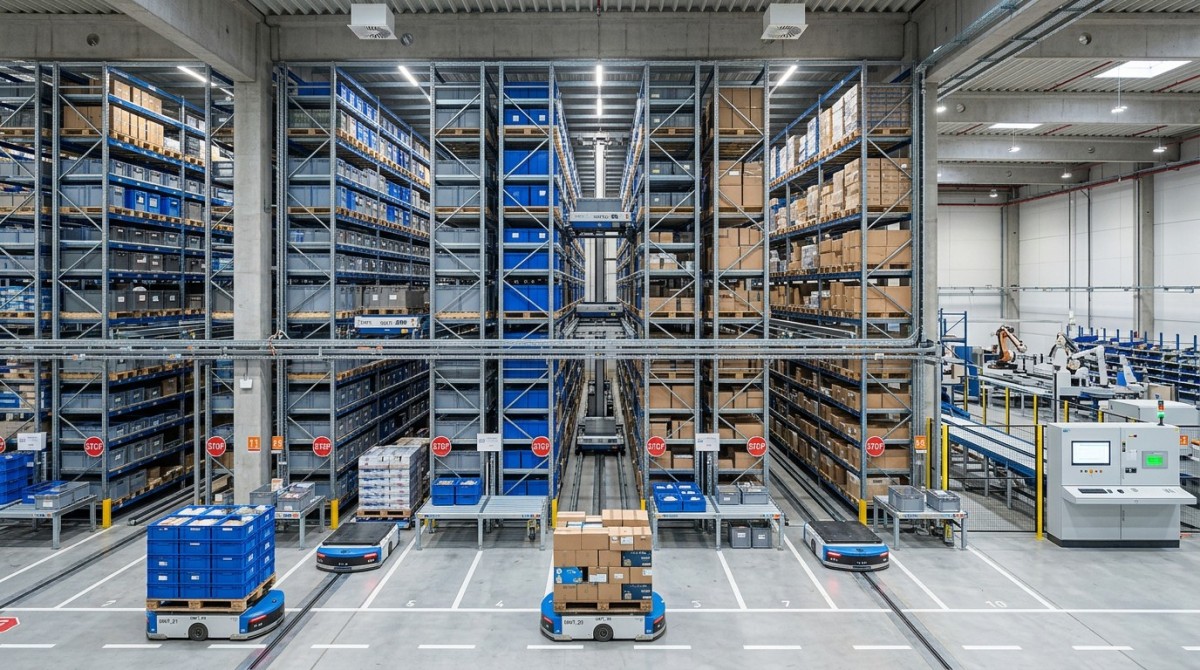
A mixed SKU warehouse is fundamentally different from a facility handling a narrow product range. Instead of storing similar cartons in repetitive flows, it must manage fast movers, slow movers, irregular dimensions, fragile units, return stock, and replenishment buffers at the same time. This creates congestion in aisles, inconsistent pick paths, and frequent location changes. In many operations, 20% of SKUs generate 70% to 80% of order lines, while the remaining long tail still consumes valuable space and management attention.
Automated storage and retrieval systems help resolve this imbalance by separating storage density from labor movement. Rather than sending workers through long travel routes, the system brings inventory to a pick face, dispatch station, or buffer zone. This is particularly useful where order profiles fluctuate by shift, day, or season. In practice, businesses often target travel reduction of 30% to 50%, inventory accuracy above 99%, and cut-off time improvements of 1 to 3 hours during peak periods.
For enterprise decision-makers, the strategic value goes beyond labor saving. Automated storage and retrieval supports better inventory governance, more disciplined lot control, and cleaner warehouse data. That matters in regulated or quality-sensitive sectors such as healthcare devices and electronic components, where traceability, serial tracking, or environmental zoning may be required. A mixed SKU strategy should therefore balance throughput, control, storage density, and future integration readiness.
Another reason a generic approach fails is that mixed SKU operations rarely have one dominant unit load. They often combine pallets, totes, bins, cartons, and each-pick lines. A single technology cannot efficiently handle every profile. The most successful projects typically segment inventory into 3 to 5 handling categories and automate only the areas where automation produces measurable gains in cycle time, touch reduction, or storage utilization.
Typical pain points in high-SKU warehouses
- Frequent mis-picks caused by visually similar packaging, especially in electronics and component distribution.
- Replenishment delays between reserve storage and forward pick locations during 2-shift or 3-shift operations.
- Low cube utilization when static racking is used for products with uneven turnover patterns.
- Difficulty maintaining FIFO, FEFO, or batch traceability across thousands of storage locations.
- Rising labor dependence in markets where seasonal staffing is expensive or unreliable.
Operational signals that justify automation review
Companies should usually begin a formal automation assessment when order lines increase by more than 15% year over year, average pick paths exceed acceptable labor standards, or storage occupancy stays above 85% for extended periods. These are not universal thresholds, but they are practical triggers. Once a warehouse consistently struggles with replenishment timing, labor spikes, and visibility gaps, automated storage and retrieval becomes a risk-control investment rather than only a productivity project.
Core Technologies: ASRS, AGVs, Shuttle Systems, and Smart Warehousing Software
Mixed SKU automation usually works best as a coordinated architecture rather than a single machine purchase. ASRS can handle dense storage and controlled retrieval, AGV robots can automate horizontal transport between zones, and warehouse software can synchronize slotting, task prioritization, and exception handling. The design question is not which technology is most advanced, but which combination solves the warehouse’s dominant bottlenecks within budget, footprint, and implementation constraints.
Mini-load ASRS and tote-based shuttle systems are commonly selected for medium to small items with high order-line frequency. Pallet ASRS is more suitable when reserve stock, inbound staging, or heavy loads dominate the operation. AGVs or AMRs add value when movements between receiving, quality inspection, storage, packing, and dispatch consume significant forklift time. In many sites, transport automation yields strong gains when average travel distance per move exceeds 40 to 60 meters or when internal replenishment tasks occur every 10 to 20 minutes.
Warehouse execution software is equally important. Without reliable location logic, wave planning, and interface control, even advanced equipment underperforms. Procurement teams should confirm whether the software supports real-time inventory synchronization, API or WMS integration, user permissions, and alert handling. For mixed SKU environments, the ability to manage dynamic slotting and exception queues is often more valuable than complex dashboards.
Safety and maintenance teams should also evaluate fallback processes. If a conveyor loop stops, if an AGV traffic zone is blocked, or if an ASRS aisle crane requires service, the operation still needs continuity. Good automation design includes manual bypass points, protected maintenance windows, and spare-parts planning. Typical maintenance reviews happen monthly for critical systems and quarterly for broader performance validation.
How common automation options compare
The table below outlines how core technologies are typically matched to warehouse conditions. The best fit depends on SKU dimensions, order-line density, handling units, and scalability requirements rather than on headline automation level.
A practical conclusion is that mixed SKU warehouses often benefit from a hybrid model. For example, dense ASRS storage can manage reserve and slow-moving stock, while AGVs support replenishment and movement to manual or semi-automated picking zones. This reduces overinvestment and keeps the solution aligned with real order patterns.
Integration priorities for project teams
- Map SKU classes by velocity, dimensions, handling sensitivity, and order frequency.
- Confirm interface needs between ERP, WMS, warehouse control, and automation devices.
- Define peak-hour throughput targets, not only average daily volume.
- Establish safety zones, battery strategy, maintenance access, and operator training requirements.
How to Evaluate ROI, Throughput, and Procurement Risk
For procurement teams and finance approvers, automation decisions should be framed around measurable business outcomes. The most useful model compares capital cost, operating savings, service improvements, error reduction, and expansion capacity over a realistic horizon, often 3, 5, or 7 years. Labor reduction is important, but in mixed SKU warehouses, the bigger gain may come from more stable throughput, fewer picking errors, lower inventory write-offs, and delayed building expansion.
A common mistake is evaluating automated storage and retrieval by unit price alone. A lower-cost system may require more manual replenishment, more software customization, or more floor space. Another mistake is using average throughput assumptions instead of peak-hour demand. If an e-commerce, spare parts, or medical supply operation has a 2-hour dispatch surge every day, the solution must be sized for that stress point. Under-sizing by even 10% to 15% can create chronic congestion and poor user acceptance.
Risk assessment should also include implementation readiness. Warehouses with unstable master data, weak location discipline, or poor SKU dimension records may not be ready for direct automation. In many cases, a 6- to 12-week data cleanup and process standardization phase delivers better long-term results than rushing into equipment procurement. This is especially relevant when the warehouse serves multiple business units or distributors with different order rules.
For project managers, the best procurement process combines technical validation with operational simulation. Request suppliers to test 50 to 100 representative SKUs, covering fast movers, awkward dimensions, fragile units, and low-volume lines. This makes it easier to identify exceptions early, estimate staffing impact, and compare actual fit instead of relying on generic proposals.
Key procurement criteria by stakeholder
Different decision-makers evaluate automation through different lenses. The following table can help align technical teams, financial approvers, and operational users before vendor shortlisting begins.
This cross-functional view prevents a narrow decision based only on speed claims or storage density. The right solution should protect operational continuity, fit the actual SKU profile, and provide a manageable upgrade path if volume increases by 20% to 40% over the next few years.
Questions suppliers should answer clearly
- What throughput is guaranteed at peak hour, and under what order profile assumptions?
- Which SKU dimensions, weights, and packaging conditions fall outside standard handling limits?
- What spare-parts coverage and response time apply during the first 12 months and after warranty?
- How much floor interruption is expected during installation, testing, and cutover?
Implementation Roadmap: From Data Preparation to Go-Live
A successful automated storage and retrieval project usually starts before any equipment arrives. The implementation phase should begin with SKU profiling, order analysis, facility constraints, and process mapping. Teams should classify items by cube, weight, turnover, handling sensitivity, and traceability requirements. In many warehouses, 4 to 6 weeks of structured analysis can uncover hidden issues such as poor item dimensions, duplicate location rules, or inconsistent replenishment logic.
The next stage is solution design and simulation. Project leaders should test inbound flow, reserve-to-pick replenishment, peak order waves, returns handling, and outage recovery. If the site operates 2 shifts, 3 shifts, or has weekend spikes, those scenarios must be included. For mixed SKU warehouses, one of the most important design choices is where to keep manual flexibility. Not every exception should be automated, because overengineering creates cost and training burden.
Commissioning and change management are often underestimated. Operators may need 3 to 10 days of role-specific training depending on system complexity. Maintenance staff need preventive checklists, spare-parts access, and escalation procedures. Quality and safety teams should validate zoning, access logic, and emergency stop protocols before full go-live. A phased ramp-up, such as 30%, then 60%, then full operational load over 2 to 4 weeks, often reduces disruption.
Post-go-live measurement should not stop at system availability. Teams should track pick accuracy, replenishment response time, storage occupancy, queue delays, and exception rate by SKU class. In many cases, the first 60 to 90 days reveal slotting improvements or software rule changes that produce another wave of efficiency without additional hardware investment.
A practical 5-step rollout structure
- Baseline assessment: collect SKU, order, labor, and capacity data for at least 8 to 12 recent weeks.
- Design validation: confirm equipment fit, software logic, peak-hour targets, and exception handling rules.
- Site preparation: adjust layout, power, network, floor conditions, safety barriers, and staging areas.
- Testing and training: complete interface tests, dry runs, user training, and acceptance checks.
- Ramp-up and optimization: phase volume into the system while monitoring throughput, errors, and downtime.
Common implementation mistakes
The most frequent errors include automating poor processes, ignoring packaging inconsistency, and failing to define ownership between warehouse operations, IT, maintenance, and suppliers. Another common problem is incomplete master data. If product dimensions vary from reality by even a small amount, bin allocation logic and pick reliability can quickly deteriorate. Good governance is therefore as important as equipment specification.
Maintenance, Safety, and Long-Term Scalability in Smart Warehousing
Automation is not a one-time installation; it is a long-term operating model. For safety managers and facility leaders, the real benchmark is stable performance over years, not only during initial commissioning. Preventive maintenance schedules should be matched to system criticality. High-use components may require weekly checks, while broader mechanical and control reviews may run monthly or quarterly. Battery management, sensor cleaning, software updates, and wear-part replacement should all be planned with minimal disruption to live operations.
Scalability also matters because mixed SKU warehouses rarely stay static. Product portfolios change, customer channels multiply, and service expectations tighten. A solution that supports modular expansion, extra workstations, software reconfiguration, or additional robot units can be more valuable than a highly optimized system with no room to grow. Businesses should test whether the design can absorb 15% to 25% annual line growth without a complete layout redesign.
Safety should be embedded into traffic logic, maintenance access, and operator behavior. AGV routes need protected crossing rules. ASRS zones require controlled access and lockout procedures during service. Warehouses that handle healthcare components, electronics, or sensitive assemblies may also need ESD controls, clean handling rules, or environmental monitoring in selected areas. These operational controls should be specified early, not added after incidents or audit findings.
For distributors, dealers, and strategic partners, service support is often a deciding factor. Local response capability, spare-parts planning, remote diagnostics, and training refresh cycles can significantly affect uptime. A realistic service model should define critical spare-parts lists, response windows, and escalation paths. Even the best automated storage and retrieval system loses value if recovery procedures are unclear or support availability is inconsistent.
FAQ for decision-makers and project teams
How do we know if automated storage and retrieval fits our warehouse?
It is usually worth evaluating when SKU count is high, floor space is tight, error reduction matters, or labor travel consumes too much time. Strong signals include occupancy above 85%, frequent replenishment delays, peak-hour congestion, and the need for better traceability or inventory control.
What implementation timeline is typical?
Timelines vary by complexity. A focused subsystem may take roughly 8 to 16 weeks from final specification to commissioning, while larger integrated projects can extend to 6 to 12 months. Data preparation, software interfaces, and site readiness often determine the real pace more than hardware lead time alone.
Can mixed manual and automated operations work together?
Yes, and in many cases they should. Hybrid models are common because not every SKU or process benefits equally from automation. A practical design may automate reserve storage and repetitive transport while keeping exception handling, special packaging, or low-volume lines in flexible manual zones.
Which KPI set should we monitor after go-live?
At minimum, track system availability, pick accuracy, lines per labor hour, replenishment response time, queue time, exception rate, and storage utilization. Review these weekly during the first 8 to 12 weeks, then monthly once the operation stabilizes.
Automated storage and retrieval for mixed SKU warehouses is most effective when it is treated as a business system, not just an equipment purchase. The best results come from matching ASRS, AGVs, software, and process discipline to the actual SKU mix, order profile, safety requirements, and growth plan. For procurement leaders, operators, and enterprise decision-makers, the priority is a solution that improves throughput, protects accuracy, supports traceability, and remains scalable as demand changes.
TradeNexus Pro helps global B2B stakeholders evaluate technologies with a practical, market-informed perspective across advanced manufacturing, healthcare technology, smart electronics, green energy, and supply chain SaaS ecosystems. If you are assessing warehouse automation, planning an upgrade, or comparing solution paths for a complex mixed SKU facility, now is the right time to build a structured roadmap. Contact us to discuss your warehouse scenario, request a tailored solution framework, or explore more automation strategies for long-term operational resilience.
Get weekly intelligence in your inbox.
No noise. No sponsored content. Pure intelligence.
 Apr 23, 2026Taobao Factory Spark 3.0 Launches AI Workbench for SME Export FactoriesTaobao Factory Spark 3.0 Launches AI Workbench for SME Export Factories
 Apr 23, 2026TENENG Group Inspects IoT Safety Compliance at Jiangnan ChemicalTENENG Group Inspects IoT Safety Compliance at Jiangnan Chemical
 Apr 23, 2026China Launches First Embodied AI Open Data CommunityChina Launches First Embodied AI Open Data Community
 Apr 23, 2026PV Glass Prices Flat for 9 Weeks Amid Rising Integrated ProcurementPV Glass Prices Flat for 9 Weeks Amid Rising Integrated Procurement
 Apr 23, 20262984 NQI One-Stop Platforms Launched Nationwide2984 NQI One-Stop Platforms Launched Nationwide
 Apr 23, 2026China’s Green Smart Ship Tech Norms Accelerate BMS & Shore Power ExportChina’s Green Smart Ship Tech Norms Accelerate BMS & Shore Power Export
 Apr 23, 2026China Builds World's Largest Agri-Meteorological IoT NetworkChina Builds World's Largest Agri-Meteorological IoT Network
 Apr 23, 2026EU CBAM Carbon Tariff Enters Enforcement on April 1, 2026EU CBAM Carbon Tariff Enters Enforcement on April 1, 2026
 Apr 23, 2026Five Ministries Issue Zero-Carbon Factory Guidance for Export IndustriesFive Ministries Issue Zero-Carbon Factory Guidance for Export Industries
 Apr 23, 2026ISO Releases First Zero-Carbon City Standard — China’s Practices IncludedISO Releases First Zero-Carbon City Standard — China’s Practices Included
 Apr 22, 2026China Leads Global Offshore Wind Installations for 5th YearChina Leads Global Offshore Wind Installations for 5th Year
 Apr 22, 2026China Launches National Mine Safety IoT Monitoring NetworkChina Launches National Mine Safety IoT Monitoring Network
 Apr 22, 2026Yinchuan Boiler Pure Water Solution Certified for Middle East ProjectsYinchuan Boiler Pure Water Solution Certified for Middle East Projects
 Apr 22, 2026China to Enforce Mandatory EV Battery Recycling Standards by 2026China to Enforce Mandatory EV Battery Recycling Standards by 2026
 Apr 22, 2026Vietnam Launches Anti-Circumvention Probe on Electronic ComponentsVietnam Launches Anti-Circumvention Probe on Electronic Components
 Apr 22, 20262026 Shanghai Fastener Show: Robotic Fasteners Drive Overseas Procurement2026 Shanghai Fastener Show: Robotic Fasteners Drive Overseas Procurement
 Apr 22, 2026US BIS Adds EV On-Board Charger Crypto Modules to EAR Appendix 7US BIS Adds EV On-Board Charger Crypto Modules to EAR Appendix 7
 Apr 22, 2026TÜV Rheinland Updates BESS Certification: Propagation Blocking Now MandatoryTÜV Rheinland Updates BESS Certification: Propagation Blocking Now Mandatory
 Apr 22, 2026Red Sea Crisis Escalates: Suez AI Speed Limits & Slot Review from Apr 19Red Sea Crisis Escalates: Suez AI Speed Limits & Slot Review from Apr 19
 Apr 22, 2026EU CBAM Carbon Tariff Takes Effect April 1, 2026EU CBAM Carbon Tariff Takes Effect April 1, 2026
 Apr 21, 2026When to Replace CT Scanner Parts Before Downtime StartsWhen to Replace CT Scanner Parts Before Downtime Starts
 Apr 21, 2026How to Cut Costs in Lathe Turning Without ReworkHow to Cut Costs in Lathe Turning Without Rework
 Apr 21, 2026Lathe Turning Tolerances: What Can You Expect?Lathe Turning Tolerances: What Can You Expect?
 Apr 21, 2026How to Avoid Risks in Solar Panels WholesaleHow to Avoid Risks in Solar Panels Wholesale
 Apr 21, 2026Solar Panels Wholesale: How to Compare SuppliersSolar Panels Wholesale: How to Compare Suppliers
 Apr 21, 2026Solar Mounting Cost Factors You Should KnowSolar Mounting Cost Factors You Should Know
 Apr 21, 2026Solar Mounting Options: Which One Fits Your Project?Solar Mounting Options: Which One Fits Your Project?