Smart Warehousing Mistakes That Create Picking Delays
Smart warehousing promises speed, accuracy, and lower costs, yet common planning and execution errors often trigger serious picking delays. From AGV robots and ASRS systems to electronic shelf labels and warehouse automation, even advanced tools can underperform without the right strategy. This article explores the most overlooked mistakes and how data-driven decisions can improve throughput, visibility, and operational control.
Why do smart warehousing projects still create picking delays?
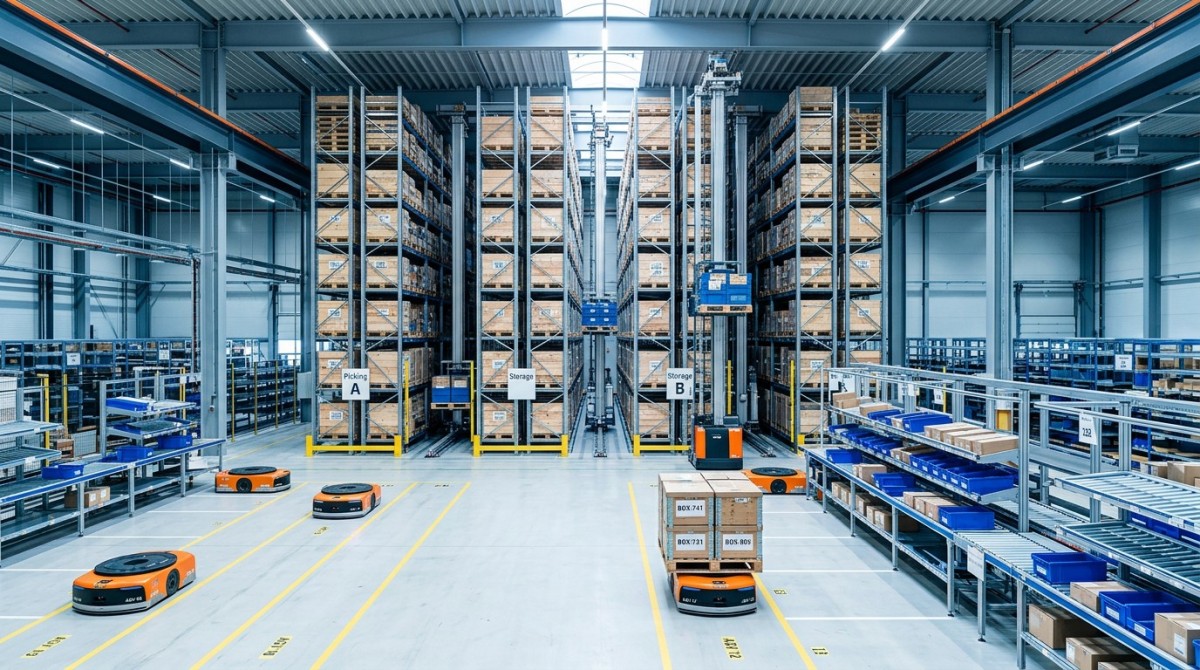
Many warehouse teams assume that automation alone will remove picking bottlenecks. In practice, picking delays often start long before the first robot moves. Poor slotting logic, weak SKU classification, disconnected WMS rules, and unclear replenishment triggers can slow operators and machines at the same time. In mixed B2B environments, where order profiles range from small urgent picks to pallet-level dispatches, a smart warehouse can become more complex rather than faster.
Across advanced manufacturing, healthcare technology, smart electronics, green energy, and supply chain SaaS-driven operations, the same pattern appears: companies invest in equipment during a 3–6 month upgrade cycle, but they underinvest in process mapping, exception handling, and inventory data quality. As a result, the expected throughput gains do not appear, and picking delays shift from manual walking time to system waiting time, queue congestion, or repeated verification steps.
For operators, delays mean more rescans, route changes, and urgent replenishment calls. For procurement teams, they mean difficult supplier reviews and unclear ROI. For decision-makers and finance approvers, they mean capital tied up in systems that may not deliver within the planned 12–24 month payback window. For quality and safety managers, delays often reveal hidden nonconformities such as improper storage zoning, weak traceability, or unsafe traffic intersections between forklifts and AGVs.
TradeNexus Pro tracks these issues from a cross-sector B2B perspective. Rather than looking only at hardware performance, TNP evaluates how smart warehousing decisions affect procurement risk, supplier coordination, inventory visibility, and long-term operational resilience. That broader lens matters because picking delays are rarely caused by one machine. They usually come from 4 linked layers: data, layout, software rules, and people.
The most common root causes behind delayed picks
- Incorrect SKU velocity analysis, where A-items, B-items, and C-items are not reviewed every 30–90 days as demand changes.
- Automation islands, where AGVs, ASRS, barcode devices, and ERP or WMS platforms exchange data with delays or incomplete status signals.
- Replenishment rules that trigger too late, forcing pickers to wait for stock movement during peak picking windows.
- Storage locations designed for capacity, not accessibility, creating long travel paths or frequent double handling.
What delay looks like in daily operations
A delayed pick is not only an order shipped late. It may show up as a picker spending 15–40 seconds more per line due to location confusion, an AGV waiting for aisle clearance, or an ASRS crane completing retrieval on time while the downstream workstation remains overloaded. In high-mix operations, even a small delay per line can expand into hours of lost labor across a shift.
This is why smart warehousing assessments should measure not just equipment speed, but end-to-end order cycle time, pick density per zone, replenishment response time, and exception frequency per 1,000 order lines. Those operating ranges help teams identify whether the real problem is software logic, layout design, labor allocation, or supplier-side packaging inconsistency.
Which planning mistakes damage warehouse picking performance first?
The first major mistake is automating unstable processes. If inventory master data is inconsistent, unit-of-measure logic is unclear, or location naming conventions differ across sites, automation amplifies confusion. A warehouse with 5,000–20,000 active SKUs cannot rely on informal location knowledge. Picking accuracy depends on clean item attributes, carton dimensions, reorder points, and handling requirements before any automation layer is added.
The second mistake is poor slotting and zoning. Fast-moving items should not be placed based only on available shelf space. They should be assigned according to order frequency, pick sequence, replenishment ease, and safety conditions. In many facilities, hazardous materials, temperature-sensitive items, and high-value electronics require separate controls. If those controls are added after go-live, picking routes become fragmented and labor productivity falls quickly.
The third mistake is choosing technology without defining the order profile. AGV robots, AMRs, ASRS, pick-to-light, and electronic shelf labels solve different problems. A site dominated by case picking and repeatable flows may benefit from one automation mix, while a site handling variable B2B orders, returns, kitting, and compliance checks may require another. Procurement teams that compare vendors only by equipment features often miss the operational fit.
The fourth mistake is neglecting exception design. In real operations, 5–15% of orders may involve short picks, damaged packaging, quality holds, urgent substitutions, or labeling discrepancies. If the smart warehouse system does not define who resolves these exceptions within 2–10 minutes, queues build up. That is especially costly in sectors such as healthcare technology and smart electronics, where traceability and handling discipline are critical.
Planning errors and their typical operational impact
The table below summarizes how common planning mistakes create direct picking delays in smart warehousing environments and what teams should monitor during implementation reviews.
This comparison shows a critical point for buyers and project managers: picking performance depends less on isolated equipment specifications and more on system design discipline. A supplier proposal should therefore be evaluated against process logic, replenishment rules, integration scope, and training requirements, not just hardware capacity.
A practical 4-step planning check before automation purchase
- Map order behavior for at least 8–12 weeks, including line count, SKU repetition, rush orders, and average picks per hour.
- Define storage classes by velocity, fragility, value, compliance, and replenishment method.
- Review software integration points, especially task release logic, inventory synchronization, and exception messaging.
- Run a pilot in one zone or one product family before full-scale rollout over 2–4 phases.
How should buyers compare AGV, ASRS, and other warehouse automation options?
Not every picking delay requires the same solution. AGVs and AMRs can reduce travel time and labor strain, but they depend on route discipline, traffic control, and battery management. ASRS can improve storage density and retrieval consistency, but only when SKU dimensions, tote logic, and downstream workstation design are stable. Electronic shelf labels and pick-to-light can speed manual picking, yet they offer limited value if slotting and replenishment remain weak.
For procurement leaders, the right comparison starts with workflow fit. Ask whether the facility handles piece picking, case picking, pallet flow, kitting, returns, or batch release. Ask whether demand swings by season, region, or project cycle. Ask whether the current labor challenge is travel distance, error rate, training time, or safety exposure. These questions produce a better technology shortlist than generic vendor presentations.
Finance approvers should also compare implementation complexity. A low-cost automation layer that requires frequent reconfiguration may become more expensive over 18–36 months than a higher-capex system with stable operating rules. Project owners should therefore examine software licenses, maintenance windows, spare parts availability, commissioning time, and the internal support skills needed after go-live.
TNP helps buyers frame these decisions with sector-aware intelligence. In advanced manufacturing, for example, component traceability and line-side replenishment may dominate the business case. In healthcare technology, controlled storage and audit-ready picking records may matter more. In green energy and smart electronics, handling large, fragile, or high-value components changes the automation selection criteria significantly.
Comparison of common smart warehousing options for picking improvement
The table below helps teams compare typical warehouse automation tools by operational fit, delay risks, and implementation considerations rather than by headline claims alone.
For distributors, agents, and channel partners, this kind of comparison is especially useful when advising clients with different maturity levels. A modular solution can be more appropriate than a full automation package if the customer still lacks SKU governance, warehouse master data discipline, or cross-site process standardization.
Three procurement questions that prevent costly mismatch
- Can the solution sustain expected order variability over the next 12–24 months without major layout changes?
- What happens when inventory is blocked, missing, or urgent orders override the release queue?
- How much internal IT, maintenance, and operator training support is required after handover?
What should implementation teams measure to reduce picking delays?
Once a smart warehousing project moves from design to execution, measurement discipline becomes the difference between fast correction and ongoing delay. Many teams only track daily output or labor hours. That is not enough. Picking delays must be broken into measurable components such as order release timing, travel time, queue time, replenishment wait time, exception handling time, and final confirmation accuracy.
A useful implementation framework covers 3 stages: pre-go-live baseline, controlled pilot, and scaled rollout. During baseline, teams should record at least 2–4 weeks of current-state data. During pilot, they should test one zone, one shift, or one product family. During rollout, they should monitor whether delays are localized to software logic, labor adaptation, or physical congestion. This staged approach protects project managers from hidden delays that only appear under volume pressure.
Quality and safety managers should add audit-oriented measures. For example, are traceability scans completed at each critical point? Are restricted items stored and picked within designated zones? Are AGV routes separated from manual pedestrian flow? These checks are essential in sectors where safety incidents or inventory misidentification can create much higher costs than a late shipment alone.
Enterprise leaders should also assign ownership. If no one owns replenishment signals, interface alerts, and shift-level exception review, the smart warehouse gradually returns to manual firefighting. A weekly review rhythm, supported by monthly trend analysis, is usually more effective than reacting only when service levels drop.
Operational metrics worth tracking from week one
- Pick rate by zone and by order type, such as piece, case, pallet, or kitting workflows.
- Replenishment response time, especially during the busiest 2–3 hours of a shift.
- Exception frequency per 1,000 order lines, grouped by root cause such as stock discrepancy, packaging defect, or system delay.
- Inventory accuracy by location and by unit of measure, reviewed weekly or monthly depending on SKU volatility.
A practical implementation sequence
A stable rollout often follows 5 steps. First, clean master data and verify location logic. Second, confirm equipment-to-software interfaces and test failure scenarios. Third, train operators, supervisors, and maintenance staff with role-specific procedures. Fourth, run pilot operations with controlled order volume. Fifth, scale by zone while keeping rollback rules ready for the first 2–6 weeks. This sequence reduces the risk of full-site disruption.
For distributors and resellers supporting end customers, these steps also create a better service model. Instead of selling only equipment, they can support site readiness checks, integration reviews, and post-launch KPI monitoring. That improves commercial credibility and lowers the risk of customer dissatisfaction linked to preventable picking delays.
What are the most overlooked misconceptions, costs, and next-step decisions?
One common misconception is that more automation always means less labor risk. In reality, smart warehousing shifts labor demand toward supervision, maintenance coordination, exception handling, and data management. If training plans are too short, often less than 3–5 days for role-specific adaptation, the warehouse may face a different kind of delay: not walking time, but uncertainty around system prompts and recovery procedures.
Another misconception is that picking delays are mainly an operations issue. They are also a sourcing and financial issue. Packaging inconsistency from suppliers, unreadable labels, carton dimension variation, and incomplete item master records all create downstream delays. Procurement teams should therefore align supplier onboarding, packaging specifications, barcode rules, and inbound quality checks with warehouse automation requirements.
Cost evaluation should also go beyond purchase price. Buyers should review commissioning time, spare parts lead time, support availability across regions, software upgrade policy, and the cost of temporary manual fallback during outages. In many projects, the most expensive delay is not a machine repair. It is the lost output and emergency labor required when fallback processes are poorly defined.
This is where TNP adds practical value. By connecting market intelligence, supply chain analysis, and sector-specific buying criteria, TradeNexus Pro helps stakeholders compare solutions with a clearer view of risk, scalability, and supplier fit. That matters for buyers balancing tight delivery windows, finance scrutiny, compliance requirements, and multi-country sourcing complexity.
FAQ: questions buyers and operators often ask
How do we know whether picking delays come from layout or software rules?
Start by separating physical delay from digital delay. If travel paths are long, pick faces are hard to access, or congestion happens in the same aisles, layout is likely the issue. If operators wait for task release, inventory status updates, or exception clearance, software logic is more likely involved. A 2–4 week review using zone-level timing data usually reveals the main cause.
Are AGV and ASRS systems suitable for every warehouse?
No. They fit specific workflows. AGVs and AMRs are stronger in repetitive transport and route support. ASRS is stronger in controlled storage and retrieval density. Sites with unstable SKUs, irregular packaging, or frequent manual exceptions may need process cleanup first. Technology should follow operational fit, not trend pressure.
What should procurement review before asking for quotations?
At minimum, review 5 items: order profile, SKU classification, integration requirements, site constraints, and fallback procedures. Also define the expected implementation window, often 8–20 weeks for moderate projects, though larger deployments may take longer. Better input quality leads to better quotations and fewer surprises after approval.
How often should slotting and replenishment rules be updated?
For fast-changing B2B operations, review high-velocity SKU placement every 30–90 days and replenishment thresholds at least monthly during demand swings. Stable facilities may use quarterly reviews. The right frequency depends on SKU volatility, seasonality, and service commitments, but infrequent reviews are a common reason smart warehouses lose picking efficiency over time.
Why work with TradeNexus Pro when evaluating smart warehousing decisions?
TradeNexus Pro supports procurement directors, supply chain managers, technical evaluators, and enterprise decision-makers who need more than vendor claims. Our platform focuses on the sectors where warehousing choices influence production continuity, compliance, inventory risk, and cross-border supply performance. That means the conversation goes beyond equipment catalogs and into real operational fit.
If your team is comparing warehouse automation, reviewing AGV or ASRS suitability, or trying to reduce picking delays in a multi-SKU B2B environment, TNP can help structure the evaluation. We can support parameter confirmation, supplier comparison logic, rollout sequencing, delivery-cycle assessment, packaging and traceability considerations, and risk-focused procurement questions relevant to your sector.
For project leaders and finance approvers, we help clarify where investment should go first: data cleanup, slotting redesign, integration planning, phased automation, or process standardization. For distributors, agents, and solution partners, we provide a stronger basis for advising clients and positioning solutions with technical and commercial credibility.
Contact TradeNexus Pro to discuss your warehouse picking delays, automation selection path, expected implementation timeline, quotation comparison criteria, custom scenario requirements, sample workflow review, or supplier screening priorities. A sharper evaluation at the start usually prevents the most expensive delays later.
Get weekly intelligence in your inbox.
No noise. No sponsored content. Pure intelligence.
 Apr 23, 2026Taobao Factory Spark 3.0 Launches AI Workbench for SME Export FactoriesTaobao Factory Spark 3.0 Launches AI Workbench for SME Export Factories
 Apr 23, 2026TENENG Group Inspects IoT Safety Compliance at Jiangnan ChemicalTENENG Group Inspects IoT Safety Compliance at Jiangnan Chemical
 Apr 23, 2026China Launches First Embodied AI Open Data CommunityChina Launches First Embodied AI Open Data Community
 Apr 23, 2026PV Glass Prices Flat for 9 Weeks Amid Rising Integrated ProcurementPV Glass Prices Flat for 9 Weeks Amid Rising Integrated Procurement
 Apr 23, 20262984 NQI One-Stop Platforms Launched Nationwide2984 NQI One-Stop Platforms Launched Nationwide
 Apr 23, 2026China’s Green Smart Ship Tech Norms Accelerate BMS & Shore Power ExportChina’s Green Smart Ship Tech Norms Accelerate BMS & Shore Power Export
 Apr 23, 2026China Builds World's Largest Agri-Meteorological IoT NetworkChina Builds World's Largest Agri-Meteorological IoT Network
 Apr 23, 2026EU CBAM Carbon Tariff Enters Enforcement on April 1, 2026EU CBAM Carbon Tariff Enters Enforcement on April 1, 2026
 Apr 23, 2026Five Ministries Issue Zero-Carbon Factory Guidance for Export IndustriesFive Ministries Issue Zero-Carbon Factory Guidance for Export Industries
 Apr 23, 2026ISO Releases First Zero-Carbon City Standard — China’s Practices IncludedISO Releases First Zero-Carbon City Standard — China’s Practices Included
 Apr 22, 2026China Leads Global Offshore Wind Installations for 5th YearChina Leads Global Offshore Wind Installations for 5th Year
 Apr 22, 2026China Launches National Mine Safety IoT Monitoring NetworkChina Launches National Mine Safety IoT Monitoring Network
 Apr 22, 2026Yinchuan Boiler Pure Water Solution Certified for Middle East ProjectsYinchuan Boiler Pure Water Solution Certified for Middle East Projects
 Apr 22, 2026China to Enforce Mandatory EV Battery Recycling Standards by 2026China to Enforce Mandatory EV Battery Recycling Standards by 2026
 Apr 22, 2026Vietnam Launches Anti-Circumvention Probe on Electronic ComponentsVietnam Launches Anti-Circumvention Probe on Electronic Components
 Apr 22, 20262026 Shanghai Fastener Show: Robotic Fasteners Drive Overseas Procurement2026 Shanghai Fastener Show: Robotic Fasteners Drive Overseas Procurement
 Apr 22, 2026US BIS Adds EV On-Board Charger Crypto Modules to EAR Appendix 7US BIS Adds EV On-Board Charger Crypto Modules to EAR Appendix 7
 Apr 22, 2026TÜV Rheinland Updates BESS Certification: Propagation Blocking Now MandatoryTÜV Rheinland Updates BESS Certification: Propagation Blocking Now Mandatory
 Apr 22, 2026Red Sea Crisis Escalates: Suez AI Speed Limits & Slot Review from Apr 19Red Sea Crisis Escalates: Suez AI Speed Limits & Slot Review from Apr 19
 Apr 22, 2026EU CBAM Carbon Tariff Takes Effect April 1, 2026EU CBAM Carbon Tariff Takes Effect April 1, 2026
 Apr 21, 2026When to Replace CT Scanner Parts Before Downtime StartsWhen to Replace CT Scanner Parts Before Downtime Starts
 Apr 21, 2026How to Cut Costs in Lathe Turning Without ReworkHow to Cut Costs in Lathe Turning Without Rework
 Apr 21, 2026Lathe Turning Tolerances: What Can You Expect?Lathe Turning Tolerances: What Can You Expect?
 Apr 21, 2026How to Avoid Risks in Solar Panels WholesaleHow to Avoid Risks in Solar Panels Wholesale
 Apr 21, 2026Solar Panels Wholesale: How to Compare SuppliersSolar Panels Wholesale: How to Compare Suppliers
 Apr 21, 2026Solar Mounting Cost Factors You Should KnowSolar Mounting Cost Factors You Should Know
 Apr 21, 2026Solar Mounting Options: Which One Fits Your Project?Solar Mounting Options: Which One Fits Your Project?