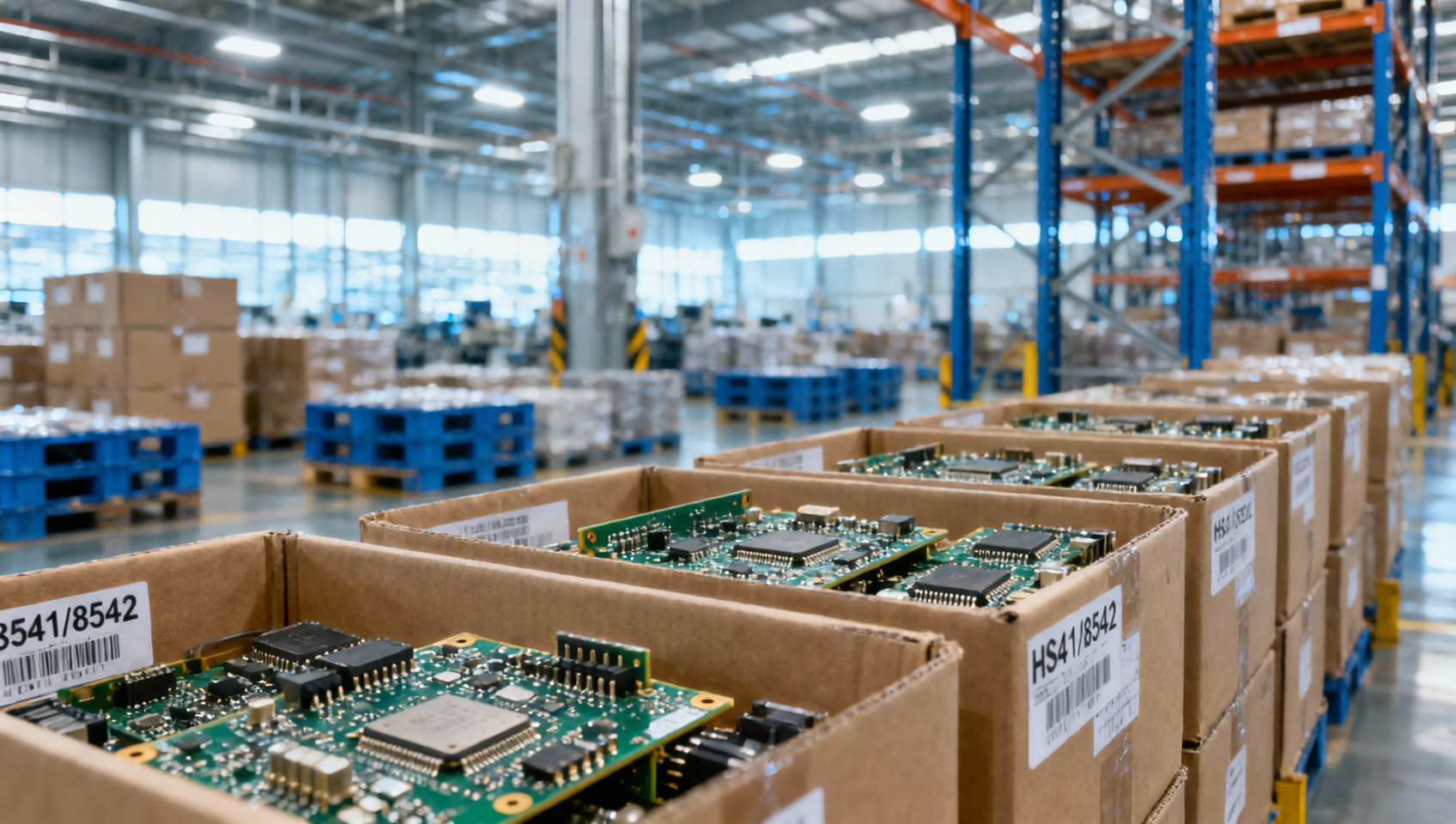
Warehouse Automation Is Growing, but Where Is ROI Fastest?
Warehouse automation is accelerating, but ROI is rarely equal across every upgrade. From smart warehousing and AGV robots to ASRS systems, automated storage and retrieval, and TMS software, the fastest returns often come where labor efficiency, throughput, and energy monitoring improve together. For buyers, operators, and decision-makers, identifying which investments deliver measurable value first is now a strategic advantage.
For procurement teams, plant managers, finance approvers, safety leaders, and project owners, the central question is no longer whether warehouse automation matters. The practical question is which automation layer pays back in 12 months, which one needs 24 to 36 months, and which one only works after process discipline, data visibility, and layout readiness are already in place.
In cross-sector B2B environments such as advanced manufacturing, green energy, smart electronics, healthcare technology, and supply chain software ecosystems, ROI is shaped by SKU variability, order frequency, labor pressure, traceability requirements, and uptime expectations. A high-mix electronics warehouse does not recover investment the same way a pallet-heavy industrial parts facility does.
This article breaks down where warehouse automation usually delivers the fastest return, how to compare options such as AGVs, ASRS, smart warehousing platforms, and TMS integration, and what operational signals buyers should verify before approving capital expenditure.
Why ROI Speeds Differ Across Warehouse Automation Projects

Not every warehouse automation investment creates value at the same speed because each one removes a different type of bottleneck. Some projects cut labor hours immediately. Others improve inventory accuracy first and only create financial return after fewer stockouts, fewer emergency shipments, or better space use appear over 2 to 4 quarters.
The fastest ROI usually appears in workflows with three conditions: high repetition, measurable labor dependence, and visible error costs. If operators walk 8 to 12 kilometers per shift, spend 25% to 40% of their time on non-value travel, or rely on paper-based picking, even moderate automation can produce meaningful gains within 6 to 18 months.
By contrast, large ASRS installations often require stronger process maturity. They can transform storage density and retrieval consistency, but they also involve facility engineering, rack design, software integration, and commissioning windows that may stretch from 4 months to 12 months depending on site complexity.
Finance teams should also separate hard ROI from strategic ROI. Hard ROI includes lower labor cost per line, fewer picking errors, reduced forklift damage, and lower overtime. Strategic ROI includes better service levels, stronger traceability, smoother peak-season scaling, and safer movement in mixed human-machine zones.
The 4 variables that most affect payback speed
- Labor intensity: Operations with 2 or 3 shifts and frequent overtime often recover automation faster than single-shift sites.
- Order profile: High daily order lines, typically above 3,000 to 5,000 lines per day, justify faster software and picking automation decisions.
- Error cost: If one shipping error triggers returns, compliance issues, or production stoppage, accuracy tools gain value quickly.
- Space pressure: Facilities operating above 85% storage occupancy often gain fast value from slotting optimization or dense storage systems.
A practical ROI lens for decision-makers
For enterprise decision-makers, the most useful question is not “Which technology is most advanced?” but “Which intervention removes the costliest constraint first?” In many cases, the answer is software-led visibility, directed picking, or internal transport automation before a major infrastructure rebuild.
Where ROI Is Usually Fastest: The Shortlist Buyers Should Evaluate First
In most warehouses, the quickest payback comes from automation layers that improve labor productivity without forcing a full building redesign. That usually places warehouse execution software, picking optimization, AGV deployment in repeatable routes, and TMS-linked dispatch planning ahead of fully engineered storage projects in the early ROI ranking.
For operators and project managers, this means starting where process waste is already visible. If the site experiences queueing at staging zones, repeated replenishment delays, or manual transfer of shipment data between systems, the return path is often clearer than in projects aimed mainly at future capacity.
The table below compares typical automation areas by speed of payback, operational effect, and implementation burden. The ranges are common market patterns rather than fixed guarantees, and actual results depend on labor rates, system integration, SKU complexity, and utilization discipline.
For many B2B facilities, software-led orchestration and transport automation rank first because they require less civil modification while improving throughput almost immediately. ASRS becomes more attractive when floor space is constrained, labor turnover is high, or inventory handling needs a controlled and traceable environment.
Fast-return scenarios by warehouse profile
In advanced manufacturing, AGVs often pay back quickly where raw materials, work-in-process, and finished goods move on repetitive lanes every 10 to 30 minutes. In smart electronics, pick guidance and bin-level visibility may produce faster returns because the cost of mis-picks and part shortages is high. In healthcare technology, traceability, serialization, and controlled handling can justify smart warehousing software even before labor savings are fully realized.
For distributors and channel partners, the most attractive ROI often comes from outbound improvements. Faster wave planning, dock scheduling, and route synchronization reduce missed cut-off times and improve on-time dispatch performance during peak periods that can run 1.5 to 2.5 times above average daily volume.
How to Evaluate AGV, ASRS, Smart Warehousing, and TMS in a Real Procurement Process
A sound procurement process should compare warehouse automation solutions through operational fit rather than vendor presentation strength. Buyers need to test route predictability, system integration effort, maintenance burden, safety implications, and whether the current warehouse layout supports expansion over the next 24 months.
A common mistake is approving hardware before validating data quality. If location master data is inconsistent, SKU dimensions are unreliable, or inventory status logic is weak, even well-designed automation may underperform. For this reason, many successful projects begin with a 4- to 8-week process baseline period before final specification is frozen.
The procurement matrix below can help purchasing teams, engineering managers, and finance approvers align around practical decision factors instead of general claims.
This comparison shows why there is no universal best choice. The right decision depends on where the operation loses money today. If transport delays stop production, AGVs may rank first. If inventory congestion blocks growth, ASRS may justify a longer payback. If outbound penalties and labor inefficiency dominate, smart warehousing software and TMS integration often move to the top of the list.
A 5-step selection sequence
- Measure baseline metrics for 30 to 60 days: travel time, picks per hour, dock dwell time, and error rate.
- Identify the top 2 cost drivers that account for the biggest operational loss or service failure.
- Confirm data readiness, including SKU dimensions, location logic, and interface requirements.
- Run a scenario review for normal volume, peak volume, and disrupted labor availability.
- Approve in phases, with clear acceptance thresholds such as 15% higher throughput or 20% less internal transport labor.
What procurement teams should request from suppliers
Request a site-fit explanation, integration scope, uptime assumptions, battery or spare-parts plan where relevant, commissioning timeline, operator training hours, and the exact metrics that will be used during acceptance testing. A strong proposal should translate features into measurable operational outcomes rather than simply listing technical components.
Implementation Risks, Safety Checks, and the Hidden Factors That Delay ROI
Even when the technology choice is correct, ROI can slip if implementation discipline is weak. The most common causes are poor master data, unrealistic changeover windows, low user adoption, and safety planning that is treated as a compliance exercise instead of an operational design requirement.
For quality and safety managers, warehouse automation should be reviewed through traffic separation, emergency stop logic, battery charging controls, rack load integrity, and maintenance access. In mixed environments where pedestrians, forklifts, and AGVs share zones, floor marking and right-of-way rules need to be clear before go-live, not after the first near miss.
Project managers should also account for a realistic ramp-up. A deployment may be technically complete in week 1, but stable performance often takes another 4 to 10 weeks as slotting rules, exception handling, and operator routines are refined. Expecting full nameplate performance on day 3 is one of the fastest ways to misjudge ROI.
Another hidden factor is underutilization. An AGV fleet sized for 20 moves per hour but used at 8 moves per hour will struggle to justify itself. An ASRS with poor inbound discipline can become a bottleneck. A smart warehousing platform without clear ownership of data governance may improve visibility but not behavior.
Common implementation pitfalls
- Skipping process mapping and moving directly to equipment purchase.
- Failing to define exception workflows for damaged goods, urgent orders, or inventory mismatches.
- Underestimating training needs; many sites need 2 to 3 role-based training rounds before stable adoption.
- Ignoring peak-season stress tests and validating only against average volume.
- Not assigning KPI ownership across operations, IT, maintenance, and finance.
Safety and compliance checkpoints
Before commissioning, teams should verify at least 6 control points: route segregation, sensor response behavior, stop-zone visibility, charging procedures, manual override rules, and preventive maintenance intervals. In regulated sectors such as healthcare technology, traceability logic and controlled access may be as important as movement efficiency.
A Practical ROI Roadmap for Operators, Buyers, and Executive Approvers
The strongest warehouse automation business cases are built in phases. Instead of treating automation as a single capital event, leading teams define a roadmap with near-term wins, medium-term scaling, and long-term infrastructure decisions. This reduces approval friction and helps finance teams compare expected return against operational risk.
Phase 1 often focuses on visibility and workflow control. This can include smart warehousing software, slotting logic, mobile task assignment, or TMS-linked dock planning. Phase 2 may add AGV or AMR transport in the most repetitive lanes. Phase 3, where justified, moves into ASRS or broader automated storage and retrieval architecture once demand patterns and data quality are stable.
For finance approvers, each phase should have 3 to 5 measurable KPIs. Typical examples include picks per labor hour, internal transfer cost per pallet, inventory accuracy above 98%, dock dwell time reduction of 15% to 25%, or overtime reduction over a 90-day period. These figures create a review structure that is easier to govern than a broad promise of transformation.
For distributors and channel partners, the same roadmap can support customer-facing growth. Faster outbound fulfillment, more reliable tracking, and fewer exception shipments strengthen service credibility and reduce margin leakage. For enterprise operators, the roadmap supports resilience when labor availability tightens or volume spikes unexpectedly.
FAQ: Questions buyers ask before approving automation
How do we know if AGV deployment is too early?
If routes change daily, aisle discipline is weak, or material handoff points are inconsistent, AGV deployment may be premature. In most cases, at least 70% to 80% of target moves should be repetitive before transport automation reaches efficient utilization.
When does ASRS make more sense than adding more racks?
ASRS becomes more compelling when storage occupancy remains above roughly 85%, expansion space is limited, retrieval accuracy must be tightly controlled, or labor access to dense storage creates safety or speed constraints. It is generally not the first step for every warehouse, but it can be the right step in space-constrained operations.
Can software deliver ROI without major hardware changes?
Yes. In many facilities, warehouse execution tools, picking logic, and TMS synchronization improve throughput and labor utilization before any large equipment investment. Sites with manual scheduling, poor slotting, or disconnected outbound planning often see early gains in 6 to 12 months.
What should be included in an approval-ready ROI case?
Include current-state metrics, target-state KPIs, implementation timeline, training hours, maintenance assumptions, utilization model, and operational risk scenarios. A complete case should show what happens at normal demand, peak demand, and labor shortage conditions rather than relying on a single average-volume estimate.
Warehouse automation is growing because the economics of labor, service reliability, and data-driven operations are changing fast. But the fastest ROI rarely comes from the most complex project first. It usually comes from the upgrade that removes the clearest operational bottleneck, fits the site’s maturity level, and can be measured against practical KPIs from day one.
For organizations navigating automation choices across manufacturing, electronics, healthcare technology, green industry, or supply chain software ecosystems, the priority is to align automation with real warehouse behavior, not with trend language. TradeNexus Pro helps B2B decision-makers assess these shifts with sector-specific insight, procurement relevance, and implementation-focused analysis.
If you are comparing AGV robots, ASRS systems, smart warehousing platforms, or TMS-driven warehouse optimization, now is the time to evaluate where return can be captured fastest. Contact TradeNexus Pro to explore tailored solution paths, benchmark your warehouse priorities, and learn more about practical automation strategies that support measurable business outcomes.
Get weekly intelligence in your inbox.
No noise. No sponsored content. Pure intelligence.
 Apr 23, 2026Taobao Factory Spark 3.0 Launches AI Workbench for SME Export FactoriesTaobao Factory Spark 3.0 Launches AI Workbench for SME Export Factories
 Apr 23, 2026TENENG Group Inspects IoT Safety Compliance at Jiangnan ChemicalTENENG Group Inspects IoT Safety Compliance at Jiangnan Chemical
 Apr 23, 2026China Launches First Embodied AI Open Data CommunityChina Launches First Embodied AI Open Data Community
 Apr 23, 2026PV Glass Prices Flat for 9 Weeks Amid Rising Integrated ProcurementPV Glass Prices Flat for 9 Weeks Amid Rising Integrated Procurement
 Apr 23, 20262984 NQI One-Stop Platforms Launched Nationwide2984 NQI One-Stop Platforms Launched Nationwide
 Apr 23, 2026China’s Green Smart Ship Tech Norms Accelerate BMS & Shore Power ExportChina’s Green Smart Ship Tech Norms Accelerate BMS & Shore Power Export
 Apr 23, 2026China Builds World's Largest Agri-Meteorological IoT NetworkChina Builds World's Largest Agri-Meteorological IoT Network
 Apr 23, 2026EU CBAM Carbon Tariff Enters Enforcement on April 1, 2026EU CBAM Carbon Tariff Enters Enforcement on April 1, 2026
 Apr 23, 2026Five Ministries Issue Zero-Carbon Factory Guidance for Export IndustriesFive Ministries Issue Zero-Carbon Factory Guidance for Export Industries
 Apr 23, 2026ISO Releases First Zero-Carbon City Standard — China’s Practices IncludedISO Releases First Zero-Carbon City Standard — China’s Practices Included
 Apr 22, 2026China Leads Global Offshore Wind Installations for 5th YearChina Leads Global Offshore Wind Installations for 5th Year
 Apr 22, 2026China Launches National Mine Safety IoT Monitoring NetworkChina Launches National Mine Safety IoT Monitoring Network
 Apr 22, 2026Yinchuan Boiler Pure Water Solution Certified for Middle East ProjectsYinchuan Boiler Pure Water Solution Certified for Middle East Projects
 Apr 22, 2026China to Enforce Mandatory EV Battery Recycling Standards by 2026China to Enforce Mandatory EV Battery Recycling Standards by 2026
 Apr 22, 2026Vietnam Launches Anti-Circumvention Probe on Electronic ComponentsVietnam Launches Anti-Circumvention Probe on Electronic Components
 Apr 22, 20262026 Shanghai Fastener Show: Robotic Fasteners Drive Overseas Procurement2026 Shanghai Fastener Show: Robotic Fasteners Drive Overseas Procurement
 Apr 22, 2026US BIS Adds EV On-Board Charger Crypto Modules to EAR Appendix 7US BIS Adds EV On-Board Charger Crypto Modules to EAR Appendix 7
 Apr 22, 2026TÜV Rheinland Updates BESS Certification: Propagation Blocking Now MandatoryTÜV Rheinland Updates BESS Certification: Propagation Blocking Now Mandatory
 Apr 22, 2026Red Sea Crisis Escalates: Suez AI Speed Limits & Slot Review from Apr 19Red Sea Crisis Escalates: Suez AI Speed Limits & Slot Review from Apr 19
 Apr 22, 2026EU CBAM Carbon Tariff Takes Effect April 1, 2026EU CBAM Carbon Tariff Takes Effect April 1, 2026
 Apr 21, 2026When to Replace CT Scanner Parts Before Downtime StartsWhen to Replace CT Scanner Parts Before Downtime Starts
 Apr 21, 2026How to Cut Costs in Lathe Turning Without ReworkHow to Cut Costs in Lathe Turning Without Rework
 Apr 21, 2026Lathe Turning Tolerances: What Can You Expect?Lathe Turning Tolerances: What Can You Expect?
 Apr 21, 2026How to Avoid Risks in Solar Panels WholesaleHow to Avoid Risks in Solar Panels Wholesale
 Apr 21, 2026Solar Panels Wholesale: How to Compare SuppliersSolar Panels Wholesale: How to Compare Suppliers
 Apr 21, 2026Solar Mounting Cost Factors You Should KnowSolar Mounting Cost Factors You Should Know
 Apr 21, 2026Solar Mounting Options: Which One Fits Your Project?Solar Mounting Options: Which One Fits Your Project?