Warehouse Automation Upgrades That Disrupt Daily Throughput
Warehouse automation upgrades can improve speed, accuracy, and labor efficiency, but the biggest operational risk is not the technology itself—it is disrupting daily throughput during implementation. For warehouse operators, procurement teams, financial approvers, and enterprise decision-makers, the real question is not whether to automate, but how to upgrade without slowing fulfillment, creating hidden costs, or introducing safety and integration problems. The most successful modernization programs treat automation as a phased operational redesign rather than a one-time equipment purchase.
In practice, upgrades such as smart warehousing platforms, AGV robots, ASRS systems, automated storage and retrieval workflows, electronic shelf labels, energy monitoring tools, and TMS software all change how inventory, labor, and transport move through the facility. That means ROI depends on sequencing, systems compatibility, process fit, and frontline adoption just as much as on hardware performance.
Why warehouse automation upgrades often hurt throughput before they help
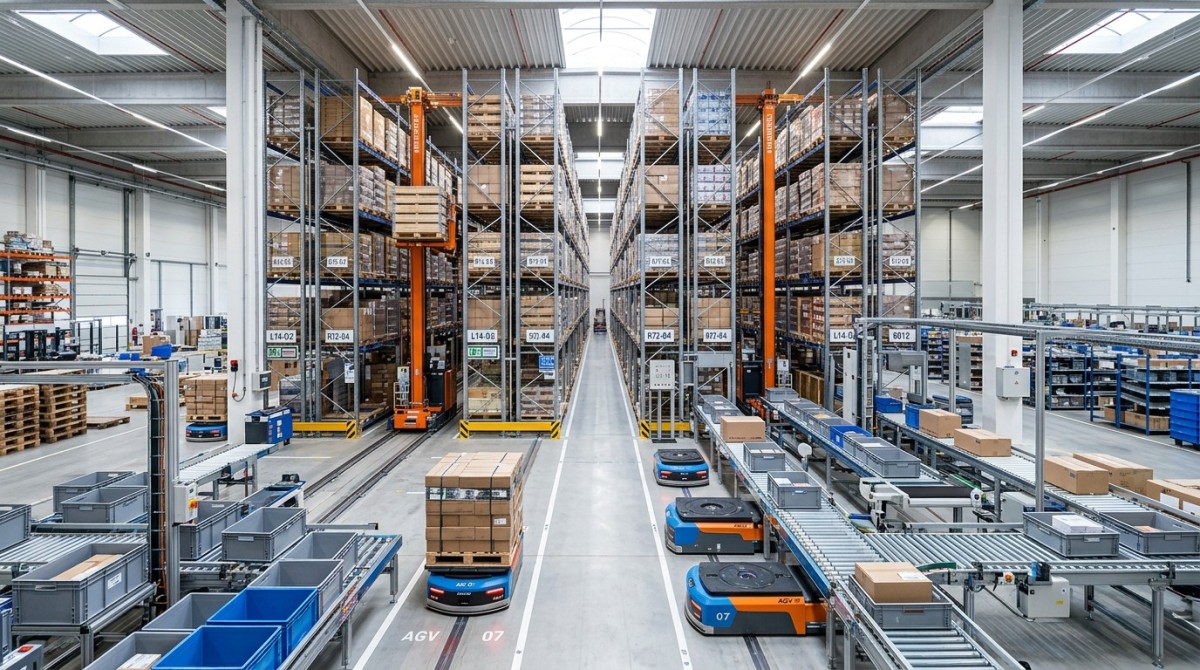
Many warehouse automation projects underperform because companies focus on equipment capability instead of operational continuity. A new ASRS system may increase storage density, or AGV robots may reduce repetitive travel, but if slotting logic, replenishment timing, WMS integration, and operator training are not aligned, the warehouse can experience temporary bottlenecks that outweigh early gains.
The most common sources of disruption include:
- Installation downtime: Racking changes, conveyor tie-ins, charging areas, and software cutovers can interrupt normal picking and replenishment.
- Workflow mismatch: Automation designed for stable, high-volume SKU profiles may struggle in fast-changing mixed-order environments.
- Data quality issues: Poor location accuracy, bad master data, and inconsistent barcoding can reduce the benefits of automated storage and retrieval.
- Labor adaptation delays: Even strong teams need time to adjust to new pick paths, exception handling, and safety rules.
- Integration gaps: TMS software, WMS, ERP, and warehouse control systems must exchange clean real-time data.
- Over-automation: A technically impressive system may be too rigid for seasonal volatility or product mix changes.
For most businesses, the throughput impact is not caused by one dramatic failure. It comes from many small frictions: slower exception handling, temporary congestion, incomplete process redesign, and underestimated change management.
What decision-makers should evaluate before approving an upgrade
Before investing in warehouse automation, stakeholders should define the operational problem clearly. Not every throughput issue requires a major capital project. Some warehouses suffer primarily from poor slotting, weak labor planning, outdated replenishment rules, or low inventory accuracy. In those cases, software optimization or process redesign may deliver a faster payback than a full automation buildout.
Decision-makers should assess six areas:
- Current throughput constraints: Identify whether the real bottleneck is picking, putaway, replenishment, staging, packing, transport coordination, or inventory visibility.
- Demand profile: Review SKU count, order volatility, peak season swings, returns volume, and service-level commitments.
- Facility readiness: Check floor conditions, ceiling height, fire protection requirements, power capacity, wireless coverage, and traffic layout.
- System architecture: Confirm whether existing WMS, TMS software, and ERP systems can support new automation logic.
- Labor model: Determine how roles, supervision, maintenance, and training will change after implementation.
- Financial threshold: Define acceptable payback period, risk tolerance, and phased investment strategy.
This pre-approval stage is especially important for procurement teams and financial approvers. The best automation proposal is not necessarily the one with the highest projected speed. It is the one that solves a proven bottleneck with manageable implementation risk and measurable ROI.
Which automation upgrades are most likely to disrupt daily operations
Different technologies create different levels of operational change. Understanding disruption risk by category helps project leaders choose the right implementation path.
ASRS systems and automated storage and retrieval
ASRS systems can significantly improve storage density, retrieval precision, and labor efficiency, especially in high-volume environments with repetitive flows. However, they often require major layout redesign, inventory migration, software coordination, and carefully controlled commissioning. They are highly effective when SKU movement is predictable, but they can create complexity if product dimensions, order profiles, or demand patterns shift frequently.
AGV robots and autonomous material movement
AGV robots are attractive because they can reduce manual travel and support flexible routing. Yet they also affect aisle access, pedestrian safety, battery management, and traffic control. If route planning is weak or mixed traffic is poorly managed, congestion can increase rather than decrease. They work best when travel paths, task priorities, and exception protocols are clearly defined.
Smart warehousing software and orchestration platforms
Software-led smart warehousing upgrades often appear less disruptive than mechanical automation, but they can still affect throughput significantly. New task orchestration logic, dynamic slotting, labor dashboards, and real-time analytics can improve visibility, but only if data inputs are reliable and supervisors know how to act on the information.
Electronic shelf labels
Electronic shelf labels are usually less disruptive than large equipment installations and can improve location accuracy, reduce relabeling effort, and support dynamic updates. Their value is strongest in operations where frequent SKU or location changes create manual errors. The main risk lies in underestimating integration and process discipline.
Energy monitoring and power management systems
Energy monitoring is often treated as a secondary upgrade, but in automated warehouses it directly affects uptime, equipment life, and operating cost. Charging schedules, peak demand control, refrigeration interactions, and equipment loads all influence total performance. This is especially relevant where automation increases dependence on electrical infrastructure.
TMS software and dock-to-transport coordination
TMS software upgrades may not look like warehouse automation in the narrow sense, but they strongly affect daily throughput by improving dock scheduling, carrier coordination, load planning, and outbound timing. A warehouse can pick quickly and still miss throughput goals if transport execution remains fragmented.
How to modernize without damaging service levels
The safest approach is phased implementation. Instead of replacing multiple workflows at once, leading operators sequence upgrades based on throughput sensitivity, operational readiness, and measurable impact.
Effective risk-control practices include:
- Start with a bottleneck map: Quantify where orders slow down today and model how each upgrade changes flow.
- Phase by zone or function: Pilot one area, one product family, or one shift before scaling.
- Protect peak periods: Avoid major cutovers during seasonal surges, promotions, or contractual service windows.
- Build parallel processes: Maintain temporary manual fallback procedures during commissioning.
- Validate integration early: Test WMS, TMS software, ERP, scanners, sensors, and control interfaces before go-live.
- Train supervisors first: Frontline leaders must understand exception handling, not just normal workflows.
- Track ramp-up KPIs: Measure picks per hour, order cycle time, inventory accuracy, dock turnaround, and incident rates daily after launch.
For project managers and engineering leads, success depends on treating commissioning as an operational transition, not just a technical milestone. For users and operators, the difference between disruption and improvement often comes down to training quality, process clarity, and how quickly issues are resolved on the floor.
How to judge ROI beyond labor savings
Many automation business cases are too narrow. They focus mainly on headcount reduction, even though real warehouse ROI often comes from a broader mix of gains and risk reductions.
A stronger evaluation should include:
- Throughput resilience: Can the operation handle higher order volume without proportional labor growth?
- Accuracy improvement: Does the system reduce mis-picks, inventory discrepancies, and returns?
- Space utilization: Can ASRS systems or automated storage and retrieval free floor space or delay expansion?
- Transport efficiency: Does better warehouse-to-TMS coordination reduce detention, missed windows, or premium freight?
- Energy performance: Can energy monitoring reduce waste, manage charging loads, and lower operating expenses?
- Safety and compliance: Does the upgrade reduce forklift exposure, ergonomic strain, or incident risk?
- Scalability: Will the solution adapt to SKU growth, channel shifts, and new service requirements?
For financial approvers, the key question is whether the upgrade creates durable operational leverage. A system with a moderate first-year gain but high scalability and low disruption risk may be more valuable than a larger, more fragile automation investment.
What procurement, safety, and quality teams should not overlook
Automation buying decisions often become too engineering-led or too vendor-led. Cross-functional review is essential because warehouse performance depends on more than machine specifications.
Procurement teams should verify lifecycle support, spare parts availability, service response times, cybersecurity obligations, and integration responsibilities. They should also compare not just capital cost but total cost of ownership.
Safety managers should review traffic segregation, emergency stop logic, guarding, charging zones, pedestrian interactions, lockout-tagout procedures, and retraining needs. AGV robots and automated storage and retrieval systems can reduce some risks while creating new ones if safety planning is incomplete.
Quality and compliance teams should assess traceability, scan accuracy, location control, exception documentation, and product handling integrity. In regulated or sensitive product environments, automation must strengthen process control, not weaken it.
Distributors and channel partners should consider how warehouse upgrades affect order cut-off times, fill rates, and communication reliability. Service consistency matters as much as internal efficiency.
When a warehouse should delay automation instead of accelerating it
Sometimes the best decision is to postpone. Automation should be delayed when the operation lacks stable process discipline, has unreliable inventory data, faces unresolved layout constraints, or cannot support the required systems integration. It should also be approached carefully when demand patterns are highly uncertain or when a network redesign is likely in the near term.
Warning signs include:
- Frequent inventory inaccuracies
- Unclear SKU rationalization
- Poor slotting governance
- Weak maintenance capability
- No internal owner for change management
- Inadequate power or network infrastructure
- ROI that depends on unrealistic labor reductions
In these cases, foundational fixes often deliver better short-term results and create a stronger base for future smart warehousing investment.
Conclusion
Warehouse automation upgrades can transform capacity, accuracy, and cost performance, but only when they are matched to the real operational constraint and implemented with minimal disruption to daily throughput. The most effective programs do not begin with technology selection alone. They begin with bottleneck analysis, cross-functional planning, phased execution, and a realistic view of integration, safety, labor adoption, and energy management.
Whether evaluating AGV robots, ASRS systems, automated storage and retrieval, electronic shelf labels, smart warehousing software, energy monitoring tools, or TMS software, decision-makers should prioritize fit over hype. If an upgrade improves flow, protects service levels, scales with demand, and delivers measurable long-term ROI, it is a strategic asset. If it introduces complexity without solving the right problem, it becomes a costly disruption.
Get weekly intelligence in your inbox.
No noise. No sponsored content. Pure intelligence.
 Apr 23, 2026Taobao Factory Spark 3.0 Launches AI Workbench for SME Export FactoriesTaobao Factory Spark 3.0 Launches AI Workbench for SME Export Factories
 Apr 23, 2026TENENG Group Inspects IoT Safety Compliance at Jiangnan ChemicalTENENG Group Inspects IoT Safety Compliance at Jiangnan Chemical
 Apr 23, 2026China Launches First Embodied AI Open Data CommunityChina Launches First Embodied AI Open Data Community
 Apr 23, 2026PV Glass Prices Flat for 9 Weeks Amid Rising Integrated ProcurementPV Glass Prices Flat for 9 Weeks Amid Rising Integrated Procurement
 Apr 23, 20262984 NQI One-Stop Platforms Launched Nationwide2984 NQI One-Stop Platforms Launched Nationwide
 Apr 23, 2026China’s Green Smart Ship Tech Norms Accelerate BMS & Shore Power ExportChina’s Green Smart Ship Tech Norms Accelerate BMS & Shore Power Export
 Apr 23, 2026China Builds World's Largest Agri-Meteorological IoT NetworkChina Builds World's Largest Agri-Meteorological IoT Network
 Apr 23, 2026EU CBAM Carbon Tariff Enters Enforcement on April 1, 2026EU CBAM Carbon Tariff Enters Enforcement on April 1, 2026
 Apr 23, 2026Five Ministries Issue Zero-Carbon Factory Guidance for Export IndustriesFive Ministries Issue Zero-Carbon Factory Guidance for Export Industries
 Apr 23, 2026ISO Releases First Zero-Carbon City Standard — China’s Practices IncludedISO Releases First Zero-Carbon City Standard — China’s Practices Included
 Apr 22, 2026China Leads Global Offshore Wind Installations for 5th YearChina Leads Global Offshore Wind Installations for 5th Year
 Apr 22, 2026China Launches National Mine Safety IoT Monitoring NetworkChina Launches National Mine Safety IoT Monitoring Network
 Apr 22, 2026Yinchuan Boiler Pure Water Solution Certified for Middle East ProjectsYinchuan Boiler Pure Water Solution Certified for Middle East Projects
 Apr 22, 2026China to Enforce Mandatory EV Battery Recycling Standards by 2026China to Enforce Mandatory EV Battery Recycling Standards by 2026
 Apr 22, 2026Vietnam Launches Anti-Circumvention Probe on Electronic ComponentsVietnam Launches Anti-Circumvention Probe on Electronic Components
 Apr 22, 20262026 Shanghai Fastener Show: Robotic Fasteners Drive Overseas Procurement2026 Shanghai Fastener Show: Robotic Fasteners Drive Overseas Procurement
 Apr 22, 2026US BIS Adds EV On-Board Charger Crypto Modules to EAR Appendix 7US BIS Adds EV On-Board Charger Crypto Modules to EAR Appendix 7
 Apr 22, 2026TÜV Rheinland Updates BESS Certification: Propagation Blocking Now MandatoryTÜV Rheinland Updates BESS Certification: Propagation Blocking Now Mandatory
 Apr 22, 2026Red Sea Crisis Escalates: Suez AI Speed Limits & Slot Review from Apr 19Red Sea Crisis Escalates: Suez AI Speed Limits & Slot Review from Apr 19
 Apr 22, 2026EU CBAM Carbon Tariff Takes Effect April 1, 2026EU CBAM Carbon Tariff Takes Effect April 1, 2026
 Apr 21, 2026When to Replace CT Scanner Parts Before Downtime StartsWhen to Replace CT Scanner Parts Before Downtime Starts
 Apr 21, 2026How to Cut Costs in Lathe Turning Without ReworkHow to Cut Costs in Lathe Turning Without Rework
 Apr 21, 2026Lathe Turning Tolerances: What Can You Expect?Lathe Turning Tolerances: What Can You Expect?
 Apr 21, 2026How to Avoid Risks in Solar Panels WholesaleHow to Avoid Risks in Solar Panels Wholesale
 Apr 21, 2026Solar Panels Wholesale: How to Compare SuppliersSolar Panels Wholesale: How to Compare Suppliers
 Apr 21, 2026Solar Mounting Cost Factors You Should KnowSolar Mounting Cost Factors You Should Know
 Apr 21, 2026Solar Mounting Options: Which One Fits Your Project?Solar Mounting Options: Which One Fits Your Project?