
Are die casting parts ready for electric vehicle demands
As electric mobility accelerates, manufacturers are under pressure to deliver lighter, stronger, and more scalable components.
But are die casting parts for electric vehicles truly ready to meet rising demands for thermal management, structural integrity, and cost efficiency?
This article explores how die casting is evolving to support EV production, where its biggest advantages lie, and what challenges buyers and engineers still need to evaluate.
Are die casting parts for electric vehicles ready for mainstream EV demand?
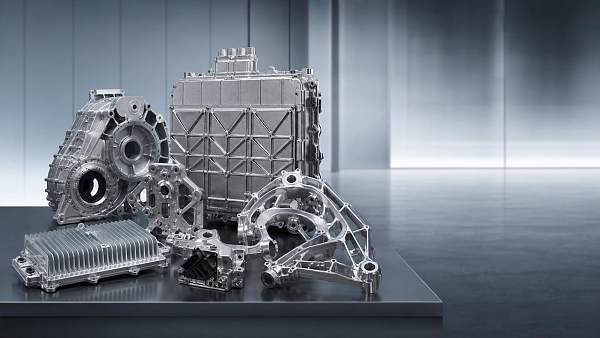
Yes, in many applications, die casting parts for electric vehicles are already production-ready and strategically important.
They are especially well suited for housings, structural brackets, motor components, battery enclosures, and thermal management parts.
However, readiness is not universal across every EV component, alloy choice, geometry, or performance requirement.
Buyers should view die casting as a mature but application-specific solution rather than a one-size-fits-all manufacturing answer.
The core question is no longer whether die casting can serve EVs, but where it creates the most value with the least risk.
What is the real search intent behind this topic?
Readers searching this topic usually want more than a definition of die casting or a list of automotive parts.
They are often evaluating whether die casting can meet EV requirements at scale, without compromising safety, cost, or reliability.
Information researchers also want to understand supplier readiness, process limitations, and where design expectations may exceed actual manufacturing capability.
In practical terms, they are asking three things: Is it technically viable, economically attractive, and operationally dependable for EV programs?
That means the most useful content must focus on performance tradeoffs, manufacturing fit, and decision criteria, not broad industry generalities.
Why EV manufacturers are increasing their use of die cast components
Electric vehicles place unique demands on part design because battery systems, power electronics, and lightweighting targets reshape the entire vehicle architecture.
Compared with internal combustion vehicles, EVs require tighter control over heat, weight, packaging efficiency, and electrical system protection.
Die casting supports these needs by enabling complex shapes, thin walls, repeatable dimensions, and high-volume output with relatively low per-unit cost.
It also reduces part count by consolidating multiple pieces into one integrated casting, which can simplify assembly and improve production throughput.
For manufacturers scaling EV programs, these advantages make die casting highly attractive in both established platforms and next-generation vehicle designs.
Which EV components are the best fit for die casting?
Not every electric vehicle part is a good candidate, but several categories consistently align well with die casting strengths.
Motor housings are a strong example because they need dimensional accuracy, structural rigidity, and effective thermal behavior in compact assemblies.
Inverter and control unit housings also benefit from castability, especially when designs require shielding, mounting features, and heat dissipation paths.
Battery pack frames, covers, and auxiliary brackets increasingly use aluminum die castings where lightweight strength and manufacturing speed matter.
Other common applications include gearbox cases, charging system housings, pump bodies, sensor mounts, and thermal system connectors.
Large structural castings are gaining attention as well, although these require more advanced equipment, tighter process control, and deeper supplier expertise.
Where die casting creates the biggest value in EV production
The strongest business case for die casting usually comes from combining performance benefits with manufacturing efficiency.
First, lightweight materials such as aluminum support vehicle range improvements by helping reduce total mass.
Second, the process can deliver near-net-shape parts, lowering downstream machining and reducing wasted material compared with other methods.
Third, complex integration can reduce assembly steps, fasteners, joining operations, and potential tolerance stack-up across multiple components.
For procurement and supply chain teams, these advantages often translate into more predictable unit economics at high production volumes.
For engineering teams, the value lies in design flexibility, repeatability, and the ability to balance structural and functional requirements in one part.
Can die casting meet EV requirements for thermal management?
Thermal management is one of the most important concerns in EV design, and die casting can perform well in this area when properly engineered.
Aluminum die cast parts offer good thermal conductivity, making them suitable for enclosures and housings that must transfer or dissipate heat.
This is particularly relevant for battery-related systems, onboard chargers, inverters, and motors where heat affects efficiency and component lifespan.
Die casting also allows designers to integrate cooling fins, channels, ribs, and mounting interfaces directly into the part geometry.
That said, thermal performance depends heavily on alloy selection, wall thickness, surface quality, and the broader thermal system design.
Buyers should avoid assuming that every cast part automatically solves heat issues without simulation, validation, and application-specific testing.
How strong and reliable are die cast parts in EV structures?
Structural integrity remains a critical question, especially as EV makers push for lighter platforms without compromising crashworthiness or durability.
Modern die casting can deliver strong and reliable parts, but actual performance depends on process quality, part geometry, and alloy behavior.
High-pressure die casting is widely used for parts requiring stiffness and dimensional consistency, though porosity control remains essential.
If a part will face high fatigue loads, impact scenarios, or demanding joining conditions, engineering validation becomes even more important.
Large structural castings have expanded what is possible, but they also raise the stakes for tooling precision and process stability.
In other words, die casting is structurally capable, but only when the design and supplier capability match the functional demands of the part.
What challenges still limit die casting in electric vehicle applications?
Despite its clear advantages, die casting is not free from limitations, and serious buyers should understand these before committing to sourcing decisions.
Porosity remains one of the most discussed issues because trapped gas or shrinkage can affect strength, leak tightness, and machining results.
Some EV applications also demand post-processing, welding, or heat treatment, which may be harder with certain die cast materials or process routes.
Tooling costs are another consideration, especially for new programs without stable volume forecasts or finalized design geometry.
Complex parts can introduce risks in filling behavior, warpage, dimensional variation, and local weakness if manufacturability is not addressed early.
There are also supply chain concerns, including capacity concentration, die maintenance capability, and differences in quality systems across regions.
How process evolution is making die casting more EV-ready
The good news is that die casting technology has advanced significantly in response to automotive electrification and lightweighting pressure.
Vacuum-assisted processes help reduce gas entrapment and improve internal quality, which is valuable for leak-sensitive and structural components.
Better simulation software now allows manufacturers to optimize flow, cooling, solidification, and die design before production begins.
Improved alloys, more stable machines, and tighter process monitoring are also making cast parts more consistent across high-volume runs.
In some cases, integrated giga-casting strategies are redefining how vehicle structures are designed and assembled at the platform level.
These developments suggest that die casting is not just keeping up with EV demand, but actively shaping the next phase of vehicle manufacturing.
What should buyers and engineers evaluate before choosing die casting?
For information researchers comparing manufacturing options, the smartest approach is to use a structured evaluation rather than relying on headline claims.
Start with application fit: what loads, temperatures, sealing requirements, and dimensional tolerances will the part actually face in service?
Then assess design suitability: can the geometry be cast efficiently, or will excessive machining and rework erase expected savings?
Next, review material compatibility, surface requirements, joining needs, and whether the part may be exposed to corrosion or electrical sensitivity.
Supplier capability is equally important, including tooling design strength, simulation competence, quality records, and automotive program management experience.
Finally, compare total cost of ownership, not just piece price, by including scrap risk, cycle time, lead time, validation burden, and assembly impact.
How to tell whether a die casting supplier is truly ready for EV programs
Not every die casting company that serves automotive markets is prepared for the technical and operational demands of electric vehicle production.
EV-ready suppliers should demonstrate strong process control, metallurgical knowledge, and proven experience with complex, high-specification components.
Ask whether they support design-for-manufacturing reviews, mold flow simulation, leak testing, dimensional validation, and traceable quality documentation.
It is also useful to examine their experience with battery-related housings, e-drive components, or other parts relevant to electrified platforms.
Suppliers should be able to discuss porosity mitigation, thermal performance considerations, secondary machining strategy, and scalability for volume ramp-up.
For B2B decision-makers, supplier maturity often matters as much as process capability because EV timelines leave little room for unstable execution.
Is die casting the right choice for every EV part?
No, and this is where realistic decision-making matters most.
Some parts may be better produced through extrusion, forging, stamping, machining, plastic molding, or hybrid manufacturing approaches.
If a component requires extreme ductility, highly specialized material properties, or low production volume, die casting may not be the best option.
Likewise, if the design is likely to change repeatedly, the high tooling investment can become a disadvantage.
The best use cases are typically medium-to-high volume parts where geometry complexity, weight reduction, and integration deliver measurable returns.
That is why successful EV sourcing teams treat die casting as a strategic option within a broader manufacturing portfolio.
Final assessment: are die casting parts ready for electric vehicle demands?
Overall, yes, die casting parts for electric vehicles are ready for many of today’s most important applications, and their role will continue to expand.
The process already supports key EV needs in lightweighting, thermal functionality, dimensional precision, and scalable production efficiency.
Its readiness, however, depends on matching the right part to the right process, alloy, design rules, and supplier capability.
For information researchers, the clearest takeaway is that die casting is neither a universal answer nor a niche option.
It is a mature and increasingly advanced manufacturing solution that can create major value when technical fit and execution discipline are both present.
Companies evaluating die casting for EV programs should focus less on hype and more on application-specific evidence, supplier readiness, and lifecycle economics.
Get weekly intelligence in your inbox.
No noise. No sponsored content. Pure intelligence.
 Oct 08, 2026How Digital Health Improves Diagnostic Accuracy and Workflow in Clinical LabsHow Digital Health Improves Diagnostic Accuracy and Workflow in Clinical Labs
 Oct 07, 2026Selecting Voice Picking Systems for German Warehouses: Integration, Languages and ROISelecting Voice Picking Systems for German Warehouses: Integration, Languages and ROI
 Oct 06, 2026How to Choose Last Mile Dispatch Software for On-Time Delivery at ScaleHow to Choose Last Mile Dispatch Software for On-Time Delivery at Scale
 Oct 05, 2026Vietnam’s Consumer Electronics Market: Demand Shifts and Sourcing OpportunitiesVietnam’s Consumer Electronics Market: Demand Shifts and Sourcing Opportunities
 Oct 04, 2026Digital Health Investment Priorities for Providers: Improving Access, Outcomes, and EfficiencyDigital Health Investment Priorities for Providers: Improving Access, Outcomes, and Efficiency
 Oct 03, 2026How to Specify an FR4 Custom PCB Board for High-Voltage and High-Heat DesignsHow to Specify an FR4 Custom PCB Board for High-Voltage and High-Heat Designs
 Oct 02, 2026ERP Software Market Intelligence: Adoption, Pricing, and Vendor Signals to WatchERP Software Market Intelligence: Adoption, Pricing, and Vendor Signals to Watch
 Oct 01, 2026How to Select Calibrated Temperature Data Loggers for GMP Cold Storage MonitoringHow to Select Calibrated Temperature Data Loggers for GMP Cold Storage Monitoring
 Sep 30, 2026Custom Molded Rubber Pricing: What Drives Unit Cost and Tooling Fees?Custom Molded Rubber Pricing: What Drives Unit Cost and Tooling Fees?
 Sep 29, 2026How to Evaluate Energy Management Software Vendors for Multi-Site OperationsHow to Evaluate Energy Management Software Vendors for Multi-Site Operations
 Sep 28, 2026How to Select a DIN Rail Smart Meter for Multi-Circuit Energy MonitoringHow to Select a DIN Rail Smart Meter for Multi-Circuit Energy Monitoring
 Sep 27, 2026TWS Earbuds in Vietnam: Demand Drivers, Price Tiers, and Retail Channel OpportunitiesTWS Earbuds in Vietnam: Demand Drivers, Price Tiers, and Retail Channel Opportunities
 Sep 26, 2026How UAE Clinics Can Qualify a Smart Glucometer Supplier for Accuracy and ComplianceHow UAE Clinics Can Qualify a Smart Glucometer Supplier for Accuracy and Compliance
 Sep 25, 2026Buying Aesthetic Lasers in the USA: FDA Status, Wavelengths, and Service SupportBuying Aesthetic Lasers in the USA: FDA Status, Wavelengths, and Service Support
 Sep 24, 2026Laser Cutting Brass Sheet: How to Prevent Burrs and Heat Marks on Thin PartsLaser Cutting Brass Sheet: How to Prevent Burrs and Heat Marks on Thin Parts
 Sep 23, 2026How to Choose Lightweight ANC Headphones for Comfortable All-Day TravelHow to Choose Lightweight ANC Headphones for Comfortable All-Day Travel
 Sep 22, 2026IPX5 TWS Bluetooth Earbuds: What Protection Do They Offer for Workouts?IPX5 TWS Bluetooth Earbuds: What Protection Do They Offer for Workouts?
 Sep 21, 2026What to Look for in a Grid Integration Company for Utility-Scale Solar ProjectsWhat to Look for in a Grid Integration Company for Utility-Scale Solar Projects
 Sep 20, 2026Microgrid Controller Pricing: What Drives Cost in Commercial Energy Projects?Microgrid Controller Pricing: What Drives Cost in Commercial Energy Projects?
 Sep 19, 2026How to Choose a GaN Charger for Laptops Without Compromising Power or PortabilityHow to Choose a GaN Charger for Laptops Without Compromising Power or Portability
 Sep 18, 2026Floating Solar Farm Costs: CAPEX, OPEX, and the Site Factors That Shape ROIFloating Solar Farm Costs: CAPEX, OPEX, and the Site Factors That Shape ROI
 Sep 17, 2026Drone Delivery Solutions for Last-Mile Routes: Site, Payload, and Range PlanningDrone Delivery Solutions for Last-Mile Routes: Site, Payload, and Range Planning
 Sep 16, 2026When Low-Volume Electronics Manufacturing Makes More Sense Than Mass ProductionWhen Low-Volume Electronics Manufacturing Makes More Sense Than Mass Production
 Sep 15, 2026Wholesale WiFi Smart Switches: What Buyers Should Verify Before OrderingWholesale WiFi Smart Switches: What Buyers Should Verify Before Ordering
 Sep 14, 2026How to Select IoT Sensors for Reliable Monitoring in Harsh Industrial EnvironmentsHow to Select IoT Sensors for Reliable Monitoring in Harsh Industrial Environments
 Sep 13, 2026How Procurement Teams Can Improve Supplier Reliability With Supply Chain VisibilityHow Procurement Teams Can Improve Supplier Reliability With Supply Chain Visibility
 Sep 12, 2026Smart Manufacturing Trends 2026: What Leaders Should Prioritize for ROISmart Manufacturing Trends 2026: What Leaders Should Prioritize for ROI



























