
China's NMPA Releases 9th Batch of AI Supervision 'Two Libraries' for Remote Diagnostic Devices
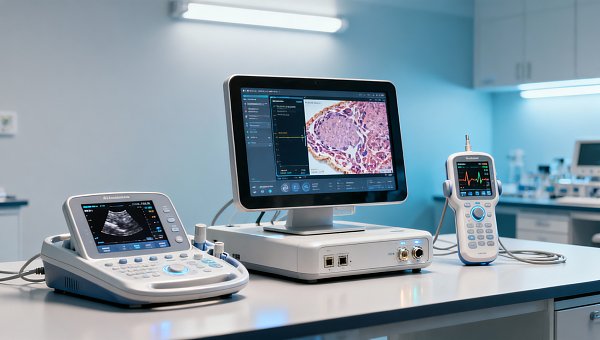
On April 27, 2026, China’s National Medical Security Administration (NMSA) published the ninth batch of its intelligent medical insurance supervision ‘knowledge base + rule base’ (‘two libraries’), introducing clinical usage standards and quality control requirements for 12 categories of diagnostic equipment—including remote ultrasound, AI-assisted pathology analysis, and portable ECG devices. This update signals heightened regulatory alignment between domestic clinical governance and overseas market access, particularly for exporters of remote diagnostic devices targeting emerging markets such as Singapore and Saudi Arabia.
Event Overview
On April 27, 2026, the National Medical Security Administration (NMSA) publicly released the ninth batch of its intelligent supervision ‘knowledge base + rule base’. The update includes clinical usage specifications and quality control points for 12 types of diagnostic equipment: remote ultrasound systems, AI-assisted pathology analysis tools, and portable electrocardiogram (ECG) devices, among others. The NMSA confirmed that regulatory authorities in Singapore (Health Sciences Authority, HSA) and Saudi Arabia (Saudi Food and Drug Authority, SFDA) are referencing these ‘two libraries’ in their product review processes. Exporters of remote diagnostic devices must now align with both China’s clinical regulatory logic and overseas registration requirements to achieve ‘single development, dual-market access’.
Industries Affected
Export-Oriented Medical Device Manufacturers
These enterprises are directly impacted because the NMSA’s clinical usage norms—though developed for domestic reimbursement oversight—are now being cited by foreign regulators as part of technical evaluation. Compliance with the ‘two libraries’ is no longer optional for market entry into jurisdictions adopting them as reference material.
Regulatory Affairs & Clinical Strategy Teams
Professionals responsible for global registration pathways must now integrate China’s clinical utilization logic—not just safety and performance data—into pre-submission planning. The ‘two libraries’ introduce new expectations around real-world clinical deployment, operator training, and output validation, which may affect labeling, instructions for use, and post-market surveillance plans.
Supply Chain & Quality Assurance Providers
Third-party QA auditors, certification bodies, and contract manufacturers supporting export-oriented device firms face increased scrutiny on documentation traceability—particularly regarding how clinical workflows (e.g., remote interpretation protocols or AI result verification steps) are embedded into design history files and risk management dossiers.
What Enterprises and Practitioners Should Focus On Now
Monitor official cross-references and implementation guidance
While Singapore HSA and Saudi SFDA have indicated use of the ‘two libraries’ as a reference, neither has formally adopted them as binding requirements. Enterprises should track official statements from these agencies—and any subsequent guidance documents—to distinguish between informal benchmarking and enforceable obligations.
Prioritize clinical workflow documentation for high-impact device categories
The 12 newly covered device types (e.g., remote ultrasound, AI-assisted pathology tools) represent priority areas. Firms should audit existing clinical evaluation reports and usability studies to ensure alignment with the NMSA’s specified clinical use cases, operator qualifications, and output verification steps outlined in the ninth batch.
Differentiate between policy signal and operational impact
This release reflects an evolving convergence of reimbursement logic and regulatory review—not an immediate change in CE marking, FDA 510(k), or GCC conformity assessment criteria. Companies should avoid overhauling submissions prematurely; instead, treat it as a forward-looking indicator for upcoming clinical evidence expectations in bilateral technical consultations.
Update internal alignment between R&D, regulatory, and clinical teams
Since the ‘two libraries’ emphasize real-world clinical integration (e.g., how AI outputs are validated before diagnosis), cross-functional coordination—especially between software development, clinical affairs, and regulatory strategy—is essential. Firms should initiate internal gap assessments focusing on traceability from algorithm design to documented clinical decision support workflows.
Editorial Perspective / Industry Observation
Observably, this ninth batch functions primarily as a regulatory signaling mechanism—not yet a binding compliance requirement outside China. Its significance lies not in immediate enforcement, but in the precedent it sets: domestic clinical governance frameworks are gaining traction as international technical benchmarks. Analysis shows that this trend reflects a broader shift where health technology assessment (HTA) criteria, reimbursement logic, and clinical utility expectations increasingly inform pre-market review—especially in middle-income markets seeking efficient, evidence-informed evaluation pathways. From an industry perspective, the ‘two libraries’ are better understood as an early-stage harmonization vector rather than a standalone standard. Continuous monitoring is warranted, particularly as more ASEAN and GCC regulators cite similar references in public consultation drafts.
In summary, the NMSA’s ninth batch of the ‘two libraries’ does not impose new legal obligations on exporters—but it does redefine the evidentiary landscape for clinical credibility in key growth markets. It is not a regulation, nor a certification hurdle; rather, it is an emerging reference point shaping how clinical value and safe integration of remote diagnostics are assessed globally. Current interpretation should focus on strategic preparedness—not urgent compliance action.
Source: National Medical Security Administration (NMSA) official announcement, April 27, 2026. Note: Ongoing observation is recommended for formal adoption status by Singapore HSA and Saudi SFDA, as neither agency has issued binding implementation rules referencing the ‘two libraries’ at time of publication.
Get weekly intelligence in your inbox.
No noise. No sponsored content. Pure intelligence.
 Oct 08, 2026How Digital Health Improves Diagnostic Accuracy and Workflow in Clinical LabsHow Digital Health Improves Diagnostic Accuracy and Workflow in Clinical Labs
 Oct 07, 2026Selecting Voice Picking Systems for German Warehouses: Integration, Languages and ROISelecting Voice Picking Systems for German Warehouses: Integration, Languages and ROI
 Oct 06, 2026How to Choose Last Mile Dispatch Software for On-Time Delivery at ScaleHow to Choose Last Mile Dispatch Software for On-Time Delivery at Scale
 Oct 05, 2026Vietnam’s Consumer Electronics Market: Demand Shifts and Sourcing OpportunitiesVietnam’s Consumer Electronics Market: Demand Shifts and Sourcing Opportunities
 Oct 04, 2026Digital Health Investment Priorities for Providers: Improving Access, Outcomes, and EfficiencyDigital Health Investment Priorities for Providers: Improving Access, Outcomes, and Efficiency
 Oct 03, 2026How to Specify an FR4 Custom PCB Board for High-Voltage and High-Heat DesignsHow to Specify an FR4 Custom PCB Board for High-Voltage and High-Heat Designs
 Oct 02, 2026ERP Software Market Intelligence: Adoption, Pricing, and Vendor Signals to WatchERP Software Market Intelligence: Adoption, Pricing, and Vendor Signals to Watch
 Oct 01, 2026How to Select Calibrated Temperature Data Loggers for GMP Cold Storage MonitoringHow to Select Calibrated Temperature Data Loggers for GMP Cold Storage Monitoring
 Sep 30, 2026Custom Molded Rubber Pricing: What Drives Unit Cost and Tooling Fees?Custom Molded Rubber Pricing: What Drives Unit Cost and Tooling Fees?
 Sep 29, 2026How to Evaluate Energy Management Software Vendors for Multi-Site OperationsHow to Evaluate Energy Management Software Vendors for Multi-Site Operations
 Sep 28, 2026How to Select a DIN Rail Smart Meter for Multi-Circuit Energy MonitoringHow to Select a DIN Rail Smart Meter for Multi-Circuit Energy Monitoring
 Sep 27, 2026TWS Earbuds in Vietnam: Demand Drivers, Price Tiers, and Retail Channel OpportunitiesTWS Earbuds in Vietnam: Demand Drivers, Price Tiers, and Retail Channel Opportunities
 Sep 26, 2026How UAE Clinics Can Qualify a Smart Glucometer Supplier for Accuracy and ComplianceHow UAE Clinics Can Qualify a Smart Glucometer Supplier for Accuracy and Compliance
 Sep 25, 2026Buying Aesthetic Lasers in the USA: FDA Status, Wavelengths, and Service SupportBuying Aesthetic Lasers in the USA: FDA Status, Wavelengths, and Service Support
 Sep 24, 2026Laser Cutting Brass Sheet: How to Prevent Burrs and Heat Marks on Thin PartsLaser Cutting Brass Sheet: How to Prevent Burrs and Heat Marks on Thin Parts
 Sep 23, 2026How to Choose Lightweight ANC Headphones for Comfortable All-Day TravelHow to Choose Lightweight ANC Headphones for Comfortable All-Day Travel
 Sep 22, 2026IPX5 TWS Bluetooth Earbuds: What Protection Do They Offer for Workouts?IPX5 TWS Bluetooth Earbuds: What Protection Do They Offer for Workouts?
 Sep 21, 2026What to Look for in a Grid Integration Company for Utility-Scale Solar ProjectsWhat to Look for in a Grid Integration Company for Utility-Scale Solar Projects
 Sep 20, 2026Microgrid Controller Pricing: What Drives Cost in Commercial Energy Projects?Microgrid Controller Pricing: What Drives Cost in Commercial Energy Projects?
 Sep 19, 2026How to Choose a GaN Charger for Laptops Without Compromising Power or PortabilityHow to Choose a GaN Charger for Laptops Without Compromising Power or Portability
 Sep 18, 2026Floating Solar Farm Costs: CAPEX, OPEX, and the Site Factors That Shape ROIFloating Solar Farm Costs: CAPEX, OPEX, and the Site Factors That Shape ROI
 Sep 17, 2026Drone Delivery Solutions for Last-Mile Routes: Site, Payload, and Range PlanningDrone Delivery Solutions for Last-Mile Routes: Site, Payload, and Range Planning
 Sep 16, 2026When Low-Volume Electronics Manufacturing Makes More Sense Than Mass ProductionWhen Low-Volume Electronics Manufacturing Makes More Sense Than Mass Production
 Sep 15, 2026Wholesale WiFi Smart Switches: What Buyers Should Verify Before OrderingWholesale WiFi Smart Switches: What Buyers Should Verify Before Ordering
 Sep 14, 2026How to Select IoT Sensors for Reliable Monitoring in Harsh Industrial EnvironmentsHow to Select IoT Sensors for Reliable Monitoring in Harsh Industrial Environments
 Sep 13, 2026How Procurement Teams Can Improve Supplier Reliability With Supply Chain VisibilityHow Procurement Teams Can Improve Supplier Reliability With Supply Chain Visibility
 Sep 12, 2026Smart Manufacturing Trends 2026: What Leaders Should Prioritize for ROISmart Manufacturing Trends 2026: What Leaders Should Prioritize for ROI



























