
Batter Mixers Shift to Process Integration Amid Export Surge
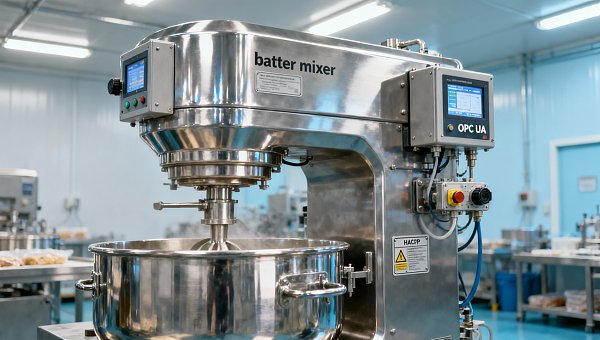
Amid growing overseas demand from pet food and meat processing sectors, Chinese manufacturers of batter mixers are experiencing a strategic shift toward process-integrated equipment solutions. Though the exact timing remains unconfirmed, industry data points to 2026 as the inflection year when downstream clients—particularly in Vietnam, Thailand, and Mexico—began prioritizing system-level performance over standalone machine specs. This trend is reshaping procurement behavior across global food-grade industrial equipment supply chains.
Event Overview
In 2026, downstream pet food and meat deep-processing enterprises raised new technical requirements for full-line batter mixer systems—emphasizing operational stability, line integration adaptability, and built-in process control aligned with HACCP standards. As a result, exports of Chinese-made high-precision transmission systems, programmable temperature-control modules, and HACCP-compliant control units increased notably. Orders from Vietnam, Thailand, and Mexico collectively accounted for 37% of total batter mixer-related export volume, signaling deeper integration of China’s food-grade industrial equipment into core global food processing infrastructure.
Industries Affected
Direct Trading Enterprises: Export-oriented equipment traders face intensified technical pre-sales demands—including validation of HACCP logic mapping, third-party food-contact material certifications, and on-site commissioning support. Revenue growth is now tied less to unit volume and more to bundled engineering service margins.
Raw Material Procurement Enterprises: Suppliers of precision gears, stainless-steel actuators, and embedded controllers report tighter lead-time expectations and rising requests for traceable, FDA-compliant material documentation—especially for components destined for ASEAN and North American markets.
Equipment Manufacturing Enterprises: Domestic OEMs are reconfiguring R&D priorities: mechanical design teams now collaborate earlier with food safety compliance specialists, and firmware development cycles have extended to accommodate regional regulatory logic (e.g., Thai FDA Annex III, Mexican NOM-251). Production lines are adapting to smaller batch runs of highly customized configurations.
Supply Chain Service Providers: Logistics firms specializing in industrial equipment see higher demand for temperature-monitored sea freight, customs classification advisory (e.g., HS Code 8438.80 vs. 8479.89), and post-shipment technical handover coordination—especially where local installers lack HACCP automation integration experience.
Key Considerations and Recommended Actions
Align product documentation with regional food safety frameworks
Manufacturers should map each control module’s functional safety logic against target-market HACCP prerequisites—not just generic ISO 22000 claims. For example, Mexican buyers increasingly require documented Critical Control Point (CCP) response latency under thermal deviation scenarios.
Prioritize modular architecture over monolithic designs
Observably, Southeast Asian integrators prefer plug-and-play interfaces (e.g., OPC UA-enabled I/O) that allow seamless retrofitting into legacy lines. Modular thermal management units—rather than integrated jacketed bowls—are gaining traction in tropical climates.
Strengthen local technical capacity in priority markets
Exporters reporting sustained growth in Vietnam and Thailand cite in-country calibration labs and bilingual service technicians—not just distributor networks—as decisive competitive advantages.
Editorial Insight / Industry Observation
This trend is better understood not as an equipment upgrade cycle, but as a structural recalibration of value capture along the food machinery value chain. Analysis shows that revenue share from software-defined features (e.g., recipe memory, audit-trail logging, remote diagnostics) rose from 12% to 29% in high-spec exports between 2023–2026. Current evidence suggests that ‘process integration’ is becoming a threshold requirement—not a differentiator—for market access in regulated food manufacturing zones.
Conclusion
The rise of process-integrated batter mixer systems reflects a broader maturation in China’s food-grade industrial equipment sector: from component supplier to trusted subsystem partner. While export growth is encouraging, long-term competitiveness will hinge less on mechanical precision alone and more on interoperability assurance, regulatory agility, and embedded food safety intelligence.
Source Attribution
Data drawn from China Food Machinery Association (CFMA) 2026 Export Technical Survey; U.S. FDA Foreign Supplier Verification Program (FSVP) audit trends (FY2025); ASEAN Centre for Food Safety & Standards (ACFSS) Equipment Compliance Bulletin Q2 2026. Note: Regulatory implementation timelines in Mexico’s NOM-251 enforcement and Vietnam’s Decree 15/2018/ND-CP updates remain under active monitoring.
Get weekly intelligence in your inbox.
No noise. No sponsored content. Pure intelligence.
 Oct 08, 2026How Digital Health Improves Diagnostic Accuracy and Workflow in Clinical LabsHow Digital Health Improves Diagnostic Accuracy and Workflow in Clinical Labs
 Oct 07, 2026Selecting Voice Picking Systems for German Warehouses: Integration, Languages and ROISelecting Voice Picking Systems for German Warehouses: Integration, Languages and ROI
 Oct 06, 2026How to Choose Last Mile Dispatch Software for On-Time Delivery at ScaleHow to Choose Last Mile Dispatch Software for On-Time Delivery at Scale
 Oct 05, 2026Vietnam’s Consumer Electronics Market: Demand Shifts and Sourcing OpportunitiesVietnam’s Consumer Electronics Market: Demand Shifts and Sourcing Opportunities
 Oct 04, 2026Digital Health Investment Priorities for Providers: Improving Access, Outcomes, and EfficiencyDigital Health Investment Priorities for Providers: Improving Access, Outcomes, and Efficiency
 Oct 03, 2026How to Specify an FR4 Custom PCB Board for High-Voltage and High-Heat DesignsHow to Specify an FR4 Custom PCB Board for High-Voltage and High-Heat Designs
 Oct 02, 2026ERP Software Market Intelligence: Adoption, Pricing, and Vendor Signals to WatchERP Software Market Intelligence: Adoption, Pricing, and Vendor Signals to Watch
 Oct 01, 2026How to Select Calibrated Temperature Data Loggers for GMP Cold Storage MonitoringHow to Select Calibrated Temperature Data Loggers for GMP Cold Storage Monitoring
 Sep 30, 2026Custom Molded Rubber Pricing: What Drives Unit Cost and Tooling Fees?Custom Molded Rubber Pricing: What Drives Unit Cost and Tooling Fees?
 Sep 29, 2026How to Evaluate Energy Management Software Vendors for Multi-Site OperationsHow to Evaluate Energy Management Software Vendors for Multi-Site Operations
 Sep 28, 2026How to Select a DIN Rail Smart Meter for Multi-Circuit Energy MonitoringHow to Select a DIN Rail Smart Meter for Multi-Circuit Energy Monitoring
 Sep 27, 2026TWS Earbuds in Vietnam: Demand Drivers, Price Tiers, and Retail Channel OpportunitiesTWS Earbuds in Vietnam: Demand Drivers, Price Tiers, and Retail Channel Opportunities
 Sep 26, 2026How UAE Clinics Can Qualify a Smart Glucometer Supplier for Accuracy and ComplianceHow UAE Clinics Can Qualify a Smart Glucometer Supplier for Accuracy and Compliance
 Sep 25, 2026Buying Aesthetic Lasers in the USA: FDA Status, Wavelengths, and Service SupportBuying Aesthetic Lasers in the USA: FDA Status, Wavelengths, and Service Support
 Sep 24, 2026Laser Cutting Brass Sheet: How to Prevent Burrs and Heat Marks on Thin PartsLaser Cutting Brass Sheet: How to Prevent Burrs and Heat Marks on Thin Parts
 Sep 23, 2026How to Choose Lightweight ANC Headphones for Comfortable All-Day TravelHow to Choose Lightweight ANC Headphones for Comfortable All-Day Travel
 Sep 22, 2026IPX5 TWS Bluetooth Earbuds: What Protection Do They Offer for Workouts?IPX5 TWS Bluetooth Earbuds: What Protection Do They Offer for Workouts?
 Sep 21, 2026What to Look for in a Grid Integration Company for Utility-Scale Solar ProjectsWhat to Look for in a Grid Integration Company for Utility-Scale Solar Projects
 Sep 20, 2026Microgrid Controller Pricing: What Drives Cost in Commercial Energy Projects?Microgrid Controller Pricing: What Drives Cost in Commercial Energy Projects?
 Sep 19, 2026How to Choose a GaN Charger for Laptops Without Compromising Power or PortabilityHow to Choose a GaN Charger for Laptops Without Compromising Power or Portability
 Sep 18, 2026Floating Solar Farm Costs: CAPEX, OPEX, and the Site Factors That Shape ROIFloating Solar Farm Costs: CAPEX, OPEX, and the Site Factors That Shape ROI
 Sep 17, 2026Drone Delivery Solutions for Last-Mile Routes: Site, Payload, and Range PlanningDrone Delivery Solutions for Last-Mile Routes: Site, Payload, and Range Planning
 Sep 16, 2026When Low-Volume Electronics Manufacturing Makes More Sense Than Mass ProductionWhen Low-Volume Electronics Manufacturing Makes More Sense Than Mass Production
 Sep 15, 2026Wholesale WiFi Smart Switches: What Buyers Should Verify Before OrderingWholesale WiFi Smart Switches: What Buyers Should Verify Before Ordering
 Sep 14, 2026How to Select IoT Sensors for Reliable Monitoring in Harsh Industrial EnvironmentsHow to Select IoT Sensors for Reliable Monitoring in Harsh Industrial Environments
 Sep 13, 2026How Procurement Teams Can Improve Supplier Reliability With Supply Chain VisibilityHow Procurement Teams Can Improve Supplier Reliability With Supply Chain Visibility
 Sep 12, 2026Smart Manufacturing Trends 2026: What Leaders Should Prioritize for ROISmart Manufacturing Trends 2026: What Leaders Should Prioritize for ROI



























