
India’s BIS Releases IS 17730:2026 for IoT Data Sovereignty
On May 11, 2026, the Bureau of Indian Standards (BIS) published mandatory standard IS 17730:2026, requiring all IoT devices sold in India to embed a BIS-certified data sovereignty module supporting local key generation, storage, and audit capabilities. Enforcement begins August 1, 2026 — leaving just 76 days for compliance. This development directly affects IoT hardware manufacturers, importers, distributors, and enterprise solution providers operating in or exporting to the Indian market.
Event Overview
The Bureau of Indian Standards (BIS) officially issued IS 17730:2026 on May 11, 2026. The standard mandates that all IoT devices placed on the Indian market must incorporate a BIS-certified data sovereignty module. This module must support local cryptographic key generation, secure local key storage, and auditable key lifecycle management. Full enforcement takes effect on August 1, 2026. No further transitional extensions or exemptions have been announced publicly.
Industries Affected by Segment
IoT Device Manufacturers (OEMs/ODMs)
Manufacturers producing IoT hardware for the Indian market must redesign or retrofit device firmware and hardware architecture to integrate certified data sovereignty modules. Impact includes revised bill-of-materials (BOM), additional certification testing cycles, and potential delays in product launch timelines.
Importers and Distributors of IoT Devices
Entities importing IoT devices into India will face customs clearance risks if products lack valid BIS certification under IS 17730:2026. Non-compliant inventory may be detained or rejected at port, triggering supply chain disruptions and financial exposure for unsold stock.
Enterprise IoT Solution Providers
System integrators and managed service providers deploying IoT solutions for Indian clients must verify end-device compliance as part of contractual delivery requirements. Non-compliant devices could invalidate service-level agreements (SLAs) or trigger liability clauses related to data governance and regulatory adherence.
Cloud and Platform Providers Supporting IoT Deployments
While IS 17730:2026 focuses on device-level key management, platform vendors offering remote provisioning, over-the-air (OTA) updates, or key orchestration services must ensure interoperability with locally hosted key management interfaces mandated by the standard — potentially requiring API or integration adjustments.
What Enterprises and Practitioners Should Monitor and Do Now
Track official BIS implementation guidance and certification pathways
BIS has not yet published detailed technical specifications for module certification, test procedures, or approved third-party laboratories. Stakeholders should monitor the BIS website and official gazette notifications for updated conformity assessment requirements ahead of the August 1 deadline.
Identify high-priority SKUs and distribution channels facing imminent shipment deadlines
Companies should map current inventory and near-term shipment schedules against devices classified as ‘IoT’ under BIS definitions (e.g., connected sensors, smart meters, industrial gateways). Prioritize compliance actions for SKUs destined for Indian retail, utility, or government procurement channels, where enforcement scrutiny is likely highest.
Distinguish between policy signal and operational readiness
Although the standard is now published, its enforceability depends on BIS’s capacity to scale certification infrastructure and customs authorities’ ability to verify compliance at entry points. Analysis shows early enforcement may focus first on high-visibility sectors (e.g., smart city deployments, public utilities), rather than broad retail categories — but this remains unconfirmed.
Initiate internal cross-functional alignment and supplier engagement
Procurement, R&D, regulatory affairs, and logistics teams should jointly review existing device designs and supplier contracts. Where modules are sourced externally, initiate discussions with component suppliers about BIS certification timelines and documentation handover. Maintain records of all compliance-related communications and design change logs for future audit purposes.
Editorial Perspective / Industry Observation
Observably, IS 17730:2026 signals India’s deliberate shift toward device-layer data governance — moving beyond data localization policies to mandate hardware-enforced control over cryptographic keys. From an industry perspective, this is less a one-off compliance update and more a structural inflection point: it institutionalizes sovereign control at the silicon level, raising the baseline for market access in India’s $5.2 billion IoT hardware segment (per 2025 industry estimates, though not cited here due to unverified sourcing). Analysis suggests the standard functions primarily as a regulatory signal — its real-world impact hinges on enforcement consistency and certification availability, both of which remain pending confirmation. Continued attention is warranted as BIS publishes supplementary documents and as Indian customs begin flagging non-compliant consignments.
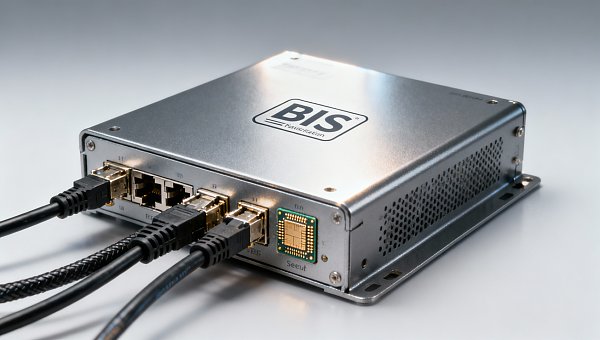
This standard underscores a broader global trend where national regulators treat embedded cryptographic functionality not as optional security enhancement, but as foundational infrastructure for digital sovereignty. For stakeholders, the immediate implication is not just certification, but re-evaluation of hardware trust architecture across product lifecycles — from design through import and deployment.
Conclusion
IS 17730:2026 represents a binding technical requirement with clear enforcement timing, not merely a consultative framework. Its significance lies in codifying local key control as a non-negotiable condition for IoT market access in India. Current understanding should treat it as an active compliance obligation — not a speculative policy direction — while acknowledging that full implementation fidelity remains contingent upon forthcoming BIS operational guidance and enforcement practice.
Source Disclosure
Main source: Bureau of Indian Standards (BIS), official release of IS 17730:2026 on May 11, 2026.
Items under ongoing observation: BIS-announced certification process details, accredited test labs list, and customs enforcement protocols — none confirmed as of publication date.
Get weekly intelligence in your inbox.
No noise. No sponsored content. Pure intelligence.
 Oct 08, 2026How Digital Health Improves Diagnostic Accuracy and Workflow in Clinical LabsHow Digital Health Improves Diagnostic Accuracy and Workflow in Clinical Labs
 Oct 07, 2026Selecting Voice Picking Systems for German Warehouses: Integration, Languages and ROISelecting Voice Picking Systems for German Warehouses: Integration, Languages and ROI
 Oct 06, 2026How to Choose Last Mile Dispatch Software for On-Time Delivery at ScaleHow to Choose Last Mile Dispatch Software for On-Time Delivery at Scale
 Oct 05, 2026Vietnam’s Consumer Electronics Market: Demand Shifts and Sourcing OpportunitiesVietnam’s Consumer Electronics Market: Demand Shifts and Sourcing Opportunities
 Oct 04, 2026Digital Health Investment Priorities for Providers: Improving Access, Outcomes, and EfficiencyDigital Health Investment Priorities for Providers: Improving Access, Outcomes, and Efficiency
 Oct 03, 2026How to Specify an FR4 Custom PCB Board for High-Voltage and High-Heat DesignsHow to Specify an FR4 Custom PCB Board for High-Voltage and High-Heat Designs
 Oct 02, 2026ERP Software Market Intelligence: Adoption, Pricing, and Vendor Signals to WatchERP Software Market Intelligence: Adoption, Pricing, and Vendor Signals to Watch
 Oct 01, 2026How to Select Calibrated Temperature Data Loggers for GMP Cold Storage MonitoringHow to Select Calibrated Temperature Data Loggers for GMP Cold Storage Monitoring
 Sep 30, 2026Custom Molded Rubber Pricing: What Drives Unit Cost and Tooling Fees?Custom Molded Rubber Pricing: What Drives Unit Cost and Tooling Fees?
 Sep 29, 2026How to Evaluate Energy Management Software Vendors for Multi-Site OperationsHow to Evaluate Energy Management Software Vendors for Multi-Site Operations
 Sep 28, 2026How to Select a DIN Rail Smart Meter for Multi-Circuit Energy MonitoringHow to Select a DIN Rail Smart Meter for Multi-Circuit Energy Monitoring
 Sep 27, 2026TWS Earbuds in Vietnam: Demand Drivers, Price Tiers, and Retail Channel OpportunitiesTWS Earbuds in Vietnam: Demand Drivers, Price Tiers, and Retail Channel Opportunities
 Sep 26, 2026How UAE Clinics Can Qualify a Smart Glucometer Supplier for Accuracy and ComplianceHow UAE Clinics Can Qualify a Smart Glucometer Supplier for Accuracy and Compliance
 Sep 25, 2026Buying Aesthetic Lasers in the USA: FDA Status, Wavelengths, and Service SupportBuying Aesthetic Lasers in the USA: FDA Status, Wavelengths, and Service Support
 Sep 24, 2026Laser Cutting Brass Sheet: How to Prevent Burrs and Heat Marks on Thin PartsLaser Cutting Brass Sheet: How to Prevent Burrs and Heat Marks on Thin Parts
 Sep 23, 2026How to Choose Lightweight ANC Headphones for Comfortable All-Day TravelHow to Choose Lightweight ANC Headphones for Comfortable All-Day Travel
 Sep 22, 2026IPX5 TWS Bluetooth Earbuds: What Protection Do They Offer for Workouts?IPX5 TWS Bluetooth Earbuds: What Protection Do They Offer for Workouts?
 Sep 21, 2026What to Look for in a Grid Integration Company for Utility-Scale Solar ProjectsWhat to Look for in a Grid Integration Company for Utility-Scale Solar Projects
 Sep 20, 2026Microgrid Controller Pricing: What Drives Cost in Commercial Energy Projects?Microgrid Controller Pricing: What Drives Cost in Commercial Energy Projects?
 Sep 19, 2026How to Choose a GaN Charger for Laptops Without Compromising Power or PortabilityHow to Choose a GaN Charger for Laptops Without Compromising Power or Portability
 Sep 18, 2026Floating Solar Farm Costs: CAPEX, OPEX, and the Site Factors That Shape ROIFloating Solar Farm Costs: CAPEX, OPEX, and the Site Factors That Shape ROI
 Sep 17, 2026Drone Delivery Solutions for Last-Mile Routes: Site, Payload, and Range PlanningDrone Delivery Solutions for Last-Mile Routes: Site, Payload, and Range Planning
 Sep 16, 2026When Low-Volume Electronics Manufacturing Makes More Sense Than Mass ProductionWhen Low-Volume Electronics Manufacturing Makes More Sense Than Mass Production
 Sep 15, 2026Wholesale WiFi Smart Switches: What Buyers Should Verify Before OrderingWholesale WiFi Smart Switches: What Buyers Should Verify Before Ordering
 Sep 14, 2026How to Select IoT Sensors for Reliable Monitoring in Harsh Industrial EnvironmentsHow to Select IoT Sensors for Reliable Monitoring in Harsh Industrial Environments
 Sep 13, 2026How Procurement Teams Can Improve Supplier Reliability With Supply Chain VisibilityHow Procurement Teams Can Improve Supplier Reliability With Supply Chain Visibility
 Sep 12, 2026Smart Manufacturing Trends 2026: What Leaders Should Prioritize for ROISmart Manufacturing Trends 2026: What Leaders Should Prioritize for ROI



























