
What Causes Reefer Tracking Gaps During Port Handoffs?
Reefer tracking gaps during port handoffs are usually caused by a mix of operational, technical, and system-level failures rather than one single fault. For operators, the biggest issue is that visibility often drops exactly when responsibility shifts between carrier, terminal, trucker, depot, and warehouse. That creates uncertainty around cargo condition, location, alarm status, and chain-of-custody records.
If you manage reefer movements in daily operations, the practical answer is this: most reefer tracking disruptions happen when devices lose connectivity, power sources change, data platforms do not sync in real time, or handoff procedures are inconsistent. The good news is that many of these blind spots can be reduced with better exception rules, clearer ownership, and stronger integration between systems.
Why do reefer tracking gaps happen most often during port handoffs?
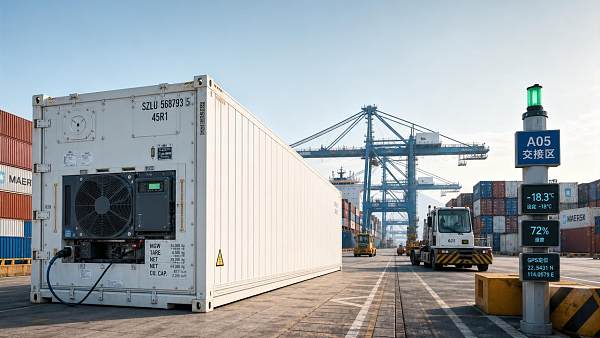
Port handoffs are high-risk moments because the container is moving across control zones. A reefer may be discharged from vessel operations, transferred into terminal handling, assigned for inspection, repositioned in a yard, connected or disconnected from power, and then released to inland transport.
Each step may involve different parties using different software, different scanning habits, and different service-level priorities. Even when the container itself is physically moving as planned, the digital record may lag behind, disappear temporarily, or show conflicting status updates.
For reefer tracking, that gap matters more than it does for dry cargo. Operators are not only checking location. They also need temperature continuity, setpoint confirmation, power status, door events, dwell time, and alarm visibility.
When any of that data goes missing during a handoff, teams lose the ability to respond quickly. That can lead to delayed interventions, cargo claims, compliance questions, and customer disputes over what happened and when.
What are the most common technical causes of reefer tracking gaps?
One major cause is signal loss. Ports are complex radio environments with cranes, stacked containers, steel structures, vessel interference, and dense equipment traffic. GPS, cellular, Bluetooth, and IoT device signals can all weaken or drop in certain yard locations.
Another common issue is power interruption. Some reefer tracking devices depend on container power, battery backup, or external gateway communication. During unplugging, repositioning, customs checks, or maintenance, the device may stop transmitting or switch into a lower reporting mode.
Device synchronization delays are also frequent. A reefer tracker may continue collecting data locally, but if the information is not uploaded immediately, operators see a visibility gap on the platform even though the sensor kept recording.
Hardware reliability is another factor. Damaged sensors, aging batteries, antenna faults, poor installation, water exposure, and firmware bugs can all produce incomplete or inaccurate tracking records during critical transfer windows.
In some cases, the reefer unit itself is functioning properly, but the monitoring layer is not. That means the refrigeration system may still be cooling cargo while the remote visibility tool fails to confirm status in real time.
How do terminal and carrier systems create visibility blind spots?
Many port handoff problems come from disconnected systems rather than disconnected containers. Ocean carriers, terminal operators, trucking firms, depots, customs systems, and consignee platforms often maintain separate event logs with different timestamps and update frequencies.
That creates a classic visibility problem: one party shows the reefer as discharged, another shows it pending inspection, and another still shows it in transit. Operators then spend time reconciling records instead of acting on live cargo risks.
EDI delays are a frequent contributor. Status messages may batch rather than stream, especially when systems are built for documentation exchange rather than operational decision-making. A handoff may physically occur at 10:05, but the update may not appear until much later.
API integration gaps can make the situation worse. If reefer tracking data is not mapped consistently across platforms, temperature events, plug-in records, alarm codes, or gate-out milestones may not transfer cleanly from one system to another.
Different naming conventions also create confusion. A terminal may record one event as grounded, a carrier may call it available, and an inland operator may interpret neither status correctly. The data exists, but operational meaning gets lost.
Why do manual processes still break reefer tracking at transfer points?
Even in digitally advanced supply chains, reefer handoffs still depend heavily on people scanning units, confirming conditions, plugging containers into power, documenting exceptions, and escalating issues. A missed step can create a tracking gap instantly.
For example, if a container arrives in the yard and is not scanned at the right checkpoint, the system may not register its exact position. If the reefer is unplugged for inspection and the reconnect event is not logged, operators may assume normal power continuity when that is not true.
Shift changes add another weak point. If one team identifies an alarm or connectivity issue but does not hand over the information clearly, the next team may believe the gap is only a data lag and fail to investigate.
Gate congestion and labor pressure make these problems more likely. When terminals prioritize throughput during peak periods, exception logging, sensor checks, and device troubleshooting may receive less attention than equipment movement and yard flow.
Manual data re-entry is especially risky. If handoff details are copied from one interface into another, wrong container numbers, incorrect timestamps, and missing event notes can all distort the reefer tracking history.
What operational situations make tracking gaps more likely?
Customs inspections are a common trigger. When a reefer is selected for inspection, it may be moved to a separate area, opened, unplugged, or held longer than expected. Those actions often occur outside the standard visibility workflow.
Port congestion is another major factor. During yard overcrowding, containers may be reshuffled multiple times. Each move increases the chance of missed scans, delayed updates, or temporary signal blockage between the reefer and the tracking network.
Transshipment moves create additional complexity. When one port handoff is followed by another vessel or feeder transfer, visibility can fragment across multiple operators, each with different technical standards and reporting discipline.
Empty repositioning, pre-trip inspections, and chassis allocation delays can also disrupt data continuity. These are not always treated as critical cargo events, but they still affect what the tracking system can capture and when.
Weather should not be overlooked either. Heavy rain, heat, salt exposure, and storm-related power instability can degrade device performance, damage infrastructure, or delay the handling sequence that tracking systems expect to follow.
How can operators tell whether a gap is a data issue or a real cargo risk?
This is one of the most important practical questions. Not every reefer tracking gap means the cargo is in danger, but every unexplained gap deserves structured review. Operators need a fast way to separate harmless reporting delay from a true cold chain threat.
Start with the last confirmed data point. Check location, temperature, return air, supply air if available, power status, setpoint, and alarm history. If the reefer was normal before handoff and there is no active alarm, the first assumption may be communication delay rather than product loss.
Next, compare event timing across sources. Review vessel discharge time, terminal move records, plug-in confirmation, gate timestamps, and truck dispatch data. If physical milestones continue while sensor data pauses, the issue may be platform-side rather than mechanical.
Then assess risk by cargo sensitivity. Frozen protein, pharmaceuticals, biologics, fresh produce, and certain specialty chemicals require much tighter response thresholds than less sensitive temperature-controlled cargo.
Finally, use exception windows. For example, if no reefer tracking update appears within a defined period after discharge or yard transfer, trigger escalation automatically. That keeps teams from waiting too long under the assumption that visibility will return on its own.
What should operators do to reduce reefer tracking gaps during port handoffs?
First, define ownership at each handoff stage. Someone must be accountable for device status, someone for power continuity, someone for event confirmation, and someone for exception escalation. Shared responsibility often becomes no responsibility.
Second, standardize the minimum handoff dataset. At a practical level, every transfer should capture container ID, timestamp, location, power status, temperature status, alarm condition, and next responsible party.
Third, tighten system integration where possible. Real-time APIs are generally better for operational visibility than delayed batch messages. If full integration is not available, set up scheduled reconciliations and exception dashboards instead of relying on ad hoc email follow-up.
Fourth, build process rules around known blind spots. If inspections, unplug events, transshipment moves, or yard reshuffles regularly interrupt reefer tracking, create specific workflows for those scenarios instead of treating them as rare anomalies.
Fifth, audit device performance regularly. Battery health, firmware version, antenna condition, and installation quality should be checked before failures occur. Preventive maintenance is cheaper than cargo claims and emergency recovery work.
Training matters too. Operators need to know how to interpret missing data, which events require immediate escalation, and how to verify whether a reefer issue is physical, digital, or procedural.
Which KPIs help measure whether handoff visibility is improving?
Tracking performance needs measurement, not assumption. One useful KPI is the percentage of handoffs completed with no visibility gap longer than the accepted threshold. This shows whether the process is stable in real operating conditions.
Another is mean time to visibility recovery. If a reefer tracking interruption happens, how long does it take to restore confirmed location and condition data? Fast recovery often matters almost as much as full prevention.
Operators should also monitor plug-in confirmation time after discharge, scan compliance at transfer points, data latency by source system, and the number of unexplained alarm events during port dwell.
Claim-related metrics are valuable as well. If temperature disputes, detention costs, or demurrage events correlate with poor handoff visibility, that gives a stronger business case for system and process improvements.
For teams working across multiple ports, compare performance by terminal and lane. Reefer tracking problems are often location-specific, so broad averages can hide persistent weak points in one facility or partner network.
What does a stronger reefer handoff process look like in practice?
A resilient process does not assume continuous perfect data. Instead, it expects interruptions and designs around them. That means fallback verification steps, automatic exception alerts, clear time thresholds, and cross-system reconciliation.
In practice, strong operators combine sensor data with operational milestones. They do not rely on a single visibility source. They compare telematics, terminal events, carrier updates, and human confirmation to build a more accurate picture.
They also segment risk. High-value or highly sensitive cargo receives tighter monitoring and faster escalation rules than lower-risk loads. This improves response quality without overloading the operations team with unnecessary alarms.
Most importantly, they treat port handoffs as control points, not routine admin steps. That mindset shift helps teams see reefer tracking as part of cargo protection and service performance, not just as a reporting tool.
Conclusion
Reefer tracking gaps during port handoffs usually come from a combination of signal loss, power changes, delayed system synchronization, disconnected platforms, and inconsistent manual processes. The problem is rarely just technical or just operational. It sits at the intersection of both.
For operators, the best response is to focus on the moments when custody, location, and power status change. If those transfer points are mapped clearly, supported by standard data capture, and backed by escalation rules, visibility becomes far more reliable.
Better reefer tracking does not require perfect infrastructure everywhere. It requires knowing where gaps happen, distinguishing data lag from true cargo risk, and building disciplined handoff procedures that protect cold chain integrity when it matters most.
Get weekly intelligence in your inbox.
No noise. No sponsored content. Pure intelligence.
 Oct 08, 2026How Digital Health Improves Diagnostic Accuracy and Workflow in Clinical LabsHow Digital Health Improves Diagnostic Accuracy and Workflow in Clinical Labs
 Oct 07, 2026Selecting Voice Picking Systems for German Warehouses: Integration, Languages and ROISelecting Voice Picking Systems for German Warehouses: Integration, Languages and ROI
 Oct 06, 2026How to Choose Last Mile Dispatch Software for On-Time Delivery at ScaleHow to Choose Last Mile Dispatch Software for On-Time Delivery at Scale
 Oct 05, 2026Vietnam’s Consumer Electronics Market: Demand Shifts and Sourcing OpportunitiesVietnam’s Consumer Electronics Market: Demand Shifts and Sourcing Opportunities
 Oct 04, 2026Digital Health Investment Priorities for Providers: Improving Access, Outcomes, and EfficiencyDigital Health Investment Priorities for Providers: Improving Access, Outcomes, and Efficiency
 Oct 03, 2026How to Specify an FR4 Custom PCB Board for High-Voltage and High-Heat DesignsHow to Specify an FR4 Custom PCB Board for High-Voltage and High-Heat Designs
 Oct 02, 2026ERP Software Market Intelligence: Adoption, Pricing, and Vendor Signals to WatchERP Software Market Intelligence: Adoption, Pricing, and Vendor Signals to Watch
 Oct 01, 2026How to Select Calibrated Temperature Data Loggers for GMP Cold Storage MonitoringHow to Select Calibrated Temperature Data Loggers for GMP Cold Storage Monitoring
 Sep 30, 2026Custom Molded Rubber Pricing: What Drives Unit Cost and Tooling Fees?Custom Molded Rubber Pricing: What Drives Unit Cost and Tooling Fees?
 Sep 29, 2026How to Evaluate Energy Management Software Vendors for Multi-Site OperationsHow to Evaluate Energy Management Software Vendors for Multi-Site Operations
 Sep 28, 2026How to Select a DIN Rail Smart Meter for Multi-Circuit Energy MonitoringHow to Select a DIN Rail Smart Meter for Multi-Circuit Energy Monitoring
 Sep 27, 2026TWS Earbuds in Vietnam: Demand Drivers, Price Tiers, and Retail Channel OpportunitiesTWS Earbuds in Vietnam: Demand Drivers, Price Tiers, and Retail Channel Opportunities
 Sep 26, 2026How UAE Clinics Can Qualify a Smart Glucometer Supplier for Accuracy and ComplianceHow UAE Clinics Can Qualify a Smart Glucometer Supplier for Accuracy and Compliance
 Sep 25, 2026Buying Aesthetic Lasers in the USA: FDA Status, Wavelengths, and Service SupportBuying Aesthetic Lasers in the USA: FDA Status, Wavelengths, and Service Support
 Sep 24, 2026Laser Cutting Brass Sheet: How to Prevent Burrs and Heat Marks on Thin PartsLaser Cutting Brass Sheet: How to Prevent Burrs and Heat Marks on Thin Parts
 Sep 23, 2026How to Choose Lightweight ANC Headphones for Comfortable All-Day TravelHow to Choose Lightweight ANC Headphones for Comfortable All-Day Travel
 Sep 22, 2026IPX5 TWS Bluetooth Earbuds: What Protection Do They Offer for Workouts?IPX5 TWS Bluetooth Earbuds: What Protection Do They Offer for Workouts?
 Sep 21, 2026What to Look for in a Grid Integration Company for Utility-Scale Solar ProjectsWhat to Look for in a Grid Integration Company for Utility-Scale Solar Projects
 Sep 20, 2026Microgrid Controller Pricing: What Drives Cost in Commercial Energy Projects?Microgrid Controller Pricing: What Drives Cost in Commercial Energy Projects?
 Sep 19, 2026How to Choose a GaN Charger for Laptops Without Compromising Power or PortabilityHow to Choose a GaN Charger for Laptops Without Compromising Power or Portability
 Sep 18, 2026Floating Solar Farm Costs: CAPEX, OPEX, and the Site Factors That Shape ROIFloating Solar Farm Costs: CAPEX, OPEX, and the Site Factors That Shape ROI
 Sep 17, 2026Drone Delivery Solutions for Last-Mile Routes: Site, Payload, and Range PlanningDrone Delivery Solutions for Last-Mile Routes: Site, Payload, and Range Planning
 Sep 16, 2026When Low-Volume Electronics Manufacturing Makes More Sense Than Mass ProductionWhen Low-Volume Electronics Manufacturing Makes More Sense Than Mass Production
 Sep 15, 2026Wholesale WiFi Smart Switches: What Buyers Should Verify Before OrderingWholesale WiFi Smart Switches: What Buyers Should Verify Before Ordering
 Sep 14, 2026How to Select IoT Sensors for Reliable Monitoring in Harsh Industrial EnvironmentsHow to Select IoT Sensors for Reliable Monitoring in Harsh Industrial Environments
 Sep 13, 2026How Procurement Teams Can Improve Supplier Reliability With Supply Chain VisibilityHow Procurement Teams Can Improve Supplier Reliability With Supply Chain Visibility
 Sep 12, 2026Smart Manufacturing Trends 2026: What Leaders Should Prioritize for ROISmart Manufacturing Trends 2026: What Leaders Should Prioritize for ROI



























