
Temperature Data Loggers: Why Calibration Errors Get Missed
Temperature data loggers are essential to product quality, cold-chain integrity, and regulatory compliance. Yet calibration errors are often missed not because teams ignore them, but because the failures are subtle, cumulative, and easily hidden by normal-looking readings until an audit, deviation, or customer complaint exposes the gap.
For quality control and safety managers, the real issue is not whether calibration matters. It is why a logger that appears functional can still produce misleading data, pass routine handling, and quietly weaken traceability. The answer usually lies in weak verification practices, misunderstood tolerances, environmental stress, and overreliance on certificates without checking performance in use.
This article explains the core search intent behind concerns about temperature data loggers, what QC and safety teams need to check first, and how to reduce the risk of unnoticed calibration drift in temperature-sensitive operations.
Why calibration errors in temperature data loggers are so often overlooked
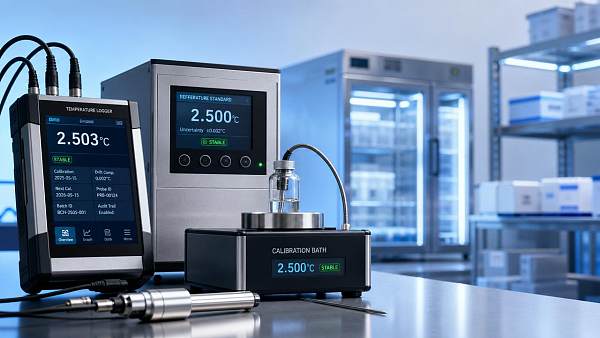
The main search intent behind this topic is practical risk prevention. Readers are usually not looking for a textbook definition of calibration. They want to understand why errors go undetected in real facilities, how that affects compliance and product integrity, and what actions can prevent expensive failures.
For QC personnel and safety managers, the biggest concern is trust. If a temperature data logger reports values that look stable, teams may assume the process is under control. But stable data is not the same as accurate data. A logger can be consistently wrong and still appear operational.
That is why calibration errors are dangerous. They rarely announce themselves through obvious device failure. More often, they appear as small offsets, slow drift, response lag, or inaccuracies at critical temperature ranges that are not checked during routine use.
In regulated or temperature-sensitive environments, even a modest deviation can affect storage conditions, shelf life assumptions, transport acceptance, batch release decisions, or root-cause investigations. The cost of missing the error is often much larger than the cost of calibration itself.
What QC and safety teams care about most
Quality and safety teams usually focus on five operational questions. First, can we trust the logger readings used for release, storage, or transport decisions? Second, will our records withstand audit scrutiny? Third, how do we detect drift before it affects product?
Fourth, how can we prove traceability across devices, locations, and time periods? Fifth, what is the most efficient way to manage calibration without disrupting operations? These concerns are practical, not theoretical, and any useful guidance must address them directly.
That means the most valuable content is not broad sensor history or generic compliance language. What helps most is understanding failure patterns, warning signs, verification methods, documentation gaps, and decision criteria for selecting, checking, and maintaining temperature data loggers.
Why a valid calibration certificate is not always enough
One of the most common reasons calibration issues get missed is false confidence in paperwork. A valid certificate confirms that a device met specified conditions at the time of calibration. It does not guarantee that the logger performs accurately in every operating environment afterward.
Certificates are often reviewed as administrative evidence instead of technical evidence. Teams may check the date, file the document, and move on. But they may not examine test points, uncertainty values, pass criteria, sensor configuration, or whether the calibration range matches actual use.
For example, a logger used in refrigerated transport may have been calibrated at points that do not fully reflect its most critical operating conditions. If the device shows stronger error near the lower end of the range, that issue may remain invisible until a shipment excursion is questioned.
Another problem is assuming all applications require the same calibration interval. In reality, interval decisions should reflect risk, usage intensity, shock exposure, humidity, cleaning cycles, and regulatory expectations. A once-a-year schedule may be acceptable for one process and inadequate for another.
How calibration errors hide during daily operations
In many facilities, temperature data loggers are treated as reliable background tools. They are mounted, deployed, downloaded, and replaced with little suspicion unless there is obvious physical damage. This routine familiarity can make gradual performance loss easy to miss.
Small offsets are especially deceptive. If a logger reads 1.2 degrees high across a storage window, the trend may still look smooth and believable. Operators may see no abrupt spikes, no missing records, and no battery alarm. Yet the actual environment may be outside specification.
Sensor drift can also be masked by process redundancy. If multiple readings are available from nearby devices, teams may assume agreement based on general similarity rather than true comparison. Without side-by-side verification against a trusted reference, near-match patterns may create false reassurance.
Software dashboards can contribute to the problem as well. Summaries, color-coded compliance screens, and exception-based views are useful, but they often emphasize threshold breaches rather than measurement integrity. If a logger is wrong but stays within alert logic, the issue may never surface.
The most common root causes behind missed calibration problems
Several recurring causes explain why temperature data loggers develop unnoticed calibration issues. Mechanical shock is a major one. Devices used in transport, warehousing, field service, or high-turn environments may be dropped, compressed, or vibrated far more than records suggest.
Thermal stress is another factor. Repeated exposure to extreme heat, freezing conditions, rapid transitions, or sterilization cycles can alter sensor behavior over time. Even when a logger still powers on and records normally, its measurement performance may no longer meet required tolerance.
Moisture intrusion, chemical exposure, and poor storage between uses also contribute. Teams sometimes focus on whether the housing is intact, but internal degradation can occur before visible damage appears. This is particularly relevant in washdown areas, cleanrooms, laboratories, and healthcare settings.
Human process weaknesses matter just as much. Common issues include incomplete asset registers, missed recall dates, unverified third-party calibration providers, incorrect device labeling, and failure to remove overdue units from service. In many cases, the biggest calibration risk is procedural, not technical.
How to spot warning signs before an audit or deviation
QC and safety managers should watch for subtle patterns that suggest a logger needs investigation. One sign is unexplained disagreement between loggers measuring similar conditions. Another is repeated near-limit readings in one location when adjacent positions remain consistently different.
Unexpected trend smoothness can also be suspicious. Real environments usually show minor fluctuation. A logger producing unusually flat or slow-moving data may have response issues, poor placement, or sensor degradation. Stable data is only useful when it accurately reflects real thermal behavior.
Pay attention to event timing too. If a logger shows delayed response during door openings, loading cycles, or product movement compared with other monitoring points, it may be underperforming. This matters because safety decisions often depend on how quickly excursions are detected.
Documentation clues are equally important. Missing serial-number linkage, reused labels, vague service histories, or calibration reports without uncertainty statements should trigger review. Audit findings often begin not with catastrophic drift, but with weak evidence that the device’s accuracy was truly controlled.
What good verification looks like between formal calibrations
Formal calibration remains essential, but it should be supported by in-use verification. For many operations, the best approach is a risk-based check program using a trusted reference device, defined acceptance criteria, and routine comparison at temperatures that reflect actual process risk.
These checks do not replace accredited calibration. They act as early warning controls. When done correctly, they help teams identify drift, handling damage, or out-of-tolerance behavior before the logger continues generating misleading compliance records.
A useful verification program includes clear frequency rules, documented comparison methods, controlled stabilization time, and action thresholds for quarantine, review, or recalibration. It should also define who performs checks, how results are recorded, and how failed devices are traced in prior records.
For higher-risk environments, consider event-triggered verification in addition to periodic checks. A temperature data logger should be evaluated after drops, severe excursions, battery leakage, water exposure, repair, or any incident that could affect sensor integrity.
How to choose calibration practices that match operational risk
Not every facility needs the same calibration strategy. The right model depends on product sensitivity, regulatory burden, process criticality, and business consequences of error. A warehouse storing low-risk materials may tolerate a simpler program than a healthcare or food safety environment.
Start by mapping where logger data drives decisions. If records support release, stability, transport acceptance, corrective action, or customer reporting, the device should be treated as a critical quality instrument. That classification should influence interval length, provider qualification, and verification depth.
Review whether your calibration points match your real control limits. If your process risk concentrates around 2°C to 8°C, ambient-only checks are not enough. If your operation includes freezing, incubated storage, or heated transport, the calibration scope must reflect those realities.
Also consider measurement uncertainty, not just pass or fail status. Two loggers may both pass calibration, but the one with tighter uncertainty and better performance at critical points may be far more suitable for compliance-sensitive applications.
Building a stronger control system around temperature data loggers
The strongest organizations do not rely on calibration events alone. They build a full control system around temperature data loggers. That system includes asset identification, deployment history, interval management, verification records, exception review, and clear ownership across quality and operations teams.
Training is part of that system. Staff should know that a logger can be functional yet inaccurate, and that visual condition alone is not proof of fitness for use. They should also understand placement effects, thermal lag, and the importance of comparing data critically rather than passively accepting it.
Digital management tools can help, especially when fleets are large or geographically distributed. Automated reminders, serialized records, audit trails, and document linkage reduce the chance of overdue calibration or untraceable device history. But software only helps if data governance is disciplined.
Finally, treat logger performance as part of risk management, not just maintenance. When a device fails calibration, investigate not only the unit itself but also what product, shipment, storage zone, or compliance decision may have been affected during the period in question.
Conclusion: accuracy is a control, not a checkbox
Calibration errors in temperature data loggers get missed because they often look like normal operation. The device records, the graph appears stable, and the certificate exists. But without risk-based verification, application-specific calibration review, and disciplined documentation, hidden inaccuracy can persist for months.
For quality control and safety teams, the right takeaway is clear: do not confuse readable data with trustworthy data. The real safeguard is a system that tests whether logger accuracy remains fit for purpose under actual operating conditions.
Organizations that strengthen this control gain more than audit readiness. They improve traceability, protect product integrity, reduce deviation risk, and make better decisions across every temperature-sensitive workflow. In practice, that is the real value of managing temperature data loggers correctly.
Get weekly intelligence in your inbox.
No noise. No sponsored content. Pure intelligence.
 Oct 08, 2026How Digital Health Improves Diagnostic Accuracy and Workflow in Clinical LabsHow Digital Health Improves Diagnostic Accuracy and Workflow in Clinical Labs
 Oct 07, 2026Selecting Voice Picking Systems for German Warehouses: Integration, Languages and ROISelecting Voice Picking Systems for German Warehouses: Integration, Languages and ROI
 Oct 06, 2026How to Choose Last Mile Dispatch Software for On-Time Delivery at ScaleHow to Choose Last Mile Dispatch Software for On-Time Delivery at Scale
 Oct 05, 2026Vietnam’s Consumer Electronics Market: Demand Shifts and Sourcing OpportunitiesVietnam’s Consumer Electronics Market: Demand Shifts and Sourcing Opportunities
 Oct 04, 2026Digital Health Investment Priorities for Providers: Improving Access, Outcomes, and EfficiencyDigital Health Investment Priorities for Providers: Improving Access, Outcomes, and Efficiency
 Oct 03, 2026How to Specify an FR4 Custom PCB Board for High-Voltage and High-Heat DesignsHow to Specify an FR4 Custom PCB Board for High-Voltage and High-Heat Designs
 Oct 02, 2026ERP Software Market Intelligence: Adoption, Pricing, and Vendor Signals to WatchERP Software Market Intelligence: Adoption, Pricing, and Vendor Signals to Watch
 Oct 01, 2026How to Select Calibrated Temperature Data Loggers for GMP Cold Storage MonitoringHow to Select Calibrated Temperature Data Loggers for GMP Cold Storage Monitoring
 Sep 30, 2026Custom Molded Rubber Pricing: What Drives Unit Cost and Tooling Fees?Custom Molded Rubber Pricing: What Drives Unit Cost and Tooling Fees?
 Sep 29, 2026How to Evaluate Energy Management Software Vendors for Multi-Site OperationsHow to Evaluate Energy Management Software Vendors for Multi-Site Operations
 Sep 28, 2026How to Select a DIN Rail Smart Meter for Multi-Circuit Energy MonitoringHow to Select a DIN Rail Smart Meter for Multi-Circuit Energy Monitoring
 Sep 27, 2026TWS Earbuds in Vietnam: Demand Drivers, Price Tiers, and Retail Channel OpportunitiesTWS Earbuds in Vietnam: Demand Drivers, Price Tiers, and Retail Channel Opportunities
 Sep 26, 2026How UAE Clinics Can Qualify a Smart Glucometer Supplier for Accuracy and ComplianceHow UAE Clinics Can Qualify a Smart Glucometer Supplier for Accuracy and Compliance
 Sep 25, 2026Buying Aesthetic Lasers in the USA: FDA Status, Wavelengths, and Service SupportBuying Aesthetic Lasers in the USA: FDA Status, Wavelengths, and Service Support
 Sep 24, 2026Laser Cutting Brass Sheet: How to Prevent Burrs and Heat Marks on Thin PartsLaser Cutting Brass Sheet: How to Prevent Burrs and Heat Marks on Thin Parts
 Sep 23, 2026How to Choose Lightweight ANC Headphones for Comfortable All-Day TravelHow to Choose Lightweight ANC Headphones for Comfortable All-Day Travel
 Sep 22, 2026IPX5 TWS Bluetooth Earbuds: What Protection Do They Offer for Workouts?IPX5 TWS Bluetooth Earbuds: What Protection Do They Offer for Workouts?
 Sep 21, 2026What to Look for in a Grid Integration Company for Utility-Scale Solar ProjectsWhat to Look for in a Grid Integration Company for Utility-Scale Solar Projects
 Sep 20, 2026Microgrid Controller Pricing: What Drives Cost in Commercial Energy Projects?Microgrid Controller Pricing: What Drives Cost in Commercial Energy Projects?
 Sep 19, 2026How to Choose a GaN Charger for Laptops Without Compromising Power or PortabilityHow to Choose a GaN Charger for Laptops Without Compromising Power or Portability
 Sep 18, 2026Floating Solar Farm Costs: CAPEX, OPEX, and the Site Factors That Shape ROIFloating Solar Farm Costs: CAPEX, OPEX, and the Site Factors That Shape ROI
 Sep 17, 2026Drone Delivery Solutions for Last-Mile Routes: Site, Payload, and Range PlanningDrone Delivery Solutions for Last-Mile Routes: Site, Payload, and Range Planning
 Sep 16, 2026When Low-Volume Electronics Manufacturing Makes More Sense Than Mass ProductionWhen Low-Volume Electronics Manufacturing Makes More Sense Than Mass Production
 Sep 15, 2026Wholesale WiFi Smart Switches: What Buyers Should Verify Before OrderingWholesale WiFi Smart Switches: What Buyers Should Verify Before Ordering
 Sep 14, 2026How to Select IoT Sensors for Reliable Monitoring in Harsh Industrial EnvironmentsHow to Select IoT Sensors for Reliable Monitoring in Harsh Industrial Environments
 Sep 13, 2026How Procurement Teams Can Improve Supplier Reliability With Supply Chain VisibilityHow Procurement Teams Can Improve Supplier Reliability With Supply Chain Visibility
 Sep 12, 2026Smart Manufacturing Trends 2026: What Leaders Should Prioritize for ROISmart Manufacturing Trends 2026: What Leaders Should Prioritize for ROI



























