
MY-ROBO 2026 Certification Launches for Warehouse Robots in Malaysia
Malaysia has introduced a new regulatory requirement for imported warehouse robotics, with the Ministry of Energy, Science, Technology, Environment and Climate Change (MESTECC) officially launching the MY-ROBO 2026 certification program on May 12, 2026. The initiative targets AI-driven logistics automation systems entering the Malaysian market — particularly those manufactured in China — and signals a strategic shift toward localized interoperability, environmental resilience, and multilingual human–machine interaction in smart warehousing infrastructure.
Event Overview
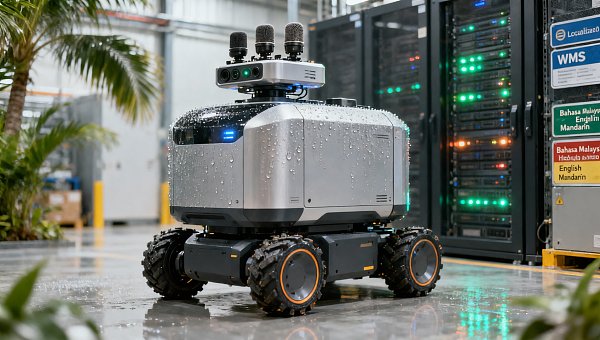
MESTECC launched the ‘Smart Warehouse Robot Localization Certification Program’ on May 12, 2026. Under the MY-ROBO 2026 standard, all imported warehouse robots must pass three mandatory technical assessments: multilingual voice command recognition (with emphasis on Bahasa Malaysia, English, and Mandarin), seamless API integration with locally deployed Warehouse Management Systems (WMS), and AI-driven scheduling stability under tropical high-humidity conditions (≥95% RH, 32°C ambient). Compliance becomes mandatory for all new imports as of October 1, 2026.
Industries Affected
Direct Trade Enterprises
Exporters and importers of warehouse robotics — especially Chinese OEMs and regional distributors — face immediate compliance pressure. Non-certified units will be barred from customs clearance after October 1, disrupting shipment timelines and triggering contractual renegotiations. Impact manifests not only in delayed revenue recognition but also in increased pre-market testing costs and local representation requirements.
Raw Material Procurement Enterprises
Suppliers of core components — such as industrial-grade microphones, humidity-resistant PCB substrates, or localized NLP training datasets — may see demand shifts. However, current procurement contracts rarely specify MY-ROBO 2026-aligned tolerances or linguistic data licensing terms. As a result, procurement teams must now reassess vendor SLAs and qualify new suppliers capable of delivering certified-ready subassemblies.
Manufacturing Enterprises
OEMs and contract manufacturers producing warehouse robots for export must revise firmware architecture, hardware shielding, and voice interface stacks. Unlike prior CE or UL certifications, MY-ROBO 2026 requires system-level validation — meaning line-side test rigs and factory QA protocols need updating. This extends time-to-market by an estimated 8–12 weeks per product variant unless modular certification pathways are adopted early.
Supply Chain Service Providers
Third-party logistics (3PL) firms deploying robotic solutions in Malaysian free zones or bonded warehouses must verify fleet compliance status before lease or deployment. Moreover, WMS integrators — especially those offering cloud-based platforms — are now expected to provide documented API conformance reports aligned with MY-ROBO 2026’s data schema and authentication protocols. Failure to do so risks service-level penalties or operational suspension.
Key Focus Areas and Recommended Actions
Validate Local WMS Integration Early
Manufacturers should engage Malaysian WMS vendors (e.g., iCargo, LogiSphere MY) during Q3 2026 to conduct joint API stress tests — particularly around real-time inventory reconciliation and multi-tiered task queuing under network latency spikes common in port-area deployments.
Conduct Tropical Environmental Stress Testing Offsite
Rather than relying solely on lab simulations, firms are advised to partner with accredited test labs in Johor or Penang that replicate sustained high-humidity thermal cycling (per IEC 60068-2-30 Ed.3). Field validation in active cold-chain distribution centers adds further credibility to AI scheduler reliability claims.
Localize Voice Command Training Data Strategically
Instead of broad multilingual models, focus on Bahasa Malaysia phoneme coverage for warehouse-specific lexicons (e.g., ‘pallet’, ‘racking zone’, ‘replenishment bin’) and account for regional accents across West and East Malaysia. Audio samples should be collected with consent from local warehouse staff — not synthetic generation alone.
Editorial Perspective / Industry Observation
Observably, MY-ROBO 2026 is less about protectionism and more about infrastructure readiness: Malaysia’s push toward ASEAN Smart Logistics Corridors demands standardized machine–system communication layers. Analysis shows that this certification may serve as a template for similar frameworks in Thailand (under Thailand 4.0) and Vietnam (via MOIT’s upcoming Robotics Interoperability Directive). From industry perspective, the emphasis on tropical environmental AI stability reflects growing recognition that algorithmic robustness cannot be decoupled from physical operating context — a nuance often overlooked in global certification benchmarks.
Conclusion
MY-ROBO 2026 marks a maturation point in Southeast Asia’s approach to robotics regulation: shifting from safety-first conformity to performance-in-context assurance. It does not raise absolute trade barriers — but it does redefine what ‘market-ready’ means for intelligent logistics hardware. For global suppliers, successful navigation hinges less on technical capability alone and more on collaborative localization — with Malaysian partners acting as co-developers, not just end users.
Source Attribution
Official announcement issued by Malaysia’s Ministry of Energy, Science, Technology, Environment and Climate Change (MESTECC), dated May 12, 2026; MY-ROBO 2026 Technical Specification v1.0 (public draft released June 3, 2026); ASEAN Centre for Robotics Standards (ACRS) preliminary commentary, July 2026. Note: Final API schema definitions and accredited test lab list remain pending official publication — subject to ongoing monitoring.
Get weekly intelligence in your inbox.
No noise. No sponsored content. Pure intelligence.
 Oct 08, 2026How Digital Health Improves Diagnostic Accuracy and Workflow in Clinical LabsHow Digital Health Improves Diagnostic Accuracy and Workflow in Clinical Labs
 Oct 07, 2026Selecting Voice Picking Systems for German Warehouses: Integration, Languages and ROISelecting Voice Picking Systems for German Warehouses: Integration, Languages and ROI
 Oct 06, 2026How to Choose Last Mile Dispatch Software for On-Time Delivery at ScaleHow to Choose Last Mile Dispatch Software for On-Time Delivery at Scale
 Oct 05, 2026Vietnam’s Consumer Electronics Market: Demand Shifts and Sourcing OpportunitiesVietnam’s Consumer Electronics Market: Demand Shifts and Sourcing Opportunities
 Oct 04, 2026Digital Health Investment Priorities for Providers: Improving Access, Outcomes, and EfficiencyDigital Health Investment Priorities for Providers: Improving Access, Outcomes, and Efficiency
 Oct 03, 2026How to Specify an FR4 Custom PCB Board for High-Voltage and High-Heat DesignsHow to Specify an FR4 Custom PCB Board for High-Voltage and High-Heat Designs
 Oct 02, 2026ERP Software Market Intelligence: Adoption, Pricing, and Vendor Signals to WatchERP Software Market Intelligence: Adoption, Pricing, and Vendor Signals to Watch
 Oct 01, 2026How to Select Calibrated Temperature Data Loggers for GMP Cold Storage MonitoringHow to Select Calibrated Temperature Data Loggers for GMP Cold Storage Monitoring
 Sep 30, 2026Custom Molded Rubber Pricing: What Drives Unit Cost and Tooling Fees?Custom Molded Rubber Pricing: What Drives Unit Cost and Tooling Fees?
 Sep 29, 2026How to Evaluate Energy Management Software Vendors for Multi-Site OperationsHow to Evaluate Energy Management Software Vendors for Multi-Site Operations
 Sep 28, 2026How to Select a DIN Rail Smart Meter for Multi-Circuit Energy MonitoringHow to Select a DIN Rail Smart Meter for Multi-Circuit Energy Monitoring
 Sep 27, 2026TWS Earbuds in Vietnam: Demand Drivers, Price Tiers, and Retail Channel OpportunitiesTWS Earbuds in Vietnam: Demand Drivers, Price Tiers, and Retail Channel Opportunities
 Sep 26, 2026How UAE Clinics Can Qualify a Smart Glucometer Supplier for Accuracy and ComplianceHow UAE Clinics Can Qualify a Smart Glucometer Supplier for Accuracy and Compliance
 Sep 25, 2026Buying Aesthetic Lasers in the USA: FDA Status, Wavelengths, and Service SupportBuying Aesthetic Lasers in the USA: FDA Status, Wavelengths, and Service Support
 Sep 24, 2026Laser Cutting Brass Sheet: How to Prevent Burrs and Heat Marks on Thin PartsLaser Cutting Brass Sheet: How to Prevent Burrs and Heat Marks on Thin Parts
 Sep 23, 2026How to Choose Lightweight ANC Headphones for Comfortable All-Day TravelHow to Choose Lightweight ANC Headphones for Comfortable All-Day Travel
 Sep 22, 2026IPX5 TWS Bluetooth Earbuds: What Protection Do They Offer for Workouts?IPX5 TWS Bluetooth Earbuds: What Protection Do They Offer for Workouts?
 Sep 21, 2026What to Look for in a Grid Integration Company for Utility-Scale Solar ProjectsWhat to Look for in a Grid Integration Company for Utility-Scale Solar Projects
 Sep 20, 2026Microgrid Controller Pricing: What Drives Cost in Commercial Energy Projects?Microgrid Controller Pricing: What Drives Cost in Commercial Energy Projects?
 Sep 19, 2026How to Choose a GaN Charger for Laptops Without Compromising Power or PortabilityHow to Choose a GaN Charger for Laptops Without Compromising Power or Portability
 Sep 18, 2026Floating Solar Farm Costs: CAPEX, OPEX, and the Site Factors That Shape ROIFloating Solar Farm Costs: CAPEX, OPEX, and the Site Factors That Shape ROI
 Sep 17, 2026Drone Delivery Solutions for Last-Mile Routes: Site, Payload, and Range PlanningDrone Delivery Solutions for Last-Mile Routes: Site, Payload, and Range Planning
 Sep 16, 2026When Low-Volume Electronics Manufacturing Makes More Sense Than Mass ProductionWhen Low-Volume Electronics Manufacturing Makes More Sense Than Mass Production
 Sep 15, 2026Wholesale WiFi Smart Switches: What Buyers Should Verify Before OrderingWholesale WiFi Smart Switches: What Buyers Should Verify Before Ordering
 Sep 14, 2026How to Select IoT Sensors for Reliable Monitoring in Harsh Industrial EnvironmentsHow to Select IoT Sensors for Reliable Monitoring in Harsh Industrial Environments
 Sep 13, 2026How Procurement Teams Can Improve Supplier Reliability With Supply Chain VisibilityHow Procurement Teams Can Improve Supplier Reliability With Supply Chain Visibility
 Sep 12, 2026Smart Manufacturing Trends 2026: What Leaders Should Prioritize for ROISmart Manufacturing Trends 2026: What Leaders Should Prioritize for ROI



























