
India BIS to Enforce Localized Data Sovereignty for IoT Devices from Aug 2026
On May 4, 2026, the Bureau of Indian Standards (BIS) released the draft standard IS 17730:2026, titled Requirements for Data Localization and Sovereignty Management in IoT Devices, with mandatory implementation scheduled for August 1, 2026. This regulation directly impacts manufacturers, exporters, and distributors of IoT devices—including smart home hubs and industrial sensors—targeting the Indian market, and introduces new technical and compliance obligations centered on data residency and sovereign control.
Event Overview
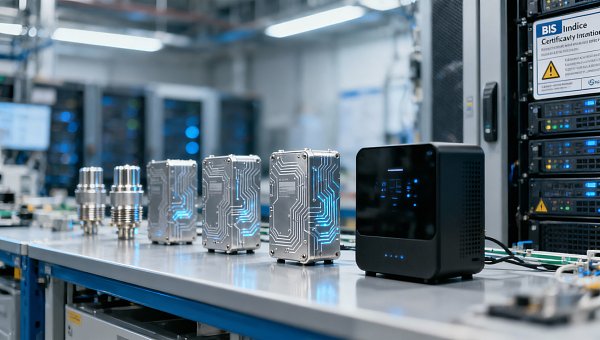
On May 4, 2026, the Bureau of Indian Standards (BIS) published the draft standard IS 17730:2026, Requirements for Data Localization and Sovereignty Management in IoT Devices. The standard is set to become mandatory for all IoT devices sold in India effective August 1, 2026. It requires that such devices—specifically including smart home hubs and industrial sensors—must be pre-installed with a BIS-certified data sovereignty module, ensuring user data is stored and processed exclusively within India. Chinese manufacturers are explicitly required to embed a BIS-specified SDK at the firmware level and complete integration with a locally hosted cloud infrastructure.
Industries Affected by Segment
IoT Device Manufacturers (OEMs/ODMs)
Manufacturers producing IoT hardware for the Indian market will face direct technical and certification requirements. The mandate necessitates firmware-level modifications, third-party SDK integration, and alignment with India-specific cloud infrastructure—potentially affecting product development timelines, validation cycles, and bill-of-materials costs.
Exporters and Distributors of IoT Hardware
Entities responsible for importing or distributing IoT devices into India must verify compliance before customs clearance or retail listing. Non-compliant stock may be rejected at entry or withdrawn post-launch, introducing inventory risk and requiring updated documentation, labeling, and traceability protocols aligned with BIS certification status.
Firmware and Embedded Software Developers
Development teams supporting IoT device vendors must allocate resources to integrate and test the BIS-specified SDK. This includes adapting secure boot processes, data routing logic, and telemetry handling to meet localization constraints—impacting release schedules and QA scope, particularly for multi-market firmware variants.
Cloud Infrastructure and Platform Providers Serving IoT Vendors
Providers offering backend platforms or managed cloud services to IoT device makers must ensure their Indian deployments meet BIS-defined sovereignty criteria—including physical server location, access controls, audit logging, and data egress restrictions. This may require dedicated infrastructure partitioning or contractual re-negotiation with local Indian cloud partners.
Key Focus Areas and Recommended Actions
Monitor official BIS updates and final standard publication
The current version is a draft. Stakeholders should track BIS’s official portal for the final text, transitional provisions, certification timelines, and any grace periods—especially regarding grandfathering of devices already in distribution channels prior to August 2026.
Identify high-priority SKUs and assess firmware modification feasibility
Vendors should map existing product lines against the defined scope (e.g., smart home hubs, industrial sensors) and prioritize models with highest India-bound volume. Technical assessment should focus on whether current firmware architecture supports modular SDK insertion without full re-architecture.
Distinguish between regulatory signal and enforceable obligation
While the August 2026 date is stated, enforcement capacity, certification lab readiness, and market surveillance mechanisms remain unconfirmed. Companies should treat the timeline as binding for planning—but recognize that initial enforcement may focus on new model registrations rather than retrospective audits of legacy stock.
Initiate early engagement with BIS-accredited testing labs and local cloud partners
Certification capacity in India for this new module type is currently limited. Proactive engagement with accredited labs—and parallel scoping with Indian cloud providers capable of meeting data sovereignty requirements—can reduce time-to-certification bottlenecks ahead of the deadline.
Editorial Perspective / Industry Observation
Observably, IS 17730:2026 signals India’s accelerating shift toward data sovereignty as a foundational requirement for digital product market access—not merely a privacy add-on. Analysis shows this is less an isolated technical update and more a structural alignment with broader national frameworks such as the Digital Personal Data Protection Act (DPDPA) and upcoming telecom and critical infrastructure regulations. From an industry perspective, it reflects a growing expectation that hardware-level compliance will be non-negotiable in regulated markets. Current enforcement readiness remains uncertain; however, the specificity of the firmware and cloud integration mandates suggests BIS intends operational rigor—not just declarative adherence.
Concluding, IS 17730:2026 marks a formalization of data localization as a hardware prerequisite for IoT market access in India. It does not introduce novel policy intent—but crystallizes implementation expectations across the supply chain. For stakeholders, it is best understood not as a one-time certification hurdle, but as an inflection point indicating that future Indian market entry for connected devices will require embedded, verifiable, and locally anchored data governance by design.
Source: Bureau of Indian Standards (BIS), Draft Standard IS 17730:2026, published May 4, 2026.
Note: Final standard text, certification procedures, and enforcement guidance remain pending official issuance and are subject to change. Continuous monitoring of BIS notifications is advised.
Get weekly intelligence in your inbox.
No noise. No sponsored content. Pure intelligence.
 Oct 08, 2026How Digital Health Improves Diagnostic Accuracy and Workflow in Clinical LabsHow Digital Health Improves Diagnostic Accuracy and Workflow in Clinical Labs
 Oct 07, 2026Selecting Voice Picking Systems for German Warehouses: Integration, Languages and ROISelecting Voice Picking Systems for German Warehouses: Integration, Languages and ROI
 Oct 06, 2026How to Choose Last Mile Dispatch Software for On-Time Delivery at ScaleHow to Choose Last Mile Dispatch Software for On-Time Delivery at Scale
 Oct 05, 2026Vietnam’s Consumer Electronics Market: Demand Shifts and Sourcing OpportunitiesVietnam’s Consumer Electronics Market: Demand Shifts and Sourcing Opportunities
 Oct 04, 2026Digital Health Investment Priorities for Providers: Improving Access, Outcomes, and EfficiencyDigital Health Investment Priorities for Providers: Improving Access, Outcomes, and Efficiency
 Oct 03, 2026How to Specify an FR4 Custom PCB Board for High-Voltage and High-Heat DesignsHow to Specify an FR4 Custom PCB Board for High-Voltage and High-Heat Designs
 Oct 02, 2026ERP Software Market Intelligence: Adoption, Pricing, and Vendor Signals to WatchERP Software Market Intelligence: Adoption, Pricing, and Vendor Signals to Watch
 Oct 01, 2026How to Select Calibrated Temperature Data Loggers for GMP Cold Storage MonitoringHow to Select Calibrated Temperature Data Loggers for GMP Cold Storage Monitoring
 Sep 30, 2026Custom Molded Rubber Pricing: What Drives Unit Cost and Tooling Fees?Custom Molded Rubber Pricing: What Drives Unit Cost and Tooling Fees?
 Sep 29, 2026How to Evaluate Energy Management Software Vendors for Multi-Site OperationsHow to Evaluate Energy Management Software Vendors for Multi-Site Operations
 Sep 28, 2026How to Select a DIN Rail Smart Meter for Multi-Circuit Energy MonitoringHow to Select a DIN Rail Smart Meter for Multi-Circuit Energy Monitoring
 Sep 27, 2026TWS Earbuds in Vietnam: Demand Drivers, Price Tiers, and Retail Channel OpportunitiesTWS Earbuds in Vietnam: Demand Drivers, Price Tiers, and Retail Channel Opportunities
 Sep 26, 2026How UAE Clinics Can Qualify a Smart Glucometer Supplier for Accuracy and ComplianceHow UAE Clinics Can Qualify a Smart Glucometer Supplier for Accuracy and Compliance
 Sep 25, 2026Buying Aesthetic Lasers in the USA: FDA Status, Wavelengths, and Service SupportBuying Aesthetic Lasers in the USA: FDA Status, Wavelengths, and Service Support
 Sep 24, 2026Laser Cutting Brass Sheet: How to Prevent Burrs and Heat Marks on Thin PartsLaser Cutting Brass Sheet: How to Prevent Burrs and Heat Marks on Thin Parts
 Sep 23, 2026How to Choose Lightweight ANC Headphones for Comfortable All-Day TravelHow to Choose Lightweight ANC Headphones for Comfortable All-Day Travel
 Sep 22, 2026IPX5 TWS Bluetooth Earbuds: What Protection Do They Offer for Workouts?IPX5 TWS Bluetooth Earbuds: What Protection Do They Offer for Workouts?
 Sep 21, 2026What to Look for in a Grid Integration Company for Utility-Scale Solar ProjectsWhat to Look for in a Grid Integration Company for Utility-Scale Solar Projects
 Sep 20, 2026Microgrid Controller Pricing: What Drives Cost in Commercial Energy Projects?Microgrid Controller Pricing: What Drives Cost in Commercial Energy Projects?
 Sep 19, 2026How to Choose a GaN Charger for Laptops Without Compromising Power or PortabilityHow to Choose a GaN Charger for Laptops Without Compromising Power or Portability
 Sep 18, 2026Floating Solar Farm Costs: CAPEX, OPEX, and the Site Factors That Shape ROIFloating Solar Farm Costs: CAPEX, OPEX, and the Site Factors That Shape ROI
 Sep 17, 2026Drone Delivery Solutions for Last-Mile Routes: Site, Payload, and Range PlanningDrone Delivery Solutions for Last-Mile Routes: Site, Payload, and Range Planning
 Sep 16, 2026When Low-Volume Electronics Manufacturing Makes More Sense Than Mass ProductionWhen Low-Volume Electronics Manufacturing Makes More Sense Than Mass Production
 Sep 15, 2026Wholesale WiFi Smart Switches: What Buyers Should Verify Before OrderingWholesale WiFi Smart Switches: What Buyers Should Verify Before Ordering
 Sep 14, 2026How to Select IoT Sensors for Reliable Monitoring in Harsh Industrial EnvironmentsHow to Select IoT Sensors for Reliable Monitoring in Harsh Industrial Environments
 Sep 13, 2026How Procurement Teams Can Improve Supplier Reliability With Supply Chain VisibilityHow Procurement Teams Can Improve Supplier Reliability With Supply Chain Visibility
 Sep 12, 2026Smart Manufacturing Trends 2026: What Leaders Should Prioritize for ROISmart Manufacturing Trends 2026: What Leaders Should Prioritize for ROI



























