
Industrial Packaging Robots: Capacity Claims vs Real Throughput
Industrial packaging robots are often marketed by peak speed, but enterprise buyers know rated capacity rarely equals real throughput on the factory floor. For decision-makers evaluating automation ROI, the real question is how robot performance holds up across product variability, line integration, changeovers, and downtime. This article examines where capacity claims diverge from operational reality and what procurement teams should measure before investing.
Why do industrial packaging robots miss their advertised output?
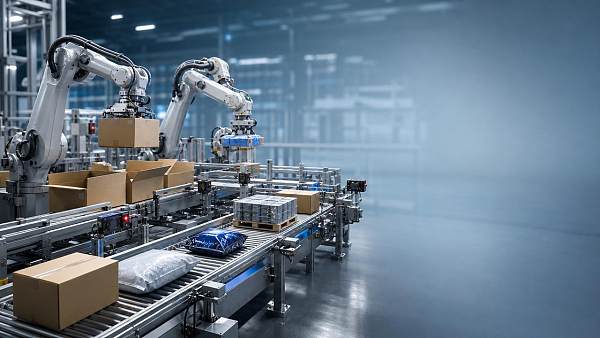
The gap between brochure numbers and actual line performance usually starts with test conditions. Many industrial packaging robots are rated in tightly controlled cycles using uniform products, fixed pick points, ideal infeed timing, and minimal interruption.
Real operations are different. Carton quality varies, upstream conveyors starve the robot, SKU dimensions shift, and downstream sealing or palletizing creates backpressure. Under those conditions, a robot cell that looks fast in a demo may deliver much lower sustained throughput.
Where rated capacity typically breaks down
- Product inconsistency slows motion planning. Flexible pouches, unstable trays, glossy films, or mixed case sizes often require gentler acceleration and longer settle times.
- Vision and sensing add latency. Inspection, orientation correction, and reject logic improve quality, but each processing step can reduce net cycles per minute.
- Integration losses matter more than arm speed. If conveyors, labelers, case erectors, or warehouse systems do not synchronize well, the robot becomes only one bottleneck in a larger chain.
- Changeovers reduce productive time. High-mix operations rarely run at one recipe long enough to approach nominal capacity.
- Micro-stoppages are cumulative. A few seconds lost to jams, sensor faults, or manual intervention across each hour can cut daily output far more than buyers expect.
For enterprise decision-makers, this means procurement should not evaluate industrial packaging robots only by maximum picks per minute. The more useful metric is stable throughput across a shift, with quality and uptime included.
What should procurement teams measure instead of peak speed?
A stronger buying framework compares laboratory claims with production reality. The table below highlights the metrics that matter most when selecting industrial packaging robots for multi-SKU, performance-sensitive operations.
This comparison shows why speed alone is misleading. Throughput is a systems outcome. It depends on mechanical design, controls integration, packaging materials, staffing, maintenance discipline, and line balance.
Key throughput indicators to include in an RFQ
- Net packs or cases per hour over an eight-hour or twelve-hour production window.
- Performance at minimum, nominal, and maximum SKU dimensions rather than one reference product.
- Documented impact of planned cleaning, changeovers, and common fault recovery steps.
- Labor requirement per shift, including operator oversight, replenishment, and troubleshooting.
- Data connectivity options for OEE tracking, MES exchange, and remote diagnostics.
At TradeNexus Pro, procurement leaders often use these measures to compare suppliers across advanced manufacturing and supply chain digitalization projects. The result is a more reliable business case and fewer surprises after commissioning.
Which operating scenarios reduce real throughput the most?
Not all packaging environments challenge industrial packaging robots in the same way. The table below summarizes common scenarios that create the largest variance between claimed capacity and observed output.
These scenarios show a simple truth: the more variable the environment, the less useful a single capacity number becomes. Buyers should test industrial packaging robots against their hardest production conditions, not their easiest.
A practical scenario-based review
In advanced manufacturing, a line may run stable carton dimensions for long periods. Here, robotic throughput can approach rated output if upstream buffering and downstream case handling are equally robust.
In healthcare technology packaging, traceability, label confirmation, and gentle handling may take priority over speed. Buyers in regulated environments should expect lower net throughput but stronger consistency and lower error cost.
In smart electronics, electrostatic precautions, orientation accuracy, and small-part handling often create hidden cycle penalties. Throughput analysis should include defect risk, not just unit count.
How should enterprise buyers evaluate industrial packaging robots before purchase?
A disciplined procurement process reduces overestimation risk. Instead of asking which robot is fastest, ask which system sustains target output at acceptable quality, labor, and maintenance cost.
A decision checklist for serious buyers
- Define the true bottleneck. If case erection, sealing, print-and-apply, or pallet transfer limits the line, a faster robot will not solve the throughput problem.
- Map SKU complexity. Count dimensions, materials, orientation rules, packaging tolerances, and expected annual changeover frequency.
- Request a throughput guarantee framework. This should specify product set, uptime assumptions, quality targets, and integration boundaries.
- Audit service capability. Spare parts lead time, remote support, local engineering coverage, and software change response all affect realized output.
- Validate digital visibility. Industrial packaging robots should support data capture for OEE, fault logging, and predictive maintenance review.
Questions to ask during vendor review
Ask for performance evidence under similar line conditions, but avoid accepting generic claims. Request line-level context: product range, infeed speed, operator count, reject rate, and downtime causes.
Ask how the supplier defines throughput. Some use mechanical cycle count, while others report accepted output after rejects. Procurement teams should normalize definitions before comparing proposals.
Ask what happens during exceptions. A robot that recovers quickly from carton skew, missing product, or barcode read failure can outperform a nominally faster model over the course of a week.
What costs are hidden when throughput is overestimated?
When industrial packaging robots underperform, the financial impact reaches beyond the robot itself. Buyers may need extra shifts, buffer inventory, manual rework, overtime labor, or additional downstream capacity.
Common hidden cost categories
- Lost output value when the line misses customer service levels or internal production plans.
- Integration rework if controls, conveyors, or grippers need modification after installation.
- Increased quality cost from damaged goods, poor case presentation, or misapplied labels.
- Higher maintenance burden caused by aggressive tuning in pursuit of unrealistic speed targets.
- Delayed payback when labor savings are offset by unplanned supervision and manual intervention.
A conservative model often produces better investment decisions. Instead of using maximum vendor-rated speed, finance teams should model expected throughput bands: stable case, nominal case, and stressed case.
That approach is particularly relevant across sectors covered by TradeNexus Pro, where packaging lines increasingly intersect with digital traceability, compliance expectations, and multi-site supply chain optimization.
Which standards and implementation details influence reliable output?
Standards do not guarantee throughput, but they influence consistency, safety, and integration quality. Buyers evaluating industrial packaging robots should review whether machine design and controls architecture align with recognized industrial practices.
Areas worth confirming during implementation planning
- Safety design, including guarding, emergency stop strategy, and collaborative or non-collaborative operating mode where applicable.
- Electrical and controls compatibility with site standards, PLC architecture, and data exchange requirements.
- Validation method for factory acceptance testing and site acceptance testing using representative SKUs and realistic line speeds.
- Operator training scope, including recipe handling, fault recovery, sanitation or cleaning, and preventive inspection routines.
- Cyber and remote-access governance when support teams need diagnostics across regions or multiple facilities.
Implementation discipline matters because many throughput losses are introduced after procurement, during rushed commissioning or incomplete handover. A well-structured acceptance plan is often more valuable than a marginal increase in advertised robot speed.
FAQ: what do buyers ask most about industrial packaging robots?
How should we compare two industrial packaging robots with similar speed claims?
Compare them on sustained throughput, changeover time, reject rate, recovery from common faults, and support responsiveness. Two robots may share the same nominal cycles per minute, but one may deliver more accepted output over a week because it loses less time between events.
Are industrial packaging robots suitable for low-volume, high-mix operations?
They can be, but success depends on tooling flexibility, recipe management, and operator workflow. If changeovers dominate the shift, buyers should prioritize fast adjustment and intuitive software over the highest peak capacity.
What is the most common procurement mistake?
The most common mistake is treating the robot as a standalone asset instead of a line component. Throughput depends on the complete packaging cell, including infeed, inspection, sealing, labeling, and material handling coordination.
How much live testing should we request before committing?
Request testing with representative SKUs, real packaging materials, and realistic fault scenarios. If possible, include at least one difficult product format and one changeover sequence so expected throughput is not based only on the simplest case.
Why work with us when evaluating industrial packaging robots?
TradeNexus Pro supports enterprise buyers who need more than surface-level supplier claims. Our platform connects procurement leaders, supply chain managers, and technical stakeholders with structured market intelligence across advanced manufacturing, healthcare technology, smart electronics, green energy, and supply chain software ecosystems.
If you are assessing industrial packaging robots, we can help you frame the right evaluation questions before budget approval or vendor shortlisting. That includes throughput benchmarking logic, supplier comparison criteria, integration risk points, digital reporting requirements, and scenario-based procurement analysis.
- Parameter confirmation for payload, reach, SKU range, and net throughput assumptions.
- Selection guidance for high-mix lines, fragile product handling, and multi-line expansion planning.
- Discussion support around delivery timelines, commissioning scope, and site-readiness checkpoints.
- Alignment on compliance expectations, data integration needs, and supplier due diligence priorities.
- Commercial preparation for quotation review, total cost modeling, and implementation risk assessment.
For decision-makers, the best automation investment is not the robot with the highest headline speed. It is the packaging system that delivers predictable throughput under your real operating conditions. If you need a sharper basis for supplier comparison or internal approval, connect with TradeNexus Pro for a decision-oriented evaluation framework.
Get weekly intelligence in your inbox.
No noise. No sponsored content. Pure intelligence.
 Oct 08, 2026How Digital Health Improves Diagnostic Accuracy and Workflow in Clinical LabsHow Digital Health Improves Diagnostic Accuracy and Workflow in Clinical Labs
 Oct 07, 2026Selecting Voice Picking Systems for German Warehouses: Integration, Languages and ROISelecting Voice Picking Systems for German Warehouses: Integration, Languages and ROI
 Oct 06, 2026How to Choose Last Mile Dispatch Software for On-Time Delivery at ScaleHow to Choose Last Mile Dispatch Software for On-Time Delivery at Scale
 Oct 05, 2026Vietnam’s Consumer Electronics Market: Demand Shifts and Sourcing OpportunitiesVietnam’s Consumer Electronics Market: Demand Shifts and Sourcing Opportunities
 Oct 04, 2026Digital Health Investment Priorities for Providers: Improving Access, Outcomes, and EfficiencyDigital Health Investment Priorities for Providers: Improving Access, Outcomes, and Efficiency
 Oct 03, 2026How to Specify an FR4 Custom PCB Board for High-Voltage and High-Heat DesignsHow to Specify an FR4 Custom PCB Board for High-Voltage and High-Heat Designs
 Oct 02, 2026ERP Software Market Intelligence: Adoption, Pricing, and Vendor Signals to WatchERP Software Market Intelligence: Adoption, Pricing, and Vendor Signals to Watch
 Oct 01, 2026How to Select Calibrated Temperature Data Loggers for GMP Cold Storage MonitoringHow to Select Calibrated Temperature Data Loggers for GMP Cold Storage Monitoring
 Sep 30, 2026Custom Molded Rubber Pricing: What Drives Unit Cost and Tooling Fees?Custom Molded Rubber Pricing: What Drives Unit Cost and Tooling Fees?
 Sep 29, 2026How to Evaluate Energy Management Software Vendors for Multi-Site OperationsHow to Evaluate Energy Management Software Vendors for Multi-Site Operations
 Sep 28, 2026How to Select a DIN Rail Smart Meter for Multi-Circuit Energy MonitoringHow to Select a DIN Rail Smart Meter for Multi-Circuit Energy Monitoring
 Sep 27, 2026TWS Earbuds in Vietnam: Demand Drivers, Price Tiers, and Retail Channel OpportunitiesTWS Earbuds in Vietnam: Demand Drivers, Price Tiers, and Retail Channel Opportunities
 Sep 26, 2026How UAE Clinics Can Qualify a Smart Glucometer Supplier for Accuracy and ComplianceHow UAE Clinics Can Qualify a Smart Glucometer Supplier for Accuracy and Compliance
 Sep 25, 2026Buying Aesthetic Lasers in the USA: FDA Status, Wavelengths, and Service SupportBuying Aesthetic Lasers in the USA: FDA Status, Wavelengths, and Service Support
 Sep 24, 2026Laser Cutting Brass Sheet: How to Prevent Burrs and Heat Marks on Thin PartsLaser Cutting Brass Sheet: How to Prevent Burrs and Heat Marks on Thin Parts
 Sep 23, 2026How to Choose Lightweight ANC Headphones for Comfortable All-Day TravelHow to Choose Lightweight ANC Headphones for Comfortable All-Day Travel
 Sep 22, 2026IPX5 TWS Bluetooth Earbuds: What Protection Do They Offer for Workouts?IPX5 TWS Bluetooth Earbuds: What Protection Do They Offer for Workouts?
 Sep 21, 2026What to Look for in a Grid Integration Company for Utility-Scale Solar ProjectsWhat to Look for in a Grid Integration Company for Utility-Scale Solar Projects
 Sep 20, 2026Microgrid Controller Pricing: What Drives Cost in Commercial Energy Projects?Microgrid Controller Pricing: What Drives Cost in Commercial Energy Projects?
 Sep 19, 2026How to Choose a GaN Charger for Laptops Without Compromising Power or PortabilityHow to Choose a GaN Charger for Laptops Without Compromising Power or Portability
 Sep 18, 2026Floating Solar Farm Costs: CAPEX, OPEX, and the Site Factors That Shape ROIFloating Solar Farm Costs: CAPEX, OPEX, and the Site Factors That Shape ROI
 Sep 17, 2026Drone Delivery Solutions for Last-Mile Routes: Site, Payload, and Range PlanningDrone Delivery Solutions for Last-Mile Routes: Site, Payload, and Range Planning
 Sep 16, 2026When Low-Volume Electronics Manufacturing Makes More Sense Than Mass ProductionWhen Low-Volume Electronics Manufacturing Makes More Sense Than Mass Production
 Sep 15, 2026Wholesale WiFi Smart Switches: What Buyers Should Verify Before OrderingWholesale WiFi Smart Switches: What Buyers Should Verify Before Ordering
 Sep 14, 2026How to Select IoT Sensors for Reliable Monitoring in Harsh Industrial EnvironmentsHow to Select IoT Sensors for Reliable Monitoring in Harsh Industrial Environments
 Sep 13, 2026How Procurement Teams Can Improve Supplier Reliability With Supply Chain VisibilityHow Procurement Teams Can Improve Supplier Reliability With Supply Chain Visibility
 Sep 12, 2026Smart Manufacturing Trends 2026: What Leaders Should Prioritize for ROISmart Manufacturing Trends 2026: What Leaders Should Prioritize for ROI



























