
Where Drone Delivery Technology Still Falls Short in 2026
Drone delivery technology promises faster logistics, lower costs, and greater reach, yet in 2026 its real-world limitations remain impossible for enterprise leaders to ignore. From regulatory friction and payload constraints to weather risks, infrastructure gaps, and weak last-mile economics, drone delivery technology still faces barriers that slow large-scale adoption. For decision-makers, understanding where the model falls short is essential to making smarter investment and supply chain strategy choices.
Why drone delivery technology still struggles to scale in enterprise logistics
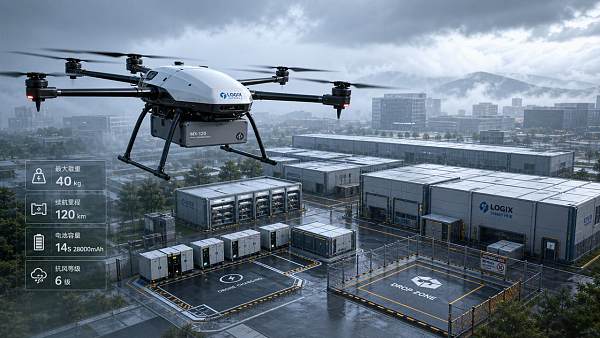
For boardrooms and procurement teams, the central question is no longer whether drone delivery technology works in controlled pilots. The more relevant question is where it fails under commercial pressure, compliance demands, and multi-site operational complexity.
In sectors such as healthcare technology, advanced manufacturing, and supply chain SaaS, executives need logistics systems that can perform across variable geographies, fluctuating demand, and strict service-level agreements. Drones remain promising, but they are not yet a universal last-mile answer.
The main adoption gap comes from a mismatch between public expectations and enterprise requirements. Consumers often focus on speed. Enterprises evaluate payload reliability, route density, risk transfer, maintenance planning, insurance exposure, and regulatory continuity.
- Flight range often drops when payload, wind resistance, and reserve battery requirements are modeled realistically rather than under demonstration conditions.
- Unit economics can weaken quickly when low delivery density requires more launch sites, more operators, and more redundant hardware.
- Regulatory approvals differ by jurisdiction, making network expansion slower than many investment decks suggest.
- Integration with warehouse systems, customer service workflows, and exception handling remains immature in many deployments.
This does not mean drone delivery technology lacks value. It means value is concentrated in narrow operational windows rather than broad substitution for vans, motorcycles, or regional carriers.
Where the technical limits create real business risk
Enterprise decision-makers should assess drone delivery technology as a constrained transport layer, not as a frictionless innovation. The table below highlights where technical realities affect service reliability and cost modeling.
For many organizations, these constraints do not kill the business case, but they narrow it sharply. High-value medical samples, emergency spare parts, and remote inspections can fit. Broad parcel substitution often does not.
Battery chemistry and energy density remain a bottleneck
Despite software improvements and lighter airframes, battery performance still limits drone delivery technology in 2026. Longer flights, heavier payloads, and added safety reserves create tradeoffs that are hard to optimize simultaneously.
For enterprise fleets, the issue is not just range. It is recharge turnaround, battery degradation, replacement planning, thermal management, and spare inventory allocation across distributed sites.
Autonomy is improving, but exception handling is expensive
Autonomous navigation has advanced, yet real logistics networks generate edge cases: blocked landing zones, GPS interference, sudden weather changes, unauthorized people near drop points, and local airspace restrictions.
Every exception requires process design. That means remote supervision, escalation protocols, rerouting logic, and customer communication systems. These hidden layers can dilute the labor savings many vendors highlight.
Why regulation and compliance remain major barriers
Regulation is still one of the biggest reasons drone delivery technology scales slowly. Rules around beyond visual line of sight operations, urban corridors, operator oversight, safety cases, and data governance vary across regions and often change with local authorities.
This matters most to multinational enterprises. A successful pilot in one country does not guarantee a repeatable model in another. Rollout plans can stall when legal, insurance, and aviation approvals do not align with commercial timelines.
- Urban operations may face stricter risk assessments because of population density and airspace conflicts.
- Healthcare and industrial sectors may need stronger chain-of-custody records and documented handoff procedures.
- Cross-border shipments add customs, identity verification, and liability issues that drone-first models rarely solve cleanly.
Decision-makers should also evaluate privacy and cyber risk. Flight telemetry, route data, video sensing, and fleet control systems can become compliance issues, especially when critical infrastructure or sensitive customer locations are involved.
Standards matter, but they do not remove local complexity
General safety management practices, maintenance documentation, cybersecurity controls, and quality processes are useful. However, enterprises still need market-specific legal reviews and operational sign-off before expanding drone delivery technology into daily logistics.
Which business scenarios actually fit drone delivery technology in 2026?
The strongest business cases are selective. Enterprise buyers should not ask whether drones can deliver. They should ask whether drones can deliver a specific item, within a specific radius, under a specific risk profile, at an acceptable cost.
The following comparison helps procurement and strategy teams identify where drone delivery technology remains practical and where conventional logistics still leads.
This pattern explains why hype persists while broad deployment lags. Drone delivery technology works best when the cargo is light, time-sensitive, high-value, and hard to move efficiently by road.
Five sectors where selective adoption makes sense
- Healthcare technology: lab samples, urgent devices, or critical consumables between controlled points.
- Advanced manufacturing: emergency movement of lightweight parts to reduce expensive downtime.
- Green energy: inspection kits or components sent to remote maintenance crews.
- Smart electronics: premium spare components needing secure, fast regional transfer.
- Supply chain SaaS ecosystems: visibility tools that orchestrate drone operations as one channel among many, not as a standalone network.
What procurement teams should evaluate before investing
A sound procurement process for drone delivery technology should be grounded in measurable constraints, not marketing claims. Buyers need to compare service design, infrastructure burden, and fallback logistics before signing pilots or expansion contracts.
Use the following decision framework when screening vendors, partners, or internal innovation proposals.
The strongest procurement teams also model total network cost, not just cost per flight. Hub staffing, battery replacement, route exceptions, compliance maintenance, and software subscriptions often shape the real financial outcome.
A practical buying checklist
- Define the exact shipment class to be moved by drone, including urgency, volume, weight, and handling sensitivity.
- Map routes against weather history, local airspace restrictions, and site infrastructure.
- Require exception management plans, not just normal-operating-case demonstrations.
- Compare drones with courier, van, locker, or micro-fulfillment alternatives on total service economics.
- Run a limited pilot with hard metrics tied to cost, uptime, compliance, and delivery success.
Cost realities and the strongest alternatives to consider
In many use cases, the problem is not that drone delivery technology is too expensive in isolation. The problem is that competing logistics models are still more flexible, more insurable, and easier to scale across mixed shipment profiles.
Ground couriers, route-optimized vans, micro-fulfillment centers, parcel lockers, and on-demand local carriers continue to outperform drones where delivery density is high and package diversity is broad.
- For dense urban networks, electric vans may deliver better economics because one trip can consolidate many parcels under fewer regulatory constraints.
- For factory support, local inventory positioning can outperform emergency drone dispatch by reducing the need for transport altogether.
- For healthcare systems, a hybrid model often works better: drones for urgent inter-facility moves, road transport for routine volume flows.
This is where market intelligence matters. TradeNexus Pro helps enterprise leaders compare not only technologies, but also operational fit, supplier maturity, and sector-specific adoption signals across manufacturing, green energy, electronics, healthcare, and digital logistics platforms.
FAQ: what enterprise buyers still ask about drone delivery technology
Is drone delivery technology ready for large-scale B2B logistics?
Not broadly. It is ready for selected high-priority use cases with clear route control, lightweight cargo, and manageable compliance conditions. Most enterprises should treat it as a complementary channel rather than a full logistics replacement.
What is the biggest mistake companies make when evaluating drone delivery technology?
Many teams focus on flight demonstrations instead of service design. A drone can fly successfully and still fail commercially if approvals, battery turnover, exception handling, and receiving-site readiness are weak.
Which KPI should matter most in a pilot?
Do not rely on speed alone. Track mission completion rate, weather-related cancellations, delivery accuracy, total cost per successful delivery, manual intervention frequency, and the cost of fallback transport.
Can drone delivery technology reduce supply chain risk?
Yes, but only in targeted cases. It can reduce downtime risk for urgent parts and improve access in remote areas. It can also introduce new risk if enterprises overdepend on a mode with tight payload limits and variable regulatory coverage.
Why choose us for strategic guidance on emerging logistics technologies
TradeNexus Pro supports enterprise decision-makers who need more than trend coverage. We help procurement directors, supply chain managers, and cross-border business leaders interpret where drone delivery technology fits inside larger operational strategy.
Our sector focus across advanced manufacturing, green energy, smart electronics, healthcare technology, and supply chain SaaS makes it easier to evaluate whether a drone-based model deserves pilot funding, hybrid deployment, or postponement.
- Consult on vendor shortlisting, parameter confirmation, and route suitability by shipment type and industry scenario.
- Assess integration requirements with ERP, WMS, TMS, inventory planning, and customer notification workflows.
- Review rollout risks related to compliance, service continuity, infrastructure readiness, and multi-market expansion.
- Support discussions around delivery timelines, pilot scope, alternative solutions, and budget-sensitive implementation paths.
If your team is evaluating drone delivery technology, contact TradeNexus Pro to discuss scenario mapping, supplier comparison, implementation sequencing, certification considerations, and commercial feasibility before you commit capital or procurement resources.
Get weekly intelligence in your inbox.
No noise. No sponsored content. Pure intelligence.
 Oct 08, 2026How Digital Health Improves Diagnostic Accuracy and Workflow in Clinical LabsHow Digital Health Improves Diagnostic Accuracy and Workflow in Clinical Labs
 Oct 07, 2026Selecting Voice Picking Systems for German Warehouses: Integration, Languages and ROISelecting Voice Picking Systems for German Warehouses: Integration, Languages and ROI
 Oct 06, 2026How to Choose Last Mile Dispatch Software for On-Time Delivery at ScaleHow to Choose Last Mile Dispatch Software for On-Time Delivery at Scale
 Oct 05, 2026Vietnam’s Consumer Electronics Market: Demand Shifts and Sourcing OpportunitiesVietnam’s Consumer Electronics Market: Demand Shifts and Sourcing Opportunities
 Oct 04, 2026Digital Health Investment Priorities for Providers: Improving Access, Outcomes, and EfficiencyDigital Health Investment Priorities for Providers: Improving Access, Outcomes, and Efficiency
 Oct 03, 2026How to Specify an FR4 Custom PCB Board for High-Voltage and High-Heat DesignsHow to Specify an FR4 Custom PCB Board for High-Voltage and High-Heat Designs
 Oct 02, 2026ERP Software Market Intelligence: Adoption, Pricing, and Vendor Signals to WatchERP Software Market Intelligence: Adoption, Pricing, and Vendor Signals to Watch
 Oct 01, 2026How to Select Calibrated Temperature Data Loggers for GMP Cold Storage MonitoringHow to Select Calibrated Temperature Data Loggers for GMP Cold Storage Monitoring
 Sep 30, 2026Custom Molded Rubber Pricing: What Drives Unit Cost and Tooling Fees?Custom Molded Rubber Pricing: What Drives Unit Cost and Tooling Fees?
 Sep 29, 2026How to Evaluate Energy Management Software Vendors for Multi-Site OperationsHow to Evaluate Energy Management Software Vendors for Multi-Site Operations
 Sep 28, 2026How to Select a DIN Rail Smart Meter for Multi-Circuit Energy MonitoringHow to Select a DIN Rail Smart Meter for Multi-Circuit Energy Monitoring
 Sep 27, 2026TWS Earbuds in Vietnam: Demand Drivers, Price Tiers, and Retail Channel OpportunitiesTWS Earbuds in Vietnam: Demand Drivers, Price Tiers, and Retail Channel Opportunities
 Sep 26, 2026How UAE Clinics Can Qualify a Smart Glucometer Supplier for Accuracy and ComplianceHow UAE Clinics Can Qualify a Smart Glucometer Supplier for Accuracy and Compliance
 Sep 25, 2026Buying Aesthetic Lasers in the USA: FDA Status, Wavelengths, and Service SupportBuying Aesthetic Lasers in the USA: FDA Status, Wavelengths, and Service Support
 Sep 24, 2026Laser Cutting Brass Sheet: How to Prevent Burrs and Heat Marks on Thin PartsLaser Cutting Brass Sheet: How to Prevent Burrs and Heat Marks on Thin Parts
 Sep 23, 2026How to Choose Lightweight ANC Headphones for Comfortable All-Day TravelHow to Choose Lightweight ANC Headphones for Comfortable All-Day Travel
 Sep 22, 2026IPX5 TWS Bluetooth Earbuds: What Protection Do They Offer for Workouts?IPX5 TWS Bluetooth Earbuds: What Protection Do They Offer for Workouts?
 Sep 21, 2026What to Look for in a Grid Integration Company for Utility-Scale Solar ProjectsWhat to Look for in a Grid Integration Company for Utility-Scale Solar Projects
 Sep 20, 2026Microgrid Controller Pricing: What Drives Cost in Commercial Energy Projects?Microgrid Controller Pricing: What Drives Cost in Commercial Energy Projects?
 Sep 19, 2026How to Choose a GaN Charger for Laptops Without Compromising Power or PortabilityHow to Choose a GaN Charger for Laptops Without Compromising Power or Portability
 Sep 18, 2026Floating Solar Farm Costs: CAPEX, OPEX, and the Site Factors That Shape ROIFloating Solar Farm Costs: CAPEX, OPEX, and the Site Factors That Shape ROI
 Sep 17, 2026Drone Delivery Solutions for Last-Mile Routes: Site, Payload, and Range PlanningDrone Delivery Solutions for Last-Mile Routes: Site, Payload, and Range Planning
 Sep 16, 2026When Low-Volume Electronics Manufacturing Makes More Sense Than Mass ProductionWhen Low-Volume Electronics Manufacturing Makes More Sense Than Mass Production
 Sep 15, 2026Wholesale WiFi Smart Switches: What Buyers Should Verify Before OrderingWholesale WiFi Smart Switches: What Buyers Should Verify Before Ordering
 Sep 14, 2026How to Select IoT Sensors for Reliable Monitoring in Harsh Industrial EnvironmentsHow to Select IoT Sensors for Reliable Monitoring in Harsh Industrial Environments
 Sep 13, 2026How Procurement Teams Can Improve Supplier Reliability With Supply Chain VisibilityHow Procurement Teams Can Improve Supplier Reliability With Supply Chain Visibility
 Sep 12, 2026Smart Manufacturing Trends 2026: What Leaders Should Prioritize for ROISmart Manufacturing Trends 2026: What Leaders Should Prioritize for ROI



























