
Voice Picking Systems: Why Accuracy Gains Sometimes Stall
Voice picking systems often deliver fast early wins. Hands-free confirmation, guided travel, and reduced paper handling can cut friction within days.
Yet many operations notice a plateau. Error rates stop falling, repeat mistakes remain, and productivity gains become harder to capture.
This matters across distribution, healthcare logistics, electronics fulfillment, spare parts handling, and mixed wholesale environments. Accuracy stalls usually reflect scenario mismatch, not just weak effort.
Understanding where voice picking systems fit, where they struggle, and how workflow details shape outcomes is the key to restoring measurable performance.
When voice picking systems work well, the operating scenario is usually tightly controlled
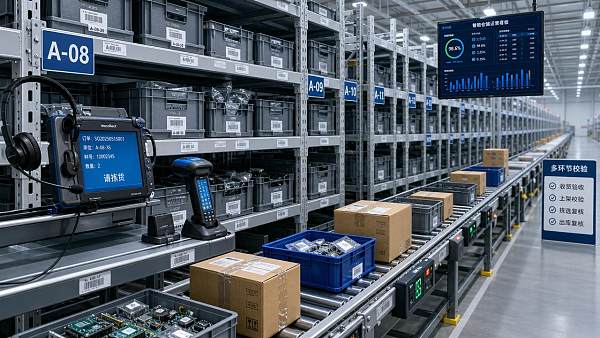
Voice picking systems shine in environments with stable slotting, clear product identifiers, repeatable pick paths, and moderate item complexity.
In these settings, operators benefit from rhythm. Speech prompts become predictable, confirmation codes remain clear, and travel paths support consistent execution.
Early gains come from removing visual distraction. Workers keep eyes and hands on inventory, which reduces scanning delays and paper-based lookup errors.
However, many facilities assume the same results will continue indefinitely. That assumption often ignores changing order profiles, labor mix, and warehouse noise conditions.
The first warning sign is not speed loss, but error concentration
Accuracy plateaus rarely spread evenly. They cluster around certain aisles, product families, shift periods, or temporary staff groups.
If voice picking systems show solid averages but repeated exceptions, the issue is usually scenario-specific. Aggregate metrics can hide that pattern.
In mixed-SKU and high-variation environments, voice prompts alone may not prevent confusion
Many modern operations manage small batches, frequent replenishment shifts, and look-alike items. That weakens the natural advantage of voice picking systems.
The problem is not voice itself. The problem is that spoken instructions may become too abstract when visual discrimination is critical.
A picker may hear location and quantity correctly, then still grab the wrong item from a crowded slot. This is common in smart electronics and healthcare supplies.
Where packaging changes often, legacy check digits also lose power. Operators begin trusting memory instead of confirming every pick.
Typical application scenarios where stalls appear
- Fast-moving consumer replenishment with seasonal slot changes.
- Electronics parts picking with visually similar SKUs.
- Healthcare consumables requiring lot or expiry attention.
- Industrial spare parts zones with mixed units of measure.
- Cross-dock or late-cutoff e-commerce waves under time pressure.
These environments need more than spoken navigation. They need layered confirmation logic and stronger exception design.
The plateau often starts where speech recognition meets operational reality
Teams often blame accent recognition first. In practice, technical speech accuracy is only one part of the issue.
Background noise, headset wear, rushed speaking, and confirmation habits all change how voice picking systems perform during live shifts.
When workers speak faster to save seconds, short codes become blurred. The system may still accept responses, but human attention drops.
Another hidden factor is prompt design. Long prompts slow pace, but over-short prompts create ambiguity. Both can reduce picking consistency.
Common friction points behind stalled accuracy
- Check digits are too similar across nearby slots.
- Prompt wording does not reflect task complexity.
- Training focuses on commands, not error recovery.
- Slotting changes faster than voice workflow updates.
- Supervisors monitor throughput more than exception causes.
Different scenarios need different control layers for voice picking systems
A single workflow standard rarely fits every zone. Voice picking systems perform differently depending on item density, compliance needs, and travel patterns.
The table below shows how scenario demands change the right control method.
Practical adjustments can help voice picking systems regain accuracy without slowing the floor
The most effective improvements are usually operational, not dramatic. Small workflow changes often unlock more value than replacing hardware.
Focus on these adaptation steps
- Map errors by zone, SKU family, shift, and worker tenure.
- Redesign check digits where neighboring slots sound alike.
- Shorten prompts only after validating comprehension.
- Add secondary verification for high-risk items.
- Refresh training around exceptions, substitutions, and recounts.
- Review slotting logic whenever order profiles change materially.
- Track near-misses, not only confirmed mispicks.
For many operations, voice picking systems improve again once managers stop treating all picks as equal-risk events.
A low-risk carton move and a regulated medical component should not share the same confirmation burden.
Some common judgments about voice picking systems are simply wrong
One mistake is assuming more training always solves the plateau. Training matters, but poor process fit can overpower good coaching.
Another mistake is chasing speed. Pushing picks per hour too aggressively can increase silent workarounds and reduce verbal confirmation quality.
A third mistake is viewing accuracy as a headset issue. In many cases, root causes come from slotting, master data, packaging similarity, or weak replenishment discipline.
Warning signs that the real problem is being missed
- Errors spike after assortment changes.
- Top performers succeed, but new workers fail repeatedly.
- Mispicks cluster around replenishment timing.
- Returned orders cite wrong variant, not wrong location.
- Supervisors hear fewer voice issues than customers experience downstream.
The next step is to evaluate voice picking systems by scenario fit, not by generic promise
Voice picking systems remain valuable across complex supply chains. But sustainable accuracy depends on matching the method to the task environment.
Start with a focused review of stalled zones. Compare product similarity, prompt design, slotting volatility, and exception frequency.
Then test targeted changes in one workflow at a time. Measure mispicks, rework minutes, retraining needs, and confirmation compliance together.
This scenario-based approach creates a clearer path to higher reliability. It also helps voice picking systems deliver stronger long-term return instead of short-lived gains.
For organizations tracking operational technology across advanced manufacturing, healthcare technology, smart electronics, and supply chain SaaS, this discipline turns voice from a tool into a controlled performance system.
Get weekly intelligence in your inbox.
No noise. No sponsored content. Pure intelligence.
 Oct 08, 2026How Digital Health Improves Diagnostic Accuracy and Workflow in Clinical LabsHow Digital Health Improves Diagnostic Accuracy and Workflow in Clinical Labs
 Oct 07, 2026Selecting Voice Picking Systems for German Warehouses: Integration, Languages and ROISelecting Voice Picking Systems for German Warehouses: Integration, Languages and ROI
 Oct 06, 2026How to Choose Last Mile Dispatch Software for On-Time Delivery at ScaleHow to Choose Last Mile Dispatch Software for On-Time Delivery at Scale
 Oct 05, 2026Vietnam’s Consumer Electronics Market: Demand Shifts and Sourcing OpportunitiesVietnam’s Consumer Electronics Market: Demand Shifts and Sourcing Opportunities
 Oct 04, 2026Digital Health Investment Priorities for Providers: Improving Access, Outcomes, and EfficiencyDigital Health Investment Priorities for Providers: Improving Access, Outcomes, and Efficiency
 Oct 03, 2026How to Specify an FR4 Custom PCB Board for High-Voltage and High-Heat DesignsHow to Specify an FR4 Custom PCB Board for High-Voltage and High-Heat Designs
 Oct 02, 2026ERP Software Market Intelligence: Adoption, Pricing, and Vendor Signals to WatchERP Software Market Intelligence: Adoption, Pricing, and Vendor Signals to Watch
 Oct 01, 2026How to Select Calibrated Temperature Data Loggers for GMP Cold Storage MonitoringHow to Select Calibrated Temperature Data Loggers for GMP Cold Storage Monitoring
 Sep 30, 2026Custom Molded Rubber Pricing: What Drives Unit Cost and Tooling Fees?Custom Molded Rubber Pricing: What Drives Unit Cost and Tooling Fees?
 Sep 29, 2026How to Evaluate Energy Management Software Vendors for Multi-Site OperationsHow to Evaluate Energy Management Software Vendors for Multi-Site Operations
 Sep 28, 2026How to Select a DIN Rail Smart Meter for Multi-Circuit Energy MonitoringHow to Select a DIN Rail Smart Meter for Multi-Circuit Energy Monitoring
 Sep 27, 2026TWS Earbuds in Vietnam: Demand Drivers, Price Tiers, and Retail Channel OpportunitiesTWS Earbuds in Vietnam: Demand Drivers, Price Tiers, and Retail Channel Opportunities
 Sep 26, 2026How UAE Clinics Can Qualify a Smart Glucometer Supplier for Accuracy and ComplianceHow UAE Clinics Can Qualify a Smart Glucometer Supplier for Accuracy and Compliance
 Sep 25, 2026Buying Aesthetic Lasers in the USA: FDA Status, Wavelengths, and Service SupportBuying Aesthetic Lasers in the USA: FDA Status, Wavelengths, and Service Support
 Sep 24, 2026Laser Cutting Brass Sheet: How to Prevent Burrs and Heat Marks on Thin PartsLaser Cutting Brass Sheet: How to Prevent Burrs and Heat Marks on Thin Parts
 Sep 23, 2026How to Choose Lightweight ANC Headphones for Comfortable All-Day TravelHow to Choose Lightweight ANC Headphones for Comfortable All-Day Travel
 Sep 22, 2026IPX5 TWS Bluetooth Earbuds: What Protection Do They Offer for Workouts?IPX5 TWS Bluetooth Earbuds: What Protection Do They Offer for Workouts?
 Sep 21, 2026What to Look for in a Grid Integration Company for Utility-Scale Solar ProjectsWhat to Look for in a Grid Integration Company for Utility-Scale Solar Projects
 Sep 20, 2026Microgrid Controller Pricing: What Drives Cost in Commercial Energy Projects?Microgrid Controller Pricing: What Drives Cost in Commercial Energy Projects?
 Sep 19, 2026How to Choose a GaN Charger for Laptops Without Compromising Power or PortabilityHow to Choose a GaN Charger for Laptops Without Compromising Power or Portability
 Sep 18, 2026Floating Solar Farm Costs: CAPEX, OPEX, and the Site Factors That Shape ROIFloating Solar Farm Costs: CAPEX, OPEX, and the Site Factors That Shape ROI
 Sep 17, 2026Drone Delivery Solutions for Last-Mile Routes: Site, Payload, and Range PlanningDrone Delivery Solutions for Last-Mile Routes: Site, Payload, and Range Planning
 Sep 16, 2026When Low-Volume Electronics Manufacturing Makes More Sense Than Mass ProductionWhen Low-Volume Electronics Manufacturing Makes More Sense Than Mass Production
 Sep 15, 2026Wholesale WiFi Smart Switches: What Buyers Should Verify Before OrderingWholesale WiFi Smart Switches: What Buyers Should Verify Before Ordering
 Sep 14, 2026How to Select IoT Sensors for Reliable Monitoring in Harsh Industrial EnvironmentsHow to Select IoT Sensors for Reliable Monitoring in Harsh Industrial Environments
 Sep 13, 2026How Procurement Teams Can Improve Supplier Reliability With Supply Chain VisibilityHow Procurement Teams Can Improve Supplier Reliability With Supply Chain Visibility
 Sep 12, 2026Smart Manufacturing Trends 2026: What Leaders Should Prioritize for ROISmart Manufacturing Trends 2026: What Leaders Should Prioritize for ROI



























