
Telescopic Conveyors: The Hidden Downtime Risk in Dock Operations
In busy dock environments, telescopic conveyors are often treated as productivity boosters rather than critical maintenance assets. Yet for after-sales service teams, a single overlooked fault can trigger unplanned downtime, shipment delays, and rising repair costs. Understanding where telescopic conveyors fail most often is the first step toward faster troubleshooting, smarter preventive maintenance, and more reliable dock performance.
Why do telescopic conveyors become a hidden downtime risk at the dock?
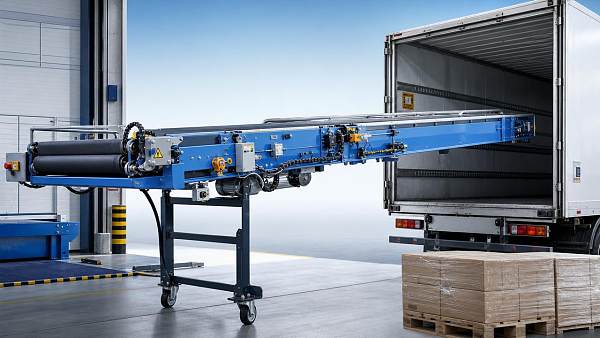
Telescopic conveyors sit at the intersection of mechanics, controls, power transmission, and operator handling. That makes them highly useful in parcel hubs, manufacturing warehouses, retail distribution centers, and third-party logistics docks, but also unusually vulnerable to cascading failures.
For after-sales maintenance personnel, the real issue is not whether a fault will occur. It is whether the fault can be diagnosed early, contained quickly, and corrected without disrupting outbound volume, labor scheduling, and service-level commitments.
Unlike fixed conveyors, telescopic conveyors operate with extension and retraction cycles, moving cable management, variable loading positions, and frequent human interaction. Each of those variables adds wear points that are easy to underestimate during routine service planning.
- The boom structure is repeatedly extended under load, creating stress on rollers, tracks, chains, belts, and alignment points.
- Electrical and sensor systems are exposed to vibration, dust, shock, and cable fatigue during repeated movement.
- Dock operations often compress maintenance windows, so minor symptoms are deferred until they become hard stoppages.
- Spare part lead times can be long when the conveyor is customized for dock height, belt width, extension length, or control architecture.
This is why telescopic conveyors deserve treatment as critical uptime equipment, not just handling accessories. In a mixed-industry environment, where loading profiles range from cartons and totes to small appliances and medical packaging, maintenance strategy must be specific, measurable, and spare-part aware.
What makes failures harder to detect than on fixed conveyor lines?
The earliest signs often look minor: slight belt drift, uneven extension speed, intermittent sensor loss, or abnormal noise near the nesting sections. These symptoms may not stop production immediately, but they usually indicate a developing failure mode rather than random wear.
After-sales teams working across multiple sites should therefore classify telescopic conveyors by failure criticality, not only by age. A newer unit operating in a high-cycle e-commerce dock may present higher risk than an older unit running fewer shifts.
Where do telescopic conveyors fail most often?
The table below highlights the most common telescopic conveyors failure points seen in dock operations and the practical service implications for maintenance teams.
For service teams, the key takeaway is that faults rarely appear in isolation. Belt drift may start with poor tension, but can also reflect misaligned rollers or an extension frame that is no longer traveling evenly. Effective diagnosis must therefore move from symptom to root cause, not just symptom to part replacement.
The high-cost pattern: intermittent faults
Intermittent electrical and control issues often create the longest downtime because they blur accountability between mechanical, electrical, and operator causes. A sensor that fails only at near-full extension can be missed during a short maintenance test and then reappear in the next loading wave.
This is one reason many global maintenance leaders now request failure logs, cycle counts, and video-assisted troubleshooting before authorizing major component replacement. Better information shortens mean time to repair and reduces unnecessary part swaps.
How should after-sales teams inspect telescopic conveyors before downtime occurs?
Preventive maintenance on telescopic conveyors should be organized by cycle stress, not by calendar alone. A dock running two intensive parcel shifts per day will consume wear life much faster than a low-frequency loading bay handling stable carton dimensions.
A practical inspection sequence
- Start with a full extension and retraction observation. Watch for hesitation, skewing, shock movement, and abnormal sound at each nesting stage.
- Check belt tracking under both empty and loaded conditions. A belt that tracks correctly without load may still drift once cartons accumulate at the nose.
- Inspect chains, sprockets, rollers, and tracks for wear patterns rather than isolated damage. Uneven wear usually signals alignment issues.
- Verify cable carrier movement through the full travel range. Look for pinch points, abrasion, loose connectors, and temporary repairs that may fail under vibration.
- Test emergency stop circuits, extension limits, photoelectric sensors, and operator controls in sequence, not individually. Functional interaction matters.
- Review maintenance history and stoppage logs. Repeated small faults often expose a larger unresolved condition.
After-sales personnel should also standardize what counts as an actionable deviation. If one technician records “minor vibration” and another records nothing, trend analysis becomes impossible. Shared checklists improve decision quality across sites and shifts.
Which indicators deserve urgent escalation?
- A conveyor that retracts more slowly than it extends, especially under light load.
- Visible cable sheath damage anywhere along moving sections.
- Repeated belt edge wear after multiple tension adjustments.
- Sensor faults that appear only at specific extension lengths.
- Metal debris near tracks, wheel assemblies, or extension guides.
These conditions often indicate that a simple adjustment will not hold for long. Escalating early can avoid a dock outage during peak loading hours.
What should you evaluate when selecting or upgrading telescopic conveyors?
Many service problems begin during specification, not operation. When telescopic conveyors are chosen primarily on reach or price, after-sales teams inherit preventable issues such as poor spare commonality, difficult access for service, and controls that do not align with site standards.
The comparison below helps maintenance personnel and procurement teams evaluate telescopic conveyors beyond headline capacity claims.
Selection becomes stronger when procurement, operations, and after-sales teams review the same criteria. TradeNexus Pro supports this by connecting decision-makers with sector-specific intelligence on supplier capabilities, service models, and technology adoption patterns across advanced manufacturing and supply chain environments.
Common specification mistakes
- Choosing the longest extension range without validating cycle frequency and mechanical stress implications.
- Ignoring service access because initial installation space appears sufficient.
- Accepting custom electrical architecture that complicates future spare stocking.
- Underestimating operator training needs in mixed-shift or seasonal labor environments.
How do downtime costs compare with preventive maintenance costs?
For most dock operations, the biggest financial loss is not the replacement part itself. It is the chain reaction: delayed trailer turnarounds, labor idle time, overtime recovery, missed dispatch windows, and customer service disruption. That is why telescopic conveyors should be assessed through total downtime exposure.
A cost-based view for maintenance planning
A planned service visit to correct belt alignment, inspect cable carriers, and replace wearing rollers may appear expensive in isolation. In practice, it is often far cheaper than an emergency stop during a peak loading period, especially when outside technicians and expedited parts are needed.
After-sales teams should therefore create a simple decision model that compares three factors: failure probability, downtime severity, and replacement lead time. Components that score high on all three deserve pre-stock or scheduled replacement consideration.
When should alternatives be considered?
Not every dock needs the same telescopic conveyor configuration. In lower-volume or less variable loading environments, a simpler conveyor layout or a dock-assisted loading system may reduce service burden. The right choice depends on throughput, trailer mix, labor model, and required flexibility.
However, alternatives should be judged carefully. Replacing telescopic conveyors with lower-complexity equipment may reduce maintenance points but can increase manual handling, loading time, or ergonomic risk. A sound decision balances maintenance efficiency with operational output.
Which standards, service processes, and documentation matter most?
While exact compliance needs vary by country and facility type, after-sales teams should align telescopic conveyors maintenance with general machinery safety, electrical safety, lockout procedures, and documented inspection routines. Clear records support safer service and stronger procurement decisions.
The following service framework helps maintenance teams structure recurring support for telescopic conveyors across multiple dock sites.
This process matters because repeated dock failures are rarely solved by parts alone. The real gains come from combining field observations, service records, and supplier intelligence into a repeatable maintenance strategy.
FAQ: what do after-sales teams ask most about telescopic conveyors?
How often should telescopic conveyors be inspected?
Inspection frequency should follow usage intensity, shift pattern, and load profile. High-cycle docks may need daily operator checks, weekly visual maintenance checks, and more formal monthly or quarterly technical inspections. Calendar-only scheduling is often too blunt for moving dock equipment.
What spare parts should be stocked locally?
At minimum, consider wear-prone and failure-critical items such as sensors, limit switches, rollers, selected belts or belt repair materials, chain-related components, connectors, and cable protection parts. The right list depends on the installed design and lead times from the supplier.
Are telescopic conveyors suitable for mixed-industry distribution environments?
Yes, but suitability depends on package stability, weight distribution, dock utilization, and handling method. A unit serving consumer parcels may require different maintenance priorities than one handling boxed components for advanced manufacturing or packaged devices for healthcare logistics.
What is the most common maintenance mistake?
Treating repeated small symptoms as unrelated events. If a telescopic conveyor shows recurring drift, intermittent stops, or extension hesitation, teams should assume a system-level issue until proven otherwise. Replacing one part at a time without root-cause review usually extends downtime over multiple service visits.
Why choose us for insight, supplier evaluation, and maintenance decision support?
TradeNexus Pro helps after-sales teams and enterprise buyers move beyond generic product listings. Our platform focuses on deep B2B intelligence across advanced manufacturing, healthcare technology, smart electronics, green energy, and supply chain software ecosystems that directly shape dock equipment decisions.
If you are reviewing telescopic conveyors for replacement, retrofit, or service improvement, we can support structured evaluation in areas that matter to maintenance outcomes.
- Parameter confirmation for extension range, load profile, duty cycle, and site constraints.
- Supplier and solution comparison for service access, parts availability, and control compatibility.
- Delivery cycle discussion for replacement units, critical spares, and phased dock upgrades.
- Custom solution review for mixed-industry warehouses, variable trailer types, and high-cycle operations.
- Guidance on documentation, standard practice alignment, and maintenance workflow planning.
- Quote communication support based on technical scope rather than headline price alone.
For teams under pressure to reduce dock downtime, the fastest improvement often starts with better questions: which telescopic conveyors faults recur, which components create the longest outages, and which supplier options actually reduce lifetime service burden. That is where targeted market intelligence becomes operational value.
Get weekly intelligence in your inbox.
No noise. No sponsored content. Pure intelligence.
 Oct 08, 2026How Digital Health Improves Diagnostic Accuracy and Workflow in Clinical LabsHow Digital Health Improves Diagnostic Accuracy and Workflow in Clinical Labs
 Oct 07, 2026Selecting Voice Picking Systems for German Warehouses: Integration, Languages and ROISelecting Voice Picking Systems for German Warehouses: Integration, Languages and ROI
 Oct 06, 2026How to Choose Last Mile Dispatch Software for On-Time Delivery at ScaleHow to Choose Last Mile Dispatch Software for On-Time Delivery at Scale
 Oct 05, 2026Vietnam’s Consumer Electronics Market: Demand Shifts and Sourcing OpportunitiesVietnam’s Consumer Electronics Market: Demand Shifts and Sourcing Opportunities
 Oct 04, 2026Digital Health Investment Priorities for Providers: Improving Access, Outcomes, and EfficiencyDigital Health Investment Priorities for Providers: Improving Access, Outcomes, and Efficiency
 Oct 03, 2026How to Specify an FR4 Custom PCB Board for High-Voltage and High-Heat DesignsHow to Specify an FR4 Custom PCB Board for High-Voltage and High-Heat Designs
 Oct 02, 2026ERP Software Market Intelligence: Adoption, Pricing, and Vendor Signals to WatchERP Software Market Intelligence: Adoption, Pricing, and Vendor Signals to Watch
 Oct 01, 2026How to Select Calibrated Temperature Data Loggers for GMP Cold Storage MonitoringHow to Select Calibrated Temperature Data Loggers for GMP Cold Storage Monitoring
 Sep 30, 2026Custom Molded Rubber Pricing: What Drives Unit Cost and Tooling Fees?Custom Molded Rubber Pricing: What Drives Unit Cost and Tooling Fees?
 Sep 29, 2026How to Evaluate Energy Management Software Vendors for Multi-Site OperationsHow to Evaluate Energy Management Software Vendors for Multi-Site Operations
 Sep 28, 2026How to Select a DIN Rail Smart Meter for Multi-Circuit Energy MonitoringHow to Select a DIN Rail Smart Meter for Multi-Circuit Energy Monitoring
 Sep 27, 2026TWS Earbuds in Vietnam: Demand Drivers, Price Tiers, and Retail Channel OpportunitiesTWS Earbuds in Vietnam: Demand Drivers, Price Tiers, and Retail Channel Opportunities
 Sep 26, 2026How UAE Clinics Can Qualify a Smart Glucometer Supplier for Accuracy and ComplianceHow UAE Clinics Can Qualify a Smart Glucometer Supplier for Accuracy and Compliance
 Sep 25, 2026Buying Aesthetic Lasers in the USA: FDA Status, Wavelengths, and Service SupportBuying Aesthetic Lasers in the USA: FDA Status, Wavelengths, and Service Support
 Sep 24, 2026Laser Cutting Brass Sheet: How to Prevent Burrs and Heat Marks on Thin PartsLaser Cutting Brass Sheet: How to Prevent Burrs and Heat Marks on Thin Parts
 Sep 23, 2026How to Choose Lightweight ANC Headphones for Comfortable All-Day TravelHow to Choose Lightweight ANC Headphones for Comfortable All-Day Travel
 Sep 22, 2026IPX5 TWS Bluetooth Earbuds: What Protection Do They Offer for Workouts?IPX5 TWS Bluetooth Earbuds: What Protection Do They Offer for Workouts?
 Sep 21, 2026What to Look for in a Grid Integration Company for Utility-Scale Solar ProjectsWhat to Look for in a Grid Integration Company for Utility-Scale Solar Projects
 Sep 20, 2026Microgrid Controller Pricing: What Drives Cost in Commercial Energy Projects?Microgrid Controller Pricing: What Drives Cost in Commercial Energy Projects?
 Sep 19, 2026How to Choose a GaN Charger for Laptops Without Compromising Power or PortabilityHow to Choose a GaN Charger for Laptops Without Compromising Power or Portability
 Sep 18, 2026Floating Solar Farm Costs: CAPEX, OPEX, and the Site Factors That Shape ROIFloating Solar Farm Costs: CAPEX, OPEX, and the Site Factors That Shape ROI
 Sep 17, 2026Drone Delivery Solutions for Last-Mile Routes: Site, Payload, and Range PlanningDrone Delivery Solutions for Last-Mile Routes: Site, Payload, and Range Planning
 Sep 16, 2026When Low-Volume Electronics Manufacturing Makes More Sense Than Mass ProductionWhen Low-Volume Electronics Manufacturing Makes More Sense Than Mass Production
 Sep 15, 2026Wholesale WiFi Smart Switches: What Buyers Should Verify Before OrderingWholesale WiFi Smart Switches: What Buyers Should Verify Before Ordering
 Sep 14, 2026How to Select IoT Sensors for Reliable Monitoring in Harsh Industrial EnvironmentsHow to Select IoT Sensors for Reliable Monitoring in Harsh Industrial Environments
 Sep 13, 2026How Procurement Teams Can Improve Supplier Reliability With Supply Chain VisibilityHow Procurement Teams Can Improve Supplier Reliability With Supply Chain Visibility
 Sep 12, 2026Smart Manufacturing Trends 2026: What Leaders Should Prioritize for ROISmart Manufacturing Trends 2026: What Leaders Should Prioritize for ROI



























