
Stretch Wrapping Machines and Load Stability Problems to Fix Early
Stretch wrapping machines play a critical role in protecting palletized goods, yet load instability often begins with small setup or handling issues that go unnoticed. For quality control and safety managers, fixing these problems early can reduce product damage, improve warehouse safety, and strengthen shipment consistency across demanding supply chains.
Why do load stability problems start so early with stretch wrapping machines?
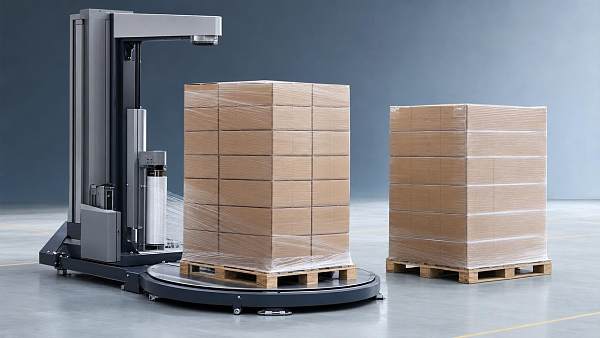
In many facilities, load failures are blamed on transportation, poor pallets, or rough forklift handling. In practice, stretch wrapping machines often introduce instability much earlier, during film application, load containment, or machine setup. Small errors in wrap force, turntable speed, or film overlap can weaken the unit load before it ever leaves the dock.
For quality and safety teams, the challenge is not only identifying visible defects. The greater risk is latent instability. A pallet may look secure in the warehouse but still shift during acceleration, cornering, stacking, or long-distance shipment. That gap between appearance and true containment is where preventable damage begins.
- Film tension may be too low to create effective load-to-load containment, especially on lightweight cartons or mixed SKU pallets.
- Wrap patterns may leave weak zones at the base, middle, or top, allowing products to lean or separate during handling.
- Pallet quality, overhang, or uneven stacking may exceed what the stretch wrapping machines can compensate for.
- Operators may change film rolls or machine settings without a containment verification process, creating inconsistency between shifts.
This matters across advanced manufacturing, healthcare technology, green energy equipment, electronics, and supply chain SaaS-driven fulfillment environments, where traceability, throughput, and shipment reliability are tightly connected. TradeNexus Pro follows these cross-sector issues closely because load stability is not just a packaging topic. It affects claims, downtime, worker safety, and supplier performance metrics.
Which early warning signs should quality and safety managers monitor?
The fastest way to improve performance from stretch wrapping machines is to detect instability before it becomes a transport claim. Early warning signs usually appear on the pallet, on the film, or in handling behavior inside the warehouse.
Common visual and operational indicators
- Film neck-down is excessive, indicating overstretch or incorrect pre-stretch settings.
- Bottom wraps do not anchor the load firmly to the pallet deck, causing sliding during forklift entry or braking.
- Cartons bow outward after wrapping, a sign that containment force may be uneven or too aggressive for the package type.
- Top layers lean after the pallet sits for several hours, showing poor vertical load support or unstable stacking.
- Frequent film breaks appear at corners, suggesting either sharp load edges, wrong film gauge, or excessive wrap force.
Safety managers should also pay attention to near misses. If forklift operators report pallets shifting in aisles, if rewrapping is common in staging areas, or if damaged loads cluster around specific SKUs, those patterns point back to machine setup or packaging design, not random handling.
The table below helps teams connect visible symptoms to likely root causes when reviewing stretch wrapping machines in daily inspections.
These signals are simple to observe, yet they are often missed because inspection routines focus on finished appearance rather than load dynamics. A more useful approach is to tie each symptom to handling risk and shipment outcome.
How do machine settings, film choice, and load design interact?
Stretch wrapping machines do not stabilize loads in isolation. Performance depends on the interaction between machine capability, film properties, and the geometry of the palletized goods. When one variable changes, the containment result changes too.
Three factors that drive containment quality
- Machine settings: pre-stretch ratio, wrap force, carriage speed, turntable speed, top and bottom wrap count, and cut-and-clamp consistency all influence final holding force.
- Film selection: gauge, puncture resistance, cling characteristics, and load retention behavior must fit the actual product profile rather than only material cost targets.
- Load design: carton integrity, column stacking, pallet condition, and overhang directly affect whether film can create a stable transport unit.
This interaction is especially important in mixed-sector distribution. A healthcare device pallet, a smart electronics shipment, and a green energy component load may all require different containment strategies. The same stretch wrapping machines cannot be expected to perform equally well with identical settings across all these profiles.
For that reason, quality control should treat wrap recipes as validated process settings. Safety management should treat unstable loads as a systemic hazard, not an operator inconvenience.
What should procurement and operations compare before selecting stretch wrapping machines?
When a site upgrades or replaces stretch wrapping machines, buyers often compare throughput and price first. For quality and safety managers, those are incomplete metrics. The more important question is whether the machine can maintain stable, repeatable containment across product variation, staffing differences, and shipment stress.
The comparison table below highlights practical selection criteria for mixed industrial and distribution environments.
A strong procurement review should include controlled trials with actual pallet types, not only demo loads. TradeNexus Pro regularly sees decision errors when buyers approve equipment from showroom performance alone and skip cross-functional testing with packaging, warehouse safety, and outbound logistics teams.
Short checklist before approval
- Confirm the machine can store validated recipes for different load families.
- Request evidence of stable performance on tall, light, heavy, and mixed pallets.
- Review maintenance access and operator safety procedures before installation.
- Estimate film consumption together with claim reduction, not as a separate KPI.
How can facilities fix load stability problems early without major disruption?
Early correction does not always require new capital equipment. Many load stability issues linked to stretch wrapping machines can be reduced through process discipline, targeted validation, and better coordination between packaging, operations, and safety functions.
Practical implementation steps
- Map failure points by SKU family, pallet size, shift, and transport route. Patterns reveal whether the issue is machine-related, packaging-related, or handling-related.
- Standardize load recipes. Document wrap counts, force settings, film specification, and pallet acceptance criteria in a controlled SOP.
- Run containment verification on representative loads. Static appearance is not enough; include movement simulation or internal transport observation.
- Train operators and supervisors on what good wrapping actually looks like, including defect recognition and escalation triggers.
- Create a feedback loop with damage claims, near-miss reporting, and warehouse observations so settings can be adjusted before losses increase.
In fast-moving facilities, one of the most effective controls is a simple approval rule: no changes to critical wrap settings without documented review. That prevents well-intended adjustments from undermining validated performance.
What standards and compliance points should teams keep in mind?
Stretch wrapping machines sit at the intersection of packaging control, workplace safety, and shipment integrity. While requirements vary by region and product class, quality and safety teams should evaluate both machine safety and transport performance within a structured compliance framework.
- Machine safeguarding and operator protection should be reviewed against applicable machinery safety requirements and local workplace regulations.
- Pallet stability testing methods should be aligned with internal quality procedures and customer shipment expectations.
- For healthcare technology or sensitive electronics, packaging validation may need tighter documentation, change control, and traceability.
- Export-heavy operations should verify whether packaging changes influence freight claims, stacking limitations, or customer acceptance standards.
A practical compliance mindset is to document why a wrap method was selected, how it was validated, and who approves changes. That record becomes valuable during audits, customer reviews, and incident investigations.
FAQ: what do buyers and site managers ask most about stretch wrapping machines?
How do I know whether instability is caused by the machine or the pallet load?
Start with controlled comparison. Use the same pallet pattern, same film, and same transport path while changing only one variable at a time. If containment changes with settings, the issue is likely machine-related. If failure remains despite setting optimization, load design or pallet quality is the stronger suspect.
Are semi-automatic stretch wrapping machines enough for safety-critical operations?
They can be, but only if load profiles are predictable and operator discipline is strong. In higher-volume environments with mixed loads, automatic systems usually provide better repeatability and stronger control over wrap patterns. The right decision depends on throughput, product variation, and risk tolerance.
What is the biggest mistake during machine selection?
Many teams focus on cycle speed and film savings while underestimating containment consistency. A slightly cheaper machine can become more expensive if it increases product damage, rework, or safety incidents. Selection should include quality, safety, and operations together.
How often should wrap settings be reviewed?
Review settings whenever product dimensions, carton strength, pallet type, film specification, or transport conditions change. Even without major changes, periodic review is wise if claims increase, operators report shifting loads, or seasonal temperature affects film behavior.
Why work with TradeNexus Pro when evaluating stretch wrapping machines?
TradeNexus Pro helps procurement leaders, quality specialists, and safety managers move beyond generic supplier comparisons. Our industry coverage connects packaging decisions to wider realities in advanced manufacturing, green energy, smart electronics, healthcare technology, and supply chain SaaS-enabled logistics.
If your team is reviewing stretch wrapping machines, we can support higher-quality decisions by helping you structure supplier evaluation, compare load containment priorities, and align packaging choices with operational risk. That is especially useful when facilities must balance budget pressure, audit readiness, shipment reliability, and multi-site standardization.
- Discuss parameter confirmation for different pallet types and product categories.
- Review product selection logic for semi-automatic versus automatic stretch wrapping machines.
- Assess delivery timelines, implementation sequencing, and change-control priorities.
- Explore custom solution paths for mixed loads, sensitive goods, or export-oriented operations.
- Clarify documentation, certification expectations, sample support needs, and quotation scope.
When load stability problems are fixed early, the gains extend well beyond packaging. Safer handling, fewer claims, stronger supplier accountability, and more predictable outbound performance all start with better control of the wrap process. For teams planning the next step, a focused consultation can save far more than a late-stage correction program.
Get weekly intelligence in your inbox.
No noise. No sponsored content. Pure intelligence.
 Oct 08, 2026How Digital Health Improves Diagnostic Accuracy and Workflow in Clinical LabsHow Digital Health Improves Diagnostic Accuracy and Workflow in Clinical Labs
 Oct 07, 2026Selecting Voice Picking Systems for German Warehouses: Integration, Languages and ROISelecting Voice Picking Systems for German Warehouses: Integration, Languages and ROI
 Oct 06, 2026How to Choose Last Mile Dispatch Software for On-Time Delivery at ScaleHow to Choose Last Mile Dispatch Software for On-Time Delivery at Scale
 Oct 05, 2026Vietnam’s Consumer Electronics Market: Demand Shifts and Sourcing OpportunitiesVietnam’s Consumer Electronics Market: Demand Shifts and Sourcing Opportunities
 Oct 04, 2026Digital Health Investment Priorities for Providers: Improving Access, Outcomes, and EfficiencyDigital Health Investment Priorities for Providers: Improving Access, Outcomes, and Efficiency
 Oct 03, 2026How to Specify an FR4 Custom PCB Board for High-Voltage and High-Heat DesignsHow to Specify an FR4 Custom PCB Board for High-Voltage and High-Heat Designs
 Oct 02, 2026ERP Software Market Intelligence: Adoption, Pricing, and Vendor Signals to WatchERP Software Market Intelligence: Adoption, Pricing, and Vendor Signals to Watch
 Oct 01, 2026How to Select Calibrated Temperature Data Loggers for GMP Cold Storage MonitoringHow to Select Calibrated Temperature Data Loggers for GMP Cold Storage Monitoring
 Sep 30, 2026Custom Molded Rubber Pricing: What Drives Unit Cost and Tooling Fees?Custom Molded Rubber Pricing: What Drives Unit Cost and Tooling Fees?
 Sep 29, 2026How to Evaluate Energy Management Software Vendors for Multi-Site OperationsHow to Evaluate Energy Management Software Vendors for Multi-Site Operations
 Sep 28, 2026How to Select a DIN Rail Smart Meter for Multi-Circuit Energy MonitoringHow to Select a DIN Rail Smart Meter for Multi-Circuit Energy Monitoring
 Sep 27, 2026TWS Earbuds in Vietnam: Demand Drivers, Price Tiers, and Retail Channel OpportunitiesTWS Earbuds in Vietnam: Demand Drivers, Price Tiers, and Retail Channel Opportunities
 Sep 26, 2026How UAE Clinics Can Qualify a Smart Glucometer Supplier for Accuracy and ComplianceHow UAE Clinics Can Qualify a Smart Glucometer Supplier for Accuracy and Compliance
 Sep 25, 2026Buying Aesthetic Lasers in the USA: FDA Status, Wavelengths, and Service SupportBuying Aesthetic Lasers in the USA: FDA Status, Wavelengths, and Service Support
 Sep 24, 2026Laser Cutting Brass Sheet: How to Prevent Burrs and Heat Marks on Thin PartsLaser Cutting Brass Sheet: How to Prevent Burrs and Heat Marks on Thin Parts
 Sep 23, 2026How to Choose Lightweight ANC Headphones for Comfortable All-Day TravelHow to Choose Lightweight ANC Headphones for Comfortable All-Day Travel
 Sep 22, 2026IPX5 TWS Bluetooth Earbuds: What Protection Do They Offer for Workouts?IPX5 TWS Bluetooth Earbuds: What Protection Do They Offer for Workouts?
 Sep 21, 2026What to Look for in a Grid Integration Company for Utility-Scale Solar ProjectsWhat to Look for in a Grid Integration Company for Utility-Scale Solar Projects
 Sep 20, 2026Microgrid Controller Pricing: What Drives Cost in Commercial Energy Projects?Microgrid Controller Pricing: What Drives Cost in Commercial Energy Projects?
 Sep 19, 2026How to Choose a GaN Charger for Laptops Without Compromising Power or PortabilityHow to Choose a GaN Charger for Laptops Without Compromising Power or Portability
 Sep 18, 2026Floating Solar Farm Costs: CAPEX, OPEX, and the Site Factors That Shape ROIFloating Solar Farm Costs: CAPEX, OPEX, and the Site Factors That Shape ROI
 Sep 17, 2026Drone Delivery Solutions for Last-Mile Routes: Site, Payload, and Range PlanningDrone Delivery Solutions for Last-Mile Routes: Site, Payload, and Range Planning
 Sep 16, 2026When Low-Volume Electronics Manufacturing Makes More Sense Than Mass ProductionWhen Low-Volume Electronics Manufacturing Makes More Sense Than Mass Production
 Sep 15, 2026Wholesale WiFi Smart Switches: What Buyers Should Verify Before OrderingWholesale WiFi Smart Switches: What Buyers Should Verify Before Ordering
 Sep 14, 2026How to Select IoT Sensors for Reliable Monitoring in Harsh Industrial EnvironmentsHow to Select IoT Sensors for Reliable Monitoring in Harsh Industrial Environments
 Sep 13, 2026How Procurement Teams Can Improve Supplier Reliability With Supply Chain VisibilityHow Procurement Teams Can Improve Supplier Reliability With Supply Chain Visibility
 Sep 12, 2026Smart Manufacturing Trends 2026: What Leaders Should Prioritize for ROISmart Manufacturing Trends 2026: What Leaders Should Prioritize for ROI



























