
Thermal Label Printers or Inkjet for High-Volume Warehouses?
For procurement teams managing fast-moving warehouse operations, choosing between thermal label printers and inkjet systems can directly impact speed, accuracy, and long-term cost control. In high-volume environments, the right labeling technology affects everything from barcode readability to maintenance downtime. This article compares performance, scalability, and total ownership value to help buyers make a smarter, data-driven decision.
Thermal Label Printers and Inkjet Systems in Warehouse Labeling
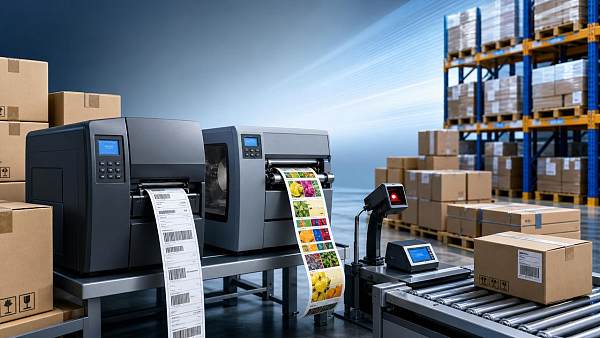
Warehouse labeling supports receiving, put-away, picking, packing, returns, and cross-docking. Printer choice shapes throughput, scanning reliability, labor efficiency, and service continuity across these workflows.
Thermal label printers create images through heat. Direct thermal prints on heat-sensitive media. Thermal transfer uses ribbons and produces more durable labels for extended handling or harsher storage conditions.
Inkjet systems spray liquid ink onto label stock or packaging surfaces. They support color output and flexible graphics, but performance depends on ink formulation, drying time, and environmental control.
In high-volume warehouses, thermal label printers are usually evaluated against speed, scan consistency, consumable stability, and ease of integration with warehouse management systems and mobile workflows.
Inkjet remains relevant where color coding, branding, or wider-format print needs matter. Yet volume logistics often prioritize durable monochrome barcodes over image-rich output.
Current Warehouse Signals Shaping Printer Decisions
Distribution networks now operate under tighter service-level expectations, labor constraints, and higher SKU complexity. These pressures make printer selection a measurable operational decision rather than a simple hardware purchase.
- More same-day and next-day fulfillment raises demand for faster label output.
- Barcode verification requirements increase focus on print sharpness and contrast.
- Labor shortages elevate the value of simple maintenance and quick media changes.
- Global traceability programs favor stable, durable labeling across transport stages.
- Warehouse automation needs printers that connect cleanly with scanners, conveyors, and WMS platforms.
These trends explain why thermal label printers are often shortlisted for high-volume sites. They align well with repetitive barcode labeling and predictable print demand.
Performance and Total Ownership Value
The strongest case for thermal label printers is not only purchase price. It is the combined effect of uptime, consumables control, lower intervention rates, and better scan performance during peak volume periods.
Speed and throughput stability
High-volume warehouses need predictable output over entire shifts. Thermal label printers generally maintain steady production for serialized labels, shipping labels, and location tags without frequent calibration interruptions.
Inkjet can print quickly, but total workflow speed may slow when drying time, nozzle checks, or substrate sensitivity create rework. Small disruptions multiply across thousands of labels.
Print durability and scan success
Warehouse labels face friction, temperature swings, pallet movement, and repeated scanning. Thermal transfer output usually resists smearing and fading better than many standard inkjet labels.
Direct thermal works well for short-life shipping labels. For long storage cycles, freezer conditions, or chemical exposure, thermal transfer is often the stronger option.
Consumables and maintenance economics
Thermal label printers simplify inventory planning. Media choices are straightforward, and service routines are usually familiar to warehouse technicians and operations teams.
Inkjet often introduces ink cartridge management, clog prevention, and environmental considerations. These costs may not appear large individually, but they affect total ownership over time.
System integration
Most enterprise logistics platforms already support thermal label printers with mature drivers, print languages, and mobile deployment options. This reduces implementation friction across new sites.
For multi-site operations, standardizing thermal label printers can also simplify training, spare parts planning, and label template control.
Typical Use Cases by Warehouse Requirement
Printer selection should match label life, scan volume, environment, and content complexity. The most practical comparison comes from mapping each technology to actual warehouse tasks.
For most broad distribution operations, thermal label printers cover the highest-frequency tasks. Inkjet becomes more attractive when visual differentiation adds operational or commercial value.
Implementation Considerations Before Standardizing
A sound decision needs live testing, not brochure comparisons. Warehouse conditions, label stock, scanner models, and network settings influence actual performance.
- Test thermal label printers and inkjet units on real order profiles.
- Measure scan pass rates after transport, handling, and storage exposure.
- Track downtime minutes, operator interventions, and consumables waste.
- Review compatibility with WMS, ERP, and carrier label templates.
- Evaluate service availability across all operating regions.
- Model three-year ownership cost, not only initial equipment spend.
Security and governance also matter. Standardized printer fleets reduce label errors, unauthorized template edits, and site-by-site process variation.
When comparing vendors, ask for barcode verification data, printhead life assumptions, ribbon yield estimates, and reference cases from similar volume environments.
Strategic Recommendation for High-Volume Operations
For most high-volume warehouses, thermal label printers provide the strongest balance of speed, reliability, and operational control. They fit repetitive barcode workflows better than general-purpose inkjet alternatives.
The best choice within thermal technology depends on label lifespan. Direct thermal suits short-cycle shipping. Thermal transfer suits durable asset, inventory, and environmental exposure requirements.
Inkjet should remain under consideration for specialized needs, especially when color, marketing presentation, or surface flexibility outweigh maintenance and scan-risk concerns.
A practical next step is to run a controlled pilot using identical SKUs, scanners, and shifts. Compare thermal label printers and inkjet output against throughput, error rate, and total support effort.
TradeNexus Pro continues to analyze labeling, automation, and supply chain infrastructure decisions across global logistics networks, helping enterprises evaluate technologies with deeper market context and operational rigor.
Get weekly intelligence in your inbox.
No noise. No sponsored content. Pure intelligence.
 Oct 08, 2026How Digital Health Improves Diagnostic Accuracy and Workflow in Clinical LabsHow Digital Health Improves Diagnostic Accuracy and Workflow in Clinical Labs
 Oct 07, 2026Selecting Voice Picking Systems for German Warehouses: Integration, Languages and ROISelecting Voice Picking Systems for German Warehouses: Integration, Languages and ROI
 Oct 06, 2026How to Choose Last Mile Dispatch Software for On-Time Delivery at ScaleHow to Choose Last Mile Dispatch Software for On-Time Delivery at Scale
 Oct 05, 2026Vietnam’s Consumer Electronics Market: Demand Shifts and Sourcing OpportunitiesVietnam’s Consumer Electronics Market: Demand Shifts and Sourcing Opportunities
 Oct 04, 2026Digital Health Investment Priorities for Providers: Improving Access, Outcomes, and EfficiencyDigital Health Investment Priorities for Providers: Improving Access, Outcomes, and Efficiency
 Oct 03, 2026How to Specify an FR4 Custom PCB Board for High-Voltage and High-Heat DesignsHow to Specify an FR4 Custom PCB Board for High-Voltage and High-Heat Designs
 Oct 02, 2026ERP Software Market Intelligence: Adoption, Pricing, and Vendor Signals to WatchERP Software Market Intelligence: Adoption, Pricing, and Vendor Signals to Watch
 Oct 01, 2026How to Select Calibrated Temperature Data Loggers for GMP Cold Storage MonitoringHow to Select Calibrated Temperature Data Loggers for GMP Cold Storage Monitoring
 Sep 30, 2026Custom Molded Rubber Pricing: What Drives Unit Cost and Tooling Fees?Custom Molded Rubber Pricing: What Drives Unit Cost and Tooling Fees?
 Sep 29, 2026How to Evaluate Energy Management Software Vendors for Multi-Site OperationsHow to Evaluate Energy Management Software Vendors for Multi-Site Operations
 Sep 28, 2026How to Select a DIN Rail Smart Meter for Multi-Circuit Energy MonitoringHow to Select a DIN Rail Smart Meter for Multi-Circuit Energy Monitoring
 Sep 27, 2026TWS Earbuds in Vietnam: Demand Drivers, Price Tiers, and Retail Channel OpportunitiesTWS Earbuds in Vietnam: Demand Drivers, Price Tiers, and Retail Channel Opportunities
 Sep 26, 2026How UAE Clinics Can Qualify a Smart Glucometer Supplier for Accuracy and ComplianceHow UAE Clinics Can Qualify a Smart Glucometer Supplier for Accuracy and Compliance
 Sep 25, 2026Buying Aesthetic Lasers in the USA: FDA Status, Wavelengths, and Service SupportBuying Aesthetic Lasers in the USA: FDA Status, Wavelengths, and Service Support
 Sep 24, 2026Laser Cutting Brass Sheet: How to Prevent Burrs and Heat Marks on Thin PartsLaser Cutting Brass Sheet: How to Prevent Burrs and Heat Marks on Thin Parts
 Sep 23, 2026How to Choose Lightweight ANC Headphones for Comfortable All-Day TravelHow to Choose Lightweight ANC Headphones for Comfortable All-Day Travel
 Sep 22, 2026IPX5 TWS Bluetooth Earbuds: What Protection Do They Offer for Workouts?IPX5 TWS Bluetooth Earbuds: What Protection Do They Offer for Workouts?
 Sep 21, 2026What to Look for in a Grid Integration Company for Utility-Scale Solar ProjectsWhat to Look for in a Grid Integration Company for Utility-Scale Solar Projects
 Sep 20, 2026Microgrid Controller Pricing: What Drives Cost in Commercial Energy Projects?Microgrid Controller Pricing: What Drives Cost in Commercial Energy Projects?
 Sep 19, 2026How to Choose a GaN Charger for Laptops Without Compromising Power or PortabilityHow to Choose a GaN Charger for Laptops Without Compromising Power or Portability
 Sep 18, 2026Floating Solar Farm Costs: CAPEX, OPEX, and the Site Factors That Shape ROIFloating Solar Farm Costs: CAPEX, OPEX, and the Site Factors That Shape ROI
 Sep 17, 2026Drone Delivery Solutions for Last-Mile Routes: Site, Payload, and Range PlanningDrone Delivery Solutions for Last-Mile Routes: Site, Payload, and Range Planning
 Sep 16, 2026When Low-Volume Electronics Manufacturing Makes More Sense Than Mass ProductionWhen Low-Volume Electronics Manufacturing Makes More Sense Than Mass Production
 Sep 15, 2026Wholesale WiFi Smart Switches: What Buyers Should Verify Before OrderingWholesale WiFi Smart Switches: What Buyers Should Verify Before Ordering
 Sep 14, 2026How to Select IoT Sensors for Reliable Monitoring in Harsh Industrial EnvironmentsHow to Select IoT Sensors for Reliable Monitoring in Harsh Industrial Environments
 Sep 13, 2026How Procurement Teams Can Improve Supplier Reliability With Supply Chain VisibilityHow Procurement Teams Can Improve Supplier Reliability With Supply Chain Visibility
 Sep 12, 2026Smart Manufacturing Trends 2026: What Leaders Should Prioritize for ROISmart Manufacturing Trends 2026: What Leaders Should Prioritize for ROI



























