
FDA Drafts Cybersecurity Rules for Remote Rehab Devices
On May 7, 2026, the U.S. Food and Drug Administration (FDA) released the Cybersecurity for Remote Rehabilitation Devices – Draft Guidance, marking the first formal regulatory framework targeting networked rehabilitation equipment. The move reflects growing concerns over data integrity, patient safety, and device resilience in an era of expanding remote care—especially as 5G- and Wi-Fi-enabled rehab devices increasingly interface with cloud-based clinical platforms.
Event Overview
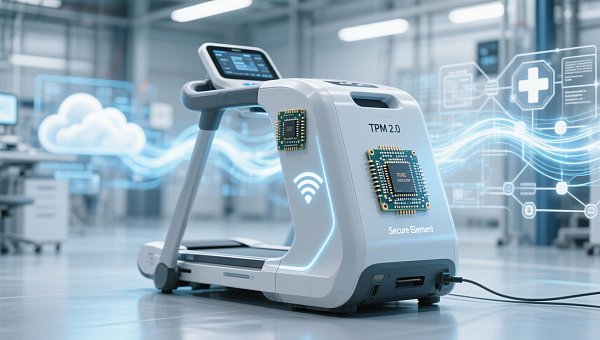
The FDA published the draft guidance on May 7, 2026. It explicitly requires all remote rehabilitation devices that connect to cloud platforms via 5G or Wi-Fi to integrate hardware-based cryptographic modules—such as Secure Elements (SE) or TPM 2.0—and to support over-the-air (OTA) firmware updates validated under FDA-recognized security protocols. The document is now open for a 60-day public comment period and is expected to become enforceable by late 2026.
Industries Affected
Direct Export/Trade Enterprises: Companies exporting rehab devices to the U.S. market must now reassess product compliance roadmaps. Non-compliant models risk rejection at entry or post-market enforcement actions—including mandatory recalls or marketing suspension. Impact manifests in delayed clearance timelines, increased pre-submission testing costs, and potential renegotiation of distribution agreements tied to regulatory readiness.
Raw Material & Component Suppliers: Firms supplying encryption-related semiconductors (e.g., certified SE chips, TPM 2.0 modules) or secure boot controllers face rising demand—but also heightened scrutiny. Buyers will require traceable certification (e.g., Common Criteria EAL4+, FIPS 140-3 validation), pushing suppliers to invest in documentation infrastructure and third-party attestation—not just component performance.
Contract Manufacturing & OEMs: Manufacturers must redesign device architectures to accommodate hardware-rooted trust anchors and secure OTA pipelines. This includes firmware signing workflows, secure bootloader integration, and failure-safe update rollback mechanisms. Engineering cycles lengthen, and validation efforts now extend beyond functional testing into threat modeling and penetration testing per NIST SP 800-218.
Supply Chain Service Providers: Logistics, regulatory consulting, and cybersecurity validation firms see expanded scope: e.g., customs brokers must verify compliance documentation; regulatory consultants must track FDA’s evolving OTA validation criteria; and penetration testing labs need updated test cases aligned with IEC 62304 Amendment 2 and AAMI TIR57:2023.
Key Considerations and Recommended Actions
Conduct Immediate Gap Assessment Against Draft Requirements
Manufacturers and importers should map existing device architectures against the draft’s two core mandates: (1) presence of hardware-enforced cryptographic roots of trust, and (2) existence of FDA-aligned OTA update processes—including secure delivery, authentication, integrity verification, and fail-safe recovery. Prioritize Class II devices with active cloud connectivity.
Engage Early with Cryptographic Module Vendors
Secure Element and TPM suppliers are experiencing lead-time pressure. Procurement teams should initiate qualification discussions now—not after final rule issuance—to secure allocation slots and co-develop integration support packages (e.g., SDKs, reference designs, attestation templates).
Prepare for Public Comment Participation
Stakeholders with clinical deployment experience, real-world update failure data, or interoperability constraints should submit evidence-based comments during the 60-day window. FDA explicitly invites input on implementation feasibility, especially regarding legacy device retrofitting and low-bandwidth rural deployment scenarios.
Editorial Perspective / Industry Observation
Observably, this draft signals a strategic pivot: FDA is no longer treating cybersecurity as a ‘quality system add-on’, but as a foundational design requirement—akin to biocompatibility or electrical safety. Analysis shows the emphasis on hardware-level enforcement (not software-only encryption) reflects lessons from recent medical device ransomware incidents. From an industry perspective, the timing aligns with CMS’s 2025 tele-rehab reimbursement expansion—suggesting regulatory and payment policy are converging around verifiable trust. Current more noteworthy than the technical mandate itself is the precedent it sets: future FDA guidance for AI-enabled diagnostics or robotic rehab systems will likely adopt similar hardware-rooted security expectations.
Conclusion
This draft does not introduce novel threats—but crystallizes long-emerging expectations into actionable, auditable requirements. For the global rehab technology ecosystem, it represents both a compliance inflection point and a catalyst for architectural modernization. A rational interpretation is that the rule’s ultimate impact may be less about exclusionary barriers and more about accelerating consolidation among vendors capable of integrating security-by-design across hardware, firmware, and cloud layers.
Source Attribution
U.S. Food and Drug Administration (FDA), Cybersecurity for Remote Rehabilitation Devices – Draft Guidance, issued May 7, 2026. Available at: https://www.fda.gov/medical-devices/digital-health-center-excellence/cybersecurity-remote-rehabilitation-devices-draft-guidance. Note: Final rule status, effective date, and potential modifications remain subject to public comment review and internal FDA deliberation—ongoing monitoring advised.
Get weekly intelligence in your inbox.
No noise. No sponsored content. Pure intelligence.
 Oct 08, 2026How Digital Health Improves Diagnostic Accuracy and Workflow in Clinical LabsHow Digital Health Improves Diagnostic Accuracy and Workflow in Clinical Labs
 Oct 07, 2026Selecting Voice Picking Systems for German Warehouses: Integration, Languages and ROISelecting Voice Picking Systems for German Warehouses: Integration, Languages and ROI
 Oct 06, 2026How to Choose Last Mile Dispatch Software for On-Time Delivery at ScaleHow to Choose Last Mile Dispatch Software for On-Time Delivery at Scale
 Oct 05, 2026Vietnam’s Consumer Electronics Market: Demand Shifts and Sourcing OpportunitiesVietnam’s Consumer Electronics Market: Demand Shifts and Sourcing Opportunities
 Oct 04, 2026Digital Health Investment Priorities for Providers: Improving Access, Outcomes, and EfficiencyDigital Health Investment Priorities for Providers: Improving Access, Outcomes, and Efficiency
 Oct 03, 2026How to Specify an FR4 Custom PCB Board for High-Voltage and High-Heat DesignsHow to Specify an FR4 Custom PCB Board for High-Voltage and High-Heat Designs
 Oct 02, 2026ERP Software Market Intelligence: Adoption, Pricing, and Vendor Signals to WatchERP Software Market Intelligence: Adoption, Pricing, and Vendor Signals to Watch
 Oct 01, 2026How to Select Calibrated Temperature Data Loggers for GMP Cold Storage MonitoringHow to Select Calibrated Temperature Data Loggers for GMP Cold Storage Monitoring
 Sep 30, 2026Custom Molded Rubber Pricing: What Drives Unit Cost and Tooling Fees?Custom Molded Rubber Pricing: What Drives Unit Cost and Tooling Fees?
 Sep 29, 2026How to Evaluate Energy Management Software Vendors for Multi-Site OperationsHow to Evaluate Energy Management Software Vendors for Multi-Site Operations
 Sep 28, 2026How to Select a DIN Rail Smart Meter for Multi-Circuit Energy MonitoringHow to Select a DIN Rail Smart Meter for Multi-Circuit Energy Monitoring
 Sep 27, 2026TWS Earbuds in Vietnam: Demand Drivers, Price Tiers, and Retail Channel OpportunitiesTWS Earbuds in Vietnam: Demand Drivers, Price Tiers, and Retail Channel Opportunities
 Sep 26, 2026How UAE Clinics Can Qualify a Smart Glucometer Supplier for Accuracy and ComplianceHow UAE Clinics Can Qualify a Smart Glucometer Supplier for Accuracy and Compliance
 Sep 25, 2026Buying Aesthetic Lasers in the USA: FDA Status, Wavelengths, and Service SupportBuying Aesthetic Lasers in the USA: FDA Status, Wavelengths, and Service Support
 Sep 24, 2026Laser Cutting Brass Sheet: How to Prevent Burrs and Heat Marks on Thin PartsLaser Cutting Brass Sheet: How to Prevent Burrs and Heat Marks on Thin Parts
 Sep 23, 2026How to Choose Lightweight ANC Headphones for Comfortable All-Day TravelHow to Choose Lightweight ANC Headphones for Comfortable All-Day Travel
 Sep 22, 2026IPX5 TWS Bluetooth Earbuds: What Protection Do They Offer for Workouts?IPX5 TWS Bluetooth Earbuds: What Protection Do They Offer for Workouts?
 Sep 21, 2026What to Look for in a Grid Integration Company for Utility-Scale Solar ProjectsWhat to Look for in a Grid Integration Company for Utility-Scale Solar Projects
 Sep 20, 2026Microgrid Controller Pricing: What Drives Cost in Commercial Energy Projects?Microgrid Controller Pricing: What Drives Cost in Commercial Energy Projects?
 Sep 19, 2026How to Choose a GaN Charger for Laptops Without Compromising Power or PortabilityHow to Choose a GaN Charger for Laptops Without Compromising Power or Portability
 Sep 18, 2026Floating Solar Farm Costs: CAPEX, OPEX, and the Site Factors That Shape ROIFloating Solar Farm Costs: CAPEX, OPEX, and the Site Factors That Shape ROI
 Sep 17, 2026Drone Delivery Solutions for Last-Mile Routes: Site, Payload, and Range PlanningDrone Delivery Solutions for Last-Mile Routes: Site, Payload, and Range Planning
 Sep 16, 2026When Low-Volume Electronics Manufacturing Makes More Sense Than Mass ProductionWhen Low-Volume Electronics Manufacturing Makes More Sense Than Mass Production
 Sep 15, 2026Wholesale WiFi Smart Switches: What Buyers Should Verify Before OrderingWholesale WiFi Smart Switches: What Buyers Should Verify Before Ordering
 Sep 14, 2026How to Select IoT Sensors for Reliable Monitoring in Harsh Industrial EnvironmentsHow to Select IoT Sensors for Reliable Monitoring in Harsh Industrial Environments
 Sep 13, 2026How Procurement Teams Can Improve Supplier Reliability With Supply Chain VisibilityHow Procurement Teams Can Improve Supplier Reliability With Supply Chain Visibility
 Sep 12, 2026Smart Manufacturing Trends 2026: What Leaders Should Prioritize for ROISmart Manufacturing Trends 2026: What Leaders Should Prioritize for ROI



























