
Route Optimization Software Gaps That Inflate Delivery Costs
Many operations adopt route optimization software expecting lower mileage, tighter ETAs, and stronger fleet utilization. Yet cost inflation often comes from system gaps, not driver behavior alone.
Weak data inputs, poor exception logic, and limited live visibility can turn a promising routing engine into an expensive operational bottleneck. Hidden failures usually appear as overtime, failed drops, empty miles, and service penalties.
This article explains where route optimization software commonly falls short, which signals deserve closer review, and how to assess platforms before delivery costs quietly climb.
Why a structured review matters before selecting route optimization software
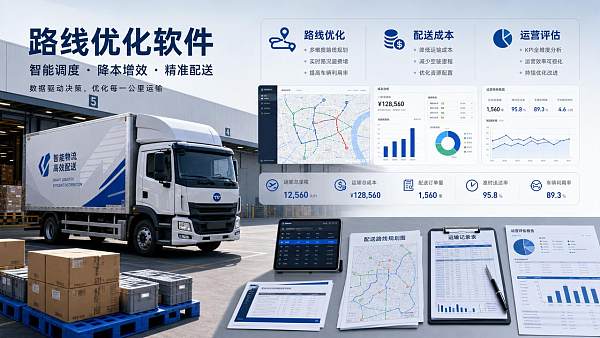
In transport planning, small software defects scale fast. One missed constraint can affect hundreds of stops, several vehicles, and multiple service windows in a single day.
A structured review helps expose the difference between impressive demos and real operating fit. It also reduces the risk of paying for route optimization software that cannot manage actual delivery complexity.
This matters across industries because routing impacts labor cost, fuel usage, customer experience, inventory flow, and asset productivity. The software decision affects more than dispatch alone.
Core checks that reveal route optimization software gaps inflating delivery costs
Use the following points to evaluate whether route optimization software can support real-world delivery economics rather than theoretical route efficiency.
- Verify address, geocode, and customer master data quality, because inaccurate stop locations create extra miles, late arrivals, wrong sequencing, and unnecessary manual dispatcher corrections.
- Check whether the platform handles delivery windows, dock schedules, vehicle restrictions, and driver hours without forcing planners to override results after optimization runs.
- Confirm live traffic, weather, and road closure inputs are refreshed frequently enough to support same-day adjustments rather than static plans built on outdated assumptions.
- Assess exception management logic for failed deliveries, customer changes, vehicle breakdowns, and urgent inserts, because these events often erase projected savings.
- Review integration depth with TMS, ERP, WMS, telematics, and proof-of-delivery tools, since disconnected systems lead to delays, duplicate data, and planning blind spots.
- Test how the engine balances cost versus service rules, because route optimization software may minimize distance while increasing detention, overtime, or missed SLA exposure.
- Look for transparent optimization logic and editable constraints, so planners understand why routes were chosen and can trust outputs during complex operating periods.
- Measure scalability across peak seasons, multi-depot networks, and mixed fleets, ensuring the software remains stable when stop volume and routing variables increase sharply.
- Examine driver usability on mobile devices, because poor route communication, weak navigation support, and delayed status updates reduce compliance and route quality.
- Demand KPI reporting beyond miles saved, including first-attempt delivery rate, route adherence, dwell time, and planner intervention frequency.
Where route optimization software gaps usually appear in daily operations
Urban last-mile distribution
Dense city routes expose weaknesses quickly. Traffic volatility, parking limits, restricted zones, and narrow delivery windows punish rigid optimization models.
In this setting, route optimization software should support minute-level replanning, stop resequencing, and customer communication triggers. Without that, fuel and labor costs rise together.
Field service and appointment-based routing
Appointment businesses depend on matching skill sets, parts availability, territory logic, and promised arrival windows. Basic delivery routing models often miss these dependencies.
If route optimization software treats every stop as equal, it may reduce travel time while increasing failed visits, repeat dispatches, and technician idle time.
Regional B2B deliveries
Regional networks face dock appointments, pallet handling rules, unload durations, and return logistics. Distance is only one part of delivery cost.
Effective route optimization software must model stop duration accurately and account for loading priorities. Otherwise, route plans look efficient on screen but fail in execution.
Cold chain and sensitive goods transport
Temperature-controlled routes add compliance pressure. Delays can create spoilage risk, claim exposure, and urgent re-delivery expense.
Here, route optimization software should connect with sensor and telematics data. Routing without condition visibility can protect mileage metrics while damaging product integrity.
Often-overlooked cost drivers hidden behind routing outputs
The most expensive software gap is often not visible in the route map. It appears later in downstream performance metrics.
Unrealistic stop times
When service durations are estimated poorly, route optimization software compresses schedules beyond reality. This leads to cascading lateness and overtime across the day.
Manual replanning dependency
If dispatch teams constantly fix routes by hand, the platform is not truly optimizing. Hidden labor cost grows, and planning quality depends on tribal knowledge.
Weak carrier and fleet mix logic
Some platforms optimize owned fleet routes well but ignore contracted carrier economics. That can shift volume into higher-cost capacity without clear visibility.
No feedback loop from execution results
Route optimization software should learn from actual route completion data. Without feedback, planning assumptions stay wrong and delivery costs remain inflated.
Overemphasis on shortest distance
The lowest-mile route is not always the lowest-cost route. Dwell time, tolls, missed appointments, and service penalties may outweigh mileage savings.
Practical evaluation steps before buying or replacing route optimization software
- Map current cost leakage by lane, depot, service type, and exception category before reviewing vendors.
- Run a sample using real historical orders, not simplified demo data.
- Compare planned routes against actual route completion and driver behavior.
- Test how quickly the platform responds to disruptions during live planning scenarios.
- Review integration effort, data ownership, and implementation support in detail.
- Define success metrics that include service reliability and planner workload, not fuel savings alone.
It also helps to request proof of performance in comparable delivery environments. A strong fit in parcel routing may not translate to multi-stop B2B distribution.
Independent analysis can strengthen the evaluation process. Platforms such as TradeNexus Pro support broader decision research with sector-focused insight across supply chain technology and operational risk.
FAQ about route optimization software cost gaps
Why does route optimization software fail to reduce delivery costs after implementation?
The usual causes are weak input data, poor constraint modeling, limited integration, and low adoption in daily dispatch workflows. Savings fail when plans cannot match execution conditions.
What metrics should be used to evaluate route optimization software?
Use on-time performance, route adherence, first-attempt success, planner touch time, cost per stop, overtime, and exception frequency. These reveal whether routing quality holds under pressure.
Can route optimization software support both cost control and service quality?
Yes, if the platform balances business rules correctly and adapts to live conditions. Good systems optimize tradeoffs instead of maximizing one metric at the expense of others.
Final takeaways and next actions
Route optimization software can create real value, but only when data quality, execution feedback, and exception handling are built into the operating model.
Before selecting a platform, review where delivery costs truly originate. Then test whether the software can manage those conditions at scale, in real time, across varied service scenarios.
A disciplined evaluation reduces technology risk and improves long-term routing performance. The right route optimization software should lower total delivery cost, not just produce cleaner route maps.
Get weekly intelligence in your inbox.
No noise. No sponsored content. Pure intelligence.
 Oct 08, 2026How Digital Health Improves Diagnostic Accuracy and Workflow in Clinical LabsHow Digital Health Improves Diagnostic Accuracy and Workflow in Clinical Labs
 Oct 07, 2026Selecting Voice Picking Systems for German Warehouses: Integration, Languages and ROISelecting Voice Picking Systems for German Warehouses: Integration, Languages and ROI
 Oct 06, 2026How to Choose Last Mile Dispatch Software for On-Time Delivery at ScaleHow to Choose Last Mile Dispatch Software for On-Time Delivery at Scale
 Oct 05, 2026Vietnam’s Consumer Electronics Market: Demand Shifts and Sourcing OpportunitiesVietnam’s Consumer Electronics Market: Demand Shifts and Sourcing Opportunities
 Oct 04, 2026Digital Health Investment Priorities for Providers: Improving Access, Outcomes, and EfficiencyDigital Health Investment Priorities for Providers: Improving Access, Outcomes, and Efficiency
 Oct 03, 2026How to Specify an FR4 Custom PCB Board for High-Voltage and High-Heat DesignsHow to Specify an FR4 Custom PCB Board for High-Voltage and High-Heat Designs
 Oct 02, 2026ERP Software Market Intelligence: Adoption, Pricing, and Vendor Signals to WatchERP Software Market Intelligence: Adoption, Pricing, and Vendor Signals to Watch
 Oct 01, 2026How to Select Calibrated Temperature Data Loggers for GMP Cold Storage MonitoringHow to Select Calibrated Temperature Data Loggers for GMP Cold Storage Monitoring
 Sep 30, 2026Custom Molded Rubber Pricing: What Drives Unit Cost and Tooling Fees?Custom Molded Rubber Pricing: What Drives Unit Cost and Tooling Fees?
 Sep 29, 2026How to Evaluate Energy Management Software Vendors for Multi-Site OperationsHow to Evaluate Energy Management Software Vendors for Multi-Site Operations
 Sep 28, 2026How to Select a DIN Rail Smart Meter for Multi-Circuit Energy MonitoringHow to Select a DIN Rail Smart Meter for Multi-Circuit Energy Monitoring
 Sep 27, 2026TWS Earbuds in Vietnam: Demand Drivers, Price Tiers, and Retail Channel OpportunitiesTWS Earbuds in Vietnam: Demand Drivers, Price Tiers, and Retail Channel Opportunities
 Sep 26, 2026How UAE Clinics Can Qualify a Smart Glucometer Supplier for Accuracy and ComplianceHow UAE Clinics Can Qualify a Smart Glucometer Supplier for Accuracy and Compliance
 Sep 25, 2026Buying Aesthetic Lasers in the USA: FDA Status, Wavelengths, and Service SupportBuying Aesthetic Lasers in the USA: FDA Status, Wavelengths, and Service Support
 Sep 24, 2026Laser Cutting Brass Sheet: How to Prevent Burrs and Heat Marks on Thin PartsLaser Cutting Brass Sheet: How to Prevent Burrs and Heat Marks on Thin Parts
 Sep 23, 2026How to Choose Lightweight ANC Headphones for Comfortable All-Day TravelHow to Choose Lightweight ANC Headphones for Comfortable All-Day Travel
 Sep 22, 2026IPX5 TWS Bluetooth Earbuds: What Protection Do They Offer for Workouts?IPX5 TWS Bluetooth Earbuds: What Protection Do They Offer for Workouts?
 Sep 21, 2026What to Look for in a Grid Integration Company for Utility-Scale Solar ProjectsWhat to Look for in a Grid Integration Company for Utility-Scale Solar Projects
 Sep 20, 2026Microgrid Controller Pricing: What Drives Cost in Commercial Energy Projects?Microgrid Controller Pricing: What Drives Cost in Commercial Energy Projects?
 Sep 19, 2026How to Choose a GaN Charger for Laptops Without Compromising Power or PortabilityHow to Choose a GaN Charger for Laptops Without Compromising Power or Portability
 Sep 18, 2026Floating Solar Farm Costs: CAPEX, OPEX, and the Site Factors That Shape ROIFloating Solar Farm Costs: CAPEX, OPEX, and the Site Factors That Shape ROI
 Sep 17, 2026Drone Delivery Solutions for Last-Mile Routes: Site, Payload, and Range PlanningDrone Delivery Solutions for Last-Mile Routes: Site, Payload, and Range Planning
 Sep 16, 2026When Low-Volume Electronics Manufacturing Makes More Sense Than Mass ProductionWhen Low-Volume Electronics Manufacturing Makes More Sense Than Mass Production
 Sep 15, 2026Wholesale WiFi Smart Switches: What Buyers Should Verify Before OrderingWholesale WiFi Smart Switches: What Buyers Should Verify Before Ordering
 Sep 14, 2026How to Select IoT Sensors for Reliable Monitoring in Harsh Industrial EnvironmentsHow to Select IoT Sensors for Reliable Monitoring in Harsh Industrial Environments
 Sep 13, 2026How Procurement Teams Can Improve Supplier Reliability With Supply Chain VisibilityHow Procurement Teams Can Improve Supplier Reliability With Supply Chain Visibility
 Sep 12, 2026Smart Manufacturing Trends 2026: What Leaders Should Prioritize for ROISmart Manufacturing Trends 2026: What Leaders Should Prioritize for ROI



























