
When Do Carton Sealing Machines Start Paying for Themselves?
For finance approvers, the real issue is timing. Carton sealing machines usually justify investment when savings become visible faster than depreciation pressure builds.
That timing depends on labor intensity, line speed, carton variation, downtime, and error rates. In today’s mixed-demand environment, payback is increasingly becoming a strategic operations question.
Across general industry, packaging lines face tighter staffing, shorter delivery windows, and rising quality expectations. That shift is changing how carton sealing machines are evaluated and when they start paying for themselves.
Why payback expectations for carton sealing machines are getting shorter
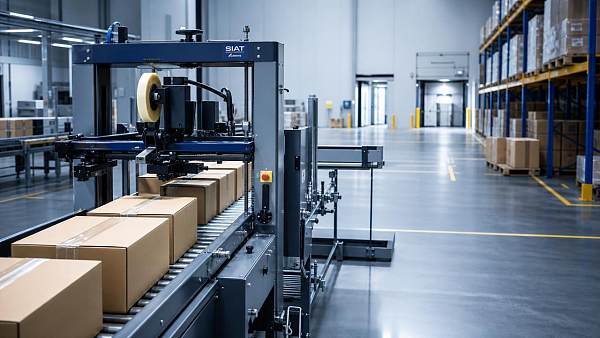
A few years ago, many businesses treated sealing automation as a gradual upgrade. Now, carton sealing machines are often reviewed as a response to labor volatility and throughput bottlenecks.
The packaging end of the line has become more visible. Small delays there can block upstream output, increase carton damage, and create hidden overtime costs.
This matters in advanced manufacturing, healthcare technology, smart electronics, and distribution-heavy operations. In each case, consistent case sealing supports shipment readiness and customer confidence.
The strongest signals that carton sealing machines can deliver fast returns
Not every line reaches break-even at the same speed. However, several operational signals consistently point to a shorter payback window for carton sealing machines.
- Manual sealing requires more than one operator during peak shifts.
- Tape consumption is inconsistent or higher than standard benchmarks.
- Rework occurs because of weak seals, crooked tape, or carton reopening.
- Line speed drops when carton volume spikes unexpectedly.
- Packaging quality affects returns, claims, or warehouse handling efficiency.
When several of these conditions appear together, carton sealing machines often move from optional equipment to a financially rational upgrade.
What is driving this shift now
When carton sealing machines typically start paying for themselves
In many general industry settings, carton sealing machines begin showing measurable returns within 6 to 18 months. High-volume lines can see benefits much sooner.
Low-volume operations may need longer. Yet even there, reduced strain, cleaner output, and fewer shipment issues can still support a strong total-value case.
A simple payback logic
The payback calculation usually combines direct and hidden savings. Direct savings are easier to model, but hidden savings often decide the final approval.
- Reduced labor hours per shift
- Lower tape waste and more consistent application
- Fewer damaged or reopened cartons
- Less rework and fewer interruptions
- Higher throughput without adding manual headcount
If one machine removes part of one full-time equivalent across shifts, payback often accelerates sharply. If it also stabilizes output, the case becomes even stronger.
Typical payback ranges by line condition
Where the financial case is often underestimated
Many evaluations focus only on labor replacement. That is useful, but incomplete. Carton sealing machines also create operational consistency that manual processes rarely sustain over time.
In smart electronics and healthcare technology, packaging presentation and traceable quality can influence downstream compliance and customer acceptance.
In green energy and advanced manufacturing, bulky or high-value shipments make poor sealing more expensive. The cost of one damaged delivery can distort a whole month’s packaging economics.
Indirect gains worth tracking
- Lower injury exposure from repetitive manual taping
- More stable shift planning during labor shortages
- Cleaner handoff between packing, palletizing, and shipping
- Improved presentation for export or regulated deliveries
What determines whether carton sealing machines outperform expectations
The machine alone does not create the return. Payback improves when equipment selection matches carton mix, tape type, conveyor flow, and maintenance discipline.
Semi-automatic units can be ideal where carton dimensions vary moderately. Fully automatic carton sealing machines make more sense when speed and standardization dominate.
Key checkpoints before approval
- Current cartons per hour by shift and season
- Actual labor minutes spent on sealing only
- Tape use per carton and monthly variance
- Rework, claims, and damaged-carton frequency
- Integration needs with conveyors or label systems
- Downtime risk and service availability
These checkpoints turn a general investment idea into a credible business case. They also prevent overly optimistic assumptions that weaken trust later.
How current market direction changes the decision framework
The question is no longer only, “What does the machine cost?” It is increasingly, “What does delay cost while manual sealing limits throughput and consistency?”
As supply chains become less predictable, flexible packaging automation becomes more valuable. Carton sealing machines support resilience by reducing reliance on repetitive manual work.
That makes the decision relevant beyond packaging. It affects shipment reliability, labor planning, service levels, and the ability to scale without operational stress.
A practical evaluation path
- Measure current sealing labor, throughput, tape waste, and rework.
- Separate direct savings from risk-reduction benefits.
- Compare semi-automatic and automatic carton sealing machines by utilization level.
- Model best-case, expected, and conservative payback scenarios.
- Review service support, spare parts access, and training needs.
When this process is data-led, carton sealing machines stop being viewed as a simple packaging purchase. They become a measurable lever for cost control and line stability.
For organizations tracking packaging efficiency trends across sectors, TradeNexus Pro highlights where automation investments are moving from optional improvements to financially urgent upgrades.
The next step is straightforward: audit one sealing line, calculate today’s hidden costs, and test whether carton sealing machines can reach payback before the next volume surge arrives.
Get weekly intelligence in your inbox.
No noise. No sponsored content. Pure intelligence.
 Oct 08, 2026How Digital Health Improves Diagnostic Accuracy and Workflow in Clinical LabsHow Digital Health Improves Diagnostic Accuracy and Workflow in Clinical Labs
 Oct 07, 2026Selecting Voice Picking Systems for German Warehouses: Integration, Languages and ROISelecting Voice Picking Systems for German Warehouses: Integration, Languages and ROI
 Oct 06, 2026How to Choose Last Mile Dispatch Software for On-Time Delivery at ScaleHow to Choose Last Mile Dispatch Software for On-Time Delivery at Scale
 Oct 05, 2026Vietnam’s Consumer Electronics Market: Demand Shifts and Sourcing OpportunitiesVietnam’s Consumer Electronics Market: Demand Shifts and Sourcing Opportunities
 Oct 04, 2026Digital Health Investment Priorities for Providers: Improving Access, Outcomes, and EfficiencyDigital Health Investment Priorities for Providers: Improving Access, Outcomes, and Efficiency
 Oct 03, 2026How to Specify an FR4 Custom PCB Board for High-Voltage and High-Heat DesignsHow to Specify an FR4 Custom PCB Board for High-Voltage and High-Heat Designs
 Oct 02, 2026ERP Software Market Intelligence: Adoption, Pricing, and Vendor Signals to WatchERP Software Market Intelligence: Adoption, Pricing, and Vendor Signals to Watch
 Oct 01, 2026How to Select Calibrated Temperature Data Loggers for GMP Cold Storage MonitoringHow to Select Calibrated Temperature Data Loggers for GMP Cold Storage Monitoring
 Sep 30, 2026Custom Molded Rubber Pricing: What Drives Unit Cost and Tooling Fees?Custom Molded Rubber Pricing: What Drives Unit Cost and Tooling Fees?
 Sep 29, 2026How to Evaluate Energy Management Software Vendors for Multi-Site OperationsHow to Evaluate Energy Management Software Vendors for Multi-Site Operations
 Sep 28, 2026How to Select a DIN Rail Smart Meter for Multi-Circuit Energy MonitoringHow to Select a DIN Rail Smart Meter for Multi-Circuit Energy Monitoring
 Sep 27, 2026TWS Earbuds in Vietnam: Demand Drivers, Price Tiers, and Retail Channel OpportunitiesTWS Earbuds in Vietnam: Demand Drivers, Price Tiers, and Retail Channel Opportunities
 Sep 26, 2026How UAE Clinics Can Qualify a Smart Glucometer Supplier for Accuracy and ComplianceHow UAE Clinics Can Qualify a Smart Glucometer Supplier for Accuracy and Compliance
 Sep 25, 2026Buying Aesthetic Lasers in the USA: FDA Status, Wavelengths, and Service SupportBuying Aesthetic Lasers in the USA: FDA Status, Wavelengths, and Service Support
 Sep 24, 2026Laser Cutting Brass Sheet: How to Prevent Burrs and Heat Marks on Thin PartsLaser Cutting Brass Sheet: How to Prevent Burrs and Heat Marks on Thin Parts
 Sep 23, 2026How to Choose Lightweight ANC Headphones for Comfortable All-Day TravelHow to Choose Lightweight ANC Headphones for Comfortable All-Day Travel
 Sep 22, 2026IPX5 TWS Bluetooth Earbuds: What Protection Do They Offer for Workouts?IPX5 TWS Bluetooth Earbuds: What Protection Do They Offer for Workouts?
 Sep 21, 2026What to Look for in a Grid Integration Company for Utility-Scale Solar ProjectsWhat to Look for in a Grid Integration Company for Utility-Scale Solar Projects
 Sep 20, 2026Microgrid Controller Pricing: What Drives Cost in Commercial Energy Projects?Microgrid Controller Pricing: What Drives Cost in Commercial Energy Projects?
 Sep 19, 2026How to Choose a GaN Charger for Laptops Without Compromising Power or PortabilityHow to Choose a GaN Charger for Laptops Without Compromising Power or Portability
 Sep 18, 2026Floating Solar Farm Costs: CAPEX, OPEX, and the Site Factors That Shape ROIFloating Solar Farm Costs: CAPEX, OPEX, and the Site Factors That Shape ROI
 Sep 17, 2026Drone Delivery Solutions for Last-Mile Routes: Site, Payload, and Range PlanningDrone Delivery Solutions for Last-Mile Routes: Site, Payload, and Range Planning
 Sep 16, 2026When Low-Volume Electronics Manufacturing Makes More Sense Than Mass ProductionWhen Low-Volume Electronics Manufacturing Makes More Sense Than Mass Production
 Sep 15, 2026Wholesale WiFi Smart Switches: What Buyers Should Verify Before OrderingWholesale WiFi Smart Switches: What Buyers Should Verify Before Ordering
 Sep 14, 2026How to Select IoT Sensors for Reliable Monitoring in Harsh Industrial EnvironmentsHow to Select IoT Sensors for Reliable Monitoring in Harsh Industrial Environments
 Sep 13, 2026How Procurement Teams Can Improve Supplier Reliability With Supply Chain VisibilityHow Procurement Teams Can Improve Supplier Reliability With Supply Chain Visibility
 Sep 12, 2026Smart Manufacturing Trends 2026: What Leaders Should Prioritize for ROISmart Manufacturing Trends 2026: What Leaders Should Prioritize for ROI



























