
Malaysia Launches Local Certification for Warehouse Robots
Malaysia’s Ministry of Science, Technology and Innovation (MESTECC) launched the National Warehouse Robotics Certification Scheme on May 6, 2026 — a new regulatory requirement affecting importers and suppliers of warehouse robotics into Malaysia. The initiative directly impacts logistics automation providers, industrial equipment distributors, and cross-border technology exporters — particularly those based in China. This move signals a formal shift toward localized technical compliance for intelligent material-handling systems, making it a critical reference point for supply chain planning and market access strategy.
Event Overview
On May 6, 2026, MESTECC announced the launch of the ‘National Warehouse Robotics Certification Scheme’. Under this scheme, all imported warehouse robotics must pass the MY-ROBO 2026 standard test. Key technical requirements include multi-robot cooperative positioning accuracy (≤±15 mm), operational reliability under high-temperature and high-humidity conditions (40°C / 95% RH), and local-language voice interaction response rate (≥98%). The first certification window opens in July 2026.
Industries Affected
Importers and Distributors of Warehouse Robotics
These entities face direct compliance obligations before clearing customs or delivering units to end users. Non-certified units will not be permitted for commercial deployment in Malaysia, potentially triggering shipment delays, rework costs, or contract renegotiations.
Original Equipment Manufacturers (OEMs) with Malaysian Market Exposure
OEMs — especially those exporting from China — must now integrate MY-ROBO 2026 validation into product development and pre-market testing cycles. Failure to align firmware, sensor calibration, or UI localization ahead of certification may delay time-to-market by several months.
Logistics Automation System Integrators
Integrators deploying turnkey robotic solutions in Malaysia must verify that all robotic components within their architecture meet MY-ROBO 2026. This affects system-level validation workflows, documentation packages, and client-facing SLAs tied to performance benchmarks such as positioning accuracy and environmental resilience.
Aftermarket Service Providers and Maintenance Vendors
Providers offering firmware updates, calibration services, or voice-interface localization support must ensure their offerings maintain certified compliance status. Post-deployment modifications that affect tested parameters (e.g., language pack upgrades or sensor recalibration) may require revalidation.
What Enterprises and Practitioners Should Monitor and Do Now
Track official MY-ROBO 2026 implementation guidance
While core test parameters are published, MESTECC has not yet released full test protocols, accredited laboratories list, or application procedures. Stakeholders should monitor MESTECC’s official portal and registered notifications for updates ahead of the July 2026 certification window.
Verify which robot models and software versions fall under scope
The scheme applies to all imported warehouse robotics — but definitions of ‘warehouse robotics’ (e.g., whether AMRs, AS/RS shuttles, or palletizing arms are included) remain pending clarification. Companies should cross-check current product portfolios against preliminary scope indicators and prepare model-specific compliance dossiers.
Distinguish between policy signal and enforceable requirement
The May 6 announcement is a formal launch, not a final regulation. Enforcement timelines, penalties for non-compliance, and transitional arrangements (e.g., grace periods for existing installations) have not been confirmed. Until further notice, this remains a preparatory milestone — not an immediate operational constraint.
Initiate internal readiness assessments for localization and environmental testing
Companies should review current hardware configurations, firmware localization capabilities, and thermal/humidity stress-test records. Early engagement with Malaysian-accredited labs — once designated — will be essential for scheduling slots amid anticipated demand surges after July 2026.
Editorial Perspective / Industry Observation
Observably, this initiative reflects Malaysia’s broader effort to strengthen domestic standards capacity for Industry 4.0 infrastructure — rather than solely serving as a trade barrier. Analysis shows the MY-ROBO 2026 criteria emphasize real-world operational robustness (e.g., 40°C/95%RH tolerance) and human-machine interface localization, suggesting alignment with national digital adoption goals. From an industry perspective, the scheme is best understood not as a sudden regulatory shock, but as an early-stage framework — one that signals growing expectations for contextual adaptation of automation technologies in Southeast Asian markets. Continuous monitoring is warranted, as subsequent phases may expand scope or tighten thresholds.
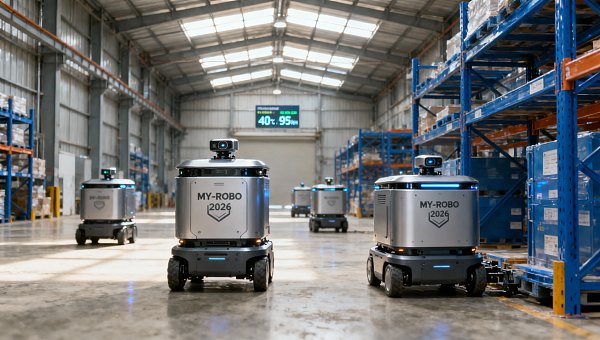
In summary, the MY-ROBO 2026 certification is a structured, technically grounded step toward harmonizing warehouse robotics deployment with Malaysia’s operational and linguistic environment. It does not yet constitute a fully enforced mandate, nor does it apply retroactively to installed systems. Rather, it establishes a forward-looking benchmark — one that rewards proactive technical alignment and underscores the increasing importance of localized validation in regional automation markets.
Source: Ministry of Science, Technology and Innovation (MESTECC), Malaysia — official announcement dated May 6, 2026.
Note: Full test methodology, lab accreditation status, and enforcement details remain pending and are subject to official updates.
Get weekly intelligence in your inbox.
No noise. No sponsored content. Pure intelligence.
 Oct 08, 2026How Digital Health Improves Diagnostic Accuracy and Workflow in Clinical LabsHow Digital Health Improves Diagnostic Accuracy and Workflow in Clinical Labs
 Oct 07, 2026Selecting Voice Picking Systems for German Warehouses: Integration, Languages and ROISelecting Voice Picking Systems for German Warehouses: Integration, Languages and ROI
 Oct 06, 2026How to Choose Last Mile Dispatch Software for On-Time Delivery at ScaleHow to Choose Last Mile Dispatch Software for On-Time Delivery at Scale
 Oct 05, 2026Vietnam’s Consumer Electronics Market: Demand Shifts and Sourcing OpportunitiesVietnam’s Consumer Electronics Market: Demand Shifts and Sourcing Opportunities
 Oct 04, 2026Digital Health Investment Priorities for Providers: Improving Access, Outcomes, and EfficiencyDigital Health Investment Priorities for Providers: Improving Access, Outcomes, and Efficiency
 Oct 03, 2026How to Specify an FR4 Custom PCB Board for High-Voltage and High-Heat DesignsHow to Specify an FR4 Custom PCB Board for High-Voltage and High-Heat Designs
 Oct 02, 2026ERP Software Market Intelligence: Adoption, Pricing, and Vendor Signals to WatchERP Software Market Intelligence: Adoption, Pricing, and Vendor Signals to Watch
 Oct 01, 2026How to Select Calibrated Temperature Data Loggers for GMP Cold Storage MonitoringHow to Select Calibrated Temperature Data Loggers for GMP Cold Storage Monitoring
 Sep 30, 2026Custom Molded Rubber Pricing: What Drives Unit Cost and Tooling Fees?Custom Molded Rubber Pricing: What Drives Unit Cost and Tooling Fees?
 Sep 29, 2026How to Evaluate Energy Management Software Vendors for Multi-Site OperationsHow to Evaluate Energy Management Software Vendors for Multi-Site Operations
 Sep 28, 2026How to Select a DIN Rail Smart Meter for Multi-Circuit Energy MonitoringHow to Select a DIN Rail Smart Meter for Multi-Circuit Energy Monitoring
 Sep 27, 2026TWS Earbuds in Vietnam: Demand Drivers, Price Tiers, and Retail Channel OpportunitiesTWS Earbuds in Vietnam: Demand Drivers, Price Tiers, and Retail Channel Opportunities
 Sep 26, 2026How UAE Clinics Can Qualify a Smart Glucometer Supplier for Accuracy and ComplianceHow UAE Clinics Can Qualify a Smart Glucometer Supplier for Accuracy and Compliance
 Sep 25, 2026Buying Aesthetic Lasers in the USA: FDA Status, Wavelengths, and Service SupportBuying Aesthetic Lasers in the USA: FDA Status, Wavelengths, and Service Support
 Sep 24, 2026Laser Cutting Brass Sheet: How to Prevent Burrs and Heat Marks on Thin PartsLaser Cutting Brass Sheet: How to Prevent Burrs and Heat Marks on Thin Parts
 Sep 23, 2026How to Choose Lightweight ANC Headphones for Comfortable All-Day TravelHow to Choose Lightweight ANC Headphones for Comfortable All-Day Travel
 Sep 22, 2026IPX5 TWS Bluetooth Earbuds: What Protection Do They Offer for Workouts?IPX5 TWS Bluetooth Earbuds: What Protection Do They Offer for Workouts?
 Sep 21, 2026What to Look for in a Grid Integration Company for Utility-Scale Solar ProjectsWhat to Look for in a Grid Integration Company for Utility-Scale Solar Projects
 Sep 20, 2026Microgrid Controller Pricing: What Drives Cost in Commercial Energy Projects?Microgrid Controller Pricing: What Drives Cost in Commercial Energy Projects?
 Sep 19, 2026How to Choose a GaN Charger for Laptops Without Compromising Power or PortabilityHow to Choose a GaN Charger for Laptops Without Compromising Power or Portability
 Sep 18, 2026Floating Solar Farm Costs: CAPEX, OPEX, and the Site Factors That Shape ROIFloating Solar Farm Costs: CAPEX, OPEX, and the Site Factors That Shape ROI
 Sep 17, 2026Drone Delivery Solutions for Last-Mile Routes: Site, Payload, and Range PlanningDrone Delivery Solutions for Last-Mile Routes: Site, Payload, and Range Planning
 Sep 16, 2026When Low-Volume Electronics Manufacturing Makes More Sense Than Mass ProductionWhen Low-Volume Electronics Manufacturing Makes More Sense Than Mass Production
 Sep 15, 2026Wholesale WiFi Smart Switches: What Buyers Should Verify Before OrderingWholesale WiFi Smart Switches: What Buyers Should Verify Before Ordering
 Sep 14, 2026How to Select IoT Sensors for Reliable Monitoring in Harsh Industrial EnvironmentsHow to Select IoT Sensors for Reliable Monitoring in Harsh Industrial Environments
 Sep 13, 2026How Procurement Teams Can Improve Supplier Reliability With Supply Chain VisibilityHow Procurement Teams Can Improve Supplier Reliability With Supply Chain Visibility
 Sep 12, 2026Smart Manufacturing Trends 2026: What Leaders Should Prioritize for ROISmart Manufacturing Trends 2026: What Leaders Should Prioritize for ROI



























