
FDA Draft Guidance on Cybersecurity for Remote Rehab Devices
The U.S. Food and Drug Administration (FDA) released the Draft Guidance on Cybersecurity for Remote Rehabilitation Devices on May 12, 2026 — a regulatory development with direct implications for manufacturers, exporters, and service providers in the digital health and medical device sectors. This draft introduces mandatory over-the-air (OTA) firmware update capabilities and end-to-end encryption compliant with NIST SP 800-193. With public comment open until August 31, 2026, and anticipated enforcement beginning in early 2027, stakeholders across the remote rehabilitation device value chain must assess readiness and adjust technical and compliance strategies accordingly.
Event Overview
On May 12, 2026, the U.S. FDA published the Draft Guidance on Cybersecurity for Remote Rehabilitation Devices. The document requires all remote rehabilitation devices intended for the U.S. market to support secure OTA firmware updates and to include an end-to-end encryption module aligned with NIST SP 800-193. The draft is currently open for public comment through August 31, 2026. Finalization and enforcement are expected in early 2027.
Industries Affected by Segment
Device Manufacturers & OEMs
Manufacturers of remote rehabilitation devices — including those producing wearable neurostimulators, tele-rehab platforms, and connected mobility aids — will be directly subject to the new requirements. Impact arises from the need to redesign or retrofit firmware update mechanisms and integrate certified cryptographic modules. Compliance may require changes to hardware architecture, software lifecycle management, and validation documentation.
Embedded Systems & Firmware Developers
Firms providing firmware development, secure boot stacks, or OTA orchestration services for medical devices face increased demand for NIST SP 800-193–compliant solutions. The draft signals a shift toward standardized, auditable update integrity and confidentiality controls — affecting toolchain selection, testing scope, and third-party verification expectations.
U.S. Importers & Regulatory Affairs Firms
Entities responsible for U.S. market entry — including authorized representatives and regulatory consultants — must now incorporate cybersecurity validation into premarket submissions (e.g., 510(k), De Novo). The draft guidance implies tighter alignment between cybersecurity documentation and existing quality system requirements (21 CFR Part 820), increasing review complexity and submission timelines.
What Stakeholders Should Monitor and Do Now
Track official FDA communications and final guidance timing
Analysis shows that the current draft remains non-binding; enforcement hinges on finalization and potential revisions during the comment period. Stakeholders should monitor FDA’s Federal Register notices and any supplemental Q&A documents issued before August 31, 2026 — particularly regarding implementation timelines, transitional provisions, and definitions of ‘remote rehabilitation device’.
Assess product portfolios against the scope of ‘remote rehabilitation devices’
Observably, the guidance applies specifically to devices used for remote delivery of rehabilitative therapy — not general wellness or fitness tools. Companies should conduct internal scoping reviews to identify affected products, distinguishing those with network connectivity, patient data transmission, or clinician-facing remote control features.
Review and align firmware update architecture with NIST SP 800-193
Current more actionable than broad compliance planning is verifying whether existing OTA mechanisms meet NIST SP 800-193’s three core functions: platform firmware measurement, firmware recovery, and secure update verification. Firms should initiate gap assessments — especially around attestation, signature validation, and rollback protection — ahead of formal requirement activation.
Prepare for updated technical documentation and audit readiness
From industry perspective, FDA’s expectation appears to extend beyond design to verifiable evidence: test reports, threat models, and traceability matrices linking security controls to specific guidance clauses. Teams should begin compiling or updating cybersecurity bills of materials (CBOMs), vulnerability disclosure policies, and update failure response procedures.
Editorial Perspective / Industry Observation
This draft guidance is better understood as a strong regulatory signal — not yet an operational mandate. Analysis shows it reflects FDA’s broader strategic pivot toward proactive, standards-based cybersecurity governance for interconnected medical devices, following earlier guidance on IoT-enabled diagnostics and therapeutic systems. Observably, its emphasis on OTA resilience and encryption standardization suggests growing concern about post-market attack surfaces in long-lifecycle rehabilitation hardware. From industry perspective, this is less about immediate certification disruption and more about reinforcing that cybersecurity is now a foundational, non-negotiable component of device safety — embedded at design, validated at submission, and maintained across the product lifecycle.
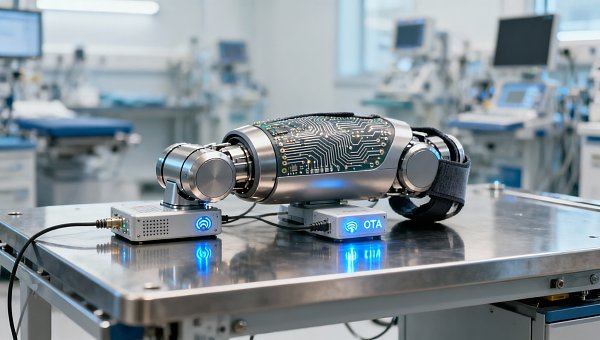
Conclusion: The FDA’s draft guidance does not introduce novel concepts but consolidates and enforces them within a defined clinical domain. Its significance lies not in surprise but in specificity: it names concrete technical expectations (OTA, NIST SP 800-193) for a high-touch, patient-critical use case. For stakeholders, the most rational interpretation is that this represents an acceleration — not a departure — from existing FDA cybersecurity expectations, making early technical alignment more valuable than delayed reaction.
Source: U.S. Food and Drug Administration (FDA), Draft Guidance on Cybersecurity for Remote Rehabilitation Devices, issued May 12, 2026. Public comment period open until August 31, 2026. Final enforcement timing and potential revisions remain subject to ongoing review and are not yet confirmed.
Get weekly intelligence in your inbox.
No noise. No sponsored content. Pure intelligence.
 Oct 08, 2026How Digital Health Improves Diagnostic Accuracy and Workflow in Clinical LabsHow Digital Health Improves Diagnostic Accuracy and Workflow in Clinical Labs
 Oct 07, 2026Selecting Voice Picking Systems for German Warehouses: Integration, Languages and ROISelecting Voice Picking Systems for German Warehouses: Integration, Languages and ROI
 Oct 06, 2026How to Choose Last Mile Dispatch Software for On-Time Delivery at ScaleHow to Choose Last Mile Dispatch Software for On-Time Delivery at Scale
 Oct 05, 2026Vietnam’s Consumer Electronics Market: Demand Shifts and Sourcing OpportunitiesVietnam’s Consumer Electronics Market: Demand Shifts and Sourcing Opportunities
 Oct 04, 2026Digital Health Investment Priorities for Providers: Improving Access, Outcomes, and EfficiencyDigital Health Investment Priorities for Providers: Improving Access, Outcomes, and Efficiency
 Oct 03, 2026How to Specify an FR4 Custom PCB Board for High-Voltage and High-Heat DesignsHow to Specify an FR4 Custom PCB Board for High-Voltage and High-Heat Designs
 Oct 02, 2026ERP Software Market Intelligence: Adoption, Pricing, and Vendor Signals to WatchERP Software Market Intelligence: Adoption, Pricing, and Vendor Signals to Watch
 Oct 01, 2026How to Select Calibrated Temperature Data Loggers for GMP Cold Storage MonitoringHow to Select Calibrated Temperature Data Loggers for GMP Cold Storage Monitoring
 Sep 30, 2026Custom Molded Rubber Pricing: What Drives Unit Cost and Tooling Fees?Custom Molded Rubber Pricing: What Drives Unit Cost and Tooling Fees?
 Sep 29, 2026How to Evaluate Energy Management Software Vendors for Multi-Site OperationsHow to Evaluate Energy Management Software Vendors for Multi-Site Operations
 Sep 28, 2026How to Select a DIN Rail Smart Meter for Multi-Circuit Energy MonitoringHow to Select a DIN Rail Smart Meter for Multi-Circuit Energy Monitoring
 Sep 27, 2026TWS Earbuds in Vietnam: Demand Drivers, Price Tiers, and Retail Channel OpportunitiesTWS Earbuds in Vietnam: Demand Drivers, Price Tiers, and Retail Channel Opportunities
 Sep 26, 2026How UAE Clinics Can Qualify a Smart Glucometer Supplier for Accuracy and ComplianceHow UAE Clinics Can Qualify a Smart Glucometer Supplier for Accuracy and Compliance
 Sep 25, 2026Buying Aesthetic Lasers in the USA: FDA Status, Wavelengths, and Service SupportBuying Aesthetic Lasers in the USA: FDA Status, Wavelengths, and Service Support
 Sep 24, 2026Laser Cutting Brass Sheet: How to Prevent Burrs and Heat Marks on Thin PartsLaser Cutting Brass Sheet: How to Prevent Burrs and Heat Marks on Thin Parts
 Sep 23, 2026How to Choose Lightweight ANC Headphones for Comfortable All-Day TravelHow to Choose Lightweight ANC Headphones for Comfortable All-Day Travel
 Sep 22, 2026IPX5 TWS Bluetooth Earbuds: What Protection Do They Offer for Workouts?IPX5 TWS Bluetooth Earbuds: What Protection Do They Offer for Workouts?
 Sep 21, 2026What to Look for in a Grid Integration Company for Utility-Scale Solar ProjectsWhat to Look for in a Grid Integration Company for Utility-Scale Solar Projects
 Sep 20, 2026Microgrid Controller Pricing: What Drives Cost in Commercial Energy Projects?Microgrid Controller Pricing: What Drives Cost in Commercial Energy Projects?
 Sep 19, 2026How to Choose a GaN Charger for Laptops Without Compromising Power or PortabilityHow to Choose a GaN Charger for Laptops Without Compromising Power or Portability
 Sep 18, 2026Floating Solar Farm Costs: CAPEX, OPEX, and the Site Factors That Shape ROIFloating Solar Farm Costs: CAPEX, OPEX, and the Site Factors That Shape ROI
 Sep 17, 2026Drone Delivery Solutions for Last-Mile Routes: Site, Payload, and Range PlanningDrone Delivery Solutions for Last-Mile Routes: Site, Payload, and Range Planning
 Sep 16, 2026When Low-Volume Electronics Manufacturing Makes More Sense Than Mass ProductionWhen Low-Volume Electronics Manufacturing Makes More Sense Than Mass Production
 Sep 15, 2026Wholesale WiFi Smart Switches: What Buyers Should Verify Before OrderingWholesale WiFi Smart Switches: What Buyers Should Verify Before Ordering
 Sep 14, 2026How to Select IoT Sensors for Reliable Monitoring in Harsh Industrial EnvironmentsHow to Select IoT Sensors for Reliable Monitoring in Harsh Industrial Environments
 Sep 13, 2026How Procurement Teams Can Improve Supplier Reliability With Supply Chain VisibilityHow Procurement Teams Can Improve Supplier Reliability With Supply Chain Visibility
 Sep 12, 2026Smart Manufacturing Trends 2026: What Leaders Should Prioritize for ROISmart Manufacturing Trends 2026: What Leaders Should Prioritize for ROI



























