
Digital Freight Matching vs Brokers: Where Costs Really Shift
For business evaluators weighing logistics models, the real question is not whether digital freight matching is cheaper than traditional brokers, but where costs actually move across speed, visibility, risk, and service control.
Headline rates can look lower on a digital freight matching platform. Yet access fees, exception handling, and internal coordination may raise total landed logistics cost.
Traditional brokers often appear more expensive per load. However, their value can surface when disruption, claims, urgency, or fragmented carrier markets create hidden operational friction.
This guide explains where costs shift, how to compare both models, and what to check before changing freight procurement strategy.
Why digital freight matching and brokers require a structured review
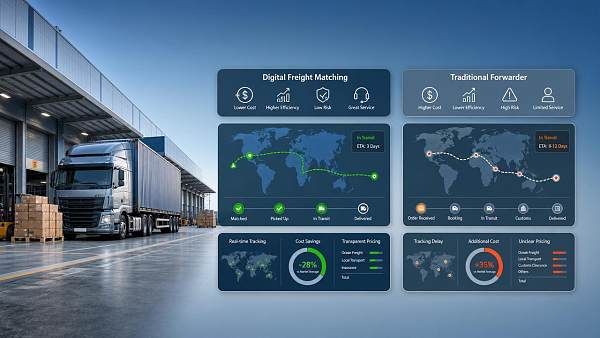
Comparing digital freight matching with brokers is not a simple rate exercise. The true difference sits inside execution quality, data transparency, service scope, and risk allocation.
In global and domestic supply chains, one weak handoff can erase any booked savings. Delays, missed appointments, chargebacks, and poor communication all create cost migration.
A structured review prevents decisions based on platform marketing, legacy assumptions, or isolated quotes. It also helps align logistics choices with business continuity goals.
The core cost-shift checklist
Use the following points to evaluate where digital freight matching creates savings, and where broker-supported execution may still protect total value.
- Check whether lower digital freight matching rates include access fees, integration costs, premium visibility tools, and paid support for urgent shipment intervention.
- Measure tender acceptance quality, not just posted price, because rejected loads create rebooking delays, internal labor costs, and service instability.
- Review carrier vetting depth, insurance verification, safety history, and onboarding controls, especially for high-value, regulated, or time-sensitive freight flows.
- Compare tracking quality across milestones, exceptions, and proof-of-delivery speed, since poor visibility often causes downstream planning inefficiency.
- Assess who manages appointment scheduling, detention disputes, lumper issues, and claims, because unmanaged exceptions often shift work back in-house.
- Calculate internal staffing needs for carrier communication, load monitoring, and after-hours escalation when using digital freight matching at scale.
- Test performance during capacity shocks, weather events, and seasonal surges, when algorithmic matches may weaken and broker relationships can matter more.
- Examine payment terms, quick-pay incentives, and dispute resolution speed, since cash-flow friction can indirectly affect available carrier capacity.
- Review data ownership and integration capability with TMS, ERP, and analytics tools to avoid visibility gaps and duplicate administrative processes.
- Separate transactional spot loads from strategic lanes, because digital freight matching may fit one category while broker support fits another.
Where costs really shift in practice
1. Rate savings versus execution cost
Digital freight matching often reduces search and pricing friction. That advantage is strongest on repeatable spot shipments with clear pickup windows and standard handling needs.
But cheaper booked rates can be offset by re-tenders, missed service windows, and added internal follow-up. The lower quote is not always the lower shipment cost.
2. Technology efficiency versus labor transfer
Digital freight matching platforms automate discovery, bidding, and visibility. That reduces some manual brokerage steps and can shorten sourcing cycles.
However, the platform may transfer coordination tasks to internal teams. Someone still handles edge cases, carrier follow-ups, documentation gaps, and urgent customer updates.
3. Visibility gains versus exception complexity
A strong digital freight matching system can provide live location updates, event status, and digital records. This supports forecasting and customer communication.
Yet visibility is most valuable when exceptions are actively resolved. Data alone does not replace experienced intervention when appointments break or equipment changes suddenly.
4. Market access versus relationship leverage
Digital freight matching expands access to broad carrier pools. This helps in fragmented markets and can improve speed for standard freight procurement.
Brokers may still outperform when lane history, regional knowledge, and relationship leverage determine whether a load gets covered reliably during disruption.
Scenario-based decision notes
Stable spot freight with flexible delivery windows
Digital freight matching usually performs well in this environment. Loads are easier to standardize, comparison is faster, and service risk is relatively contained.
Focus on acceptance rates, actual on-time performance, and platform fee structure before assuming the cheapest posted option delivers the best result.
Time-critical or high-penalty shipments
Service recovery matters more than quote speed. A broker’s human intervention can reduce cascading losses when missed appointments trigger penalties or production delays.
In these cases, evaluate backup capacity, escalation paths, and claims support. Cost shifts toward resilience, not just linehaul price.
Specialized, regulated, or high-value freight
Digital freight matching can still help discover capacity, but qualification standards become critical. Compliance gaps can erase savings immediately.
Review carrier credentials, equipment suitability, chain-of-custody controls, and incident response responsibilities before shifting sensitive freight to a platform-led model.
Enterprise networks with strong internal logistics teams
Organizations with mature TMS integration and round-the-clock coordination may capture more benefit from digital freight matching than smaller teams.
The key question is whether operational ownership is already funded internally. If yes, platform economics may become more attractive.
Commonly overlooked cost drivers and risks
Soft costs from fragmented communication
When communication spans multiple carrier contacts without a single accountable owner, issue resolution slows. That creates hidden labor cost and service inconsistency.
Claims administration burden
Freight damage and shortage claims require time, documentation, and follow-through. If digital freight matching leaves that burden internal, total cost rises quietly.
Inconsistent carrier experience
A large marketplace increases options but can also widen service variability. Standard operating consistency is often harder than initial load coverage.
Overreliance on average savings metrics
Average rate reduction figures hide outlier losses. One failed critical load can outweigh many small transactional savings from digital freight matching.
Weak disruption testing
A model that performs in normal conditions may fail under weather, labor shortages, or peak season imbalance. Stress testing is essential before broad rollout.
Practical execution steps before choosing a model
- Segment freight by lane stability, urgency, cargo sensitivity, and service penalty exposure rather than using one sourcing model for everything.
- Run a 60 to 90 day pilot comparing digital freight matching and broker performance on matched loads with identical service requirements.
- Track total cost per successful delivery, including internal labor, claims time, detention, rebooking, customer penalties, and on-time delivery outcome.
- Set decision thresholds for when loads stay on platform and when they escalate to broker-managed recovery or specialized support.
- Review integration quality, exception ownership, and reporting cadence before scaling digital freight matching across more volatile freight categories.
FAQ
Is digital freight matching always cheaper than brokers?
No. Digital freight matching may lower booking rates, but total cost can increase if internal labor, failed tenders, or service disruptions rise.
When do brokers usually add more value?
Brokers often add value when shipments are urgent, specialized, high-risk, or vulnerable to disruption that requires active recovery and relationship-based coverage.
Can both models work together?
Yes. Many freight networks benefit from a hybrid approach, using digital freight matching for standard spot loads and brokers for critical exceptions or complex lanes.
Conclusion and next action
The best comparison between digital freight matching and brokers is not about who looks cheaper first. It is about where cost, control, and risk actually move.
A disciplined review should measure service reliability, exception handling, labor transfer, and disruption resilience alongside freight rate data.
For organizations tracking global supply chain shifts, platforms like TradeNexus Pro help frame these decisions with deeper market context, operational intelligence, and strategic visibility.
Start with a lane-level pilot, score total delivery performance, and let evidence decide where digital freight matching creates value and where broker support remains essential.
Get weekly intelligence in your inbox.
No noise. No sponsored content. Pure intelligence.
 Oct 08, 2026How Digital Health Improves Diagnostic Accuracy and Workflow in Clinical LabsHow Digital Health Improves Diagnostic Accuracy and Workflow in Clinical Labs
 Oct 07, 2026Selecting Voice Picking Systems for German Warehouses: Integration, Languages and ROISelecting Voice Picking Systems for German Warehouses: Integration, Languages and ROI
 Oct 06, 2026How to Choose Last Mile Dispatch Software for On-Time Delivery at ScaleHow to Choose Last Mile Dispatch Software for On-Time Delivery at Scale
 Oct 05, 2026Vietnam’s Consumer Electronics Market: Demand Shifts and Sourcing OpportunitiesVietnam’s Consumer Electronics Market: Demand Shifts and Sourcing Opportunities
 Oct 04, 2026Digital Health Investment Priorities for Providers: Improving Access, Outcomes, and EfficiencyDigital Health Investment Priorities for Providers: Improving Access, Outcomes, and Efficiency
 Oct 03, 2026How to Specify an FR4 Custom PCB Board for High-Voltage and High-Heat DesignsHow to Specify an FR4 Custom PCB Board for High-Voltage and High-Heat Designs
 Oct 02, 2026ERP Software Market Intelligence: Adoption, Pricing, and Vendor Signals to WatchERP Software Market Intelligence: Adoption, Pricing, and Vendor Signals to Watch
 Oct 01, 2026How to Select Calibrated Temperature Data Loggers for GMP Cold Storage MonitoringHow to Select Calibrated Temperature Data Loggers for GMP Cold Storage Monitoring
 Sep 30, 2026Custom Molded Rubber Pricing: What Drives Unit Cost and Tooling Fees?Custom Molded Rubber Pricing: What Drives Unit Cost and Tooling Fees?
 Sep 29, 2026How to Evaluate Energy Management Software Vendors for Multi-Site OperationsHow to Evaluate Energy Management Software Vendors for Multi-Site Operations
 Sep 28, 2026How to Select a DIN Rail Smart Meter for Multi-Circuit Energy MonitoringHow to Select a DIN Rail Smart Meter for Multi-Circuit Energy Monitoring
 Sep 27, 2026TWS Earbuds in Vietnam: Demand Drivers, Price Tiers, and Retail Channel OpportunitiesTWS Earbuds in Vietnam: Demand Drivers, Price Tiers, and Retail Channel Opportunities
 Sep 26, 2026How UAE Clinics Can Qualify a Smart Glucometer Supplier for Accuracy and ComplianceHow UAE Clinics Can Qualify a Smart Glucometer Supplier for Accuracy and Compliance
 Sep 25, 2026Buying Aesthetic Lasers in the USA: FDA Status, Wavelengths, and Service SupportBuying Aesthetic Lasers in the USA: FDA Status, Wavelengths, and Service Support
 Sep 24, 2026Laser Cutting Brass Sheet: How to Prevent Burrs and Heat Marks on Thin PartsLaser Cutting Brass Sheet: How to Prevent Burrs and Heat Marks on Thin Parts
 Sep 23, 2026How to Choose Lightweight ANC Headphones for Comfortable All-Day TravelHow to Choose Lightweight ANC Headphones for Comfortable All-Day Travel
 Sep 22, 2026IPX5 TWS Bluetooth Earbuds: What Protection Do They Offer for Workouts?IPX5 TWS Bluetooth Earbuds: What Protection Do They Offer for Workouts?
 Sep 21, 2026What to Look for in a Grid Integration Company for Utility-Scale Solar ProjectsWhat to Look for in a Grid Integration Company for Utility-Scale Solar Projects
 Sep 20, 2026Microgrid Controller Pricing: What Drives Cost in Commercial Energy Projects?Microgrid Controller Pricing: What Drives Cost in Commercial Energy Projects?
 Sep 19, 2026How to Choose a GaN Charger for Laptops Without Compromising Power or PortabilityHow to Choose a GaN Charger for Laptops Without Compromising Power or Portability
 Sep 18, 2026Floating Solar Farm Costs: CAPEX, OPEX, and the Site Factors That Shape ROIFloating Solar Farm Costs: CAPEX, OPEX, and the Site Factors That Shape ROI
 Sep 17, 2026Drone Delivery Solutions for Last-Mile Routes: Site, Payload, and Range PlanningDrone Delivery Solutions for Last-Mile Routes: Site, Payload, and Range Planning
 Sep 16, 2026When Low-Volume Electronics Manufacturing Makes More Sense Than Mass ProductionWhen Low-Volume Electronics Manufacturing Makes More Sense Than Mass Production
 Sep 15, 2026Wholesale WiFi Smart Switches: What Buyers Should Verify Before OrderingWholesale WiFi Smart Switches: What Buyers Should Verify Before Ordering
 Sep 14, 2026How to Select IoT Sensors for Reliable Monitoring in Harsh Industrial EnvironmentsHow to Select IoT Sensors for Reliable Monitoring in Harsh Industrial Environments
 Sep 13, 2026How Procurement Teams Can Improve Supplier Reliability With Supply Chain VisibilityHow Procurement Teams Can Improve Supplier Reliability With Supply Chain Visibility
 Sep 12, 2026Smart Manufacturing Trends 2026: What Leaders Should Prioritize for ROISmart Manufacturing Trends 2026: What Leaders Should Prioritize for ROI



























