
How Long Do Refrigerated Shipping Containers Hold Temperature?
How long can refrigerated shipping containers maintain safe temperatures during storage or transit? In most real-world operations, the answer is: as long as continuous power, sound equipment, and proper loading conditions are maintained. Without power, however, refrigerated shipping containers do not “create cold” for long. They can often slow temperature rise for several hours, and sometimes longer under favorable conditions, but actual hold time varies sharply by cargo type, ambient heat, insulation performance, door openings, and starting temperature.
For procurement teams, exporters, and logistics planners, the practical question is not simply how many hours a reefer stays cold. It is whether the container can protect product quality across the specific risk points in your route, including port dwell time, customs delay, transloading, inland trucking, and temporary outages. That is where informed equipment selection and operating discipline matter most.
This article explains what determines temperature retention in refrigerated shipping containers, what safe expectations look like during powered and unpowered periods, and how buyers can evaluate risk before booking equipment for temperature-sensitive cargo.
What is the real answer: how long do refrigerated shipping containers hold temperature?
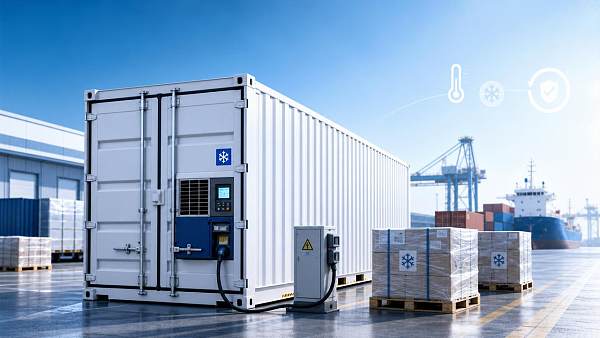
The most accurate answer is twofold. When powered and functioning correctly, refrigerated shipping containers can hold their set temperature continuously for days or weeks. They are designed for long-duration transport, not short-term cooling only.
When power is disconnected, the container becomes an insulated box. At that point, temperature retention depends on how much cold has already been stored in the cargo and interior, how hot the outside environment is, and how often doors are opened.
In a well-prepared scenario, a loaded reefer with closed doors may maintain a reasonably stable internal temperature for several hours. In cooler weather, it may remain within an acceptable range longer. In hot port yards, under direct sun, temperature drift can happen much faster.
This is why experienced operators avoid giving a single universal number. A container carrying frozen goods at the correct pull-down temperature behaves differently from one carrying chilled produce with high respiration rates. The practical planning range may be anywhere from less than two hours of low-risk tolerance to more than twelve hours of acceptable stability, depending on conditions.
For business decision-makers, the key takeaway is simple: refrigerated shipping containers are highly reliable temperature-control assets when powered, but they should never be treated as passive cold storage for unpredictable outage periods unless route risk has been carefully assessed.
What affects temperature retention the most?
Several factors determine how long a reefer can hold temperature safely. The most important is whether the cargo was loaded at the correct temperature. Refrigerated shipping containers are designed to maintain temperature, not rapidly cool warm product after loading.
If cargo enters the container above its target range, the unit must work harder, and any later outage creates immediate risk. Pre-cooled or pre-frozen cargo gives the container thermal stability and a much better chance of remaining within tolerance during interruptions.
The second major factor is ambient temperature. A container sitting in mild weather loses cold far more slowly than one exposed to tropical heat, direct sunlight, or hot terminal pavement. Route geography and season therefore matter more than many buyers assume.
Third is the insulation condition of the container itself. Modern refrigerated shipping containers use insulated walls, floors, and doors to reduce heat transfer. However, damaged door gaskets, worn panels, or poor structural condition can sharply reduce retention performance.
Fourth is air circulation and loading pattern. Reefer units rely on proper airflow around cargo. Overpacking, blocked floor channels, or cartons stacked too tightly against walls can create warm zones and reduce temperature consistency across the load.
Finally, door management is critical. Every unnecessary opening introduces warm air and moisture. In some operations, repeated inspections or poorly coordinated handoffs cause more temperature instability than the transport leg itself.
Powered operation versus unplugged periods: why the distinction matters
Many searchers ask how long refrigerated shipping containers hold temperature as if the answer were mainly about insulation. In reality, the more useful distinction is between active refrigeration and passive retention after power loss.
During powered operation, the refrigeration unit continuously removes heat and maintains the setpoint. If equipment is healthy and monitored, this can continue throughout ocean transit, depot storage, or inland movement using a generator set or shore power connection.
During unplugged periods, the unit cannot actively cool. The container only delays heat gain. That means safe hold time becomes a risk-management question rather than a simple equipment specification.
For example, a frozen cargo at -20°C may tolerate a short outage better than chilled pharmaceuticals with a narrow 2°C to 8°C requirement. Likewise, products with strong regulatory temperature limits often need tighter contingency planning than foods with slightly broader acceptance windows.
This distinction matters in procurement because the same container may be suitable for one supply chain and too risky for another. A buyer evaluating refrigerated shipping containers should always match equipment performance to the product’s temperature sensitivity and the route’s interruption profile.
How long can cargo stay safe during a power outage?
There is no responsible universal number, but there are useful planning principles. If the container is fully loaded, properly pre-cooled, unopened, and placed in moderate ambient conditions, many shipments can tolerate short outages measured in hours rather than minutes.
However, “safe” depends on the cargo’s allowable temperature excursion. Some frozen goods can absorb limited warming without immediate spoilage. Fresh produce may face quality loss, shortened shelf life, or condensation problems well before outright spoilage occurs.
For high-value healthcare or specialty electronics applications, even small deviations may create compliance, warranty, or performance concerns. In those cases, acceptable outage tolerance can be extremely narrow, regardless of whether the product visibly appears intact.
A practical rule for planners is to treat every unplugged period as a controlled exception, not a normal operating mode. Build your process so the container remains connected to power whenever possible, and assume that long outages increase both cargo risk and claims exposure.
If your shipment route includes known power gaps, request historical performance data, alarm records, and equipment condition details from the service provider. In many cases, data transparency is more valuable than broad marketing claims about reefer reliability.
What buyers should check before booking refrigerated shipping containers
For information-driven buyers, the right question is not only “how long does it hold temperature?” but also “what evidence shows this unit can protect my cargo on this route?” That shifts the conversation from theory to operational proof.
Start with the container’s pre-trip inspection status. A current PTI helps confirm that the refrigeration system, sensors, controls, insulation-related components, and door seals have been checked before deployment.
Next, confirm temperature setpoint capability and monitoring features. Some refrigerated shipping containers provide better data logging, alarm visibility, and remote monitoring support than others. For high-risk cargo, data access is not optional; it is part of quality assurance.
Ask about power continuity across handoff points. Will the container remain plugged in at port, rail, depot, and truck interface stages? If generator sets are used inland, what is the fuel and maintenance protocol? These details often determine real temperature security.
You should also review route-specific dwell risks. Congested ports, customs uncertainty, remote inland transfers, or weak cold chain infrastructure can make a technically capable reefer operationally vulnerable. Equipment quality and network quality must be judged together.
Finally, assess support responsiveness. If an alarm triggers or power is interrupted, how quickly can the carrier, leasing company, or logistics partner respond? In temperature-sensitive supply chains, response time is part of the product.
How loading practices influence hold time more than many teams expect
Even strong equipment can underperform if loading discipline is poor. One common mistake is loading cargo that has not been pre-cooled to the required core temperature. This increases heat load and reduces the buffer available during any later disruption.
Another issue is obstructed airflow. Refrigerated shipping containers are engineered to circulate conditioned air through and around the cargo. If cartons block return air paths or the T-floor channels, the unit may show the correct setpoint while parts of the load drift outside tolerance.
Overloading is also risky. Excess cargo mass can prevent even air distribution and slow recovery after door openings. In products with narrow shelf-life windows, this can create hidden quality loss that only appears after delivery.
Door opening control is equally important. Each opening exchanges cold interior air for warmer exterior air. In humid climates, that also introduces moisture, which can affect packaging, frost buildup, and product condition.
For teams managing supplier compliance, loading SOPs should be treated as part of temperature retention strategy. The best refrigerated shipping containers cannot compensate for weak preparation, rushed stuffing, or poor handoff control.
How to estimate risk for your shipment scenario
If you need to judge whether refrigerated shipping containers are suitable for a given movement, begin with five variables: product temperature range, cargo thermal mass, expected ambient conditions, maximum possible outage duration, and number of door events.
Then classify the shipment as frozen, chilled, narrow-band regulated, or quality-sensitive ambient-protected. Each category has a different tolerance profile. Frozen seafood, fresh berries, vaccines, and specialty chemicals should not be evaluated using the same assumptions.
Next, map the route in detail. Include factory loading, drayage, terminal dwell, ocean leg, discharge delay, customs clearance, inland transport, and final unloading. The longest risk often sits outside the vessel segment, especially during transfer stages.
After that, request operating data where available: PTI records, temperature logs, alarm events, and historical performance on similar lanes. These inputs help move the assessment from guesswork to evidence-based planning.
If the shipment carries high financial or reputational exposure, build redundancy. That may include tighter monitoring, shorter dwell windows, premium service levels, backup power planning, or alternative routing through stronger cold chain nodes.
Common misconceptions about reefer temperature performance
One common misconception is that a reefer works like a household refrigerator. In fact, refrigerated shipping containers are transport assets optimized to maintain set conditions in a controlled logistics chain, not casual open-and-close storage environments.
Another misconception is that lower setpoints always create more safety. Overcooling can damage some products, especially fresh produce or temperature-sensitive medical goods. Correct temperature matters more than simply colder temperature.
Some buyers also assume an empty container will hold temperature longer. In many cases, properly conditioned cargo mass actually helps stabilize the internal environment. A loaded container can retain cold more predictably than an empty one after power loss.
Finally, many people ask for a single hour-based benchmark. That may be useful for rough discussion, but not for commercial decision-making. The safer approach is to evaluate refrigerated shipping containers within the context of product risk, route exposure, and control capability.
Bottom line for procurement and logistics teams
Refrigerated shipping containers can hold target temperatures for extended periods when powered correctly, which is why they remain essential for global cold chain trade. But once disconnected from power, they become insulated retention systems with performance that depends heavily on operating conditions.
For most buyers, the right decision framework is not to search for one fixed temperature-hold number. Instead, assess cargo sensitivity, outage tolerance, route conditions, equipment quality, monitoring visibility, and loading discipline as one integrated risk picture.
If those elements are well managed, refrigerated shipping containers are highly dependable tools for protecting product value across international supply chains. If they are poorly managed, even short interruptions can lead to spoilage, claims, compliance issues, or customer dissatisfaction.
In short, refrigerated shipping containers hold temperature very well when actively powered and properly operated. During unpowered periods, safe hold time varies widely. The smartest supply chain decisions come from planning around that reality rather than relying on generic assumptions.
Get weekly intelligence in your inbox.
No noise. No sponsored content. Pure intelligence.
 Oct 08, 2026How Digital Health Improves Diagnostic Accuracy and Workflow in Clinical LabsHow Digital Health Improves Diagnostic Accuracy and Workflow in Clinical Labs
 Oct 07, 2026Selecting Voice Picking Systems for German Warehouses: Integration, Languages and ROISelecting Voice Picking Systems for German Warehouses: Integration, Languages and ROI
 Oct 06, 2026How to Choose Last Mile Dispatch Software for On-Time Delivery at ScaleHow to Choose Last Mile Dispatch Software for On-Time Delivery at Scale
 Oct 05, 2026Vietnam’s Consumer Electronics Market: Demand Shifts and Sourcing OpportunitiesVietnam’s Consumer Electronics Market: Demand Shifts and Sourcing Opportunities
 Oct 04, 2026Digital Health Investment Priorities for Providers: Improving Access, Outcomes, and EfficiencyDigital Health Investment Priorities for Providers: Improving Access, Outcomes, and Efficiency
 Oct 03, 2026How to Specify an FR4 Custom PCB Board for High-Voltage and High-Heat DesignsHow to Specify an FR4 Custom PCB Board for High-Voltage and High-Heat Designs
 Oct 02, 2026ERP Software Market Intelligence: Adoption, Pricing, and Vendor Signals to WatchERP Software Market Intelligence: Adoption, Pricing, and Vendor Signals to Watch
 Oct 01, 2026How to Select Calibrated Temperature Data Loggers for GMP Cold Storage MonitoringHow to Select Calibrated Temperature Data Loggers for GMP Cold Storage Monitoring
 Sep 30, 2026Custom Molded Rubber Pricing: What Drives Unit Cost and Tooling Fees?Custom Molded Rubber Pricing: What Drives Unit Cost and Tooling Fees?
 Sep 29, 2026How to Evaluate Energy Management Software Vendors for Multi-Site OperationsHow to Evaluate Energy Management Software Vendors for Multi-Site Operations
 Sep 28, 2026How to Select a DIN Rail Smart Meter for Multi-Circuit Energy MonitoringHow to Select a DIN Rail Smart Meter for Multi-Circuit Energy Monitoring
 Sep 27, 2026TWS Earbuds in Vietnam: Demand Drivers, Price Tiers, and Retail Channel OpportunitiesTWS Earbuds in Vietnam: Demand Drivers, Price Tiers, and Retail Channel Opportunities
 Sep 26, 2026How UAE Clinics Can Qualify a Smart Glucometer Supplier for Accuracy and ComplianceHow UAE Clinics Can Qualify a Smart Glucometer Supplier for Accuracy and Compliance
 Sep 25, 2026Buying Aesthetic Lasers in the USA: FDA Status, Wavelengths, and Service SupportBuying Aesthetic Lasers in the USA: FDA Status, Wavelengths, and Service Support
 Sep 24, 2026Laser Cutting Brass Sheet: How to Prevent Burrs and Heat Marks on Thin PartsLaser Cutting Brass Sheet: How to Prevent Burrs and Heat Marks on Thin Parts
 Sep 23, 2026How to Choose Lightweight ANC Headphones for Comfortable All-Day TravelHow to Choose Lightweight ANC Headphones for Comfortable All-Day Travel
 Sep 22, 2026IPX5 TWS Bluetooth Earbuds: What Protection Do They Offer for Workouts?IPX5 TWS Bluetooth Earbuds: What Protection Do They Offer for Workouts?
 Sep 21, 2026What to Look for in a Grid Integration Company for Utility-Scale Solar ProjectsWhat to Look for in a Grid Integration Company for Utility-Scale Solar Projects
 Sep 20, 2026Microgrid Controller Pricing: What Drives Cost in Commercial Energy Projects?Microgrid Controller Pricing: What Drives Cost in Commercial Energy Projects?
 Sep 19, 2026How to Choose a GaN Charger for Laptops Without Compromising Power or PortabilityHow to Choose a GaN Charger for Laptops Without Compromising Power or Portability
 Sep 18, 2026Floating Solar Farm Costs: CAPEX, OPEX, and the Site Factors That Shape ROIFloating Solar Farm Costs: CAPEX, OPEX, and the Site Factors That Shape ROI
 Sep 17, 2026Drone Delivery Solutions for Last-Mile Routes: Site, Payload, and Range PlanningDrone Delivery Solutions for Last-Mile Routes: Site, Payload, and Range Planning
 Sep 16, 2026When Low-Volume Electronics Manufacturing Makes More Sense Than Mass ProductionWhen Low-Volume Electronics Manufacturing Makes More Sense Than Mass Production
 Sep 15, 2026Wholesale WiFi Smart Switches: What Buyers Should Verify Before OrderingWholesale WiFi Smart Switches: What Buyers Should Verify Before Ordering
 Sep 14, 2026How to Select IoT Sensors for Reliable Monitoring in Harsh Industrial EnvironmentsHow to Select IoT Sensors for Reliable Monitoring in Harsh Industrial Environments
 Sep 13, 2026How Procurement Teams Can Improve Supplier Reliability With Supply Chain VisibilityHow Procurement Teams Can Improve Supplier Reliability With Supply Chain Visibility
 Sep 12, 2026Smart Manufacturing Trends 2026: What Leaders Should Prioritize for ROISmart Manufacturing Trends 2026: What Leaders Should Prioritize for ROI



























