
Cold Chain Monitoring Failures That Raise Product Loss Risk
Cold chain monitoring failures rarely begin with a dramatic equipment breakdown. More often, they start with small reliability gaps that after-sales maintenance teams see every day but may not escalate fast enough: drifting sensors, unverified probes, delayed alarm routing, unstable connectivity, or incomplete service logs.
When those gaps accumulate, the result is not just a temperature excursion. It can mean rejected shipments, compliance exposure, preventable spoilage, customer disputes, and repeat service calls that consume maintenance resources without solving the root issue.
For after-sales maintenance personnel, the practical question is not whether cold chain monitoring matters. It is where monitoring systems most often fail, how to detect weak points early, and which maintenance actions reduce product loss risk fastest.
This article focuses on that operational reality. Rather than reviewing cold chain theory in general, it examines the failure patterns that actually compromise cold chain monitoring, the warning signs that appear before loss events, and the maintenance priorities that improve reliability in the field.
Why small cold chain monitoring failures create outsized product loss risk
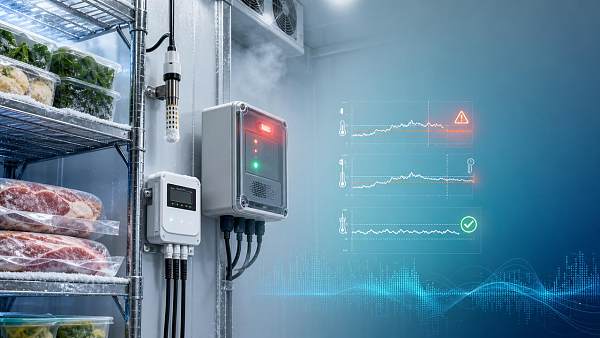
Temperature-sensitive products do not fail only when refrigeration stops. Many losses happen while cooling equipment appears to be running normally, but the monitoring layer is inaccurate, delayed, or incomplete. That distinction matters because maintenance teams are often judged on uptime, while the real business risk sits in data integrity.
In practical terms, a cold room can hold a target range most of the day and still produce a damaging event if the monitoring system misses a short excursion during loading, defrost cycles, power fluctuations, or door openings. If the alert comes late, the recovery window may already be gone.
That is why cold chain monitoring should be treated as a control system, not just a reporting tool. If the sensors, alarms, network path, software logic, and maintenance records are not working together, the business may think products are protected when they are not.
For after-sales teams, this changes the maintenance objective. The goal is not only to keep devices powered on. The goal is to preserve trusted visibility, timely alarms, and defensible records that support intervention before product quality is affected.
What after-sales maintenance teams are usually up against
After-sales personnel often inherit systems with mixed hardware generations, unclear installation history, inconsistent calibration routines, and undocumented changes made during urgent service visits. In those conditions, cold chain monitoring can look functional at a glance while hiding serious control weaknesses.
The challenge is made harder by fragmented responsibility. One team owns refrigeration equipment, another manages networking, another handles quality documentation, and site staff respond to alarms. When product loss occurs, no single issue appears catastrophic, but several small failures often align.
Maintenance teams also face pressure to restore service quickly. That urgency can push root-cause work into the background. A sensor is replaced, an alert is reset, a gateway is rebooted, and the site returns to operation, but the underlying reason for monitoring failure remains unresolved.
Because of this, the most effective after-sales teams adopt a risk-based view. They identify the components most likely to undermine monitoring accuracy or alarm speed, then build preventive checks around those points instead of relying only on reactive troubleshooting.
Sensor drift and calibration gaps are among the most common hidden failures
One of the most damaging cold chain monitoring issues is silent sensor drift. A probe may remain online, continue reporting values, and pass basic functionality checks while gradually moving away from actual temperature conditions. That creates false confidence, which is often more dangerous than an obvious failure.
Drift becomes especially risky in environments with repeated thermal cycling, moisture exposure, vibration, cleaning chemicals, or frequent relocation of probes. Over time, those factors can affect measurement performance without generating a system fault code.
Calibration gaps worsen the problem. If a site has no consistent calibration interval, no documented tolerance threshold, or no clear process for replacing out-of-spec probes, maintenance staff may not know whether displayed values are still trustworthy enough for compliance or product protection.
For after-sales teams, the corrective approach should be specific. Verify calibration schedules by asset criticality, compare probe readings against traceable references, review recurring offsets rather than single measurements, and document any drift trend before it becomes a product-loss event.
It also helps to distinguish between calibration and validation. Calibration checks measurement accuracy against a reference. Validation confirms that the sensor placement and system response still reflect the real product environment. A perfectly calibrated probe in the wrong location can still mislead operators.
Poor sensor placement creates blind spots even when devices are working
Many cold chain monitoring failures are not caused by bad hardware but by bad placement. A sensor installed near an evaporator, far from the warmest load zone, or too close to airflow recovery points may report acceptable temperatures while products elsewhere in the space experience excursions.
This issue is common after layout changes, storage density increases, loading pattern shifts, or equipment retrofits. The original sensor position may no longer represent the actual risk point, yet the monitoring configuration stays unchanged because the system still appears operational.
After-sales maintenance teams should review placement whenever site conditions change. Ask where the most temperature-sensitive goods sit, where doors remain open longest, where airflow is weakest, and where thermal recovery is slowest after loading. Those are the places where data matters most.
A useful field practice is to compare fixed sensor data with temporary mapping during representative operations. If mapping reveals consistent hot or cold spots that fixed monitoring does not capture, the problem is not just environmental control. It is a monitoring design gap.
Alarm delays are often more costly than outright alarm failures
When people think about alarms, they often focus on whether an alert was generated. In reality, the more important question is whether it reached the right person early enough to support action. A delayed alarm can be operationally equivalent to no alarm at all.
Delays can originate from many sources: poorly configured thresholds, excessive alarm delay timers, network latency, battery weakness in wireless devices, overloaded gateways, software queue issues, or notification routing that sends messages to inactive or unavailable contacts.
Another common problem is alarm fatigue. If teams receive too many nuisance alerts from door openings, planned maintenance, or short non-critical fluctuations, they begin to ignore notifications. Then a real excursion is treated as just another routine message until product risk has escalated.
Maintenance teams can reduce this risk by reviewing alarm history for response speed, not just event count. Which alerts were acknowledged late? Which thresholds generate repeated noise? Which escalation paths fail during nights, weekends, or shift changes? Those answers usually expose weak links quickly.
Good cold chain monitoring depends on alarm logic that matches the real thermal behavior of the site. Thresholds should protect products without triggering constant false positives, and escalation rules should ensure that unresolved alarms move to someone empowered to act.
Connectivity issues turn monitored assets into unmanaged risk
Wireless and cloud-connected systems have improved visibility across distributed cold chain operations, but they also introduce failure points that are easy to underestimate. A device may continue sensing locally while data transmission is interrupted, delayed, or only partially restored after reconnection.
From a maintenance perspective, connectivity failures are dangerous because they can go unnoticed until someone checks missing logs or a customer asks for excursion evidence. By then, the gap may cover the exact period when product conditions needed verification.
Common causes include unstable Wi-Fi coverage, gateway overload, SIM or carrier issues, firmware bugs, poor antenna placement, power interruptions, and cybersecurity controls that inadvertently block data traffic. In mixed environments, protocol conversion between old and new devices can create additional failure points.
After-sales teams should monitor communication health as actively as temperature values. If packet loss, timestamp gaps, synchronization errors, or repeated reconnect cycles are treated as minor IT issues, the organization may be accepting major product-risk exposure without realizing it.
One effective practice is to define a maximum acceptable data gap by application. The tolerance for a frozen warehouse may differ from that of a biologics shipment or a medical storage cabinet. Once the acceptable gap is defined, monitoring reliability becomes measurable and enforceable.
Power backup assumptions often fail under real-world conditions
Many operators assume backup power protects cold chain monitoring automatically. In reality, batteries may be degraded, chargers may be faulty, backup runtimes may be shorter than expected, or certain components may not be connected to backup circuits at all.
This becomes critical during short outages and transfer events. Refrigeration may recover, but if loggers, gateways, routers, or local displays reboot slowly or lose configuration, the system can miss the exact period when excursion evidence and alarm continuity matter most.
Maintenance teams should test backup performance under realistic scenarios instead of relying on installation specifications. How long do sensors keep reporting? Does alarm transmission continue during failover? Are timestamps preserved correctly? Is buffered data uploaded completely after recovery?
Documenting those answers gives after-sales personnel a far stronger basis for preventive recommendations. It also helps separate equipment resilience from monitoring resilience, which are related but not identical layers of protection.
Data integrity and records management are part of cold chain monitoring reliability
In many loss investigations, the issue is not only whether temperatures went out of range. It is whether the organization can prove what happened, when it happened, and how quickly it responded. Weak records can turn a manageable deviation into a compliance and customer-trust problem.
Missing timestamps, overwritten logs, manual data transcription errors, inconsistent time zones, unsigned maintenance changes, and undocumented threshold updates all reduce confidence in the monitoring system. Even if products are ultimately safe, poor records make that hard to demonstrate.
After-sales maintenance teams contribute directly to this area. Service visits should not end with a hardware fix alone. They should include configuration verification, change documentation, event note entry, and confirmation that reporting remains complete after maintenance work.
Teams that treat documentation as a technical control rather than an administrative burden usually perform better during audits, customer complaints, and root-cause reviews. In cold chain environments, trustworthy records are part of system performance.
How to identify the highest-risk failure points before product loss occurs
Not every weakness deserves equal urgency. The most useful approach for maintenance personnel is to rank failure points by a simple combination of likelihood, detectability, and product impact. This keeps effort focused on issues that can quietly create major loss.
Start by asking five practical questions. If this component fails, will the site know immediately? Can the product still be protected manually? Is there redundancy? Does the failure affect one zone or all assets? And has the same issue appeared before in service history?
Components that fail silently should rank high. So should any point where a single issue interrupts both monitoring and escalation, such as a gateway that carries all wireless traffic or a shared notification path that no one regularly tests.
It is also wise to review repeated “small” incidents together. A few missed uploads, a few late acknowledgments, and a few unexplained sensor offsets may seem minor in isolation. Together, they often signal a system approaching a much larger failure.
A practical maintenance checklist to reduce cold chain monitoring failures
For after-sales teams, improvement usually comes from disciplined routines more than from dramatic redesign. A focused preventive checklist can reduce product loss risk substantially if it targets the most failure-prone elements.
First, verify sensor accuracy and placement on a defined schedule. Check for drift, compare critical probes to traceable references, and confirm that locations still represent the worst-case thermal conditions after any site or storage change.
Second, test alarm functionality end to end. Confirm that alarms trigger at the right thresholds, reach active contacts quickly, escalate when unacknowledged, and remain actionable during nights, weekends, and planned maintenance periods.
Third, inspect connectivity health. Review communication gaps, signal strength, gateway loads, timestamp consistency, and data recovery after temporary outages. Treat repeated communication warnings as reliability defects, not background noise.
Fourth, validate backup power and restart behavior. Ensure sensors, loggers, gateways, and communications equipment remain functional through outages or recover without losing critical data continuity.
Fifth, tighten documentation discipline. Record calibration status, firmware versions, threshold changes, probe replacements, root-cause findings, and any temporary workarounds. These records support both compliance and better future troubleshooting.
Finally, close the loop with trend review. The strongest maintenance programs do not stop at fixing incidents. They analyze recurring deviations, identify weak assets or locations, and update preventive tasks before the next shipment, batch, or storage cycle is at risk.
When the problem is not the device but the service model
Sometimes repeated cold chain monitoring failures persist because the technical service model is too reactive. If maintenance is triggered only after alarms, outages, or customer complaints, the organization will continue absorbing avoidable loss and emergency labor costs.
A better model uses service data proactively. Sites with frequent probe replacements, repeated network instability, or chronic alarm delays should receive targeted reliability reviews. Not every customer needs the same service interval or support structure.
For after-sales teams and the businesses supporting them, this is also where strategic value becomes visible. Reliable cold chain monitoring is not just a maintenance outcome. It strengthens customer retention, reduces dispute frequency, and supports premium service positioning in high-sensitivity sectors.
That matters in industries ranging from healthcare technology to advanced food logistics, where monitoring credibility can influence supplier trust as much as equipment performance itself.
Conclusion: cold chain monitoring failures are usually preventable when teams focus on the right weak points
The biggest lesson for after-sales maintenance personnel is simple: product loss risk often rises long before a catastrophic system failure appears. Inaccurate sensors, poor placement, delayed alarms, unstable connectivity, weak backup performance, and incomplete records all create openings for preventable damage.
Effective cold chain monitoring depends on more than installed hardware. It requires trusted measurements, fast escalation, resilient communication, and service practices that verify the whole monitoring chain rather than isolated components.
If your team wants to reduce loss risk quickly, start with the failures that are easiest to miss but hardest to recover from: silent drift, blind spots, alarm latency, and data gaps. Those are the issues most likely to turn a stable-looking operation into an expensive product event.
When maintenance teams treat monitoring reliability as a frontline product-protection function, not just a technical support task, they create measurable value: less waste, faster response, stronger compliance confidence, and more resilient cold chain operations overall.
Get weekly intelligence in your inbox.
No noise. No sponsored content. Pure intelligence.
 Oct 08, 2026How Digital Health Improves Diagnostic Accuracy and Workflow in Clinical LabsHow Digital Health Improves Diagnostic Accuracy and Workflow in Clinical Labs
 Oct 07, 2026Selecting Voice Picking Systems for German Warehouses: Integration, Languages and ROISelecting Voice Picking Systems for German Warehouses: Integration, Languages and ROI
 Oct 06, 2026How to Choose Last Mile Dispatch Software for On-Time Delivery at ScaleHow to Choose Last Mile Dispatch Software for On-Time Delivery at Scale
 Oct 05, 2026Vietnam’s Consumer Electronics Market: Demand Shifts and Sourcing OpportunitiesVietnam’s Consumer Electronics Market: Demand Shifts and Sourcing Opportunities
 Oct 04, 2026Digital Health Investment Priorities for Providers: Improving Access, Outcomes, and EfficiencyDigital Health Investment Priorities for Providers: Improving Access, Outcomes, and Efficiency
 Oct 03, 2026How to Specify an FR4 Custom PCB Board for High-Voltage and High-Heat DesignsHow to Specify an FR4 Custom PCB Board for High-Voltage and High-Heat Designs
 Oct 02, 2026ERP Software Market Intelligence: Adoption, Pricing, and Vendor Signals to WatchERP Software Market Intelligence: Adoption, Pricing, and Vendor Signals to Watch
 Oct 01, 2026How to Select Calibrated Temperature Data Loggers for GMP Cold Storage MonitoringHow to Select Calibrated Temperature Data Loggers for GMP Cold Storage Monitoring
 Sep 30, 2026Custom Molded Rubber Pricing: What Drives Unit Cost and Tooling Fees?Custom Molded Rubber Pricing: What Drives Unit Cost and Tooling Fees?
 Sep 29, 2026How to Evaluate Energy Management Software Vendors for Multi-Site OperationsHow to Evaluate Energy Management Software Vendors for Multi-Site Operations
 Sep 28, 2026How to Select a DIN Rail Smart Meter for Multi-Circuit Energy MonitoringHow to Select a DIN Rail Smart Meter for Multi-Circuit Energy Monitoring
 Sep 27, 2026TWS Earbuds in Vietnam: Demand Drivers, Price Tiers, and Retail Channel OpportunitiesTWS Earbuds in Vietnam: Demand Drivers, Price Tiers, and Retail Channel Opportunities
 Sep 26, 2026How UAE Clinics Can Qualify a Smart Glucometer Supplier for Accuracy and ComplianceHow UAE Clinics Can Qualify a Smart Glucometer Supplier for Accuracy and Compliance
 Sep 25, 2026Buying Aesthetic Lasers in the USA: FDA Status, Wavelengths, and Service SupportBuying Aesthetic Lasers in the USA: FDA Status, Wavelengths, and Service Support
 Sep 24, 2026Laser Cutting Brass Sheet: How to Prevent Burrs and Heat Marks on Thin PartsLaser Cutting Brass Sheet: How to Prevent Burrs and Heat Marks on Thin Parts
 Sep 23, 2026How to Choose Lightweight ANC Headphones for Comfortable All-Day TravelHow to Choose Lightweight ANC Headphones for Comfortable All-Day Travel
 Sep 22, 2026IPX5 TWS Bluetooth Earbuds: What Protection Do They Offer for Workouts?IPX5 TWS Bluetooth Earbuds: What Protection Do They Offer for Workouts?
 Sep 21, 2026What to Look for in a Grid Integration Company for Utility-Scale Solar ProjectsWhat to Look for in a Grid Integration Company for Utility-Scale Solar Projects
 Sep 20, 2026Microgrid Controller Pricing: What Drives Cost in Commercial Energy Projects?Microgrid Controller Pricing: What Drives Cost in Commercial Energy Projects?
 Sep 19, 2026How to Choose a GaN Charger for Laptops Without Compromising Power or PortabilityHow to Choose a GaN Charger for Laptops Without Compromising Power or Portability
 Sep 18, 2026Floating Solar Farm Costs: CAPEX, OPEX, and the Site Factors That Shape ROIFloating Solar Farm Costs: CAPEX, OPEX, and the Site Factors That Shape ROI
 Sep 17, 2026Drone Delivery Solutions for Last-Mile Routes: Site, Payload, and Range PlanningDrone Delivery Solutions for Last-Mile Routes: Site, Payload, and Range Planning
 Sep 16, 2026When Low-Volume Electronics Manufacturing Makes More Sense Than Mass ProductionWhen Low-Volume Electronics Manufacturing Makes More Sense Than Mass Production
 Sep 15, 2026Wholesale WiFi Smart Switches: What Buyers Should Verify Before OrderingWholesale WiFi Smart Switches: What Buyers Should Verify Before Ordering
 Sep 14, 2026How to Select IoT Sensors for Reliable Monitoring in Harsh Industrial EnvironmentsHow to Select IoT Sensors for Reliable Monitoring in Harsh Industrial Environments
 Sep 13, 2026How Procurement Teams Can Improve Supplier Reliability With Supply Chain VisibilityHow Procurement Teams Can Improve Supplier Reliability With Supply Chain Visibility
 Sep 12, 2026Smart Manufacturing Trends 2026: What Leaders Should Prioritize for ROISmart Manufacturing Trends 2026: What Leaders Should Prioritize for ROI



























