
China-Europe Railway Express Hits 130,000 Trains
On May 9, 2026, the China-Europe Railway Express (CEREX) surpassed 130,000 cumulative departures — a milestone underscoring its growing role in global supply chain resilience, particularly for time- and value-sensitive cross-border trade between Asia and Europe.
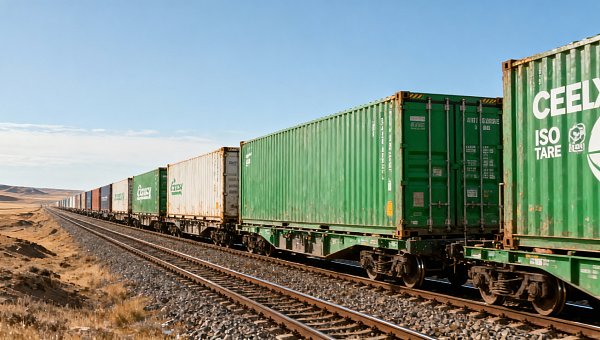
Event Overview
As of May 9, 2026, the China-Europe Railway Express had completed over 130,000 train departures, carrying goods valued at more than USD 520 billion. The average transit time for outbound services remains stable at 12–14 days — approximately 3–4 weeks faster than maritime shipping. In April 2026, railway infrastructure investment increased by 3.2% year-on-year, supporting continued capacity expansion.
Industries Affected
Direct Trading Enterprises
Export-oriented trading firms — especially those handling high-value industrial goods such as CNC machine tools, photovoltaic modules, and specialty alloys — benefit from enhanced delivery certainty. The shortened lead time reduces working capital lock-up and improves order-to-cash cycles, particularly for European distributors and Middle Eastern channel partners with tight replenishment windows.
Raw Material Procurement Enterprises
Importers sourcing critical inputs (e.g., rare-earth components, precision bearings, or lithium battery precursors) from Chinese suppliers now face lower logistics risk exposure. While rail does not replace air freight for ultra-urgent spares, its improved schedule reliability strengthens just-in-time procurement strategies — especially where port congestion or customs delays persist on sea routes.
Manufacturing Enterprises
Original Equipment Manufacturers (OEMs) and contract manufacturers relying on cross-border component flows — including automotive Tier-1 suppliers and electronics assemblers — gain greater predictability in inbound logistics planning. This supports production scheduling accuracy and reduces safety stock requirements, though cost sensitivity remains higher than for bulk commodities shipped via sea.
Supply Chain Service Providers
Freight forwarders, multimodal integrators, and customs brokerage firms are adapting service portfolios to include rail-specific documentation support, inland consolidation hubs, and real-time tracking integration. Demand is rising for end-to-end visibility across rail-sea-rail handoffs, especially along secondary corridors like the China–Central Asia–Europe route.
Key Considerations and Recommended Actions
Monitor corridor-specific capacity allocation
With infrastructure investment up 3.2%, new slots are being allocated across key nodes (e.g., Xi’an, Chengdu, Duisburg). Firms should engage early with rail operators to secure priority booking windows — particularly for Q3/Q4 peak-season shipments.
Evaluate total landed cost beyond headline transit time
While rail is faster than sea, inland haulage, transshipment fees, and insurance premiums vary significantly by origin/destination pair. A full landed-cost comparison — including demurrage risk and documentation complexity — remains essential before shifting volume.
Align with evolving customs facilitation frameworks
The EU’s recent pilot on ‘single-window’ pre-clearance for CEREX consignments (launched April 2026) reduces border dwell time. Importers should verify eligibility and ensure harmonized HS coding and digital certificate submission capabilities.
Editorial Perspective / Industry Observation
Observably, the 130,000-train milestone reflects not only volume growth but also institutional maturation: standardized documentation, interoperable telematics, and bilateral customs protocols have improved. However, analysis shows that rail’s strategic advantage lies less in displacing sea or air and more in offering a *third-tier option* — one optimized for mid-volume, mid-value, mid-urgency cargo. Its scalability remains constrained by terminal handling throughput and intermodal interface efficiency, not just track mileage. Current growth is therefore better understood as demand diversification rather than modal substitution.
Conclusion
The CEREX’s evolution into a predictable, scalable land corridor marks a structural shift in Eurasian trade logistics. For industries balancing cost, speed, and reliability, it no longer functions merely as an emergency alternative — but as a core node in multi-modal network design. That said, rational adoption requires granular assessment: corridor performance, regulatory alignment, and total cost transparency remain decisive factors.
Source Attribution
Data sourced from the National Development and Reform Commission (NDRC) of China and the International Union of Railways (UIC) Joint Statistics Report, May 2026 edition. Note: Customs clearance timelines under the EU’s new pre-clearance pilot remain subject to operational validation; further updates expected by Q3 2026.
Get weekly intelligence in your inbox.
No noise. No sponsored content. Pure intelligence.
 Oct 08, 2026How Digital Health Improves Diagnostic Accuracy and Workflow in Clinical LabsHow Digital Health Improves Diagnostic Accuracy and Workflow in Clinical Labs
 Oct 07, 2026Selecting Voice Picking Systems for German Warehouses: Integration, Languages and ROISelecting Voice Picking Systems for German Warehouses: Integration, Languages and ROI
 Oct 06, 2026How to Choose Last Mile Dispatch Software for On-Time Delivery at ScaleHow to Choose Last Mile Dispatch Software for On-Time Delivery at Scale
 Oct 05, 2026Vietnam’s Consumer Electronics Market: Demand Shifts and Sourcing OpportunitiesVietnam’s Consumer Electronics Market: Demand Shifts and Sourcing Opportunities
 Oct 04, 2026Digital Health Investment Priorities for Providers: Improving Access, Outcomes, and EfficiencyDigital Health Investment Priorities for Providers: Improving Access, Outcomes, and Efficiency
 Oct 03, 2026How to Specify an FR4 Custom PCB Board for High-Voltage and High-Heat DesignsHow to Specify an FR4 Custom PCB Board for High-Voltage and High-Heat Designs
 Oct 02, 2026ERP Software Market Intelligence: Adoption, Pricing, and Vendor Signals to WatchERP Software Market Intelligence: Adoption, Pricing, and Vendor Signals to Watch
 Oct 01, 2026How to Select Calibrated Temperature Data Loggers for GMP Cold Storage MonitoringHow to Select Calibrated Temperature Data Loggers for GMP Cold Storage Monitoring
 Sep 30, 2026Custom Molded Rubber Pricing: What Drives Unit Cost and Tooling Fees?Custom Molded Rubber Pricing: What Drives Unit Cost and Tooling Fees?
 Sep 29, 2026How to Evaluate Energy Management Software Vendors for Multi-Site OperationsHow to Evaluate Energy Management Software Vendors for Multi-Site Operations
 Sep 28, 2026How to Select a DIN Rail Smart Meter for Multi-Circuit Energy MonitoringHow to Select a DIN Rail Smart Meter for Multi-Circuit Energy Monitoring
 Sep 27, 2026TWS Earbuds in Vietnam: Demand Drivers, Price Tiers, and Retail Channel OpportunitiesTWS Earbuds in Vietnam: Demand Drivers, Price Tiers, and Retail Channel Opportunities
 Sep 26, 2026How UAE Clinics Can Qualify a Smart Glucometer Supplier for Accuracy and ComplianceHow UAE Clinics Can Qualify a Smart Glucometer Supplier for Accuracy and Compliance
 Sep 25, 2026Buying Aesthetic Lasers in the USA: FDA Status, Wavelengths, and Service SupportBuying Aesthetic Lasers in the USA: FDA Status, Wavelengths, and Service Support
 Sep 24, 2026Laser Cutting Brass Sheet: How to Prevent Burrs and Heat Marks on Thin PartsLaser Cutting Brass Sheet: How to Prevent Burrs and Heat Marks on Thin Parts
 Sep 23, 2026How to Choose Lightweight ANC Headphones for Comfortable All-Day TravelHow to Choose Lightweight ANC Headphones for Comfortable All-Day Travel
 Sep 22, 2026IPX5 TWS Bluetooth Earbuds: What Protection Do They Offer for Workouts?IPX5 TWS Bluetooth Earbuds: What Protection Do They Offer for Workouts?
 Sep 21, 2026What to Look for in a Grid Integration Company for Utility-Scale Solar ProjectsWhat to Look for in a Grid Integration Company for Utility-Scale Solar Projects
 Sep 20, 2026Microgrid Controller Pricing: What Drives Cost in Commercial Energy Projects?Microgrid Controller Pricing: What Drives Cost in Commercial Energy Projects?
 Sep 19, 2026How to Choose a GaN Charger for Laptops Without Compromising Power or PortabilityHow to Choose a GaN Charger for Laptops Without Compromising Power or Portability
 Sep 18, 2026Floating Solar Farm Costs: CAPEX, OPEX, and the Site Factors That Shape ROIFloating Solar Farm Costs: CAPEX, OPEX, and the Site Factors That Shape ROI
 Sep 17, 2026Drone Delivery Solutions for Last-Mile Routes: Site, Payload, and Range PlanningDrone Delivery Solutions for Last-Mile Routes: Site, Payload, and Range Planning
 Sep 16, 2026When Low-Volume Electronics Manufacturing Makes More Sense Than Mass ProductionWhen Low-Volume Electronics Manufacturing Makes More Sense Than Mass Production
 Sep 15, 2026Wholesale WiFi Smart Switches: What Buyers Should Verify Before OrderingWholesale WiFi Smart Switches: What Buyers Should Verify Before Ordering
 Sep 14, 2026How to Select IoT Sensors for Reliable Monitoring in Harsh Industrial EnvironmentsHow to Select IoT Sensors for Reliable Monitoring in Harsh Industrial Environments
 Sep 13, 2026How Procurement Teams Can Improve Supplier Reliability With Supply Chain VisibilityHow Procurement Teams Can Improve Supplier Reliability With Supply Chain Visibility
 Sep 12, 2026Smart Manufacturing Trends 2026: What Leaders Should Prioritize for ROISmart Manufacturing Trends 2026: What Leaders Should Prioritize for ROI



























