
Port automation tech is advancing faster than many terminals expect
Port automation tech is evolving at a pace that many terminals did not plan for, forcing technical evaluators to rethink equipment compatibility, software integration, and long-term ROI. From autonomous yard systems to AI-driven scheduling, the gap between innovation and deployment is widening. This article examines where the biggest shifts are happening, what risks they introduce, and how terminals can assess readiness before automation outpaces operations.
For technical assessment teams, the issue is no longer whether automation will reach the port environment, but how quickly legacy assets, control layers, and workforce processes can adapt. In many terminals, equipment lifecycles still run 10 to 20 years, while software refresh cycles now compress to 12 to 36 months.
That mismatch creates practical evaluation challenges. A terminal may have cranes with usable structural life remaining, yet its terminal operating system, sensor stack, or network architecture may be unprepared for modern port automation tech. Capital decisions therefore require more than a simple productivity forecast.
Where port automation tech is accelerating fastest
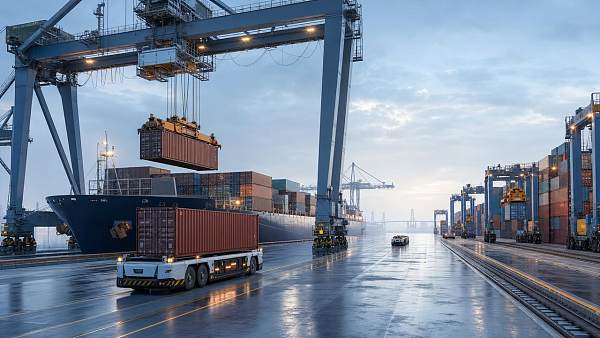
The fastest movement is happening in operational layers that can deliver measurable gains within 6 to 24 months. These include yard orchestration, berth planning, remote equipment supervision, energy management, and predictive maintenance. Full lights-out automation remains limited, but partial automation is expanding much faster.
Technical evaluators should separate high-visibility automation from high-impact automation. A pilot with autonomous vehicles may attract attention, but in many mixed-use terminals, the first return often comes from better dispatch logic, machine health monitoring, and queue reduction at key transfer points.
Yard systems are becoming software-defined
In conventional yards, routing rules were often fixed and manually adjusted by experienced operators. Newer systems use real-time location data, camera feeds, and AI-assisted scheduling to optimize moves every few seconds. That can reduce unproductive travel distance by 8% to 20% in typical container handling scenarios.
For assessment teams, the key question is not only whether autonomous straddle carriers, AGVs, or yard trucks are available. It is whether the terminal has sufficient positioning accuracy, wireless coverage, and exception-handling workflows to support them during peak utilization windows of 70% to 90%.
Remote operations are maturing faster than full autonomy
Remote crane operation has become a preferred intermediate step because it lowers risk while preserving operator oversight. In practice, many terminals can move from local cabins to remote control rooms in 2 to 4 phases, rather than attempt complete autonomous lifting in a single program.
This shift also changes infrastructure requirements. Low-latency networks, redundant video transmission, and human-machine interface design become as important as mechanical performance. In some cases, a 50 millisecond delay threshold may be acceptable for one function but unacceptable for precision placement near vessel edges.
AI scheduling is widening the capability gap
AI-based planning tools are increasingly used for berth allocation, labor planning, gate sequencing, and maintenance timing. Unlike static rule sets, these systems improve when fed consistent operational data over 3 to 9 months. Terminals with fragmented data structures struggle to capture the same benefit.
As a result, port automation tech is no longer defined only by machines. Data cleanliness, event timestamp accuracy, and application integration now influence outcomes just as strongly as vehicle speed, lift capacity, or stack density.
The table below highlights where technical evaluators typically see the fastest automation movement and what infrastructure dependencies should be checked before approval.
A common pattern stands out: the most scalable deployments depend less on replacing every machine and more on connecting assets, data, and decision logic. For many terminals, the first strategic gain from port automation tech comes from integration depth rather than from hardware novelty alone.
Why many terminals are falling behind deployment reality
Many terminals planned modernization in sequential capital cycles, but automation vendors now release meaningful software upgrades every quarter or every half year. This means a terminal can complete procurement for one layer while the next-generation interface, sensor package, or optimization module is already entering the market.
The result is not simply delay. It is architectural drift. A site may buy modern equipment but connect it through older middleware, nonstandard APIs, or fragmented data models. In that environment, port automation tech underperforms not because the machines are weak, but because the stack is inconsistent.
Legacy equipment still shapes the investment path
Technical evaluators often inherit fleets with 30% to 60% of core assets still economically viable. Replacing everything at once rarely makes financial sense. However, mixed fleets create edge cases: one crane may support modern telemetry, while another only provides limited PLC data and requires retrofit gateways.
That affects procurement. The real cost of port automation tech is not limited to vehicles, software licenses, or control systems. It also includes interface engineering, downtime planning, cybersecurity hardening, test simulation, and operator retraining over periods that may stretch from 3 months to 18 months.
Data quality is often weaker than teams expect
Automation decisions depend on accurate operating data, yet many terminals still work with incomplete exception logs, inconsistent naming conventions, and timestamp gaps between yard, gate, and berth systems. Even a 2% to 5% event mismatch can distort optimization outputs when schedules are recalculated every few minutes.
Before approving advanced orchestration tools, technical teams should verify whether data sources are synchronized, whether field devices follow a common protocol strategy, and whether historical records are granular enough to train useful models rather than generate false confidence.
Frequent root causes of readiness gaps
- Control systems from multiple generations with limited interoperability
- Wireless dead zones affecting vehicle command reliability
- Inadequate time synchronization across operational platforms
- Manual exception handling that is not captured in machine-readable logs
- Vendor contracts that do not clearly define integration ownership
Cybersecurity and safety now influence purchasing earlier
As port automation tech connects OT and IT environments more tightly, security reviews move from final approval to early-stage design. Segmentation, access control, patching windows, and fail-safe modes must be considered before pilot deployment, not after commissioning incidents expose weak points.
Safety design is equally critical. Autonomous systems need clear operational zones, fallback logic, and manual intervention protocols. A terminal may accept a 1 to 2 second pause for obstacle confirmation in one area, but not in a high-throughput transfer corridor where queues can multiply rapidly.
How technical evaluators should assess readiness
A practical readiness review should combine engineering, software, operational, and financial criteria. The most effective approach is a staged assessment model rather than a binary go-or-no-go decision. In most cases, 4 assessment layers are enough to expose whether a terminal can absorb new port automation tech without operational disruption.
Layer 1: Asset and interface compatibility
Start with asset mapping. List cranes, yard equipment, sensors, PLC environments, power systems, and network endpoints. Then score each asset on data availability, control accessibility, retrofit effort, and remaining service life. A simple 1-to-5 scale can quickly show which assets are blockers.
Layer 2: Software and integration maturity
Review the terminal operating system, maintenance systems, gate applications, and analytics tools. Check API availability, message structure consistency, and vendor support terms. If core systems require custom translation at more than 3 or 4 interfaces, integration cost and future upgrade risk increase sharply.
Layer 3: Operational process stability
Automation performs poorly in unstable workflows. If lane rules, handoff priorities, or exception procedures change weekly, optimization software cannot settle. Teams should document standard operating scenarios, exception categories, and escalation paths for at least the top 10 recurring disruptions.
Layer 4: ROI under realistic throughput assumptions
Return on investment should be tested against multiple utilization cases, such as 55%, 75%, and 90% throughput conditions. Savings may come from labor redeployment, reduced idle time, fewer unplanned outages, or better berth productivity, but the payback window can vary from 2 years to more than 7 years.
The matrix below can help technical evaluators compare readiness dimensions before moving from concept to pilot deployment.
This kind of matrix helps procurement and engineering teams align on scope. It also prevents a recurring mistake: approving advanced port automation tech based on vendor demonstrations rather than on site-specific constraints, data behavior, and handoff complexity.
Implementation priorities that reduce risk
The lowest-risk path is usually phased adoption. Instead of targeting full automation in one capital package, many terminals benefit from sequencing projects into 3 stages: digital visibility, assisted optimization, and controlled autonomy. Each stage should have measurable acceptance criteria and a defined rollback path.
Phase automation around bottlenecks, not headlines
Technical evaluators should identify the 2 or 3 operational constraints that most affect vessel turnaround, truck dwell time, or yard density. If berth conflicts and rehandle rates are the core issues, AI planning and yard sequencing may outperform more expensive vehicle automation in the first cycle.
Demand clearer vendor responsibility boundaries
One major implementation risk is unclear ownership between OEMs, software vendors, and systems integrators. Contracts should define who is responsible for interface validation, simulation testing, cybersecurity patches, latency thresholds, and post-go-live incident response within the first 30, 60, and 90 days.
Recommended procurement checkpoints
- Run a baseline audit of equipment data access and network coverage.
- Map every required interface before vendor selection is finalized.
- Use one pilot zone with measurable KPIs for 8 to 12 weeks.
- Define failure modes and manual fallback procedures before launch.
- Review payback under conservative, base, and peak throughput cases.
Build for upgradeability, not just initial performance
Because port automation tech changes rapidly, technical teams should favor architectures that can absorb future modules without major rewiring. Open integration logic, modular sensor layers, and documented APIs often create more long-term value than highly customized deployments that look efficient on day one.
A terminal that designs for upgradeability can adopt later AI, electrification, or digital twin functions with lower disruption. That matters in sectors linked to advanced manufacturing, green energy logistics, smart electronics flows, healthcare technology shipments, and supply chain SaaS ecosystems where cargo patterns may shift quickly.
What this means for B2B decision-makers
For procurement directors, operations leaders, and technical evaluators, the central lesson is clear: port automation tech should be assessed as a system capability, not as an isolated equipment purchase. Competitive advantage increasingly comes from how fast a terminal can integrate, validate, and scale digital operations safely.
The strongest evaluations connect engineering feasibility with commercial resilience. That means checking not only whether a solution works in a pilot, but whether it can support higher call frequency, energy constraints, labor transitions, and software upgrades over the next 3 to 5 years.
For organizations tracking industrial transformation across global trade networks, structured intelligence matters. TradeNexus Pro helps decision-makers examine technology shifts, supplier landscapes, and integration strategies with the depth required for modern B2B planning. To assess port automation tech with greater confidence, contact us to discuss your use case, request a tailored solution view, or explore more supply chain transformation insights.
Get weekly intelligence in your inbox.
No noise. No sponsored content. Pure intelligence.
 Oct 08, 2026How Digital Health Improves Diagnostic Accuracy and Workflow in Clinical LabsHow Digital Health Improves Diagnostic Accuracy and Workflow in Clinical Labs
 Oct 07, 2026Selecting Voice Picking Systems for German Warehouses: Integration, Languages and ROISelecting Voice Picking Systems for German Warehouses: Integration, Languages and ROI
 Oct 06, 2026How to Choose Last Mile Dispatch Software for On-Time Delivery at ScaleHow to Choose Last Mile Dispatch Software for On-Time Delivery at Scale
 Oct 05, 2026Vietnam’s Consumer Electronics Market: Demand Shifts and Sourcing OpportunitiesVietnam’s Consumer Electronics Market: Demand Shifts and Sourcing Opportunities
 Oct 04, 2026Digital Health Investment Priorities for Providers: Improving Access, Outcomes, and EfficiencyDigital Health Investment Priorities for Providers: Improving Access, Outcomes, and Efficiency
 Oct 03, 2026How to Specify an FR4 Custom PCB Board for High-Voltage and High-Heat DesignsHow to Specify an FR4 Custom PCB Board for High-Voltage and High-Heat Designs
 Oct 02, 2026ERP Software Market Intelligence: Adoption, Pricing, and Vendor Signals to WatchERP Software Market Intelligence: Adoption, Pricing, and Vendor Signals to Watch
 Oct 01, 2026How to Select Calibrated Temperature Data Loggers for GMP Cold Storage MonitoringHow to Select Calibrated Temperature Data Loggers for GMP Cold Storage Monitoring
 Sep 30, 2026Custom Molded Rubber Pricing: What Drives Unit Cost and Tooling Fees?Custom Molded Rubber Pricing: What Drives Unit Cost and Tooling Fees?
 Sep 29, 2026How to Evaluate Energy Management Software Vendors for Multi-Site OperationsHow to Evaluate Energy Management Software Vendors for Multi-Site Operations
 Sep 28, 2026How to Select a DIN Rail Smart Meter for Multi-Circuit Energy MonitoringHow to Select a DIN Rail Smart Meter for Multi-Circuit Energy Monitoring
 Sep 27, 2026TWS Earbuds in Vietnam: Demand Drivers, Price Tiers, and Retail Channel OpportunitiesTWS Earbuds in Vietnam: Demand Drivers, Price Tiers, and Retail Channel Opportunities
 Sep 26, 2026How UAE Clinics Can Qualify a Smart Glucometer Supplier for Accuracy and ComplianceHow UAE Clinics Can Qualify a Smart Glucometer Supplier for Accuracy and Compliance
 Sep 25, 2026Buying Aesthetic Lasers in the USA: FDA Status, Wavelengths, and Service SupportBuying Aesthetic Lasers in the USA: FDA Status, Wavelengths, and Service Support
 Sep 24, 2026Laser Cutting Brass Sheet: How to Prevent Burrs and Heat Marks on Thin PartsLaser Cutting Brass Sheet: How to Prevent Burrs and Heat Marks on Thin Parts
 Sep 23, 2026How to Choose Lightweight ANC Headphones for Comfortable All-Day TravelHow to Choose Lightweight ANC Headphones for Comfortable All-Day Travel
 Sep 22, 2026IPX5 TWS Bluetooth Earbuds: What Protection Do They Offer for Workouts?IPX5 TWS Bluetooth Earbuds: What Protection Do They Offer for Workouts?
 Sep 21, 2026What to Look for in a Grid Integration Company for Utility-Scale Solar ProjectsWhat to Look for in a Grid Integration Company for Utility-Scale Solar Projects
 Sep 20, 2026Microgrid Controller Pricing: What Drives Cost in Commercial Energy Projects?Microgrid Controller Pricing: What Drives Cost in Commercial Energy Projects?
 Sep 19, 2026How to Choose a GaN Charger for Laptops Without Compromising Power or PortabilityHow to Choose a GaN Charger for Laptops Without Compromising Power or Portability
 Sep 18, 2026Floating Solar Farm Costs: CAPEX, OPEX, and the Site Factors That Shape ROIFloating Solar Farm Costs: CAPEX, OPEX, and the Site Factors That Shape ROI
 Sep 17, 2026Drone Delivery Solutions for Last-Mile Routes: Site, Payload, and Range PlanningDrone Delivery Solutions for Last-Mile Routes: Site, Payload, and Range Planning
 Sep 16, 2026When Low-Volume Electronics Manufacturing Makes More Sense Than Mass ProductionWhen Low-Volume Electronics Manufacturing Makes More Sense Than Mass Production
 Sep 15, 2026Wholesale WiFi Smart Switches: What Buyers Should Verify Before OrderingWholesale WiFi Smart Switches: What Buyers Should Verify Before Ordering
 Sep 14, 2026How to Select IoT Sensors for Reliable Monitoring in Harsh Industrial EnvironmentsHow to Select IoT Sensors for Reliable Monitoring in Harsh Industrial Environments
 Sep 13, 2026How Procurement Teams Can Improve Supplier Reliability With Supply Chain VisibilityHow Procurement Teams Can Improve Supplier Reliability With Supply Chain Visibility
 Sep 12, 2026Smart Manufacturing Trends 2026: What Leaders Should Prioritize for ROISmart Manufacturing Trends 2026: What Leaders Should Prioritize for ROI



























