
Why industrial robotics in Germany keeps setting the pace
Industrial robotics in Germany continues to shape global manufacturing benchmarks through precision engineering, dense supplier networks, and rapid factory automation. To understand why industrial robotics in Germany keeps leading, it helps to examine technology depth, industrial culture, standards, labor realities, and how innovation moves from lab to factory floor.
What makes industrial robotics in Germany different from other major automation markets?
industrial robotics in Germany stands out because robotics is not treated as a single equipment category. It is embedded inside a broader industrial system.
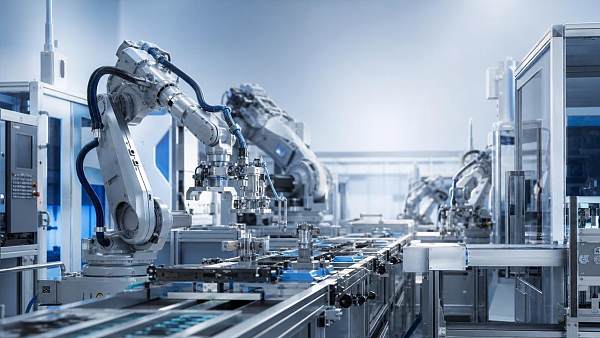
That system includes machine tools, drives, sensors, software, metrology, industrial safety, and advanced materials. Each layer supports better robot performance and faster deployment.
Germany also benefits from long-standing engineering traditions. Precision, repeatability, and process discipline are deeply valued across industrial operations and technical education.
Another advantage is supplier density. Integrators, component makers, automation specialists, and testing institutions often operate within efficient regional clusters.
This shortens development cycles. It also improves maintenance access, retrofit planning, and coordination between robotics hardware and line-level production systems.
In many countries, robots arrive after process design. In industrial robotics in Germany, process engineering and robot planning often evolve together from the beginning.
Key structural strengths
- High integration between robotics, industrial controls, and factory software
- Strong domestic demand from automotive, electronics, and machinery sectors
- Reliable technical standards and safety frameworks
- Close links between research institutes and production companies
- A culture of continuous process optimization rather than one-time automation
Why does industrial robotics in Germany remain strong despite global cost pressure?
At first glance, Germany seems expensive. Energy, labor, and regulatory costs are rarely the lowest. Yet industrial robotics in Germany keeps expanding because the value model is different.
German industry often competes on quality, uptime, traceability, and engineering complexity. In that environment, robotics protects margin more effectively than low-cost labor strategies.
Robots help reduce variation, improve throughput, and support compliance. They also make it easier to manage smaller production runs with higher precision requirements.
This matters in sectors where defects are expensive. Automotive components, medical devices, battery systems, and precision electronics all demand highly stable processes.
Another factor is demographics. Aging workforces and persistent technical labor shortages increase the strategic importance of automation across German factories.
Rather than replacing expertise, robots increasingly preserve productivity when skilled labor availability becomes less predictable. That is a major reason industrial robotics in Germany remains a priority.
What cost pressure changes in practice
- Companies evaluate total system efficiency, not only robot purchase price.
- Retrofits become attractive when new lines are too capital intensive.
- Digital monitoring gains value because downtime is more expensive.
- Flexible cells matter more as product variants continue to rise.
Which industries benefit most from industrial robotics in Germany?
The most visible user is automotive, but that is only part of the story. industrial robotics in Germany now supports a far broader industrial landscape.
In automotive, robots handle welding, painting, assembly, inspection, and battery production. The shift toward electric mobility creates fresh demand for new robotic workflows.
In advanced manufacturing, robots support machining cells, part handling, vision inspection, and precise finishing. These tasks benefit from repeatability and integration with CNC environments.
Smart electronics production uses robotics for delicate placement, testing, packaging, and micro-assembly. Here, contamination control and exact motion profiles are critical.
Healthcare technology also gains from automation. Cleanroom-compatible robotics, traceable assembly steps, and reduced human error support quality-sensitive production.
Green energy applications are rising fast. Battery modules, fuel cell systems, solar components, and power electronics all benefit from robotics-based consistency.
Even logistics and intrafactory transport are growing use cases. Mobile robots, picking systems, and automated material flow complement traditional articulated robots.
High-fit application scenarios
- High-mix production needing fast changeovers
- Processes requiring traceability and visual inspection
- Hazardous or ergonomically difficult tasks
- Applications where defect costs exceed labor savings
How do standards, research, and training keep industrial robotics in Germany ahead?
Leadership in industrial robotics in Germany is not based on hardware alone. It depends on institutions that make adoption safer, faster, and more technically reliable.
Technical universities, applied research centers, and industrial labs create a strong pipeline of robotics knowledge. New methods can move into production without long disconnects.
Standardization also matters. Clear approaches to machine safety, interoperability, testing, and documentation reduce deployment risk across complex industrial sites.
Germany’s apprenticeship and vocational systems strengthen implementation. Factory teams are often better prepared to work with controls, maintenance routines, and process data.
This lowers hidden friction. Many automation projects fail less because of robot limits and more because teams lack integration skills, commissioning support, or process discipline.
In industrial robotics in Germany, organizational capability is often as important as the robot arm itself. That combination is difficult for competitors to copy quickly.
What are the most common misconceptions about industrial robotics in Germany?
One misconception is that the market is mature and therefore slow. In reality, maturity often means faster scaling because infrastructure and expertise already exist.
Another misconception is that robotics only makes sense for giant factories. German adoption increasingly includes modular cells, collaborative robots, and specialized mid-sized installations.
A third myth is that automation value comes only from headcount reduction. In many cases, the real gains come from quality assurance, traceability, and schedule reliability.
Some also assume that buying advanced robots automatically creates a smart factory. That is rarely true without process redesign, software integration, and operator readiness.
industrial robotics in Germany performs well because projects are usually grounded in engineering logic. The focus is often on measurable bottlenecks, not on automation as a slogan.
Risk reminders before drawing conclusions
- Do not compare robot density without comparing process complexity.
- Do not judge competitiveness by labor cost alone.
- Do not separate robotics strategy from energy, data, and supply chain strategy.
- Do not ignore training when evaluating implementation timelines.
How should future-focused organizations interpret the rise of industrial robotics in Germany?
The rise of industrial robotics in Germany signals more than equipment demand. It points to a durable model where automation, software, and industrial expertise reinforce each other.
This matters for market analysis, technology scouting, and partnership planning. Germany remains a valuable reference point for advanced factory architecture and scalable industrial integration.
It also suggests that future winners will combine robotics with data visibility, resilient sourcing, energy-aware operations, and flexible production system design.
For research teams tracking robotics trends, the clearest lesson is simple. The strongest automation ecosystems are built, not purchased in isolated steps.
TradeNexus Pro follows these shifts across advanced manufacturing, green energy, smart electronics, healthcare technology, and supply chain SaaS with sector-deep, evidence-led analysis.
If industrial robotics in Germany is on the evaluation horizon, the next step is to examine supplier clusters, integration readiness, standards exposure, and real application fit before making strategic assumptions.
In summary, industrial robotics in Germany keeps setting the pace because technology capability, institutional strength, and industrial discipline work together. That combination continues to shape global automation standards and offers practical signals for better long-term decision-making.
Get weekly intelligence in your inbox.
No noise. No sponsored content. Pure intelligence.
 Oct 08, 2026How Digital Health Improves Diagnostic Accuracy and Workflow in Clinical LabsHow Digital Health Improves Diagnostic Accuracy and Workflow in Clinical Labs
 Oct 07, 2026Selecting Voice Picking Systems for German Warehouses: Integration, Languages and ROISelecting Voice Picking Systems for German Warehouses: Integration, Languages and ROI
 Oct 06, 2026How to Choose Last Mile Dispatch Software for On-Time Delivery at ScaleHow to Choose Last Mile Dispatch Software for On-Time Delivery at Scale
 Oct 05, 2026Vietnam’s Consumer Electronics Market: Demand Shifts and Sourcing OpportunitiesVietnam’s Consumer Electronics Market: Demand Shifts and Sourcing Opportunities
 Oct 04, 2026Digital Health Investment Priorities for Providers: Improving Access, Outcomes, and EfficiencyDigital Health Investment Priorities for Providers: Improving Access, Outcomes, and Efficiency
 Oct 03, 2026How to Specify an FR4 Custom PCB Board for High-Voltage and High-Heat DesignsHow to Specify an FR4 Custom PCB Board for High-Voltage and High-Heat Designs
 Oct 02, 2026ERP Software Market Intelligence: Adoption, Pricing, and Vendor Signals to WatchERP Software Market Intelligence: Adoption, Pricing, and Vendor Signals to Watch
 Oct 01, 2026How to Select Calibrated Temperature Data Loggers for GMP Cold Storage MonitoringHow to Select Calibrated Temperature Data Loggers for GMP Cold Storage Monitoring
 Sep 30, 2026Custom Molded Rubber Pricing: What Drives Unit Cost and Tooling Fees?Custom Molded Rubber Pricing: What Drives Unit Cost and Tooling Fees?
 Sep 29, 2026How to Evaluate Energy Management Software Vendors for Multi-Site OperationsHow to Evaluate Energy Management Software Vendors for Multi-Site Operations
 Sep 28, 2026How to Select a DIN Rail Smart Meter for Multi-Circuit Energy MonitoringHow to Select a DIN Rail Smart Meter for Multi-Circuit Energy Monitoring
 Sep 27, 2026TWS Earbuds in Vietnam: Demand Drivers, Price Tiers, and Retail Channel OpportunitiesTWS Earbuds in Vietnam: Demand Drivers, Price Tiers, and Retail Channel Opportunities
 Sep 26, 2026How UAE Clinics Can Qualify a Smart Glucometer Supplier for Accuracy and ComplianceHow UAE Clinics Can Qualify a Smart Glucometer Supplier for Accuracy and Compliance
 Sep 25, 2026Buying Aesthetic Lasers in the USA: FDA Status, Wavelengths, and Service SupportBuying Aesthetic Lasers in the USA: FDA Status, Wavelengths, and Service Support
 Sep 24, 2026Laser Cutting Brass Sheet: How to Prevent Burrs and Heat Marks on Thin PartsLaser Cutting Brass Sheet: How to Prevent Burrs and Heat Marks on Thin Parts
 Sep 23, 2026How to Choose Lightweight ANC Headphones for Comfortable All-Day TravelHow to Choose Lightweight ANC Headphones for Comfortable All-Day Travel
 Sep 22, 2026IPX5 TWS Bluetooth Earbuds: What Protection Do They Offer for Workouts?IPX5 TWS Bluetooth Earbuds: What Protection Do They Offer for Workouts?
 Sep 21, 2026What to Look for in a Grid Integration Company for Utility-Scale Solar ProjectsWhat to Look for in a Grid Integration Company for Utility-Scale Solar Projects
 Sep 20, 2026Microgrid Controller Pricing: What Drives Cost in Commercial Energy Projects?Microgrid Controller Pricing: What Drives Cost in Commercial Energy Projects?
 Sep 19, 2026How to Choose a GaN Charger for Laptops Without Compromising Power or PortabilityHow to Choose a GaN Charger for Laptops Without Compromising Power or Portability
 Sep 18, 2026Floating Solar Farm Costs: CAPEX, OPEX, and the Site Factors That Shape ROIFloating Solar Farm Costs: CAPEX, OPEX, and the Site Factors That Shape ROI
 Sep 17, 2026Drone Delivery Solutions for Last-Mile Routes: Site, Payload, and Range PlanningDrone Delivery Solutions for Last-Mile Routes: Site, Payload, and Range Planning
 Sep 16, 2026When Low-Volume Electronics Manufacturing Makes More Sense Than Mass ProductionWhen Low-Volume Electronics Manufacturing Makes More Sense Than Mass Production
 Sep 15, 2026Wholesale WiFi Smart Switches: What Buyers Should Verify Before OrderingWholesale WiFi Smart Switches: What Buyers Should Verify Before Ordering
 Sep 14, 2026How to Select IoT Sensors for Reliable Monitoring in Harsh Industrial EnvironmentsHow to Select IoT Sensors for Reliable Monitoring in Harsh Industrial Environments
 Sep 13, 2026How Procurement Teams Can Improve Supplier Reliability With Supply Chain VisibilityHow Procurement Teams Can Improve Supplier Reliability With Supply Chain Visibility
 Sep 12, 2026Smart Manufacturing Trends 2026: What Leaders Should Prioritize for ROISmart Manufacturing Trends 2026: What Leaders Should Prioritize for ROI



























