
When is a sheet metal bending machine truly cost effective
A sheet metal bending machine cost-effective decision is rarely about sticker price alone. Real value comes from throughput, repeatability, scrap control, uptime, labor use, and financing pressure.
In cross-industry fabrication, equipment economics change with order mix, tolerance demands, and delivery speed. A machine that looks expensive upfront may become the better financial choice over time.
This guide explains when a sheet metal bending machine cost-effective outcome is realistic, what data matters most, and how to judge long-term return with less guesswork.
What does sheet metal bending machine cost-effective really mean?
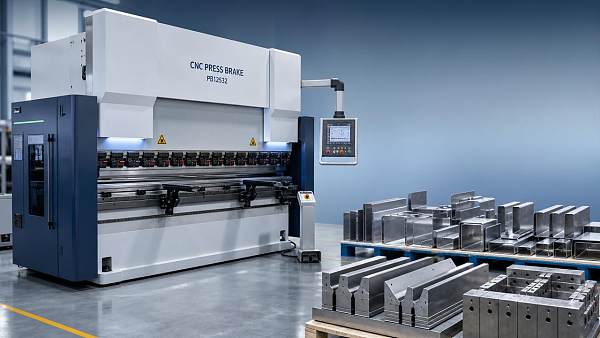
A sheet metal bending machine cost-effective result means total economic gain exceeds total ownership cost within an acceptable period. Purchase price is only one small part of that equation.
True cost effectiveness usually combines five outcomes: lower labor input, less rework, less scrap, more stable output, and stronger delivery reliability.
In practical terms, a machine is cost effective when it improves margin per part, not merely production capacity. Extra tonnage or advanced controls matter only if they are actually used.
For mixed production environments, the sheet metal bending machine cost-effective threshold often depends on changeover frequency. Fast setup can save more money than raw bending speed.
For stable high-volume work, repeatability matters more. Predictable angles and fewer operator adjustments reduce hidden cost across thousands of parts.
- Capital cost over useful life
- Tooling and setup burden
- Operator skill dependency
- Energy and maintenance expense
- Output quality and consistency
When does a higher-priced machine become the cheaper option?
A more expensive machine becomes cheaper when savings accumulate faster than the extra investment. This usually happens in demanding, repetitive, or labor-sensitive production.
CNC controls, automatic backgauge systems, and angle correction can shorten cycle time. They also reduce dependence on highly experienced operators.
That matters in many industries. Advanced manufacturing, enclosures, brackets, cabinets, healthcare housings, and smart electronics parts often require consistent accuracy.
If manual adjustment causes frequent rework, a premium machine may deliver a faster payback than a low-cost model. Scrap reduction alone can justify the upgrade.
The same logic applies when delivery windows are tight. A machine with better uptime and faster programming protects revenue by reducing late shipments.
Signs the premium option may be more cost effective
- Frequent multi-bend parts with narrow tolerances
- High labor cost per shift
- Noticeable scrap from angle inconsistency
- Recurring overtime caused by slow setup
- Strong need for digital job repeatability
In those cases, the sheet metal bending machine cost-effective answer often favors technology that removes process variation and compresses production time.
Which cost factors should be included before buying?
A reliable evaluation starts with total cost of ownership. Many weak investment decisions happen because the estimate stops at machine price and shipping.
A full sheet metal bending machine cost-effective review should include direct, indirect, and opportunity costs. Each category affects actual return.
Direct costs
- Machine purchase price
- Tooling, dies, and accessories
- Freight, installation, and commissioning
- Operator training
- Preventive maintenance contracts
Indirect costs
- Floor space usage
- Energy consumption
- Programming time
- Unplanned downtime
- Quality inspection burden
Opportunity costs
- Lost orders from capacity limits
- Margin erosion from excessive scrap
- Slow response to custom jobs
- Revenue loss from inconsistent quality
Without these factors, the sheet metal bending machine cost-effective decision will be distorted. Lower purchase price can hide a much higher operating burden.
How can payback period and ROI be estimated with confidence?
Start with current baseline data. Estimate labor hours, scrap percentage, average setup time, maintenance spend, and output per shift.
Then model the future state using realistic assumptions. Avoid vendor best-case claims unless they are verified by sample runs or reference sites.
A simple payback formula works well first: total investment divided by annual net savings. Add sensitivity analysis to test low, medium, and high utilization scenarios.
For example, annual savings may come from one less setup hour daily, lower scrap, reduced rework, and stronger throughput during peak months.
A sheet metal bending machine cost-effective project often shows healthy ROI when the machine runs across multiple products instead of one narrow application.
Confidence improves when estimates are built around actual parts, actual material thickness, and realistic production scheduling rather than brochure-level specifications.
What mistakes make a sheet metal bending machine look cost effective when it is not?
The most common mistake is buying for maximum capacity instead of real demand. Oversized equipment often carries higher tooling, energy, and maintenance costs.
Another mistake is ignoring part mix. A machine perfect for long, simple bends may perform poorly on small, complex work requiring frequent tool changes.
Support quality also matters. Cheap equipment with weak service access can turn a low purchase price into expensive downtime.
Some evaluations miss software compatibility. If programming workflows are clumsy, promised efficiency gains may never appear on the shop floor.
A sheet metal bending machine cost-effective plan should never rely on unrealistic utilization. If the machine runs far below projection, payback stretches quickly.
Red flags to watch
- No trial with representative parts
- No estimate for tooling replacement
- No maintenance response-time commitment
- No operator learning curve included
- No downside scenario in ROI model
How do different application scenarios change the answer?
The sheet metal bending machine cost-effective answer changes by industry pattern. There is no universal best choice across all fabrication environments.
In advanced manufacturing, precision and repeatability often outweigh upfront savings. Tighter quality demands make rework especially expensive.
In green energy components, larger parts and stronger materials may require stable tonnage and durable tooling. Here, underbuying can limit usable capacity.
In smart electronics housings, rapid changeovers can matter more than tonnage. Short runs and varied designs reward flexible programming and quick setup.
In healthcare technology enclosures, traceable repeatability and low defect rates become central to the cost-effective equation.
Across broader industrial supply chains, the best machine is usually the one aligned with actual part geometry, order volatility, and service support availability.
FAQ: quick answers for a sheet metal bending machine cost-effective evaluation
A sheet metal bending machine cost-effective decision becomes clearer when actual production data replaces assumptions. That means testing representative parts and mapping all cost drivers.
Use a structured comparison: purchase price, setup efficiency, scrap impact, maintenance exposure, service reliability, and expected payback under conservative utilization.
When those numbers align, the right machine will not simply bend metal efficiently. It will strengthen margins, improve planning confidence, and support scalable growth across evolving industrial demand.
Get weekly intelligence in your inbox.
No noise. No sponsored content. Pure intelligence.
 Oct 08, 2026How Digital Health Improves Diagnostic Accuracy and Workflow in Clinical LabsHow Digital Health Improves Diagnostic Accuracy and Workflow in Clinical Labs
 Oct 07, 2026Selecting Voice Picking Systems for German Warehouses: Integration, Languages and ROISelecting Voice Picking Systems for German Warehouses: Integration, Languages and ROI
 Oct 06, 2026How to Choose Last Mile Dispatch Software for On-Time Delivery at ScaleHow to Choose Last Mile Dispatch Software for On-Time Delivery at Scale
 Oct 05, 2026Vietnam’s Consumer Electronics Market: Demand Shifts and Sourcing OpportunitiesVietnam’s Consumer Electronics Market: Demand Shifts and Sourcing Opportunities
 Oct 04, 2026Digital Health Investment Priorities for Providers: Improving Access, Outcomes, and EfficiencyDigital Health Investment Priorities for Providers: Improving Access, Outcomes, and Efficiency
 Oct 03, 2026How to Specify an FR4 Custom PCB Board for High-Voltage and High-Heat DesignsHow to Specify an FR4 Custom PCB Board for High-Voltage and High-Heat Designs
 Oct 02, 2026ERP Software Market Intelligence: Adoption, Pricing, and Vendor Signals to WatchERP Software Market Intelligence: Adoption, Pricing, and Vendor Signals to Watch
 Oct 01, 2026How to Select Calibrated Temperature Data Loggers for GMP Cold Storage MonitoringHow to Select Calibrated Temperature Data Loggers for GMP Cold Storage Monitoring
 Sep 30, 2026Custom Molded Rubber Pricing: What Drives Unit Cost and Tooling Fees?Custom Molded Rubber Pricing: What Drives Unit Cost and Tooling Fees?
 Sep 29, 2026How to Evaluate Energy Management Software Vendors for Multi-Site OperationsHow to Evaluate Energy Management Software Vendors for Multi-Site Operations
 Sep 28, 2026How to Select a DIN Rail Smart Meter for Multi-Circuit Energy MonitoringHow to Select a DIN Rail Smart Meter for Multi-Circuit Energy Monitoring
 Sep 27, 2026TWS Earbuds in Vietnam: Demand Drivers, Price Tiers, and Retail Channel OpportunitiesTWS Earbuds in Vietnam: Demand Drivers, Price Tiers, and Retail Channel Opportunities
 Sep 26, 2026How UAE Clinics Can Qualify a Smart Glucometer Supplier for Accuracy and ComplianceHow UAE Clinics Can Qualify a Smart Glucometer Supplier for Accuracy and Compliance
 Sep 25, 2026Buying Aesthetic Lasers in the USA: FDA Status, Wavelengths, and Service SupportBuying Aesthetic Lasers in the USA: FDA Status, Wavelengths, and Service Support
 Sep 24, 2026Laser Cutting Brass Sheet: How to Prevent Burrs and Heat Marks on Thin PartsLaser Cutting Brass Sheet: How to Prevent Burrs and Heat Marks on Thin Parts
 Sep 23, 2026How to Choose Lightweight ANC Headphones for Comfortable All-Day TravelHow to Choose Lightweight ANC Headphones for Comfortable All-Day Travel
 Sep 22, 2026IPX5 TWS Bluetooth Earbuds: What Protection Do They Offer for Workouts?IPX5 TWS Bluetooth Earbuds: What Protection Do They Offer for Workouts?
 Sep 21, 2026What to Look for in a Grid Integration Company for Utility-Scale Solar ProjectsWhat to Look for in a Grid Integration Company for Utility-Scale Solar Projects
 Sep 20, 2026Microgrid Controller Pricing: What Drives Cost in Commercial Energy Projects?Microgrid Controller Pricing: What Drives Cost in Commercial Energy Projects?
 Sep 19, 2026How to Choose a GaN Charger for Laptops Without Compromising Power or PortabilityHow to Choose a GaN Charger for Laptops Without Compromising Power or Portability
 Sep 18, 2026Floating Solar Farm Costs: CAPEX, OPEX, and the Site Factors That Shape ROIFloating Solar Farm Costs: CAPEX, OPEX, and the Site Factors That Shape ROI
 Sep 17, 2026Drone Delivery Solutions for Last-Mile Routes: Site, Payload, and Range PlanningDrone Delivery Solutions for Last-Mile Routes: Site, Payload, and Range Planning
 Sep 16, 2026When Low-Volume Electronics Manufacturing Makes More Sense Than Mass ProductionWhen Low-Volume Electronics Manufacturing Makes More Sense Than Mass Production
 Sep 15, 2026Wholesale WiFi Smart Switches: What Buyers Should Verify Before OrderingWholesale WiFi Smart Switches: What Buyers Should Verify Before Ordering
 Sep 14, 2026How to Select IoT Sensors for Reliable Monitoring in Harsh Industrial EnvironmentsHow to Select IoT Sensors for Reliable Monitoring in Harsh Industrial Environments
 Sep 13, 2026How Procurement Teams Can Improve Supplier Reliability With Supply Chain VisibilityHow Procurement Teams Can Improve Supplier Reliability With Supply Chain Visibility
 Sep 12, 2026Smart Manufacturing Trends 2026: What Leaders Should Prioritize for ROISmart Manufacturing Trends 2026: What Leaders Should Prioritize for ROI



























