
How to compare custom metal fabrication shops in the USA
Choosing a partner for custom metal fabrication USA projects affects unit cost, quality consistency, delivery speed, and supply resilience. A weak comparison process can create hidden risk long after the first quote looks attractive.
A stronger approach reviews technical fit, production systems, documentation quality, and commercial reliability together. This article explains how to compare U.S. shops in a disciplined way and build a sourcing shortlist with confidence.
What custom metal fabrication USA usually includes
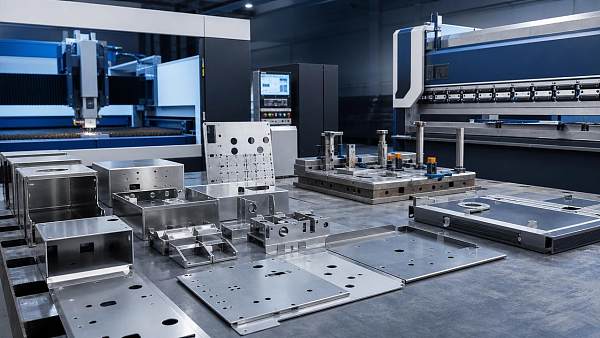
In most cases, custom metal fabrication USA refers to made-to-spec parts, assemblies, or enclosures produced from drawings, CAD files, or physical samples.
Capabilities often include laser cutting, CNC punching, bending, welding, machining, finishing, and assembly. Some shops also support prototyping, design-for-manufacturing review, and inventory programs.
The term covers a wide range of materials. Common examples include carbon steel, stainless steel, aluminum, copper, brass, and specialty alloys used in regulated or demanding environments.
Because capability varies widely, comparing only by headline price can be misleading. Two suppliers may quote the same print but perform very differently on tolerances, change control, traceability, and packaging.
Current market factors shaping supplier evaluation
The market for custom metal fabrication USA services has changed. More buyers now weigh resilience and quality data as heavily as labor cost.
- Shorter product cycles increase the value of rapid prototyping and engineering responsiveness.
- Freight volatility makes domestic routing and regional proximity more important.
- Regulated sectors require stronger documentation, lot control, and process validation.
- Capacity constraints can turn a low quote into a long lead-time problem.
- Automation investment now affects repeatability, throughput, and labor stability.
For this reason, supplier comparison should balance commercial, operational, and technical signals. That method is especially useful when evaluating custom metal fabrication USA partners for recurring production programs.
A simple comparison lens
Core criteria for comparing fabrication shops
A useful comparison framework starts with process alignment. A shop can be excellent overall yet still be the wrong fit for a specific geometry, alloy, or tolerance stack.
1. Process and material capability
Confirm the exact processes performed in-house. Ask whether cutting, forming, welding, machining, coating, and final assembly are internal or subcontracted.
Then verify real material experience. A supplier used to mild steel may not deliver the same efficiency with stainless, aluminum, or exotic alloys.
2. Certification and quality controls
For custom metal fabrication USA sourcing, certifications matter when they connect to actual process discipline. ISO 9001 is common, while sector-specific standards may apply in stricter environments.
Review first article inspection practices, calibration records, weld procedures, nonconformance handling, and document retention. Reliable quality comes from systems, not claims.
3. Engineering and quoting depth
A detailed quote often reveals technical maturity. Strong shops highlight tolerance concerns, suggest manufacturability improvements, and identify cost drivers before production begins.
Shallow quoting can hide later surprises. Watch for missing assumptions on finish thickness, hardware, packaging, inspection level, or revision status.
4. Capacity and lead-time realism
Published lead times mean little without context. Ask about current machine utilization, staffing levels, overtime dependence, and scheduling flexibility for urgent releases.
A shop with balanced workflow and cross-trained operators may be more dependable than one offering aggressive dates with no buffer.
5. Communication and program management
Communication quality is often underestimated in custom metal fabrication USA projects. Fast, clear replies reduce delays during approval cycles, engineering changes, and shipment coordination.
Review who owns the account, how changes are documented, and how production updates are shared. Consistent communication supports fewer surprises.
Business value behind a stronger supplier comparison
A structured review creates benefits beyond a single order. It improves continuity, budget accuracy, and long-term sourcing efficiency.
- Lower scrap and rework through better process matching
- Fewer delivery disruptions through clearer capacity checks
- Better forecasting through stable communication and release planning
- Reduced compliance risk through documented inspections and traceability
- Stronger total-cost control through fewer hidden extras
This is where high-authority industry research also helps. Platforms such as TradeNexus Pro support smarter comparisons by organizing verified market insights, sector developments, and supplier-evaluation logic into a practical decision framework.
For organizations tracking custom metal fabrication USA trends, deeper intelligence can reveal which capabilities are becoming standard and which still distinguish top-performing shops.
Typical sourcing scenarios and what to emphasize
Different programs require different weighting. The best custom metal fabrication USA partner for one project may not be ideal for another.
Practical steps for evaluating shortlists
A consistent review method improves fairness between shops. It also makes internal decisions easier to justify later.
- Prepare a clean RFQ package with drawings, revisions, annual volumes, and finish requirements.
- Request the same commercial details from every supplier, including tooling, freight terms, and inspection assumptions.
- Score technical response quality, not only quoted price.
- Ask for sample reports, certification copies, and representative project references.
- Review on-time delivery history and escalation processes for late orders.
- If possible, conduct a site visit or video audit focused on workflow, housekeeping, and inspection discipline.
Warning signs during comparison
- Very fast quotes with little technical detail
- Unclear ownership of outsourced operations
- No formal revision control process
- Inconsistent answers on tolerances or inspection scope
- Promises on lead time that exceed visible capacity
A disciplined next step for custom metal fabrication USA sourcing
The most effective custom metal fabrication USA decisions come from structured comparison, not rushed quote collection. Process fit, quality systems, capacity, and communication should all be visible before awarding work.
Build a weighted scorecard, test assumptions early, and document each supplier’s strengths by program type. That approach supports lower risk and stronger long-term performance.
For deeper market context, TradeNexus Pro provides high-authority industry intelligence across advanced manufacturing and supply chain strategy. Use that insight to refine sourcing criteria, benchmark suppliers, and strengthen every custom metal fabrication USA evaluation cycle.
Get weekly intelligence in your inbox.
No noise. No sponsored content. Pure intelligence.
 Oct 08, 2026How Digital Health Improves Diagnostic Accuracy and Workflow in Clinical LabsHow Digital Health Improves Diagnostic Accuracy and Workflow in Clinical Labs
 Oct 07, 2026Selecting Voice Picking Systems for German Warehouses: Integration, Languages and ROISelecting Voice Picking Systems for German Warehouses: Integration, Languages and ROI
 Oct 06, 2026How to Choose Last Mile Dispatch Software for On-Time Delivery at ScaleHow to Choose Last Mile Dispatch Software for On-Time Delivery at Scale
 Oct 05, 2026Vietnam’s Consumer Electronics Market: Demand Shifts and Sourcing OpportunitiesVietnam’s Consumer Electronics Market: Demand Shifts and Sourcing Opportunities
 Oct 04, 2026Digital Health Investment Priorities for Providers: Improving Access, Outcomes, and EfficiencyDigital Health Investment Priorities for Providers: Improving Access, Outcomes, and Efficiency
 Oct 03, 2026How to Specify an FR4 Custom PCB Board for High-Voltage and High-Heat DesignsHow to Specify an FR4 Custom PCB Board for High-Voltage and High-Heat Designs
 Oct 02, 2026ERP Software Market Intelligence: Adoption, Pricing, and Vendor Signals to WatchERP Software Market Intelligence: Adoption, Pricing, and Vendor Signals to Watch
 Oct 01, 2026How to Select Calibrated Temperature Data Loggers for GMP Cold Storage MonitoringHow to Select Calibrated Temperature Data Loggers for GMP Cold Storage Monitoring
 Sep 30, 2026Custom Molded Rubber Pricing: What Drives Unit Cost and Tooling Fees?Custom Molded Rubber Pricing: What Drives Unit Cost and Tooling Fees?
 Sep 29, 2026How to Evaluate Energy Management Software Vendors for Multi-Site OperationsHow to Evaluate Energy Management Software Vendors for Multi-Site Operations
 Sep 28, 2026How to Select a DIN Rail Smart Meter for Multi-Circuit Energy MonitoringHow to Select a DIN Rail Smart Meter for Multi-Circuit Energy Monitoring
 Sep 27, 2026TWS Earbuds in Vietnam: Demand Drivers, Price Tiers, and Retail Channel OpportunitiesTWS Earbuds in Vietnam: Demand Drivers, Price Tiers, and Retail Channel Opportunities
 Sep 26, 2026How UAE Clinics Can Qualify a Smart Glucometer Supplier for Accuracy and ComplianceHow UAE Clinics Can Qualify a Smart Glucometer Supplier for Accuracy and Compliance
 Sep 25, 2026Buying Aesthetic Lasers in the USA: FDA Status, Wavelengths, and Service SupportBuying Aesthetic Lasers in the USA: FDA Status, Wavelengths, and Service Support
 Sep 24, 2026Laser Cutting Brass Sheet: How to Prevent Burrs and Heat Marks on Thin PartsLaser Cutting Brass Sheet: How to Prevent Burrs and Heat Marks on Thin Parts
 Sep 23, 2026How to Choose Lightweight ANC Headphones for Comfortable All-Day TravelHow to Choose Lightweight ANC Headphones for Comfortable All-Day Travel
 Sep 22, 2026IPX5 TWS Bluetooth Earbuds: What Protection Do They Offer for Workouts?IPX5 TWS Bluetooth Earbuds: What Protection Do They Offer for Workouts?
 Sep 21, 2026What to Look for in a Grid Integration Company for Utility-Scale Solar ProjectsWhat to Look for in a Grid Integration Company for Utility-Scale Solar Projects
 Sep 20, 2026Microgrid Controller Pricing: What Drives Cost in Commercial Energy Projects?Microgrid Controller Pricing: What Drives Cost in Commercial Energy Projects?
 Sep 19, 2026How to Choose a GaN Charger for Laptops Without Compromising Power or PortabilityHow to Choose a GaN Charger for Laptops Without Compromising Power or Portability
 Sep 18, 2026Floating Solar Farm Costs: CAPEX, OPEX, and the Site Factors That Shape ROIFloating Solar Farm Costs: CAPEX, OPEX, and the Site Factors That Shape ROI
 Sep 17, 2026Drone Delivery Solutions for Last-Mile Routes: Site, Payload, and Range PlanningDrone Delivery Solutions for Last-Mile Routes: Site, Payload, and Range Planning
 Sep 16, 2026When Low-Volume Electronics Manufacturing Makes More Sense Than Mass ProductionWhen Low-Volume Electronics Manufacturing Makes More Sense Than Mass Production
 Sep 15, 2026Wholesale WiFi Smart Switches: What Buyers Should Verify Before OrderingWholesale WiFi Smart Switches: What Buyers Should Verify Before Ordering
 Sep 14, 2026How to Select IoT Sensors for Reliable Monitoring in Harsh Industrial EnvironmentsHow to Select IoT Sensors for Reliable Monitoring in Harsh Industrial Environments
 Sep 13, 2026How Procurement Teams Can Improve Supplier Reliability With Supply Chain VisibilityHow Procurement Teams Can Improve Supplier Reliability With Supply Chain Visibility
 Sep 12, 2026Smart Manufacturing Trends 2026: What Leaders Should Prioritize for ROISmart Manufacturing Trends 2026: What Leaders Should Prioritize for ROI



























