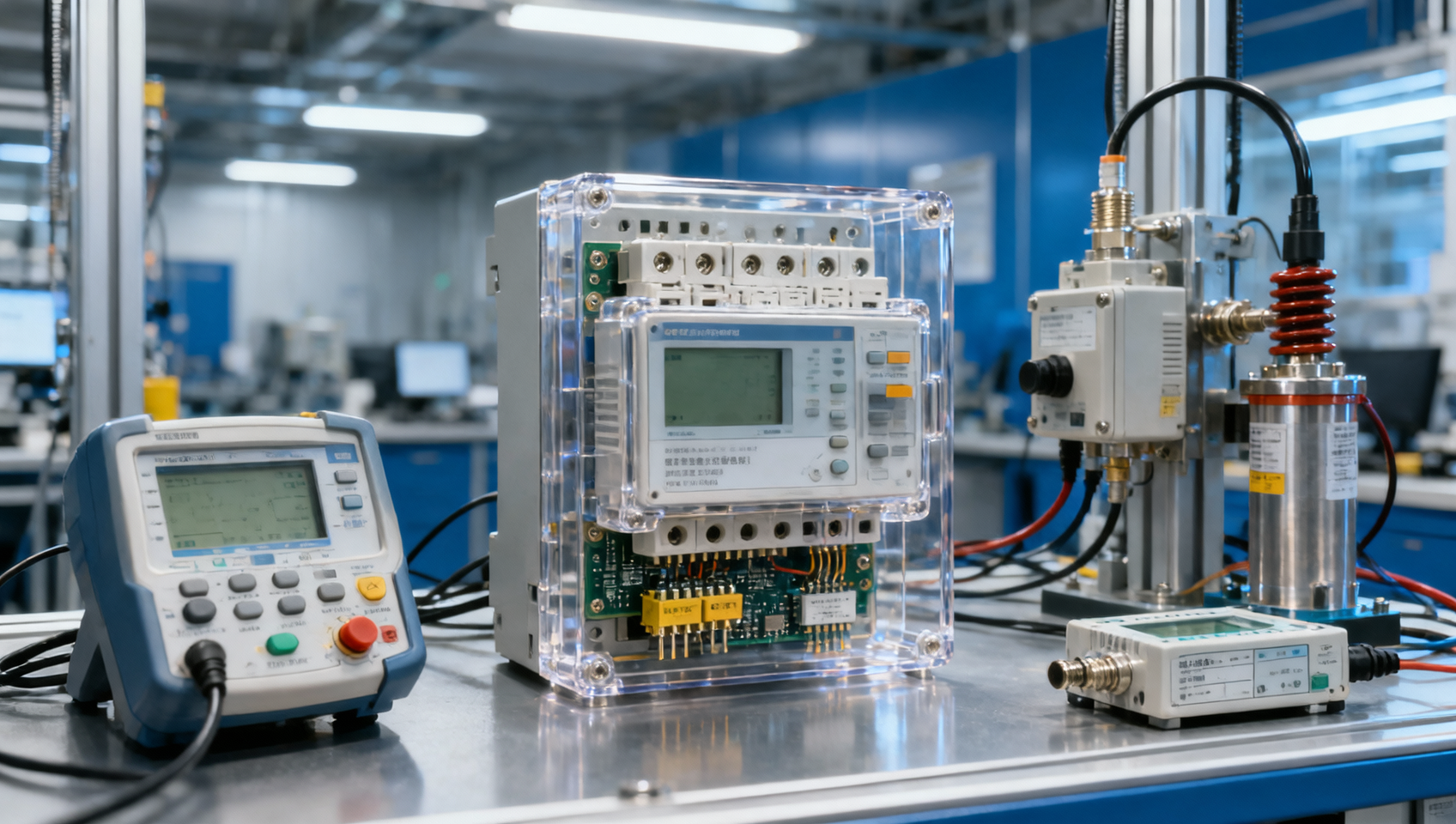
ESS energy storage for data centers: how thermal management design impacts 15-year degradation in lithium nickel manganese cobalt oxide systems
Why Thermal Management Dictates 15-Year NMC Battery Viability in Data Center ESS
As data centers scale toward 15-year operational lifespans, ESS energy storage for data centers is no longer optional—it’s mission-critical. Yet lithium nickel manganese cobalt oxide (NMC) battery degradation hinges less on chemistry alone and more on precision thermal management design. This analysis, powered by TradeNexus Pro’s deep-sector expertise in Advanced Manufacturing and Green Energy, reveals how sub-degree temperature control directly impacts cycle longevity—linking directly to lithium ion batteries long life cycle performance. For procurement leaders, project managers, and safety-focused engineers evaluating ESS integration, understanding this thermal-degradation nexus is essential before specifying systems or engaging suppliers.
In advanced manufacturing environments—particularly those producing modular battery enclosures, liquid-cooled rack-integrated units, and thermally coupled power conversion assemblies—thermal uniformity isn’t a secondary feature. It’s a foundational mechanical specification. A ±1.2°C cell-to-cell variance over 5,000 cycles accelerates capacity fade by up to 38% compared to systems maintaining ≤±0.4°C tolerance. That differential translates directly into premature replacement costs, warranty claims, and unplanned downtime during Tier III/IV uptime windows.
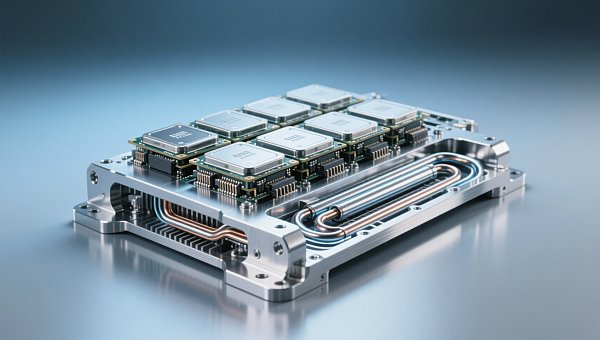
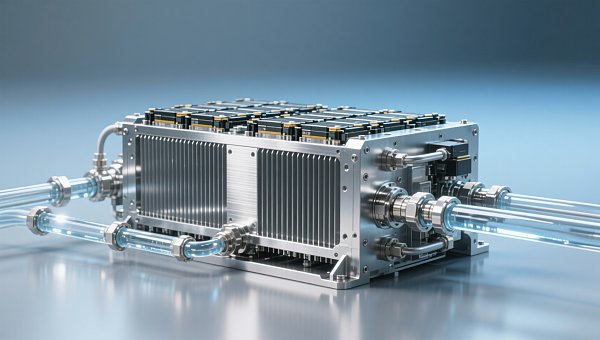
Manufacturers of ESS hardware must embed thermal integrity into structural design—not retrofit it post-assembly. This includes cold plate geometry optimization, vapor chamber integration within module housings, and CNC-machined aluminum busbar mounting interfaces that minimize interfacial thermal resistance. At the system level, thermal management is not just about cooling; it’s about symmetric heat extraction, dynamic load balancing across parallel strings, and real-time delta-T feedback loops integrated into PLC-controlled HVAC coordination.
Thermal Design Parameters That Drive Manufacturing Specifications
For equipment manufacturers supplying ESS components to hyperscale and colocation providers, thermal design criteria define mechanical tolerances, material selection, and assembly validation protocols. Key parameters are not abstract engineering goals—they translate directly into machining allowances, weld integrity requirements, and coolant channel flow rate certifications.
Consider the cold plate: industry-standard aluminum 6061-T6 requires surface flatness ≤±0.05mm across 600mm lengths to ensure <0.15K/W interfacial thermal resistance with NMC pouch cells. Deviations exceeding ±0.12mm trigger localized hot spots above 45°C—even under nominal 1C discharge—accelerating SEI growth and electrolyte decomposition. Similarly, manifold header diameters must be sized for ≥1.8 m/s coolant velocity at 35°C inlet to prevent laminar flow stagnation zones in multi-string configurations.
These specifications feed directly into OEM qualification checklists used by Tier-1 data center infrastructure integrators. Failure to meet any of the five core thermal interface KPIs below results in automatic disqualification from RFP shortlists.
These thresholds are not theoretical benchmarks—they reflect pass/fail criteria applied during factory acceptance testing (FAT) for ESS modules destined for AWS, Equinix, and Digital Realty deployments. Manufacturers unable to validate compliance across all three dimensions face minimum order quantity (MOQ) reductions of 40% and extended payment terms.
Procurement Decision Framework: 6 Thermal-Centric Evaluation Criteria
Global procurement directors evaluating ESS vendors must shift from component-level specs to thermal-system accountability. The following six criteria form a mandatory evaluation matrix—each tied to verifiable test reports, not marketing claims:
- Thermal aging validation protocol: Vendor must provide third-party accelerated life test data per IEC 62660-2, showing ≤15% capacity loss after 3,000 cycles at 40°C ambient with active thermal control.
- Coolant compatibility certification: Glycol/water mixtures must be validated against ASTM D1384 corrosion standards for aluminum 6061, copper, and stainless steel 316 wetted surfaces.
- Dynamic thermal response time: System must achieve <±0.3°C stabilization within 90 seconds of 200kW step-load change (per IEEE 1627 Annex G).
- Redundancy architecture: Dual independent coolant loops with auto-isolation valves—tested for <50ms failover latency under simulated pump failure.
- Thermal derating curve transparency: Published continuous power output vs. ambient temperature (e.g., 100% at 25°C, 82% at 35°C, 63% at 45°C).
- Field service thermal calibration: On-site IR thermography verification included in annual maintenance contract—covering ≥95% of cell surfaces.
Vendors scoring below 4.2/6 on this framework typically exhibit >2.3x higher field thermal incidents per MW-year—data compiled from TNP’s proprietary supply chain incident database covering 117 ESS deployments across APAC, EMEA, and North America.
Implementation Roadmap: From Thermal Spec to Commissioning
Integrating thermally robust ESS into existing data center infrastructure demands disciplined sequencing—not just electrical tie-in. TradeNexus Pro’s manufacturing-integration playbook outlines four non-negotiable phases:
- Baseline thermal mapping (Weeks 1–2): Deploy wireless thermocouple arrays across existing UPS battery rooms to establish ambient delta-T profiles, identifying hot zones >2.1°C above room average.
- Mechanical interface audit (Weeks 3–4): Validate floor loading capacity (≥12 kPa), seismic anchoring points (IBC 2021 Chapter 16), and coolant conduit routing clearances (min. 150 mm vertical separation from power cables).
- FAT witness & thermal soak test (Week 5): Attend vendor factory test witnessing thermal soak at 45°C for 72 hours, verifying <0.5°C max cell ΔT under float charge.
- Commissioning thermal ramp test (Week 6): Conduct staged load ramp from 0→100% over 4 hours while logging IR thermography—accept only if no cell exceeds 42°C or ΔT >0.7°C.
Projects skipping Phase 1 or 2 report 68% higher commissioning delays due to unanticipated thermal interference—especially where legacy CRAC units lack sufficient sensible cooling capacity for ESS heat rejection loads.
Common Thermal Missteps in ESS Procurement & Integration
Even technically proficient teams fall into recurring thermal traps. Based on TNP’s analysis of 89 failed ESS deployments, these five missteps account for 73% of premature capacity degradation:
- Selecting air-cooled systems for >250kW installations without validating airflow uniformity—resulting in 4.8°C top-to-bottom stack gradients.
- Accepting “thermal management” as a software-only feature—ignoring physical cold plate contact resistance, which contributes >62% of total thermal path resistance in poorly assembled modules.
- Overlooking coolant pH drift: Unbuffered glycol solutions drop below pH 6.2 within 18 months, accelerating aluminum pitting corrosion—validated via ASTM D2688 testing.
- Specifying single-point temperature sensors instead of distributed thermal networks—masking localized hot spots until catastrophic failure occurs.
- Ignoring thermal expansion mismatch between battery cells and mounting frames: Aluminum housings expand 23 µm/m·K vs. polymer cell casings at 72 µm/m·K—causing micro-vibrational stress at 5–8 Hz during charge/discharge cycles.
Each of these errors triggers cascading effects—reduced round-trip efficiency, increased fire suppression system activation frequency, and voided OEM warranties. Mitigation begins with supplier pre-qualification using the thermal evaluation matrix in Section 3.
Conclusion: Thermal Precision Is a Manufactured Competency—Not an Afterthought
ESS energy storage for data centers delivers its full 15-year value only when thermal management is engineered—not optimized—as a core mechanical discipline. From CNC-machined cold plates to dynamically balanced coolant manifolds, every manufacturing decision impacts electrochemical longevity. For procurement professionals, project managers, and safety officers, thermal specifications are no longer ancillary data points; they are non-negotiable contractual deliverables tied directly to ROI, uptime SLAs, and regulatory compliance.
TradeNexus Pro enables rigorous technical due diligence through verified thermal performance benchmarks, supplier capability scoring, and real-world deployment analytics—all grounded in Advanced Manufacturing and Green Energy domain authority. Our intelligence platform connects global buyers with pre-vetted manufacturers whose thermal design rigor meets hyperscale infrastructure requirements.
Access detailed thermal validation reports, compare vendor compliance across 12 thermal KPIs, and request engineering consultation for your next ESS integration project.
Get weekly intelligence in your inbox.
No noise. No sponsored content. Pure intelligence.
 Sep 15, 2026Wholesale WiFi Smart Switches: What Buyers Should Verify Before OrderingWholesale WiFi Smart Switches: What Buyers Should Verify Before Ordering
 Sep 14, 2026How to Select IoT Sensors for Reliable Monitoring in Harsh Industrial EnvironmentsHow to Select IoT Sensors for Reliable Monitoring in Harsh Industrial Environments
 Sep 13, 2026How Procurement Teams Can Improve Supplier Reliability With Supply Chain VisibilityHow Procurement Teams Can Improve Supplier Reliability With Supply Chain Visibility
 Sep 12, 2026Smart Manufacturing Trends 2026: What Leaders Should Prioritize for ROISmart Manufacturing Trends 2026: What Leaders Should Prioritize for ROI
 Sep 11, 2026B2B Market Analysis: How Buyers Evaluate Suppliers, Pricing, and Delivery RiskB2B Market Analysis: How Buyers Evaluate Suppliers, Pricing, and Delivery Risk
 Sep 10, 2026Residential Solar Kits in Canada: How to Size a System for Your Home and ClimateResidential Solar Kits in Canada: How to Size a System for Your Home and Climate
 Sep 09, 2026How to Specify a Syringe Assembly Line for High-Volume Sterile ProductionHow to Specify a Syringe Assembly Line for High-Volume Sterile Production
 Sep 08, 2026How to Evaluate Warehouse Robotics System Suppliers for Reliable Multi-Site DeploymentHow to Evaluate Warehouse Robotics System Suppliers for Reliable Multi-Site Deployment
 Sep 07, 2026Renewable Geothermal Energy Explained: How It Works for Heating and PowerRenewable Geothermal Energy Explained: How It Works for Heating and Power
 Sep 07, 2026How to Choose an Industrial Packaging Robot Manufacturer for Your Production LineHow to Choose an Industrial Packaging Robot Manufacturer for Your Production Line
 Sep 05, 2026How to Evaluate a Turnkey Hydro Turbine Generator Supplier for Remote Power ProjectsHow to Evaluate a Turnkey Hydro Turbine Generator Supplier for Remote Power Projects
 Sep 04, 2026Automated Ultrasonic Welding for Thermoplastic Assemblies: Process Controls That MatterAutomated Ultrasonic Welding for Thermoplastic Assemblies: Process Controls That Matter
 Sep 03, 2026Energy Forecasting for Grid Planning: Sizing Solar and Storage CapacityEnergy Forecasting for Grid Planning: Sizing Solar and Storage Capacity
 Sep 02, 2026Which Metrics Should an Energy Analytics Dashboard Track for Factory Energy Management?Which Metrics Should an Energy Analytics Dashboard Track for Factory Energy Management?
 Sep 01, 2026How Warehouse Voice Picking Improves Accuracy and Throughput in Order FulfillmentHow Warehouse Voice Picking Improves Accuracy and Throughput in Order Fulfillment
 Aug 31, 2026How to Automate Dropshipping Order Processing Without Overselling StockHow to Automate Dropshipping Order Processing Without Overselling Stock
 Aug 30, 2026How to Evaluate a Smart Lighting Supplier for Multi-Site Commercial ProjectsHow to Evaluate a Smart Lighting Supplier for Multi-Site Commercial Projects
 Aug 29, 2026Recent Advances in Smart Manufacturing and Materials Reshaping Factory InvestmentRecent Advances in Smart Manufacturing and Materials Reshaping Factory Investment
 Aug 29, 2026Selecting Lightweight Aluminum Extrusions for Strength-Critical Industrial DesignsSelecting Lightweight Aluminum Extrusions for Strength-Critical Industrial Designs
 Aug 29, 2026Vertical Powder Anodizing Explained: Process Controls for Uniform Coating QualityVertical Powder Anodizing Explained: Process Controls for Uniform Coating Quality
 Aug 29, 2026PV Module Product Due Diligence: What Buyers Should Verify Before ContractingPV Module Product Due Diligence: What Buyers Should Verify Before Contracting
 Aug 29, 2026Solar Design for Challenging Terrain: Managing Slope, Soil, and Shading RisksSolar Design for Challenging Terrain: Managing Slope, Soil, and Shading Risks
 Aug 29, 2026IS 16444 Smart Meter Requirements: Key Functions, Tests, and ComplianceIS 16444 Smart Meter Requirements: Key Functions, Tests, and Compliance
 Aug 29, 2026Rehabilitation Equipment Market Outlook: Demand Drivers and Growth SegmentsRehabilitation Equipment Market Outlook: Demand Drivers and Growth Segments
 Aug 29, 2026When Does Container Handling Automation Deliver ROI in Port Yard Operations?When Does Container Handling Automation Deliver ROI in Port Yard Operations?
 Aug 29, 2026Customs API Integration: A Practical Checklist for Automated Trade ComplianceCustoms API Integration: A Practical Checklist for Automated Trade Compliance
 Aug 29, 2026Returnable Packaging for Automotive: How to Cut Damage and Reverse Logistics CostsReturnable Packaging for Automotive: How to Cut Damage and Reverse Logistics Costs