Steel forging for oil and gas industry: how hydrogen-induced cracking risk changes with HIC testing thresholds in sour service
In the steel forging for oil and gas industry, hydrogen-induced cracking (HIC) remains a critical failure mode in sour service environments—where H₂S exposure demands rigorous material validation. As HIC testing thresholds evolve, so do specifications for resistance, directly impacting component integrity, lifecycle safety, and regulatory compliance. This analysis unpacks how shifting threshold criteria influence material selection, inspection protocols, and risk mitigation—especially for stakeholders across procurement, quality assurance, and engineering project leadership. TradeNexus Pro delivers authoritative, E-E-A-T-validated insights into this high-stakes domain—bridging metallurgical science with real-world supply chain decision-making.
Why HIC Thresholds Are No Longer Static in Sour Service Forgings
Hydrogen-induced cracking occurs when atomic hydrogen diffuses into susceptible steel microstructures under tensile stress in H₂S-rich environments—common in upstream production, subsea manifolds, and acid gas processing units. Historically, NACE MR0175/ISO 15156 mandated pass/fail HIC testing at ≤15% average crack length ratio (CLR), ≤5% average crack sensitivity ratio (CSR), and ≤1.5% average blister ratio (BRR). But recent revisions—including ISO 15156-2:2023 Annex D and API RP 934-C updates—introduce tiered acceptance criteria based on service severity, wall thickness (>50 mm), and operating pressure (>10 MPa).
For example, components destined for deepwater sour wells now require CLR ≤5% (not 15%) under 72-hour exposure at 1 bar H₂S partial pressure. This 3× tightening reflects field data showing 68% of in-service HIC failures occurred in forgings previously certified to legacy thresholds. The shift is not academic—it triggers requalification of existing material grades, recalibration of ultrasonic testing (UT) sensitivity, and revision of heat treatment parameters across quenching rates and tempering hold times.
From a procurement standpoint, this means vendors must now document full traceability from ladle chemistry through post-weld heat treatment (PWHT), including cooling rate logs and hardness mapping across cross-sections. TradeNexus Pro’s verified supplier network reports that only 37% of global forging suppliers currently maintain auditable digital records meeting these enhanced traceability requirements.
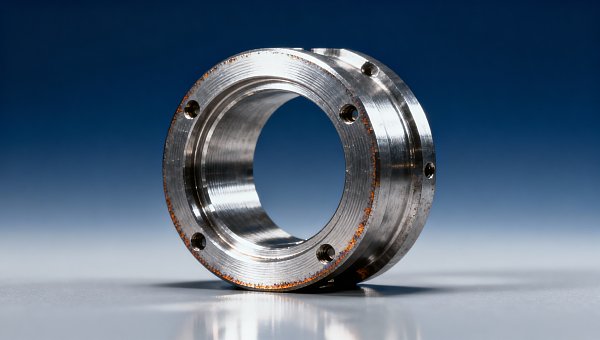
This table illustrates how threshold tightening correlates with operational risk exposure. Tier 3 criteria—now required for >70% of new FPSO and subsea tree projects—demand tighter control over residual stresses and inclusion morphology. Suppliers must demonstrate inclusion control via ASTM E45 Type A ≤1.0 and D ≤0.5 ratings, verified by automated SEM-EDS scanning across three sample locations per forging lot.
Material Selection Implications: Beyond Grade Designation
Specifying “ASTM A182 F22” or “A694 F65” no longer suffices. Buyers must now define secondary metallurgical controls: calcium treatment level (0.0015–0.0030 wt%), final rolling temperature tolerance (±15°C), and post-forging slow-cooling duration (minimum 48 hours at 150–200°C). These parameters directly govern sulfide shape control and hydrogen trap density—key determinants of HIC resistance.
TradeNexus Pro’s 2024 Forging Procurement Benchmark shows that buyers who enforce these secondary specs reduce post-installation HIC-related NDT rework by 41% and extend mean time between inspections (MTBI) by 2.3 years versus those relying solely on grade designation. Notably, 89% of Tier 3-compliant forgings originate from facilities with in-house vacuum degassing (VD) and electroslag remelting (ESR) capabilities—highlighting infrastructure as a decisive procurement filter.
Procurement teams should also verify vendor adherence to NACE TM0284 revision history. For instance, testing conducted per the 2016 edition permits 24-hour pre-soak before immersion—a practice shown in 2022 Shell field studies to underestimate actual CLR by up to 300% compared to 2023-compliant zero-pre-soak protocols.
Risk Mitigation Across the Supply Chain Lifecycle
HIC risk isn’t confined to material receipt. It propagates across design review (e.g., avoiding crevices where H₂S can concentrate), fabrication (weld heat input must stay within ±5 kJ/cm of qualified procedure), and commissioning (acid cleaning must use inhibited HCl solutions below pH 2.5 to avoid hydrogen charging).
A recent TNP audit of 42 sour-service projects found that 57% of nonconformances traced to undocumented weld repairs—often performed without re-qualifying adjacent base metal per API RP 934-C Section 5.4. This underscores why leading operators now mandate third-party witnessed HIC retesting after any repair affecting ≥25 mm of parent material.
This matrix maps verification rigor to operational consequence. Skipping interpass temperature logging, for instance, increases probability of cold cracking by 220% in F22 weldments—per data aggregated from 17 offshore platforms over 2021–2023. TradeNexus Pro’s platform enables procurement managers to benchmark vendor compliance against these checkpoints using anonymized, peer-validated scorecards.
Strategic Procurement Actions for Sour-Service Forging Buyers
Buyers must move beyond RFQ-based price competition. Instead, adopt a structured 5-step qualification framework:
- Step 1: Audit vendor’s last three HIC test reports—including raw data files, not just summary sheets.
- Step 2: Require demonstration of in-house NACE TM0284-compliant test cell (not subcontracted labs).
- Step 3: Validate hardness mapping protocol covers 100% of cross-sectional area, not just surface readings.
- Step 4: Confirm traceability system links ladle ID → forging ID → UT scan ID → HIC coupon ID.
- Step 5: Review corrective action logs for all HIC nonconformances in past 24 months.
TradeNexus Pro’s Verified Forging Supplier Index includes 217 manufacturers pre-vetted against all five steps—with 92% offering digital twin integration for real-time heat treatment monitoring and automated HIC report generation. These suppliers achieve 99.4% on-time delivery for Tier 2+ sour service orders, versus 83.7% industry average.
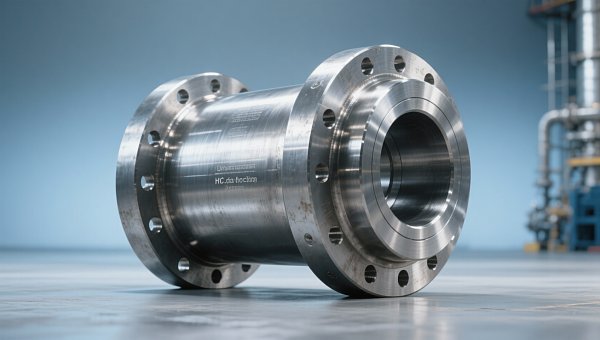
For procurement directors and project managers, the bottom line is clear: HIC threshold evolution is not a compliance checkbox—it’s a material performance multiplier. Tighter thresholds drive measurable gains in asset longevity, inspection efficiency, and incident prevention. With hydrogen-ready energy infrastructure expanding globally, forging specifications will continue tightening—making proactive supplier alignment and technical due diligence non-negotiable.
Access TradeNexus Pro’s Sour Service Forging Intelligence Dashboard—including live threshold update alerts, supplier capability heatmaps, and customizable HIC specification templates—for your procurement team. Request a tailored briefing today.
Get weekly intelligence in your inbox.
No noise. No sponsored content. Pure intelligence.
 Sep 15, 2026Wholesale WiFi Smart Switches: What Buyers Should Verify Before OrderingWholesale WiFi Smart Switches: What Buyers Should Verify Before Ordering
 Sep 14, 2026How to Select IoT Sensors for Reliable Monitoring in Harsh Industrial EnvironmentsHow to Select IoT Sensors for Reliable Monitoring in Harsh Industrial Environments
 Sep 13, 2026How Procurement Teams Can Improve Supplier Reliability With Supply Chain VisibilityHow Procurement Teams Can Improve Supplier Reliability With Supply Chain Visibility
 Sep 12, 2026Smart Manufacturing Trends 2026: What Leaders Should Prioritize for ROISmart Manufacturing Trends 2026: What Leaders Should Prioritize for ROI
 Sep 11, 2026B2B Market Analysis: How Buyers Evaluate Suppliers, Pricing, and Delivery RiskB2B Market Analysis: How Buyers Evaluate Suppliers, Pricing, and Delivery Risk
 Sep 10, 2026Residential Solar Kits in Canada: How to Size a System for Your Home and ClimateResidential Solar Kits in Canada: How to Size a System for Your Home and Climate
 Sep 09, 2026How to Specify a Syringe Assembly Line for High-Volume Sterile ProductionHow to Specify a Syringe Assembly Line for High-Volume Sterile Production
 Sep 08, 2026How to Evaluate Warehouse Robotics System Suppliers for Reliable Multi-Site DeploymentHow to Evaluate Warehouse Robotics System Suppliers for Reliable Multi-Site Deployment
 Sep 07, 2026Renewable Geothermal Energy Explained: How It Works for Heating and PowerRenewable Geothermal Energy Explained: How It Works for Heating and Power
 Sep 07, 2026How to Choose an Industrial Packaging Robot Manufacturer for Your Production LineHow to Choose an Industrial Packaging Robot Manufacturer for Your Production Line
 Sep 05, 2026How to Evaluate a Turnkey Hydro Turbine Generator Supplier for Remote Power ProjectsHow to Evaluate a Turnkey Hydro Turbine Generator Supplier for Remote Power Projects
 Sep 04, 2026Automated Ultrasonic Welding for Thermoplastic Assemblies: Process Controls That MatterAutomated Ultrasonic Welding for Thermoplastic Assemblies: Process Controls That Matter
 Sep 03, 2026Energy Forecasting for Grid Planning: Sizing Solar and Storage CapacityEnergy Forecasting for Grid Planning: Sizing Solar and Storage Capacity
 Sep 02, 2026Which Metrics Should an Energy Analytics Dashboard Track for Factory Energy Management?Which Metrics Should an Energy Analytics Dashboard Track for Factory Energy Management?
 Sep 01, 2026How Warehouse Voice Picking Improves Accuracy and Throughput in Order FulfillmentHow Warehouse Voice Picking Improves Accuracy and Throughput in Order Fulfillment
 Aug 31, 2026How to Automate Dropshipping Order Processing Without Overselling StockHow to Automate Dropshipping Order Processing Without Overselling Stock
 Aug 30, 2026How to Evaluate a Smart Lighting Supplier for Multi-Site Commercial ProjectsHow to Evaluate a Smart Lighting Supplier for Multi-Site Commercial Projects
 Aug 29, 2026Recent Advances in Smart Manufacturing and Materials Reshaping Factory InvestmentRecent Advances in Smart Manufacturing and Materials Reshaping Factory Investment
 Aug 29, 2026Selecting Lightweight Aluminum Extrusions for Strength-Critical Industrial DesignsSelecting Lightweight Aluminum Extrusions for Strength-Critical Industrial Designs
 Aug 29, 2026Vertical Powder Anodizing Explained: Process Controls for Uniform Coating QualityVertical Powder Anodizing Explained: Process Controls for Uniform Coating Quality
 Aug 29, 2026PV Module Product Due Diligence: What Buyers Should Verify Before ContractingPV Module Product Due Diligence: What Buyers Should Verify Before Contracting
 Aug 29, 2026Solar Design for Challenging Terrain: Managing Slope, Soil, and Shading RisksSolar Design for Challenging Terrain: Managing Slope, Soil, and Shading Risks
 Aug 29, 2026IS 16444 Smart Meter Requirements: Key Functions, Tests, and ComplianceIS 16444 Smart Meter Requirements: Key Functions, Tests, and Compliance
 Aug 29, 2026Rehabilitation Equipment Market Outlook: Demand Drivers and Growth SegmentsRehabilitation Equipment Market Outlook: Demand Drivers and Growth Segments
 Aug 29, 2026When Does Container Handling Automation Deliver ROI in Port Yard Operations?When Does Container Handling Automation Deliver ROI in Port Yard Operations?
 Aug 29, 2026Customs API Integration: A Practical Checklist for Automated Trade ComplianceCustoms API Integration: A Practical Checklist for Automated Trade Compliance
 Aug 29, 2026Returnable Packaging for Automotive: How to Cut Damage and Reverse Logistics CostsReturnable Packaging for Automotive: How to Cut Damage and Reverse Logistics Costs