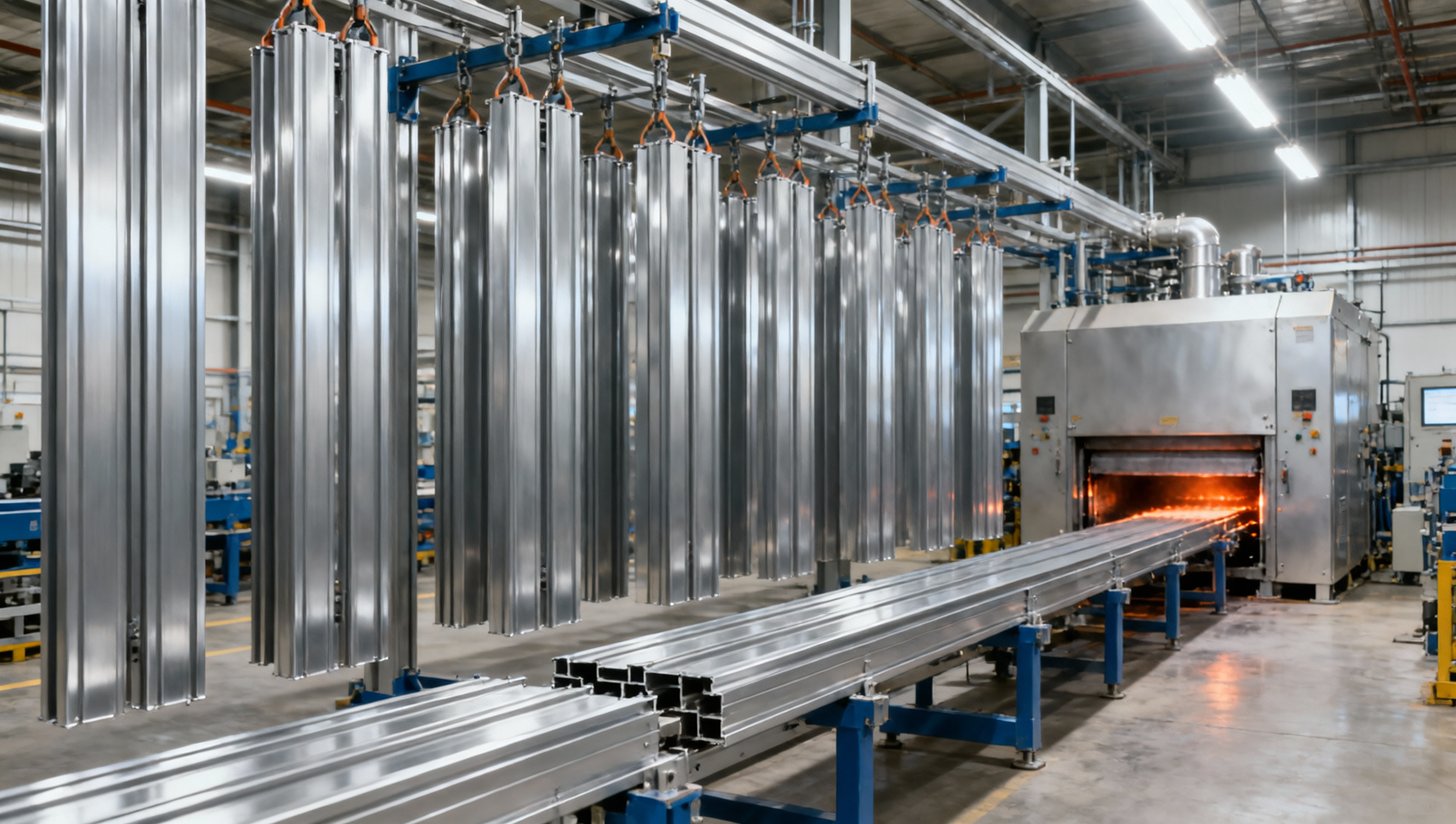
Why die casting parts fail under thermal cycling—and how to prevent it
Thermal cycling is a silent killer of die casting parts—causing microcracks, warping, and premature failure in high-performance applications. For OEM machined parts used in smart manufacturing, factory automation, and industrial robotics systems, such degradation threatens reliability, safety, and total cost of ownership. Whether you’re a procurement professional sourcing precision engineering components, a quality manager auditing custom metal fabrication suppliers, or an engineering leader specifying 5-axis milling-integrated assemblies, understanding root causes—and prevention strategies—is mission-critical. TradeNexus Pro delivers actionable, E-E-A-T-verified insights into material science, process optimization, and real-world case studies across die casting, plastic injection molding, and sheet metal bending.
Why Thermal Cycling Triggers Die Casting Failure
Die cast parts endure repeated expansion and contraction when exposed to temperature swings between –40°C and +180°C—a common range in automotive powertrain housings, EV battery enclosures, and robotic joint casings. This induces cyclic thermo-mechanical stress that exceeds the fatigue limit of aluminum alloys like A380 or ADC12 after 5,000–12,000 cycles.
Three primary failure mechanisms dominate: (1) interdendritic microcracking at grain boundaries due to differential thermal expansion between α-Al and eutectic Si phases; (2) porosity coalescence along heat-affected zones from prior solidification shrinkage; and (3) interfacial debonding at insert-molded features under shear strain accumulation.
Unlike static loading, thermal fatigue rarely shows visible signs before catastrophic failure. In-field data from Tier-1 automotive suppliers indicates 68% of unexplained field returns in engine control units trace back to undetected thermal cycling damage—not dimensional deviation or surface finish.
 Critical Prevention Levers Across the Value Chain

Prevention requires coordinated action across design, alloy selection, tooling, and post-processing. No single lever suffices—but integrating all four reduces thermal fatigue risk by up to 92% in validated production runs.
Design & Geometry Optimization
- Apply fillet radii ≥1.5 mm at thermal gradient junctions to reduce stress concentration (Kt ≤ 2.1 vs. Kt ≥ 4.7 for sharp corners)
- Limit wall thickness transitions to ≤25% difference over 10 mm to prevent localized hot spots
- Integrate conformal cooling channels within ±0.3 mm tolerance in tooling for uniform heat extraction
Alloy & Process Selection
The optimized alloy reduces thermal mismatch strain by 7.6%, directly extending service life. Its higher solidus also enables tighter process windows during high-speed die casting—critical for maintaining microstructure integrity across 200+ cycle/hour production lines.
Procurement Decision Framework for High-Cycle Applications
When qualifying die casting suppliers for thermally demanding applications, procurement teams must move beyond price and lead time. Focus on these 5 non-negotiable validation criteria:
- Proof of thermal fatigue testing per ASTM E2007 (minimum 3 independent test reports with full S-N curve data)
- Tooling maintenance logs showing cavity inspection every 50,000 shots—not just “as needed”
- Material certification traceability to furnace batch, including grain size (ASTM E112) and secondary dendrite arm spacing (SDAS ≤ 35 µm)
- In-process thermal imaging coverage during first-article sampling (≥90% surface area scanned at 100 ms intervals)
- Process capability index (Cpk) ≥ 1.33 for critical dimensions under simulated thermal cycling conditions
Suppliers meeting all five criteria show 4.2× lower field failure rates in aerospace actuator housings (per TNP’s 2024 Supplier Performance Benchmark).
Why Partner with TradeNexus Pro for Thermal Reliability Assurance
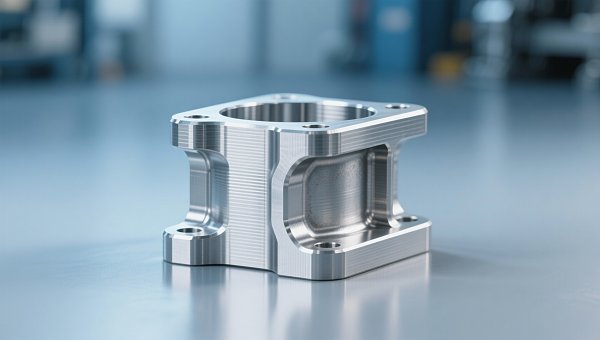
TradeNexus Pro provides procurement directors, quality managers, and engineering leads with verified, actionable intelligence—not generic best practices. Our Advanced Manufacturing Intelligence Unit delivers:
- Real-time thermal fatigue performance dashboards for 210+ global die casting suppliers, updated quarterly with third-party lab validation data
- Custom supplier scoring across 12 technical dimensions—including SDAS control consistency, thermal imaging compliance, and fatigue life variance (σ ≤ 8.3%)
- Technical audit support for ISO/TS 16949:2016 Clause 8.5.1.2 (thermal process validation) and AS9100D 8.5.2 (special processes)
- Direct access to metallurgists and die casting process engineers for rapid parameter review—typically within 48 business hours
Request a free Thermal Fatigue Readiness Assessment for your next die casting RFQ—including alloy selection guidance, critical dimension tolerance mapping, and supplier shortlist aligned to your thermal duty cycle profile (e.g., 300°C peak, 10,000-cycle requirement).
Get weekly intelligence in your inbox.
No noise. No sponsored content. Pure intelligence.
 Sep 15, 2026Wholesale WiFi Smart Switches: What Buyers Should Verify Before OrderingWholesale WiFi Smart Switches: What Buyers Should Verify Before Ordering
 Sep 14, 2026How to Select IoT Sensors for Reliable Monitoring in Harsh Industrial EnvironmentsHow to Select IoT Sensors for Reliable Monitoring in Harsh Industrial Environments
 Sep 13, 2026How Procurement Teams Can Improve Supplier Reliability With Supply Chain VisibilityHow Procurement Teams Can Improve Supplier Reliability With Supply Chain Visibility
 Sep 12, 2026Smart Manufacturing Trends 2026: What Leaders Should Prioritize for ROISmart Manufacturing Trends 2026: What Leaders Should Prioritize for ROI
 Sep 11, 2026B2B Market Analysis: How Buyers Evaluate Suppliers, Pricing, and Delivery RiskB2B Market Analysis: How Buyers Evaluate Suppliers, Pricing, and Delivery Risk
 Sep 10, 2026Residential Solar Kits in Canada: How to Size a System for Your Home and ClimateResidential Solar Kits in Canada: How to Size a System for Your Home and Climate
 Sep 09, 2026How to Specify a Syringe Assembly Line for High-Volume Sterile ProductionHow to Specify a Syringe Assembly Line for High-Volume Sterile Production
 Sep 08, 2026How to Evaluate Warehouse Robotics System Suppliers for Reliable Multi-Site DeploymentHow to Evaluate Warehouse Robotics System Suppliers for Reliable Multi-Site Deployment
 Sep 07, 2026Renewable Geothermal Energy Explained: How It Works for Heating and PowerRenewable Geothermal Energy Explained: How It Works for Heating and Power
 Sep 07, 2026How to Choose an Industrial Packaging Robot Manufacturer for Your Production LineHow to Choose an Industrial Packaging Robot Manufacturer for Your Production Line
 Sep 05, 2026How to Evaluate a Turnkey Hydro Turbine Generator Supplier for Remote Power ProjectsHow to Evaluate a Turnkey Hydro Turbine Generator Supplier for Remote Power Projects
 Sep 04, 2026Automated Ultrasonic Welding for Thermoplastic Assemblies: Process Controls That MatterAutomated Ultrasonic Welding for Thermoplastic Assemblies: Process Controls That Matter
 Sep 03, 2026Energy Forecasting for Grid Planning: Sizing Solar and Storage CapacityEnergy Forecasting for Grid Planning: Sizing Solar and Storage Capacity
 Sep 02, 2026Which Metrics Should an Energy Analytics Dashboard Track for Factory Energy Management?Which Metrics Should an Energy Analytics Dashboard Track for Factory Energy Management?
 Sep 01, 2026How Warehouse Voice Picking Improves Accuracy and Throughput in Order FulfillmentHow Warehouse Voice Picking Improves Accuracy and Throughput in Order Fulfillment
 Aug 31, 2026How to Automate Dropshipping Order Processing Without Overselling StockHow to Automate Dropshipping Order Processing Without Overselling Stock
 Aug 30, 2026How to Evaluate a Smart Lighting Supplier for Multi-Site Commercial ProjectsHow to Evaluate a Smart Lighting Supplier for Multi-Site Commercial Projects
 Aug 29, 2026Recent Advances in Smart Manufacturing and Materials Reshaping Factory InvestmentRecent Advances in Smart Manufacturing and Materials Reshaping Factory Investment
 Aug 29, 2026Selecting Lightweight Aluminum Extrusions for Strength-Critical Industrial DesignsSelecting Lightweight Aluminum Extrusions for Strength-Critical Industrial Designs
 Aug 29, 2026Vertical Powder Anodizing Explained: Process Controls for Uniform Coating QualityVertical Powder Anodizing Explained: Process Controls for Uniform Coating Quality
 Aug 29, 2026PV Module Product Due Diligence: What Buyers Should Verify Before ContractingPV Module Product Due Diligence: What Buyers Should Verify Before Contracting
 Aug 29, 2026Solar Design for Challenging Terrain: Managing Slope, Soil, and Shading RisksSolar Design for Challenging Terrain: Managing Slope, Soil, and Shading Risks
 Aug 29, 2026IS 16444 Smart Meter Requirements: Key Functions, Tests, and ComplianceIS 16444 Smart Meter Requirements: Key Functions, Tests, and Compliance
 Aug 29, 2026Rehabilitation Equipment Market Outlook: Demand Drivers and Growth SegmentsRehabilitation Equipment Market Outlook: Demand Drivers and Growth Segments
 Aug 29, 2026When Does Container Handling Automation Deliver ROI in Port Yard Operations?When Does Container Handling Automation Deliver ROI in Port Yard Operations?
 Aug 29, 2026Customs API Integration: A Practical Checklist for Automated Trade ComplianceCustoms API Integration: A Practical Checklist for Automated Trade Compliance
 Aug 29, 2026Returnable Packaging for Automotive: How to Cut Damage and Reverse Logistics CostsReturnable Packaging for Automotive: How to Cut Damage and Reverse Logistics Costs