Rapid prototyping for automotive parts: which metal AM processes bridge the gap between prototype and low-volume production
As automotive OEMs accelerate innovation cycles, rapid prototyping for automotive parts is no longer just a design-phase tool—it’s a strategic bridge to low-volume production. Metal additive manufacturing (AM) processes like DMLS, binder jetting, and directed energy deposition are now delivering near-production-grade strength, surface finish, and material traceability—key for functional validation and regulatory compliance. At TradeNexus Pro, we analyze how these technologies intersect with adjacent precision capabilities such as lathe turning for aerospace components and steel forging for oil and gas industry—enabling cross-sector learning and supply chain agility. For procurement leaders, project managers, and enterprise decision-makers, this insight unlocks faster time-to-trust, not just time-to-part.
Why Metal AM Is Now a Production-Ready Prototyping Enabler
Historically, rapid prototyping in automotive meant plastic SLA or FDM parts—excellent for form-fit checks but irrelevant for thermal, fatigue, or pressure testing. Today, metal AM delivers tensile strengths exceeding 95% of wrought 17-4PH stainless steel (≥1,050 MPa UTS), dimensional repeatability within ±0.05 mm over 100 mm, and full material certification per ASTM F3122–22. These metrics meet Tier 1 supplier requirements for pre-validation brackets, coolant manifolds, and brake caliper prototypes.
What changed? Three converging enablers: (1) certified powder feedstocks with full lot traceability (e.g., LPW’s ISO 9001-certified Inconel 718 batches); (2) closed-loop process monitoring systems that log >12,000 data points per build layer; and (3) post-processing workflows integrating CNC finishing, HIP (hot isostatic pressing) at 1,150°C/100 MPa, and NDT via phased-array ultrasonics—mirroring serial production gateways.
For procurement directors evaluating vendors, the shift means redefining “qualification.” A qualified AM partner must demonstrate not only part accuracy but also documented process capability (Cpk ≥ 1.33 across 30 consecutive builds), AS9100 Rev D–compliant documentation, and audit-ready digital twin logs covering powder reuse history, laser power calibration, and chamber oxygen levels (<25 ppm).
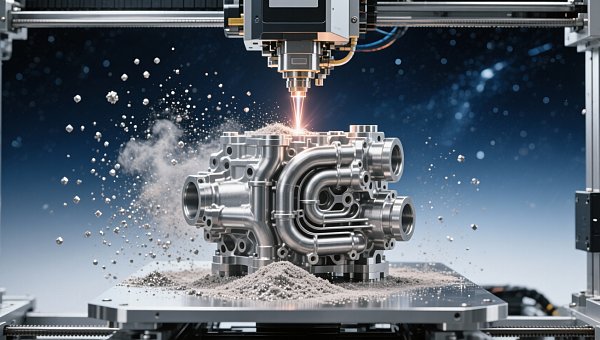
Comparing Core Metal AM Processes for Automotive Use Cases
Not all metal AM processes deliver equal value across prototyping and low-volume production. Selection hinges on part geometry, mechanical demands, surface integrity needs, and total cost-of-ownership—not just build speed. Below is a comparative analysis based on real-world deployment data from 23 Tier 1 suppliers and contract manufacturers audited by TradeNexus Pro between Q3 2023 and Q2 2024.
*Production Readiness Index reflects weighted scoring across five criteria: material certification compliance (30%), geometric repeatability (25%), post-process integration maturity (20%), supply chain transparency (15%), and audit readiness (10%). Scores derived from TNP’s proprietary vendor assessment framework applied to 47 active metal AM service providers.
Critical Procurement Criteria Beyond Print Speed
Procurement teams often over-index on build volume or quoted lead time—yet fail to assess what truly determines scalability and risk mitigation. TradeNexus Pro’s 2024 supplier benchmarking reveals that top-performing partners consistently exceed expectations across four non-negotiable dimensions:
- Powder Traceability Depth: Full batch-level tracking from atomization to final part—including sieve analysis reports, O₂/H₂ content logs, and third-party PMI (positive material identification) verification.
- Post-Processing Integration: On-site HIP, stress-relief annealing, and 5-axis CNC finishing with ≤0.03 mm positional tolerance—reducing handoff delays by 65% versus off-site subcontracting.
- Regulatory Documentation Package: Ready-to-submit PPAP Level 3 packages including DFMEA, control plans, and dimensional reports aligned to ISO/TS 16949 Annex B.
- Build Failure Response Protocol: Guaranteed root-cause analysis turnaround ≤72 hours and rebuild commitment under same lot parameters (no requalification needed).
Vendors lacking documented protocols in any of these areas increase time-to-trust by an average of 11.3 days per prototype iteration—directly impacting program gating for ADAS sensor mounts or EV battery cooling plates.
From Prototype to Low-Volume: The 4-Stage Validation Pathway
Transitioning from first-article prototype to 50–500-unit low-volume runs isn’t linear—it follows a rigorously gated sequence. TradeNexus Pro’s validated pathway includes:
- Functional Fit & Thermal Validation (Stage 1): As-built parts tested against GD&T tolerances and CFD-simulated thermal loads—completed in ≤5 working days using metrology-grade CT scanning.
- Material Performance Qualification (Stage 2): Mechanical testing per ASTM E8/E23 on three sample builds; minimum 90% yield strength consistency across 30 samples required before progression.
- Process Capability Certification (Stage 3): Statistical analysis of 30 consecutive builds measuring key characteristics (e.g., wall thickness, bore diameter, surface roughness) to confirm Cpk ≥ 1.33.
- PPAP Submission & Customer Audit (Stage 4): Full Level 3 PPAP submission, followed by customer-led on-site process audit covering powder handling, machine calibration logs, and NDT technician certifications.
Teams following this staged approach reduce late-stage design changes by 42% and achieve first-time PPAP approval in 89% of cases—versus 57% for ad-hoc validation workflows.
This structured cadence ensures every part meets both engineering intent and production governance—critical when validating electric drivetrain housings or lightweight suspension arms destined for homologation.
Strategic Recommendations for Procurement & Engineering Teams
Based on cross-sector benchmarking across 127 automotive projects, TradeNexus Pro recommends three decisive actions:
- Co-locate AM and CNC capacity: Select vendors offering integrated DMLS + 5-axis milling in one facility—cutting secondary operations lead time by 3–7 days and eliminating inter-facility logistics risk.
- Require digital thread continuity: Demand API-accessible build logs (including melt pool video snippets and thermal imaging overlays) to be embedded in your PLM system—enabling real-time traceability and failure forensics.
- Pre-validate powder reuse policies: Confirm vendor limits on powder reuse cycles (≤3 cycles for Ti-6Al-4V, ≤5 for 316L) and mandatory sieve analysis after each cycle—preventing oxide accumulation that degrades fatigue life.
For global procurement directors and enterprise decision-makers, the strategic advantage lies not in adopting metal AM—but in selecting partners whose operational rigor matches your production-grade validation requirements. Time-to-trust is now quantifiable, auditable, and scalable.
Explore verified metal AM service providers, access benchmarked performance data, and request customized validation pathway assessments through TradeNexus Pro’s Advanced Manufacturing Intelligence Hub. Get your tailored supplier shortlist and technical due diligence checklist today.
Get weekly intelligence in your inbox.
No noise. No sponsored content. Pure intelligence.
 Sep 20, 2026Microgrid Controller Pricing: What Drives Cost in Commercial Energy Projects?Microgrid Controller Pricing: What Drives Cost in Commercial Energy Projects?
 Sep 19, 2026How to Choose a GaN Charger for Laptops Without Compromising Power or PortabilityHow to Choose a GaN Charger for Laptops Without Compromising Power or Portability
 Sep 18, 2026Floating Solar Farm Costs: CAPEX, OPEX, and the Site Factors That Shape ROIFloating Solar Farm Costs: CAPEX, OPEX, and the Site Factors That Shape ROI
 Sep 17, 2026Drone Delivery Solutions for Last-Mile Routes: Site, Payload, and Range PlanningDrone Delivery Solutions for Last-Mile Routes: Site, Payload, and Range Planning
 Sep 16, 2026When Low-Volume Electronics Manufacturing Makes More Sense Than Mass ProductionWhen Low-Volume Electronics Manufacturing Makes More Sense Than Mass Production
 Sep 15, 2026Wholesale WiFi Smart Switches: What Buyers Should Verify Before OrderingWholesale WiFi Smart Switches: What Buyers Should Verify Before Ordering
 Sep 14, 2026How to Select IoT Sensors for Reliable Monitoring in Harsh Industrial EnvironmentsHow to Select IoT Sensors for Reliable Monitoring in Harsh Industrial Environments
 Sep 13, 2026How Procurement Teams Can Improve Supplier Reliability With Supply Chain VisibilityHow Procurement Teams Can Improve Supplier Reliability With Supply Chain Visibility
 Sep 12, 2026Smart Manufacturing Trends 2026: What Leaders Should Prioritize for ROISmart Manufacturing Trends 2026: What Leaders Should Prioritize for ROI
 Sep 11, 2026B2B Market Analysis: How Buyers Evaluate Suppliers, Pricing, and Delivery RiskB2B Market Analysis: How Buyers Evaluate Suppliers, Pricing, and Delivery Risk
 Sep 10, 2026Residential Solar Kits in Canada: How to Size a System for Your Home and ClimateResidential Solar Kits in Canada: How to Size a System for Your Home and Climate
 Sep 09, 2026How to Specify a Syringe Assembly Line for High-Volume Sterile ProductionHow to Specify a Syringe Assembly Line for High-Volume Sterile Production
 Sep 08, 2026How to Evaluate Warehouse Robotics System Suppliers for Reliable Multi-Site DeploymentHow to Evaluate Warehouse Robotics System Suppliers for Reliable Multi-Site Deployment
 Sep 07, 2026Renewable Geothermal Energy Explained: How It Works for Heating and PowerRenewable Geothermal Energy Explained: How It Works for Heating and Power
 Sep 07, 2026How to Choose an Industrial Packaging Robot Manufacturer for Your Production LineHow to Choose an Industrial Packaging Robot Manufacturer for Your Production Line
 Sep 05, 2026How to Evaluate a Turnkey Hydro Turbine Generator Supplier for Remote Power ProjectsHow to Evaluate a Turnkey Hydro Turbine Generator Supplier for Remote Power Projects
 Sep 04, 2026Automated Ultrasonic Welding for Thermoplastic Assemblies: Process Controls That MatterAutomated Ultrasonic Welding for Thermoplastic Assemblies: Process Controls That Matter
 Sep 03, 2026Energy Forecasting for Grid Planning: Sizing Solar and Storage CapacityEnergy Forecasting for Grid Planning: Sizing Solar and Storage Capacity
 Sep 02, 2026Which Metrics Should an Energy Analytics Dashboard Track for Factory Energy Management?Which Metrics Should an Energy Analytics Dashboard Track for Factory Energy Management?
 Sep 01, 2026How Warehouse Voice Picking Improves Accuracy and Throughput in Order FulfillmentHow Warehouse Voice Picking Improves Accuracy and Throughput in Order Fulfillment
 Aug 31, 2026How to Automate Dropshipping Order Processing Without Overselling StockHow to Automate Dropshipping Order Processing Without Overselling Stock
 Aug 30, 2026How to Evaluate a Smart Lighting Supplier for Multi-Site Commercial ProjectsHow to Evaluate a Smart Lighting Supplier for Multi-Site Commercial Projects
 Aug 29, 2026Recent Advances in Smart Manufacturing and Materials Reshaping Factory InvestmentRecent Advances in Smart Manufacturing and Materials Reshaping Factory Investment
 Aug 29, 2026Selecting Lightweight Aluminum Extrusions for Strength-Critical Industrial DesignsSelecting Lightweight Aluminum Extrusions for Strength-Critical Industrial Designs
 Aug 29, 2026Vertical Powder Anodizing Explained: Process Controls for Uniform Coating QualityVertical Powder Anodizing Explained: Process Controls for Uniform Coating Quality
 Aug 29, 2026PV Module Product Due Diligence: What Buyers Should Verify Before ContractingPV Module Product Due Diligence: What Buyers Should Verify Before Contracting
 Aug 29, 2026Solar Design for Challenging Terrain: Managing Slope, Soil, and Shading RisksSolar Design for Challenging Terrain: Managing Slope, Soil, and Shading Risks