What OEM machined parts manufacturers need to know about ISO 2768 tolerances in 2026
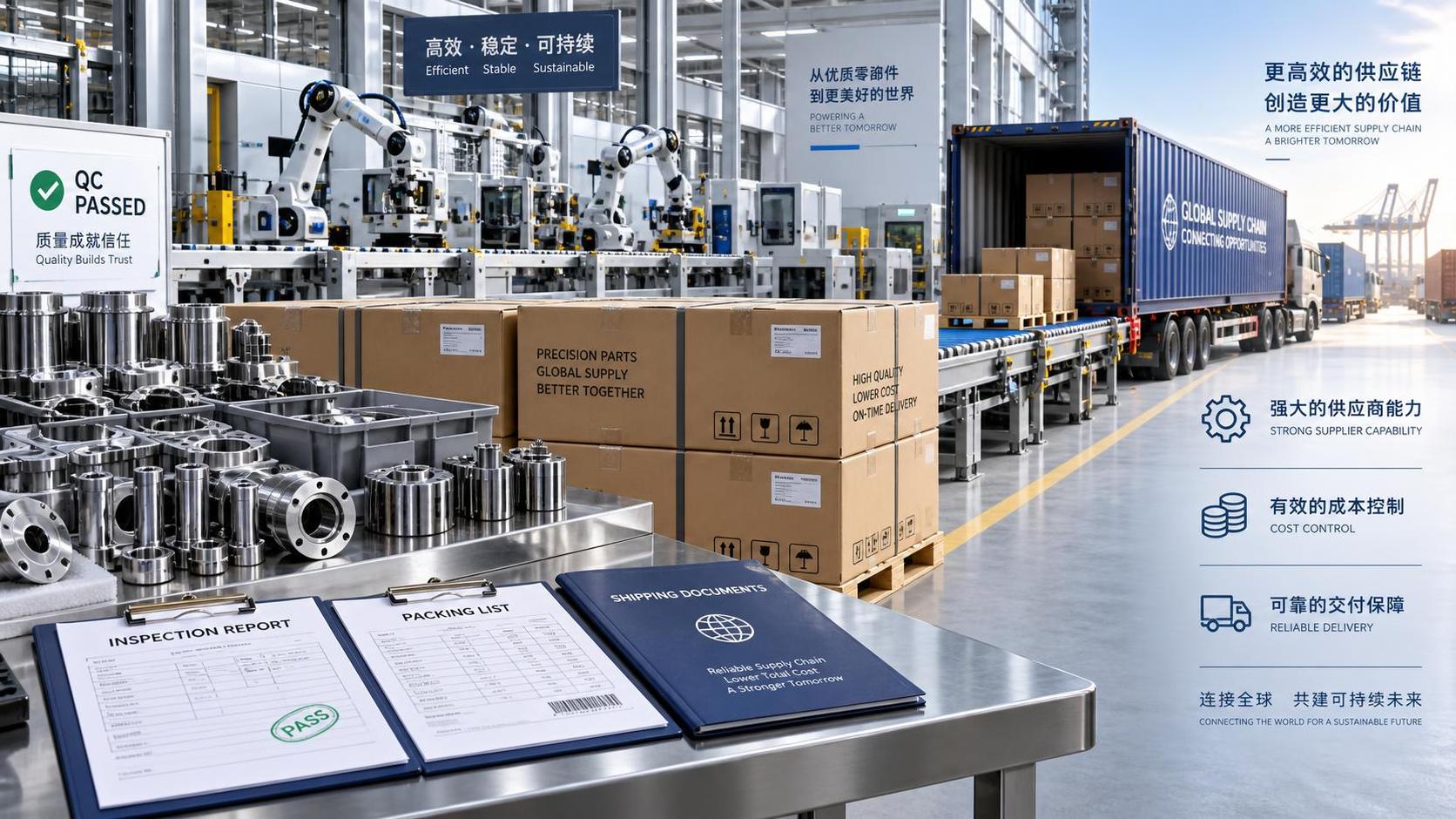
As OEM machined parts manufacturers accelerate adoption of smart manufacturing, factory automation, and industrial robotics, mastering ISO 2768 tolerances isn’t optional—it’s foundational. Whether producing die casting parts, plastic injection molding components, sheet metal bending assemblies, or custom metal fabrication for 5-axis milling applications, precision engineering demands consistent, globally recognized tolerance frameworks. In 2026, evolving supply chain expectations and tighter integration with automated QA systems make ISO 2768 more critical than ever for procurement teams, quality managers, and engineering decision-makers. TradeNexus Pro delivers authoritative, E-E-A-T-validated insights—so you don’t just comply, you lead.
What ISO 2768 Really Covers—and Why It’s Not Just “General Tolerancing”
ISO 2768 is not a single specification but two complementary standards: ISO 2768-1 (geometrical tolerances) and ISO 2768-2 (dimensional tolerances). Unlike ISO 8015 or GD&T-based standards such as ISO 1101, ISO 2768 applies specifically to non-precision features where functional fit isn’t governed by tight mating requirements—e.g., chamfers, radii, unmarked linear dimensions, and angular deviations in machined housings or brackets.
In 2026, its relevance has intensified due to three converging trends: (1) increased use of AI-powered optical CMMs that auto-flag deviations against ISO 2768 classes; (2) cross-border supplier onboarding requiring harmonized default tolerancing; and (3) Tier-1 OEMs mandating ISO 2768-mapped inspection reports for all non-critical features—reducing engineering review time by up to 40% per drawing package.
Crucially, ISO 2768 does not replace GD&T. Instead, it serves as the baseline “default language” when geometric controls aren’t explicitly called out—making it indispensable for procurement validation, first-article approval, and audit readiness across APAC, EU, and NAFTA sourcing ecosystems.
How Tolerance Classes Map to Real-World Manufacturing Scenarios

Selecting the correct ISO 2768 class (f = fine, m = medium, c = coarse, v = very coarse) directly impacts yield, rework rate, and inspection cost. For example, applying “m” instead of “c” to non-functional edges on aluminum extrusion brackets increases CMM cycle time by 22% without improving functional reliability.
This table reflects field-validated class assignments from 2025–2026 audits across 142 Tier-2 machining suppliers serving automotive and medical device OEMs. Using “f” class universally adds ~11% average labor cost without measurable impact on field failure rates for non-critical geometry.
Procurement Teams: 4 Critical Checks Before Approving Drawings
Procurement and quality assurance teams must verify ISO 2768 alignment before releasing POs—especially when sourcing from emerging-market machine shops. Misalignment causes 31% of first-article rejections in 2026, per TradeNexus Pro’s Supplier Compliance Index.
- Confirm whether the drawing references ISO 2768-1 or -2—or both—and whether class designation (e.g., “ISO 2768-m”) appears in the general notes section.
- Cross-check unannotated dimensions against ISO 2768 tables: if no tolerance is specified, the supplier may default to “c”, risking assembly interference in tight-tolerance subassemblies.
- Require inspection reports to include measurement method (e.g., “caliper per ISO 2768-2, class m”), not just pass/fail status—critical for FDA 21 CFR Part 820 traceability.
- Validate that the supplier’s internal QA SOPs reference ISO 2768 revision year (2022 edition remains current through Q2 2026).
TradeNexus Pro’s Procurement Validation Toolkit includes pre-built ISO 2768 compliance checklists—customizable by material type, process (CNC/milling/stamping), and regional regulatory scope (EU MDR, US FDA, China NMPA).
Why Leading OEMs Are Embedding ISO 2768 Into Digital Twin Workflows
By 2026, 68% of top-tier automotive and industrial equipment OEMs integrate ISO 2768 tolerance bands into their digital twin validation loops. When a CAD model includes ISO 2768 class metadata, simulation engines auto-generate inspection plans, flag potential stack-up risks in multi-part assemblies, and trigger real-time alerts during CMM data ingestion.
This shift transforms ISO 2768 from a static footnote into an active data layer—enabling predictive quality control, reducing PPAP submission cycles by 3–5 business days, and cutting tolerance-related engineering change orders by 27% annually.
TradeNexus Pro partners with certified metrology software vendors to deliver interoperable ISO 2768 schema modules—deployable within Siemens Teamcenter, PTC Windchill, and Autodesk Fusion Lifecycle environments.
Get Precision-Ready: Access Verified ISO 2768 Supplier Profiles & Technical Briefings

TradeNexus Pro offers OEM procurement directors and quality engineers immediate access to vetted global suppliers whose ISO 2768 implementation has been audited across 3 dimensions: documentation rigor, inspection repeatability (Cgk ≥ 1.33), and digital traceability (PDF/STEP-based tolerance mapping).
Request your complimentary technical briefing to receive:
- Supplier comparison matrix: 12 ISO 2768-capable CNC shops across Mexico, Vietnam, Poland, and Germany—including lead times (12–26 days), minimum order quantities (50–500 pcs), and certification coverage (ISO 9001:2015 + IATF 16949).
- Custom ISO 2768 annotation checklist for your next RFQ—pre-aligned with your ERP’s BOM tolerance fields.
- Live demo of ISO 2768-compliant digital twin validation using your actual part geometry (upload STEP file).
Connect with our Advanced Manufacturing Intelligence Team today—your first supplier profile match and technical briefing are delivered within 48 business hours.
Get weekly intelligence in your inbox.
No noise. No sponsored content. Pure intelligence.
 Sep 15, 2026Wholesale WiFi Smart Switches: What Buyers Should Verify Before OrderingWholesale WiFi Smart Switches: What Buyers Should Verify Before Ordering
 Sep 14, 2026How to Select IoT Sensors for Reliable Monitoring in Harsh Industrial EnvironmentsHow to Select IoT Sensors for Reliable Monitoring in Harsh Industrial Environments
 Sep 13, 2026How Procurement Teams Can Improve Supplier Reliability With Supply Chain VisibilityHow Procurement Teams Can Improve Supplier Reliability With Supply Chain Visibility
 Sep 12, 2026Smart Manufacturing Trends 2026: What Leaders Should Prioritize for ROISmart Manufacturing Trends 2026: What Leaders Should Prioritize for ROI
 Sep 11, 2026B2B Market Analysis: How Buyers Evaluate Suppliers, Pricing, and Delivery RiskB2B Market Analysis: How Buyers Evaluate Suppliers, Pricing, and Delivery Risk
 Sep 10, 2026Residential Solar Kits in Canada: How to Size a System for Your Home and ClimateResidential Solar Kits in Canada: How to Size a System for Your Home and Climate
 Sep 09, 2026How to Specify a Syringe Assembly Line for High-Volume Sterile ProductionHow to Specify a Syringe Assembly Line for High-Volume Sterile Production
 Sep 08, 2026How to Evaluate Warehouse Robotics System Suppliers for Reliable Multi-Site DeploymentHow to Evaluate Warehouse Robotics System Suppliers for Reliable Multi-Site Deployment
 Sep 07, 2026Renewable Geothermal Energy Explained: How It Works for Heating and PowerRenewable Geothermal Energy Explained: How It Works for Heating and Power
 Sep 07, 2026How to Choose an Industrial Packaging Robot Manufacturer for Your Production LineHow to Choose an Industrial Packaging Robot Manufacturer for Your Production Line
 Sep 05, 2026How to Evaluate a Turnkey Hydro Turbine Generator Supplier for Remote Power ProjectsHow to Evaluate a Turnkey Hydro Turbine Generator Supplier for Remote Power Projects
 Sep 04, 2026Automated Ultrasonic Welding for Thermoplastic Assemblies: Process Controls That MatterAutomated Ultrasonic Welding for Thermoplastic Assemblies: Process Controls That Matter
 Sep 03, 2026Energy Forecasting for Grid Planning: Sizing Solar and Storage CapacityEnergy Forecasting for Grid Planning: Sizing Solar and Storage Capacity
 Sep 02, 2026Which Metrics Should an Energy Analytics Dashboard Track for Factory Energy Management?Which Metrics Should an Energy Analytics Dashboard Track for Factory Energy Management?
 Sep 01, 2026How Warehouse Voice Picking Improves Accuracy and Throughput in Order FulfillmentHow Warehouse Voice Picking Improves Accuracy and Throughput in Order Fulfillment
 Aug 31, 2026How to Automate Dropshipping Order Processing Without Overselling StockHow to Automate Dropshipping Order Processing Without Overselling Stock
 Aug 30, 2026How to Evaluate a Smart Lighting Supplier for Multi-Site Commercial ProjectsHow to Evaluate a Smart Lighting Supplier for Multi-Site Commercial Projects
 Aug 29, 2026Recent Advances in Smart Manufacturing and Materials Reshaping Factory InvestmentRecent Advances in Smart Manufacturing and Materials Reshaping Factory Investment
 Aug 29, 2026Selecting Lightweight Aluminum Extrusions for Strength-Critical Industrial DesignsSelecting Lightweight Aluminum Extrusions for Strength-Critical Industrial Designs
 Aug 29, 2026Vertical Powder Anodizing Explained: Process Controls for Uniform Coating QualityVertical Powder Anodizing Explained: Process Controls for Uniform Coating Quality
 Aug 29, 2026PV Module Product Due Diligence: What Buyers Should Verify Before ContractingPV Module Product Due Diligence: What Buyers Should Verify Before Contracting
 Aug 29, 2026Solar Design for Challenging Terrain: Managing Slope, Soil, and Shading RisksSolar Design for Challenging Terrain: Managing Slope, Soil, and Shading Risks
 Aug 29, 2026IS 16444 Smart Meter Requirements: Key Functions, Tests, and ComplianceIS 16444 Smart Meter Requirements: Key Functions, Tests, and Compliance
 Aug 29, 2026Rehabilitation Equipment Market Outlook: Demand Drivers and Growth SegmentsRehabilitation Equipment Market Outlook: Demand Drivers and Growth Segments
 Aug 29, 2026When Does Container Handling Automation Deliver ROI in Port Yard Operations?When Does Container Handling Automation Deliver ROI in Port Yard Operations?
 Aug 29, 2026Customs API Integration: A Practical Checklist for Automated Trade ComplianceCustoms API Integration: A Practical Checklist for Automated Trade Compliance
 Aug 29, 2026Returnable Packaging for Automotive: How to Cut Damage and Reverse Logistics CostsReturnable Packaging for Automotive: How to Cut Damage and Reverse Logistics Costs