BYD Clarifies It Is Not Under U.S. Sanctions
On June 9, 2026, BYD issued a clarification saying its inclusion on a U.S. Department of Defense list of “Chinese military companies” was a mistaken listing, that it is not a military enterprise, and that the list itself does not carry sanctions effect. For EV infrastructure stakeholders, this matters less as a headline dispute and more as a near-term compliance signal for battery and charging equipment trade, especially for project developers, buyers, and supply-chain partners in Southeast Asia, Latin America, and the Middle East that have been weighing political-risk exposure in sourcing decisions.
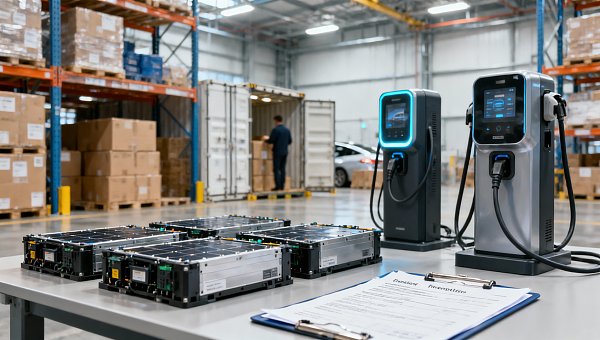
What the June 9 clarification confirmed
According to the information provided, BYD stated on June 9 that its appearance on the U.S. Department of Defense “Chinese military companies” list was erroneous. The company said it is not a military industry entity and that the list does not have sanctions effect. It also said the matter does not affect its normal business with global customers, except for the U.S. Department of Defense.
The same information indicates that this clarification has significantly eased political-risk concerns among EV infrastructure project parties in Southeast Asia, Latin America, and the Middle East regarding Chinese battery and charging pile suppliers.
Why this matters across EV infrastructure transactions
For project owners and procurement teams, the issue is contract confidence
From an industry perspective, project developers and procurement teams may feel the impact first because supplier eligibility, delivery assurance, and financing discussions can all be influenced by perceived political risk. In this case, the clarification may reduce immediate concern around whether working with Chinese battery and charging equipment suppliers creates the same risk as dealing with an actual sanctions target. What deserves closer attention is whether buyers adjust internal risk reviews, tender screening, or approval workflows in response.
For battery and charging equipment exporters, the issue is compliance communication
Analysis shows that exporters are affected not only by formal rules but also by customer interpretation of those rules. Even when a list does not have sanctions effect, uncertainty can delay quotations, due diligence, onboarding, or shipment decisions. For suppliers of batteries and charging piles, the practical impact is likely to center on how clearly they can explain the difference between a political label, a compliance assessment, and an actual trade restriction.
For supply-chain and delivery partners, the issue is operational continuity
Supply-chain service providers, logistics coordinators, and project delivery partners may also be affected because politically sensitive headlines can trigger extra document checks or customer requests for clarification. Observably, the current development is relevant to operational continuity: even if no formal sanctions apply, counterparties may still review vendor files, contract language, or declaration materials more closely before moving goods or approving milestones.
What companies should watch next in practice
Separate list-related headlines from enforceable restrictions
Companies involved in EV infrastructure exports should distinguish between a listing controversy and a restriction with direct sanctions effect. Based on the provided information, the key point is that BYD said the list does not carry sanctions effect. In practice, this distinction matters for internal compliance reviews, customer explanations, and risk escalation procedures.
Prepare customer-facing compliance materials carefully
For battery and charging equipment suppliers, one practical focus is whether qualification files, corporate statements, and transaction documents are ready for renewed scrutiny. This is especially relevant in overseas projects where buyers may ask for additional clarification before confirming procurement, delivery, or long-cycle supply arrangements.
Watch how overseas project markets interpret the signal
The information provided specifically points to Southeast Asia, Latin America, and the Middle East. What deserves closer attention is not only the statement itself, but also how project owners, EPC-related counterparts, and procurement teams in these markets translate that statement into actual sourcing decisions. A reduced level of concern does not automatically mean every review process returns to normal immediately.
Keep monitoring official wording and follow-up changes
Observably, this development should be tracked as an ongoing compliance and communication issue rather than treated as a closed matter after one announcement. Companies should continue to monitor official wording, customer responses, and any change in how counterparties frame supplier-risk checks in cross-border EV infrastructure business.
How to read the signal at this stage
Analysis shows that this news is best understood as a stabilizing signal for export compliance perception rather than proof that all external political-risk questions have disappeared. The clarification appears to lower immediate concern around Chinese battery and charging pile suppliers in certain overseas EV infrastructure markets, but it does not eliminate the need for case-by-case customer review.
It is more appropriate to understand this as a short-term easing of market anxiety with possible longer-term relevance if similar issues continue to shape procurement behavior. That is why the industry still needs to watch not just the statement, but also whether it changes transaction speed, supplier screening, and customer communication standards in practice.
What this means for the market now
At this point, the industry significance lies in clearer differentiation between a mistaken listing claim and a measure with actual sanctions effect. For EV infrastructure trade, that distinction can influence purchasing confidence, supplier conversations, and project execution rhythm. A neutral reading is that the clarification improves the immediate compliance signal around exports, while the broader business impact still depends on how overseas counterparties apply that signal in real transactions.
Basis of this article and what still needs verification
This article is generated from the user-provided news title, event date, and event summary. The analysis is based only on the provided information: BYD’s June 9 clarification, the stated lack of sanctions effect, the company’s position that normal global business remains unaffected except with the U.S. Department of Defense, and the stated easing of political-risk concerns in Southeast Asia, Latin America, and the Middle East.
For this type of industry update, commonly relevant source categories may include official statements, company announcements, industry association information, authoritative media reporting, and standards-related documents. A specific official source link was not provided in the input, so continued verification is still needed. Follow-up attention should remain on any official wording changes, further company disclosures, and how overseas EV infrastructure buyers and project participants respond in actual procurement and delivery processes.
Get weekly intelligence in your inbox.
No noise. No sponsored content. Pure intelligence.
 Oct 24, 2026Tesla Q3 2026 Storage Deployments Rank Second Highest as Revenue Falls 16%Tesla Q3 2026 Storage Deployments Rank Second Highest as Revenue Falls 16%
 Oct 24, 2026Freight Forwarding Services Pricing: Comparing Quotes Beyond Base RatesFreight Forwarding Services Pricing: Comparing Quotes Beyond Base Rates
 Oct 23, 2026IndexBox Issues Off-Grid Solar Outlook to 2035, Forecasting 8.2% CAGRIndexBox Issues Off-Grid Solar Outlook to 2035, Forecasting 8.2% CAGR
 Oct 23, 2026NSF/ANSI 49 Biosafety Cabinets: Product Certification vs. Field TestingNSF/ANSI 49 Biosafety Cabinets: Product Certification vs. Field Testing
 Oct 22, 2026Mitsubishi Electric Develops Industry-First Humanoid Robot–CNC Machining SystemMitsubishi Electric Develops Industry-First Humanoid Robot–CNC Machining System
 Oct 22, 2026Aerospace Aluminum Machining: How to Control Distortion in Thin-Wall PartsAerospace Aluminum Machining: How to Control Distortion in Thin-Wall Parts
 Oct 21, 2026Genesis Energy commissions 200 MWh battery storage system at HuntlyGenesis Energy commissions 200 MWh battery storage system at Huntly
 Oct 21, 2026Buying AMI Smart Meters Wholesale: Compatibility Checks and Total CostsBuying AMI Smart Meters Wholesale: Compatibility Checks and Total Costs
 Oct 20, 2026Werner Enterprises Issues Q3 Earnings Warning as Costs RiseWerner Enterprises Issues Q3 Earnings Warning as Costs Rise
 Oct 20, 2026Are Digital Twins Viable for SMEs? Costs, Use Cases, and Data RequirementsAre Digital Twins Viable for SMEs? Costs, Use Cases, and Data Requirements
 Oct 19, 2026Choosing a Wholesale Servo Motor Exporter: Traceability and Warranty ChecksChoosing a Wholesale Servo Motor Exporter: Traceability and Warranty Checks
 Oct 18, 2026Syringe Manufacturing Equipment: Evaluating Throughput and Assembly AccuracySyringe Manufacturing Equipment: Evaluating Throughput and Assembly Accuracy
 Oct 17, 2026Air Freight Forwarding Services: How to Compare Quotes for Urgent ShipmentsAir Freight Forwarding Services: How to Compare Quotes for Urgent Shipments
 Oct 16, 2026Wholesale Solar Panels: How to Compare Bulk Quotes by Total Landed CostWholesale Solar Panels: How to Compare Bulk Quotes by Total Landed Cost
 Oct 15, 2026Supply Chain Intelligence for Sourcing: How to Vet New SuppliersSupply Chain Intelligence for Sourcing: How to Vet New Suppliers
 Oct 14, 2026How energy costs shape smart manufacturing investment in EuropeHow energy costs shape smart manufacturing investment in Europe
 Oct 14, 2026How skills shortages slow smart manufacturing in Southeast AsiaHow skills shortages slow smart manufacturing in Southeast Asia
 Oct 14, 2026How CNC wire-cut machining maintains tight tolerances in thick partsHow CNC wire-cut machining maintains tight tolerances in thick parts
 Oct 14, 2026Can automated feeding stabilize metal forming in smart factories?Can automated feeding stabilize metal forming in smart factories?
 Oct 14, 2026Can CT inspection detect internal defects in metal additive parts?Can CT inspection detect internal defects in metal additive parts?
 Oct 14, 2026When does additive manufacturing reduce lead time for spare parts?When does additive manufacturing reduce lead time for spare parts?
 Oct 14, 2026How production volume affects ROI on an automated painting lineHow production volume affects ROI on an automated painting line
 Oct 14, 2026What data does manufacturing bottleneck analysis consulting need?What data does manufacturing bottleneck analysis consulting need?
 Oct 14, 2026When should you hire a consultant for manufacturing bottlenecks?When should you hire a consultant for manufacturing bottlenecks?
 Oct 14, 2026What Are Electronics Exporters' Top Supply Chain Resilience Gaps in 2026?What Are Electronics Exporters' Top Supply Chain Resilience Gaps in 2026?
 Oct 14, 2026How Do You Measure AI Adoption Maturity in a Traditional Factory?How Do You Measure AI Adoption Maturity in a Traditional Factory?
 Oct 14, 2026Are Chinese AI-Assisted Surgical Devices Gaining Global Trust?Are Chinese AI-Assisted Surgical Devices Gaining Global Trust?