How to Choose BMS Boards With Temperature Sensor for Safer Battery Pack Designs
How to Choose BMS Boards With Temperature Sensor for Safer Battery Pack Designs
Choosing the right bms boards with temperature sensor usually goes wrong in one of two ways: either the team buys on headline current rating alone, or they treat temperature sensing as a checkbox instead of a protection function. In real battery pack work, that shortcut shows up later as nuisance shutdowns, uneven thermal behavior, poor charging control, or a pack that technically works in the lab but becomes hard to trust in field use.
For technical evaluators, the job is not just to compare boards. It is to decide whether the sensing method, protection logic, and system fit are good enough for the actual battery chemistry, enclosure, charge profile, and operating environment. The checklist below is written from that angle.
Start with the battery, not the board listing
Before comparing any BMS, lock down the basics of the pack you are protecting: cell chemistry, series count, parallel structure, charge and discharge current, expected ambient range, enclosure airflow, and whether the pack is removable, sealed, or installed in a vibration-heavy product.
That sounds obvious, but many mismatches start here. A board that looks fine for a generic 10S lithium pack may be a poor fit if your actual product sees fast charging in a compact housing or spends time in cold-start conditions. Temperature sensor behavior matters much more in those cases than it does in a lightly loaded indoor device.
If your internal requirement sheet is vague, fix that first. A weak requirement set makes every supplier comparison look artificially similar.
Check where temperature is actually being measured
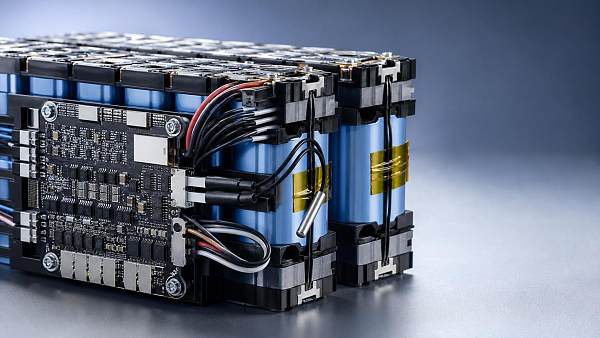
Not all temperature-monitored BMS designs are equally useful. Some boards measure only their own PCB area. Some use external NTC probes that can be attached near cells. Some support multiple sensors, which is often the safer choice for larger packs or packs with known hot spots.
Ask this directly: what exactly is the sensor monitoring?
- Board temperature only
- Cell surface temperature
- Connector or MOSFET area temperature
- More than one location with independent thresholds
For compact energy storage modules, e-bikes, power tools, and other high-load designs, one sensor is often not enough. Thermal trouble rarely starts evenly across the pack. It starts at the weak cell group, the poor weld, the crowded corner near the enclosure wall, or the switching area on the board itself.
If the supplier cannot clearly explain sensor placement strategy, treat that as a real evaluation risk.
Do not accept “temperature protection” without threshold detail
A BMS board with a temperature sensor only becomes meaningful when you know how the firmware or protection IC responds. You need to verify:
- Over-temperature cutoff for charging
- Over-temperature cutoff for discharging
- Low-temperature charge inhibit
- Recovery thresholds and hysteresis behavior
- Whether thresholds are fixed or configurable
This is where spec sheets often become slippery. A listing may claim temperature protection but provide no recovery window, no tolerance range, and no distinction between charge and discharge logic. For lithium-ion systems, that omission matters. Charging restrictions at low temperature are not the same thing as high-temperature discharge shutdown, and a board that handles both crudely can create operational problems even if it passes a simple bench test.
If threshold values are application-dependent and not published, mark them as 【Pending verification】 and request the actual protection table before approval.
Look at sensor accuracy, but also response lag
Teams sometimes focus on temperature accuracy alone, such as whether the NTC is within a certain tolerance band. That is worth checking, but field behavior depends just as much on response speed and installation quality. A well-rated sensor attached in a poor location can react too late. A sensor mounted with inconsistent contact pressure can produce noisy readings. A probe routed near interference sources can create unstable control behavior.
In evaluation samples, do not just ask whether the reading matches room temperature. Heat the likely hot spot gradually and observe when the board reacts relative to the cell surface and current load. This is often more revealing than a static accuracy check.
Match continuous current claims to thermal reality
A current rating without thermal context is not enough for decision-making. Many BMS boards are sold with attractive continuous and peak current numbers, but those numbers may depend on open-air test conditions, short duty cycles, or generous assumptions about cooling.
Check the power path design: MOSFET count, copper thickness if disclosed, heat dissipation path, connector quality, and whether the board will sit inside a tightly packed enclosure. In a closed pack, temperature rise often comes from the combination of cell heat and BMS switching losses, not one or the other.
If a supplier can only repeat the nominal amp rating and cannot explain the thermal test conditions, you are still at brochure stage, not evaluation stage.
Balance function matters more than many buyers expect
In safer battery pack design, balancing is not just about maximizing runtime. It affects thermal stress, cell aging spread, and how often the protection system gets pushed by one weak series group. Passive balancing may be adequate for many standard packs, but the balancing current, start voltage, and balancing logic still deserve review.
Watch for a common mistake: choosing a board with basic temperature protection while ignoring whether the pack can remain balanced over its expected cycle profile. A pack that drifts badly may start triggering temperature or voltage protections in a way that looks like a thermal problem but is actually a cell management problem.
Check communication and diagnostics early
For evaluation projects, a “working” board with poor visibility is expensive in the long run. If your application benefits from UART, CAN, SMBus, Bluetooth, or another diagnostic interface, decide that early. A board with accessible fault codes and temperature logs is much easier to validate than one that only hard-cuts power.
This matters even more for technical teams supporting customers across regions. If a pack fails in the field, being able to distinguish over-temperature, low-temperature charge lockout, overcurrent, or sensor fault can save a lot of avoidable returns.
Review compliance claims carefully
Do not let generic compliance language do the work of real verification. If the board is being considered for products entering regulated markets, ask which certifications apply to the final battery pack versus the bare BMS assembly. Those are not the same thing.
Depending on end use, you may need to consider transport, safety, and market-access requirements at the pack or product level. Exact applicability varies by chemistry, product category, and destination market, so broad claims should remain 【Pending verification】 until backed by documents. Avoid assuming that a certified component automatically means a compliant battery pack.
Ask how sensor faults are handled
This point gets missed surprisingly often. What does the board do if the temperature sensor becomes disconnected, shorted, or drifts out of expected range? A robust design should have defined fault behavior, not silent operation. In practical terms, fail-safe handling is part of temperature protection, not an optional extra.
When suppliers cannot answer this clearly, it usually means the evaluation has not gone deep enough.
Sample testing should reflect your abuse cases
Bench approval based only on nominal load is not enough. Build sample tests around the situations most likely to stress the pack:
- Charging after cold storage
- Repeated high-current discharge in a warm enclosure
- Recovery after thermal trip
- One sensor positioned at a less favorable cell location
- Connector heating under extended current draw
You are not trying to prove the board can survive ideal conditions. You are trying to learn how it behaves when the pack stops being ideal.
Supplier quality is part of board selection
When selecting bms boards with temperature sensor for production, technical fit and supplier discipline need to be evaluated together. Ask for revision control, traceability, test process information, and change notification practice. A stable board revision with clear documents is usually worth more than a slightly cheaper unit with shifting components or undocumented firmware changes.
For cross-border sourcing, this is where many enterprise teams now rely on curated B2B intelligence platforms rather than simple directory listings. The point is not just to find more suppliers. It is to identify which ones can explain technical risk in a credible way, provide consistent documentation, and support product decisions beyond the initial quote.
A short decision filter that works
If you need a practical final screen, keep it simple. Move a candidate board forward only if you can answer yes to these points:
- The sensor location matches the pack’s real thermal risk points.
- Charge and discharge temperature thresholds are clearly defined.
- Current rating has believable thermal conditions behind it.
- Sensor fault handling is documented.
- Diagnostics are sufficient for validation and after-sales analysis.
- The supplier can support document review, sample testing, and revision consistency.
That is usually enough to eliminate weak options quickly. And in battery pack design, removing the wrong board early is often more valuable than comparing ten similar-looking spec sheets to the last decimal point.
Get weekly intelligence in your inbox.
No noise. No sponsored content. Pure intelligence.
 Oct 24, 2026Tesla Q3 2026 Storage Deployments Rank Second Highest as Revenue Falls 16%Tesla Q3 2026 Storage Deployments Rank Second Highest as Revenue Falls 16%
 Oct 24, 2026Freight Forwarding Services Pricing: Comparing Quotes Beyond Base RatesFreight Forwarding Services Pricing: Comparing Quotes Beyond Base Rates
 Oct 23, 2026IndexBox Issues Off-Grid Solar Outlook to 2035, Forecasting 8.2% CAGRIndexBox Issues Off-Grid Solar Outlook to 2035, Forecasting 8.2% CAGR
 Oct 23, 2026NSF/ANSI 49 Biosafety Cabinets: Product Certification vs. Field TestingNSF/ANSI 49 Biosafety Cabinets: Product Certification vs. Field Testing
 Oct 22, 2026Mitsubishi Electric Develops Industry-First Humanoid Robot–CNC Machining SystemMitsubishi Electric Develops Industry-First Humanoid Robot–CNC Machining System
 Oct 22, 2026Aerospace Aluminum Machining: How to Control Distortion in Thin-Wall PartsAerospace Aluminum Machining: How to Control Distortion in Thin-Wall Parts
 Oct 21, 2026Genesis Energy commissions 200 MWh battery storage system at HuntlyGenesis Energy commissions 200 MWh battery storage system at Huntly
 Oct 21, 2026Buying AMI Smart Meters Wholesale: Compatibility Checks and Total CostsBuying AMI Smart Meters Wholesale: Compatibility Checks and Total Costs
 Oct 20, 2026Werner Enterprises Issues Q3 Earnings Warning as Costs RiseWerner Enterprises Issues Q3 Earnings Warning as Costs Rise
 Oct 20, 2026Are Digital Twins Viable for SMEs? Costs, Use Cases, and Data RequirementsAre Digital Twins Viable for SMEs? Costs, Use Cases, and Data Requirements
 Oct 19, 2026Choosing a Wholesale Servo Motor Exporter: Traceability and Warranty ChecksChoosing a Wholesale Servo Motor Exporter: Traceability and Warranty Checks
 Oct 18, 2026Syringe Manufacturing Equipment: Evaluating Throughput and Assembly AccuracySyringe Manufacturing Equipment: Evaluating Throughput and Assembly Accuracy
 Oct 17, 2026Air Freight Forwarding Services: How to Compare Quotes for Urgent ShipmentsAir Freight Forwarding Services: How to Compare Quotes for Urgent Shipments
 Oct 16, 2026Wholesale Solar Panels: How to Compare Bulk Quotes by Total Landed CostWholesale Solar Panels: How to Compare Bulk Quotes by Total Landed Cost
 Oct 15, 2026Supply Chain Intelligence for Sourcing: How to Vet New SuppliersSupply Chain Intelligence for Sourcing: How to Vet New Suppliers
 Oct 14, 2026How energy costs shape smart manufacturing investment in EuropeHow energy costs shape smart manufacturing investment in Europe
 Oct 14, 2026How skills shortages slow smart manufacturing in Southeast AsiaHow skills shortages slow smart manufacturing in Southeast Asia
 Oct 14, 2026How CNC wire-cut machining maintains tight tolerances in thick partsHow CNC wire-cut machining maintains tight tolerances in thick parts
 Oct 14, 2026Can automated feeding stabilize metal forming in smart factories?Can automated feeding stabilize metal forming in smart factories?
 Oct 14, 2026Can CT inspection detect internal defects in metal additive parts?Can CT inspection detect internal defects in metal additive parts?
 Oct 14, 2026When does additive manufacturing reduce lead time for spare parts?When does additive manufacturing reduce lead time for spare parts?
 Oct 14, 2026How production volume affects ROI on an automated painting lineHow production volume affects ROI on an automated painting line
 Oct 14, 2026What data does manufacturing bottleneck analysis consulting need?What data does manufacturing bottleneck analysis consulting need?
 Oct 14, 2026When should you hire a consultant for manufacturing bottlenecks?When should you hire a consultant for manufacturing bottlenecks?
 Oct 14, 2026What Are Electronics Exporters' Top Supply Chain Resilience Gaps in 2026?What Are Electronics Exporters' Top Supply Chain Resilience Gaps in 2026?
 Oct 14, 2026How Do You Measure AI Adoption Maturity in a Traditional Factory?How Do You Measure AI Adoption Maturity in a Traditional Factory?
 Oct 14, 2026Are Chinese AI-Assisted Surgical Devices Gaining Global Trust?Are Chinese AI-Assisted Surgical Devices Gaining Global Trust?