
Clean energy innovations that are finally lowering project costs
For finance approvers, the debate has shifted from adoption to timing. Clean energy innovations are now reducing delivered project costs in ways that were difficult to model even three years ago.
Falling storage prices, modular engineering, software-led optimization, and better procurement visibility are improving returns without automatically raising execution risk. That matters across industries, because energy now affects margins, resilience, compliance, and market access.
For organizations tracking long-cycle investments, the real question is practical: which clean energy innovations create bankable savings, and which remain promising but immature?
Cost curves are bending faster than many project models expected
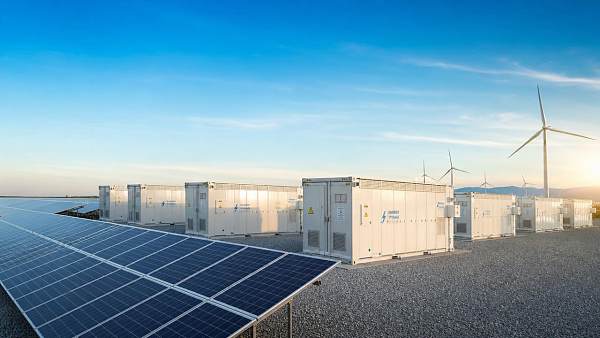
A notable shift is happening across utility, commercial, and industrial deployments. Cost declines no longer come from one technology alone. They come from stacked improvements across design, sourcing, commissioning, and ongoing performance management.
Solar modules are more efficient. Battery systems are more configurable. Wind components are benefiting from predictive maintenance. Grid-interactive controls are reducing curtailment and improving dispatch value.
These changes make clean energy innovations more financially attractive because they compress total installed cost and improve lifetime output simultaneously. In many cases, the biggest gain is not capex reduction alone, but a stronger cost-to-performance ratio.
Another important signal is investor behavior. Capital increasingly favors projects with clearer digital traceability, resilient supplier networks, and shorter payback periods. This trend rewards solutions that turn technical innovation into measurable financial discipline.
Why clean energy innovations are finally lowering project costs
The current wave of savings is being driven by several forces at once. Their combined effect is stronger than any single breakthrough.
Among these drivers, digitalization deserves special attention. Clean energy innovations increasingly create savings after commissioning, not just before it. That shifts the conversation from initial price to lifecycle control.
Software is turning intermittent assets into manageable financial assets
Energy management software, forecasting tools, and remote diagnostics are reducing uncertainty. Better forecasting lowers imbalance costs. Smarter controls improve self-consumption. Automated alerts prevent small losses from becoming major failures.
This is one reason clean energy innovations now appeal to cost-sensitive decision frameworks. Predictability is improving, and predictability often lowers the effective cost of capital.
Where the strongest savings are emerging across project stages
The most valuable cost reductions appear when innovation is mapped to each stage of project delivery. This stage view reveals where savings are durable instead of temporary.
- Development: better site analytics reduce poor asset placement and weak yield assumptions.
- Engineering: standardized designs shorten specification cycles and lower customization errors.
- Procurement: dual-sourcing visibility reduces pricing spikes and shipment disruptions.
- Construction: prefabricated assemblies lower labor intensity and on-site delays.
- Operations: AI-assisted monitoring improves uptime and extends equipment life.
This pattern matters because not all clean energy innovations save money in the same way. Some lower upfront expense. Others improve capacity factor, lower downtime, or reduce financing friction.
Projects that combine several of these levers typically outperform those relying on one headline technology. The market is rewarding integrated efficiency, not isolated innovation.
The broader business impact reaches beyond energy teams
Lower project costs affect more than utility bills. Clean energy innovations now influence operating resilience, contract strategy, product competitiveness, and even customer qualification in export markets.
For facilities with volatile demand, storage-backed systems can reduce exposure to peak pricing. For distributed operations, modular assets can speed expansion without waiting for major grid upgrades.
There is also a supply chain effect. Better energy economics can support localization, reduce fuel-linked logistics risk, and strengthen continuity planning during price shocks or grid instability.
Clean energy innovations are becoming a strategic sourcing issue
Energy assets are now tied to component traceability, service support, firmware reliability, and data integration. That means cost savings depend partly on supplier quality and post-installation responsiveness.
This is where specialized market intelligence platforms such as TradeNexus Pro add value. Deep sector analysis helps compare technology maturity, supplier credibility, and cross-border sourcing risks with greater precision.
What deserves close attention before assuming savings are real
Not every low-cost proposal leads to lower total project cost. Some apparent savings disappear through weak integration, poor maintenance design, or unrealistic yield assumptions.
- Check whether efficiency gains are validated in similar climate and load conditions.
- Review storage degradation models, not just nameplate performance.
- Verify spare parts availability and software support periods.
- Assess interoperability with existing control systems and reporting tools.
- Model curtailment, downtime, and grid-connection delays in financial scenarios.
- Track regulatory exposure, especially around incentives, localization, and certification.
These checks matter because the newest clean energy innovations often blend hardware, software, and services. Hidden complexity can erode expected returns if due diligence remains too narrow.
A practical framework for judging the next wave of investment
A disciplined response should focus on comparable metrics, not headlines. The goal is to determine whether clean energy innovations improve economics under real operating conditions.
This framework helps separate mature clean energy innovations from speculative concepts. It also supports stronger communication between technical reviewers and capital approval processes.
The next step is better intelligence, not just faster adoption
The market is entering a phase where clean energy innovations can lower costs meaningfully, but only when assessed with operational realism. Speed matters, yet informed speed matters more.
A useful next step is to benchmark projects by lifecycle metrics, supplier reliability, and digital performance visibility. That approach makes it easier to identify where savings are structural and repeatable.
TradeNexus Pro supports that process with focused intelligence across Green Energy, Advanced Manufacturing, Smart Electronics, Healthcare Technology, and Supply Chain SaaS. In fast-changing markets, deeper evidence creates better timing.
Organizations that track clean energy innovations through both technology and supply chain lenses will be better positioned to capture lower project costs, stronger resilience, and more defensible long-term returns.
Get weekly intelligence in your inbox.
No noise. No sponsored content. Pure intelligence.
 Oct 08, 2026How Digital Health Improves Diagnostic Accuracy and Workflow in Clinical LabsHow Digital Health Improves Diagnostic Accuracy and Workflow in Clinical Labs
 Oct 07, 2026Selecting Voice Picking Systems for German Warehouses: Integration, Languages and ROISelecting Voice Picking Systems for German Warehouses: Integration, Languages and ROI
 Oct 06, 2026How to Choose Last Mile Dispatch Software for On-Time Delivery at ScaleHow to Choose Last Mile Dispatch Software for On-Time Delivery at Scale
 Oct 05, 2026Vietnam’s Consumer Electronics Market: Demand Shifts and Sourcing OpportunitiesVietnam’s Consumer Electronics Market: Demand Shifts and Sourcing Opportunities
 Oct 04, 2026Digital Health Investment Priorities for Providers: Improving Access, Outcomes, and EfficiencyDigital Health Investment Priorities for Providers: Improving Access, Outcomes, and Efficiency
 Oct 03, 2026How to Specify an FR4 Custom PCB Board for High-Voltage and High-Heat DesignsHow to Specify an FR4 Custom PCB Board for High-Voltage and High-Heat Designs
 Oct 02, 2026ERP Software Market Intelligence: Adoption, Pricing, and Vendor Signals to WatchERP Software Market Intelligence: Adoption, Pricing, and Vendor Signals to Watch
 Oct 01, 2026How to Select Calibrated Temperature Data Loggers for GMP Cold Storage MonitoringHow to Select Calibrated Temperature Data Loggers for GMP Cold Storage Monitoring
 Sep 30, 2026Custom Molded Rubber Pricing: What Drives Unit Cost and Tooling Fees?Custom Molded Rubber Pricing: What Drives Unit Cost and Tooling Fees?
 Sep 29, 2026How to Evaluate Energy Management Software Vendors for Multi-Site OperationsHow to Evaluate Energy Management Software Vendors for Multi-Site Operations
 Sep 28, 2026How to Select a DIN Rail Smart Meter for Multi-Circuit Energy MonitoringHow to Select a DIN Rail Smart Meter for Multi-Circuit Energy Monitoring
 Sep 27, 2026TWS Earbuds in Vietnam: Demand Drivers, Price Tiers, and Retail Channel OpportunitiesTWS Earbuds in Vietnam: Demand Drivers, Price Tiers, and Retail Channel Opportunities
 Sep 26, 2026How UAE Clinics Can Qualify a Smart Glucometer Supplier for Accuracy and ComplianceHow UAE Clinics Can Qualify a Smart Glucometer Supplier for Accuracy and Compliance
 Sep 25, 2026Buying Aesthetic Lasers in the USA: FDA Status, Wavelengths, and Service SupportBuying Aesthetic Lasers in the USA: FDA Status, Wavelengths, and Service Support
 Sep 24, 2026Laser Cutting Brass Sheet: How to Prevent Burrs and Heat Marks on Thin PartsLaser Cutting Brass Sheet: How to Prevent Burrs and Heat Marks on Thin Parts
 Sep 23, 2026How to Choose Lightweight ANC Headphones for Comfortable All-Day TravelHow to Choose Lightweight ANC Headphones for Comfortable All-Day Travel
 Sep 22, 2026IPX5 TWS Bluetooth Earbuds: What Protection Do They Offer for Workouts?IPX5 TWS Bluetooth Earbuds: What Protection Do They Offer for Workouts?
 Sep 21, 2026What to Look for in a Grid Integration Company for Utility-Scale Solar ProjectsWhat to Look for in a Grid Integration Company for Utility-Scale Solar Projects
 Sep 20, 2026Microgrid Controller Pricing: What Drives Cost in Commercial Energy Projects?Microgrid Controller Pricing: What Drives Cost in Commercial Energy Projects?
 Sep 19, 2026How to Choose a GaN Charger for Laptops Without Compromising Power or PortabilityHow to Choose a GaN Charger for Laptops Without Compromising Power or Portability
 Sep 18, 2026Floating Solar Farm Costs: CAPEX, OPEX, and the Site Factors That Shape ROIFloating Solar Farm Costs: CAPEX, OPEX, and the Site Factors That Shape ROI
 Sep 17, 2026Drone Delivery Solutions for Last-Mile Routes: Site, Payload, and Range PlanningDrone Delivery Solutions for Last-Mile Routes: Site, Payload, and Range Planning
 Sep 16, 2026When Low-Volume Electronics Manufacturing Makes More Sense Than Mass ProductionWhen Low-Volume Electronics Manufacturing Makes More Sense Than Mass Production
 Sep 15, 2026Wholesale WiFi Smart Switches: What Buyers Should Verify Before OrderingWholesale WiFi Smart Switches: What Buyers Should Verify Before Ordering
 Sep 14, 2026How to Select IoT Sensors for Reliable Monitoring in Harsh Industrial EnvironmentsHow to Select IoT Sensors for Reliable Monitoring in Harsh Industrial Environments
 Sep 13, 2026How Procurement Teams Can Improve Supplier Reliability With Supply Chain VisibilityHow Procurement Teams Can Improve Supplier Reliability With Supply Chain Visibility
 Sep 12, 2026Smart Manufacturing Trends 2026: What Leaders Should Prioritize for ROISmart Manufacturing Trends 2026: What Leaders Should Prioritize for ROI



























