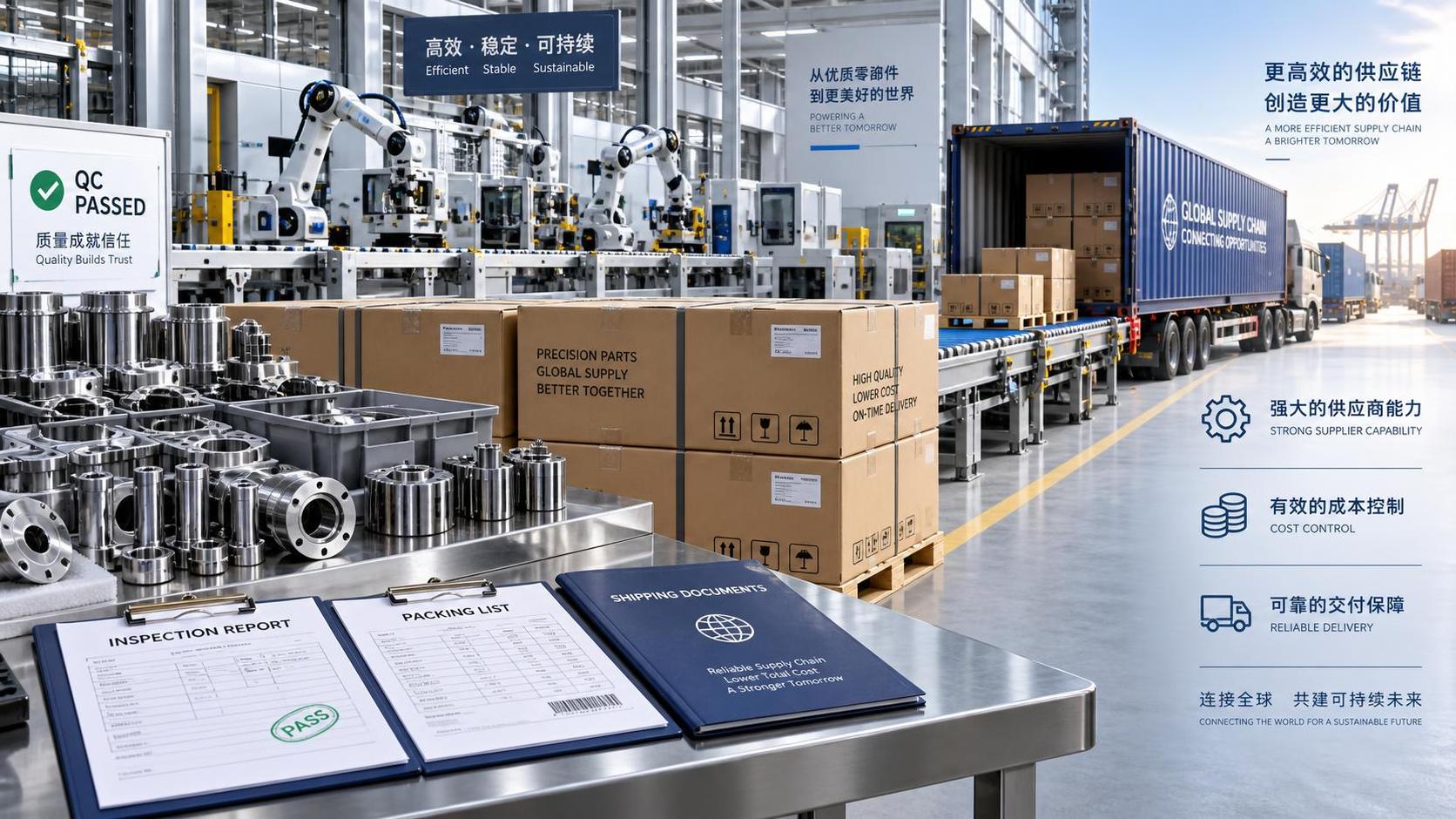
Plastic Injection Molding for Medical Devices: Key Material and Compliance Factors
Why does plastic injection molding for medical devices demand closer scrutiny?

Plastic injection molding for medical devices is not simply about making parts at scale.
It sits at the intersection of precision engineering, patient safety, documentation, and global compliance.
A resin that performs well in consumer products may fail under sterilization, extractables testing, or biocompatibility review.
That is why early material and process decisions shape certification readiness later.
In practical terms, the real question is not whether injection molding works for healthcare components.
The question is whether the chosen molding route supports function, traceability, and regulatory evidence at the same time.
This matters across a broad industrial landscape, from diagnostic housings and drug delivery components to fluid management parts and wearable health devices.
It also explains why platforms such as TradeNexus Pro follow healthcare technology with the same depth used in advanced manufacturing and supply chain analysis.
Reliable sourcing and compliance intelligence now influence design choices much earlier than before.
Which materials are usually considered first, and why?
The shortlist often starts with polypropylene, polycarbonate, polyethylene, PEEK, ABS, and medical-grade silicone alternatives for related components.
But selection should not begin with popularity alone.
A better approach is to match material behavior to the device’s clinical and manufacturing environment.
For single-use items, cost stability and sterilization compatibility often outweigh premium mechanical performance.
For implant-adjacent or high-stress parts, long-term dimensional stability and chemical resistance become more important.
More specifically, plastic injection molding for medical devices usually evaluates materials against these questions.
- Can the resin tolerate gamma, EtO, or autoclave sterilization without degrading?
- Does it meet biocompatibility expectations under ISO 10993 testing pathways?
- Will it maintain tight tolerances during high-volume molding and post-processing?
- Is there a documented medical-grade supply chain with lot traceability?
- Are colorants, additives, or regrind restrictions clearly defined?
Polycarbonate, for example, offers clarity and impact resistance, but repeated sterilization can change performance depending on grade.
PEEK is highly durable, yet cost and molding complexity may be difficult to justify for simpler disposable parts.
So the right answer is usually contextual, not universal.
A quick material judgment table helps narrow the field
The table below is useful when comparing plastic injection molding for medical devices across common material choices.
This kind of comparison prevents teams from choosing on datasheet claims alone.
What compliance factors tend to delay approval or launch?
In many projects, the biggest delay is not molding capacity.
It is missing evidence that the material, process, and controls remain consistent over time.
Plastic injection molding for medical devices usually faces scrutiny in four linked areas.
- Material documentation, including medical-grade declarations and change control commitments.
- Biocompatibility alignment, often tied to ISO 10993 evaluation strategy.
- Manufacturing system compliance, such as ISO 13485 quality management practices.
- Process validation, especially IQ, OQ, and PQ for stable production conditions.
There is also a common misunderstanding here.
A resin labeled “medical grade” does not automatically make the finished part compliant.
Regulators and auditors look at the final application, contact duration, sterilization path, packaging, and process controls.
If tooling modifications, gate changes, or outsourced secondary operations are poorly documented, risk increases quickly.
That is one reason decision-grade market platforms have become useful.
TradeNexus Pro, for instance, reflects how healthcare technology and supply chain visibility now overlap in real supplier evaluation.
Compliance is no longer a narrow lab issue.
It is part of manufacturing credibility, sourcing continuity, and market entry planning.
How do you judge whether a supplier can really support medical molding?
This is where many evaluations become more practical.
A capable supplier should demonstrate more than clean production space and a polished presentation.
For plastic injection molding for medical devices, deeper signals matter.
- Validated molding processes with documented parameter windows.
- Experience handling medical-grade polymers without uncontrolled substitutions.
- Tool maintenance records that protect repeatability over long production runs.
- Traceability from resin lot to finished batch and packaging stage.
- Defined contamination control for packaging, handling, and post-mold operations.
In actual reviews, it helps to ask for examples of deviation handling.
How were dimensional drifts investigated?
What happens when a raw material lot changes?
Can the supplier show evidence of corrective action rather than only capability charts?
That kind of transparency often tells more than a certificate alone.
It also aligns with the broader trust-building model seen in specialized B2B intelligence ecosystems.
Clear technical content, structured service information, and documented sector participation make evaluation faster and less speculative.
Where do cost, tooling, and production timing usually go off track?
The hidden cost in plastic injection molding for medical devices is often change, not the initial mold quote.
A design that looks simple may require expensive validation repeats after material or geometry adjustments.
Short timelines also become unrealistic when sterilization studies and packaging validation start too late.
Common trouble spots include the following.
- Ignoring resin shrinkage effects during tolerance planning.
- Choosing low-cost tooling before confirming long-run maintenance needs.
- Overlooking cleanroom packaging requirements in total project cost.
- Assuming sample approval is equal to validated production readiness.
- Adding colorants or additives without rechecking compliance impact.
A more resilient planning method links part design, resin choice, validation burden, and supplier capability from the beginning.
That reduces the risk of repeating expensive mold revisions later.
A simple checkpoint list before freezing specifications
What are the most common mistakes in plastic injection molding for medical devices?
One common mistake is treating compliance as a final-stage paperwork exercise.
By that point, the material or tool design may already limit what is possible.
Another mistake is relying on general industrial molding experience without adjusting for healthcare documentation discipline.
Plastic injection molding for medical devices requires tighter coordination between design, quality, validation, and supplier management.
It also helps to avoid two shortcuts.
- Do not assume one approved resin grade can replace another with identical results.
- Do not assume an ISO certificate alone proves application-specific readiness.
A better pattern is evidence-based comparison.
Review technical files, ask how process changes are controlled, and connect supplier claims with actual production records.
That is especially relevant in cross-border programs, where market entry, sourcing risk, and regulatory timing often move together.
So what should be reviewed before making a final decision?
The strongest decisions usually come from a short, disciplined review framework.
Start with application conditions, then move to material behavior, validation burden, and supplier evidence.
If plastic injection molding for medical devices is being considered for a new program, these checks are worth completing before specification freeze.
- Map device contact type, sterilization method, and performance limits.
- Compare candidate resins using medical data, not general industrial literature.
- Confirm process validation scope, including tooling, molding, and packaging controls.
- Review traceability systems and change notification practices across the supply chain.
- Check whether timelines include testing, documentation review, and potential rework.
In the broader market, this is exactly where specialized intelligence becomes useful.
TradeNexus Pro reflects a practical shift in B2B evaluation.
Technical performance, compliance maturity, and supply credibility now need to be reviewed together, not in isolation.
If the next step is supplier comparison or design review, build the checklist first.
That makes plastic injection molding for medical devices easier to judge on risk, readiness, and long-term reliability rather than cost alone.
Get weekly intelligence in your inbox.
No noise. No sponsored content. Pure intelligence.
 Sep 15, 2026Wholesale WiFi Smart Switches: What Buyers Should Verify Before OrderingWholesale WiFi Smart Switches: What Buyers Should Verify Before Ordering
 Sep 14, 2026How to Select IoT Sensors for Reliable Monitoring in Harsh Industrial EnvironmentsHow to Select IoT Sensors for Reliable Monitoring in Harsh Industrial Environments
 Sep 13, 2026How Procurement Teams Can Improve Supplier Reliability With Supply Chain VisibilityHow Procurement Teams Can Improve Supplier Reliability With Supply Chain Visibility
 Sep 12, 2026Smart Manufacturing Trends 2026: What Leaders Should Prioritize for ROISmart Manufacturing Trends 2026: What Leaders Should Prioritize for ROI
 Sep 11, 2026B2B Market Analysis: How Buyers Evaluate Suppliers, Pricing, and Delivery RiskB2B Market Analysis: How Buyers Evaluate Suppliers, Pricing, and Delivery Risk
 Sep 10, 2026Residential Solar Kits in Canada: How to Size a System for Your Home and ClimateResidential Solar Kits in Canada: How to Size a System for Your Home and Climate
 Sep 09, 2026How to Specify a Syringe Assembly Line for High-Volume Sterile ProductionHow to Specify a Syringe Assembly Line for High-Volume Sterile Production
 Sep 08, 2026How to Evaluate Warehouse Robotics System Suppliers for Reliable Multi-Site DeploymentHow to Evaluate Warehouse Robotics System Suppliers for Reliable Multi-Site Deployment
 Sep 07, 2026Renewable Geothermal Energy Explained: How It Works for Heating and PowerRenewable Geothermal Energy Explained: How It Works for Heating and Power
 Sep 07, 2026How to Choose an Industrial Packaging Robot Manufacturer for Your Production LineHow to Choose an Industrial Packaging Robot Manufacturer for Your Production Line
 Sep 05, 2026How to Evaluate a Turnkey Hydro Turbine Generator Supplier for Remote Power ProjectsHow to Evaluate a Turnkey Hydro Turbine Generator Supplier for Remote Power Projects
 Sep 04, 2026Automated Ultrasonic Welding for Thermoplastic Assemblies: Process Controls That MatterAutomated Ultrasonic Welding for Thermoplastic Assemblies: Process Controls That Matter
 Sep 03, 2026Energy Forecasting for Grid Planning: Sizing Solar and Storage CapacityEnergy Forecasting for Grid Planning: Sizing Solar and Storage Capacity
 Sep 02, 2026Which Metrics Should an Energy Analytics Dashboard Track for Factory Energy Management?Which Metrics Should an Energy Analytics Dashboard Track for Factory Energy Management?
 Sep 01, 2026How Warehouse Voice Picking Improves Accuracy and Throughput in Order FulfillmentHow Warehouse Voice Picking Improves Accuracy and Throughput in Order Fulfillment
 Aug 31, 2026How to Automate Dropshipping Order Processing Without Overselling StockHow to Automate Dropshipping Order Processing Without Overselling Stock
 Aug 30, 2026How to Evaluate a Smart Lighting Supplier for Multi-Site Commercial ProjectsHow to Evaluate a Smart Lighting Supplier for Multi-Site Commercial Projects
 Aug 29, 2026Recent Advances in Smart Manufacturing and Materials Reshaping Factory InvestmentRecent Advances in Smart Manufacturing and Materials Reshaping Factory Investment
 Aug 29, 2026Selecting Lightweight Aluminum Extrusions for Strength-Critical Industrial DesignsSelecting Lightweight Aluminum Extrusions for Strength-Critical Industrial Designs
 Aug 29, 2026Vertical Powder Anodizing Explained: Process Controls for Uniform Coating QualityVertical Powder Anodizing Explained: Process Controls for Uniform Coating Quality
 Aug 29, 2026PV Module Product Due Diligence: What Buyers Should Verify Before ContractingPV Module Product Due Diligence: What Buyers Should Verify Before Contracting
 Aug 29, 2026Solar Design for Challenging Terrain: Managing Slope, Soil, and Shading RisksSolar Design for Challenging Terrain: Managing Slope, Soil, and Shading Risks
 Aug 29, 2026IS 16444 Smart Meter Requirements: Key Functions, Tests, and ComplianceIS 16444 Smart Meter Requirements: Key Functions, Tests, and Compliance
 Aug 29, 2026Rehabilitation Equipment Market Outlook: Demand Drivers and Growth SegmentsRehabilitation Equipment Market Outlook: Demand Drivers and Growth Segments
 Aug 29, 2026When Does Container Handling Automation Deliver ROI in Port Yard Operations?When Does Container Handling Automation Deliver ROI in Port Yard Operations?
 Aug 29, 2026Customs API Integration: A Practical Checklist for Automated Trade ComplianceCustoms API Integration: A Practical Checklist for Automated Trade Compliance
 Aug 29, 2026Returnable Packaging for Automotive: How to Cut Damage and Reverse Logistics CostsReturnable Packaging for Automotive: How to Cut Damage and Reverse Logistics Costs